




















- Best of All
- Best Miami Luxury Condos
- Most popular
- Relocating to Miami
- Private Schools
- Investments
- Gated communities
- Waterfront information
- Luxury homes
- Luxury Condos
- New Construction Condos in South Florida
- Independent Pre-Construction condo reviews for Miami
- Independent Pre-Construction condo reviews for Fort Lauderdale
The Rise of Miami’s Most Disruptive New School | 2 Hours of Academics, 10x Faster Results
Top Private Schools In Miami: Inside Miami’s Most Innovative New Option
On this episode of Better Decisions, I sit down with someone who is quickly becoming one of Miami’s most influential operators in the education space: Mackenzie Price, founder of Alpha School. Originally launched in Austin, Alpha has now arrived in Miami, and it’s already challenging long-held ideas about what a modern private school should be. With its innovative learning model, Alpha is rapidly emerging as one of the best private schools in Miami.
Mackenzie joins me to talk about why she chose Miami, what makes Alpha’s model so different, and how she’s helping redefine the educational experience for families in a city that’s growing faster than ever. If you’re a parent, an operator, or simply curious about Private schools in Miami or the future of learning in Miami, this is a conversation you won’t want to miss.
A New Model of School: Personalized Learning, Human-Centered Growth
This model flips traditional education on its head by replacing the one-size-fits-all classroom with a fully personalized, AI-powered learning system. Students complete all core academics in just two hours a day through 1:1, mastery-based tutoring that adapts to their exact level, pace, and knowledge gaps. This allows advanced learners to accelerate and struggling learners to catch up. The rest of the day is dedicated to deep human interaction: hands-on projects, entrepreneurship, storytelling, leadership, teamwork, and social-emotional development. With more adult engagement, more collaboration, and a school culture designed to make kids genuinely love coming to school, this approach uses technology not to replace humanity, but to create more space for it.
The Secret Behind Rapid Academic Growth
This education model works because it eliminates the biggest flaw in traditional schools: time-based learning. In a standard classroom, every student moves forward at the same pace whether they’ve mastered the material or not. That’s why kids with A’s and B’s are often years behind grade level without anyone realizing it. Alpha flips that by using 1:1, mastery-based learning powered by AI—so every child learns exactly what they need, at exactly the right level, with no gaps. When you remove the wasted time of lectures, classroom management, slow group pacing, and repetitive instruction, the academic content itself is shockingly fast to complete. A full year of fifth-grade math? It actually takes 20–30 hours when a student receives personalized, adaptive instruction.
Because students aren’t sitting through six hours of generalized teaching, they finish and exceed their academic requirements in just two hours a day. That time savings is then reinvested into relationship-building, mentorship, entrepreneurship, collaboration, creativity, resilience, and play. Activities and skills that actually help develop successful, emotionally intelligent, future-ready humans. Meanwhile, “teachers” become dedicated guides who spend all their time motivating, supporting, and personally knowing each child, rather than creating lesson plans and grading worksheets. This combination of true mastery learning, radically personalized pacing, and deep human connection is why students not only catch up quickly, but often leap multiple grade levels in their first year, proving that kids weren’t the problem; the old system was.

The Power of Coaches, Not Teachers
Traditional teachers are forced to manage 20–30 students at once, leaving almost no time for real emotional connection. Alpha flips that by transforming teachers into guides, coaches whose full-time job is to understand each child, motivate them, and help them build self-awareness. Because the academics are handled by adaptive technology, guides spend their days doing what humans do best: building trust, supporting emotional development, and helping kids navigate stress, confidence, and identity.
Because this role attracts people from world-class backgrounds, educators, entrepreneurs, athletes and corporate leaders, Alpha gets the top 1% of talent. More than 80,000 people applied for guide positions, allowing the school to select those who are not just smart, but exceptional at connecting with kids. The result: young learners who feel seen, supported, and emotionally grounded as they grow into themselves.
Why Motivation Beats Intelligence: The Real Reason Kids Thrive Here
Learning science has been clear for decades: students learn 2–10x faster when instruction is personalized, mastery-based, and emotionally supported. But a traditional classroom model can’t deliver that, no matter how good the teacher is. Some kids are bored, some are lost, and motivation steadily declines.
Alpha solves that by giving every child the two things needed to thrive:
- The right level and pace for academics, made possible through AI-driven learning.
- The motivation to learn, built through deep relationships, clarity of goals, and personalized incentives.
Guides work closely with each student to understand what excites them, when they feel stuck, and what systems help them stay engaged. Kids set clear daily goals, track their own progress, and get tailored motivation models, from simple wins to team rewards. Instead of being passengers in a classroom, they become self-driven learners who know how to learn, a skill that matters far more in today’s fast-changing world than memorizing content.
Real-World Learning That Sparks Engagement
Students at Alpha don’t just study concepts, they run real businesses and make real decisions. From analyzing Airbnb models to choosing whether to buy or rent property, pricing strategies, cleaning logistics, décor choices, and customer experience, kids learn financial literacy by actually doing it. When school becomes hands-on and relevant, learning stops feeling abstract. Kids who once tuned out in traditional classrooms suddenly lean in, because the work feels real, meaningful, and theirs. This shift from passive listening to active ownership creates the same spark adults feel when they build careers they truly care about.

Building Grit, Confidence, and Human Skills
Alpha pairs high standards with high support, helping students realize they’re capable of far more than they thought. Whether it’s completing a firefighter course, climbing a 40-foot wall, running Tough Mudders, or finishing a “grit triathlon” of solving a Rubik’s cube, juggling, and running a mile, kids learn perseverance by doing hard things. Failure is celebrated as growth, not punished, and social development is intentionally taught through workshops on communication, friendship, navigating groups, and being both interesting and interested. With academics completed efficiently through 1:1 adaptive learning, the rest of the day is devoted to developing the emotional intelligence, creativity, teamwork, and curiosity that traditional school simply doesn’t have time for, creating self-driven learners ready to build their own paths.
| MOST DESIRED SINGLE-FAMILY NEIGHBORHOODS CLOSE TO THE ALPHA SCHOOL | |
| Glenvar Heights | Glenvar Heights Homes for Sale |
| South Miami | South Miami Homes for Sale |
| Coral Gables | Coral Gables Homes for Sale |
| Pinecrest | Pinecrest Homes for Sale |
| Coconut Grove | Coconut Grove Homes for Sale |
| High Pines | High Pines Homes for Sale |
| Ponce Davis | Ponce Davis Homes for Sale |
From Six Kids to a Movement: How Alpha Became Miami’s Breakout School
Alpha didn’t arrive in Miami with a massive campus or an established student body, it launched with just six kids. But families who were entrepreneurial, forward-thinking, and frustrated with the limits of traditional education immediately recognized the opportunity. In one year, that tiny group became 65 students, and the school expects to double again next fall. Parents aren’t choosing Alpha for scale, they’re choosing it because it flips the script compared to many private schools in Miami, offering small cohorts, deeper relationships, and a model built around unlocking human potential. It is a learning environment designed for kids who want more than standardized checkboxes. With overcrowded private schools in Miami and a booming population, Alpha has become the home for families seeking a model that actually unlocks human potential.
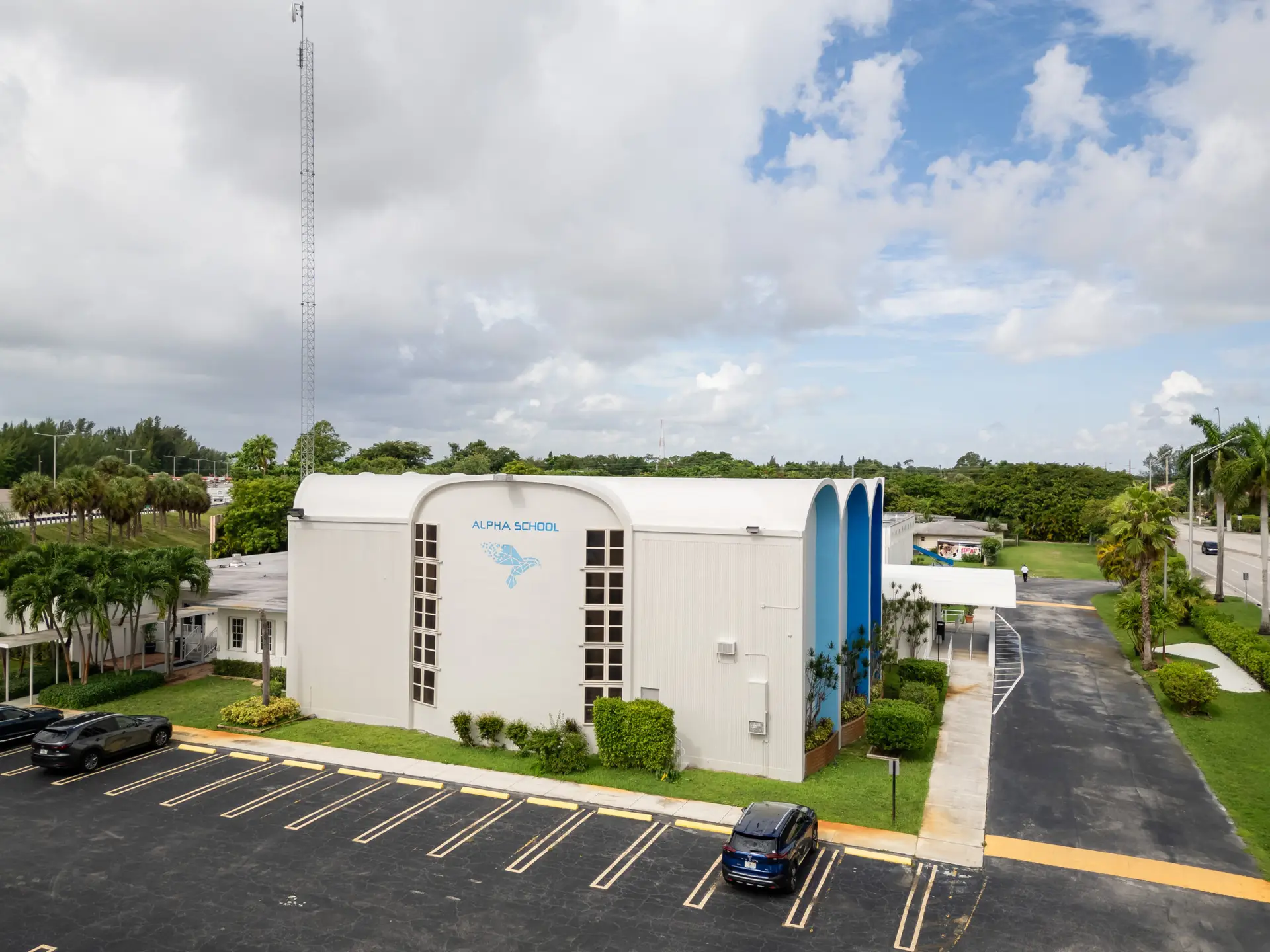
Sports, Life Skills, and Real Confidence—Built Into the School Day
Instead of relying on big-team sports to teach character, Alpha weaves physical challenges and life-skills training directly into the school day. Kids run Ninja Warrior courses at 10 AM, learn golf and tennis with real feedback loops, take horseback workshops on goal-setting, and even sail from Florida to the Bahamas to learn teamwork and adaptability. Every activity doubles as a lesson in communication, grit, and emotional intelligence—right down to tracking “uplifting language” during field games or analyzing teamwork inside escape rooms. The goal isn’t to create quarterbacks; it’s to build resilient, self-aware, capable kids who can take on real-world challenges with confidence and curiosity.
Top Private schools in Miami | Alpha’s Vision for the Next Five Years
When Mackenzie looks ahead, she sees Alpha becoming the model for what education must be in the age of AI; flexible, mastery-based, deeply human, and global. In Miami, that means building toward a 1,000-student campus that can support full sports programs, expanded workshops, and even richer community integration. Nationally, it means giving families the freedom to learn anywhere, spending six weeks in Puerto Rico, a season in Utah, or a few months in San Francisco while staying fully on track academically. As AI makes knowledge instantly accessible, she believes the future belongs to kids who can create new knowledge, students trained to think deeply, explore interests, build real projects, and collaborate across cities. Alpha’s growing network of campuses, partnerships, and real-world experiences is designed to prepare this generation not just for the jobs of the future, but to invent them.
Final Words
This conversation makes one thing very clear: the future of learning, and the future of opportunity, belongs to the kids who are taught to think differently, build boldly, and use technology as a multiplier rather than a crutch. In a world where tomorrow’s billion-dollar companies may be built by one person with AI, the question every parent is asking is, Will my child be prepared? Schools like Alpha are rewriting that answer. If you’re a family exploring private schools in Miami or thinking about your child’s next step, reach out. My information is below, and I’d love to connect you with leaders like Mackenzie and help you navigate the options in this fast-evolving city.
A special thank you to McKenzie for joining the podcast and introducing us to the Alpha school, on of the newest top private schools in Miami
FAQ
These are the most commonly Miami Real Estate Related questions
What should relocation buyers know before buying real estate in Miami?
HOME BUYERS
Relocation buyers looking at homes in Miami should understand that choosing the right house is less about the property itself and more about location, schools, and long-term value. Many buyers make the mistake of focusing on price or finishes, while the real driver of value is the neighborhood and micro-location. Older homes often represent better value, but may also be part of a future redevelopment cycle. Newer homes command premiums, but don’t always sell faster if pricing is ahead of the market. Commute time, school access, and community dynamics are critical and often underestimated. The key is to evaluate homes not just as lifestyle purchases, but as long-term assets within a very localized market.
Sources:
https://luxlifemiamiblog.com/relocating-to-miami/
https://luxlifemiamiblog.com/relocating-to-miami-with-a-family/
CONDO BUYERS:
Relocation buyers should understand that Miami is a highly segmented, building-driven market, not a uniform one. Pricing can vary significantly between similar properties depending on building quality, layout, and financial health. Many buyers assume newer construction equals better investment, but that is often not the case. Factors like HOA fees, reserves, and rental policies can materially impact long-term value and liquidity. Negotiation opportunities often exist, especially in slower segments, but require precise market knowledge. The key is to evaluate micro-markets and individual buildings, not just neighborhoods or price per square foot.
Sources:
https://luxlifemiamiblog.com/miami-real-estate-market-report/
https://luxlifemiamiblog.com/new-construction-miami-guide/
What are the best areas for relocating families with children
For families relocating to Miami with young children, the most recommended neighborhoods are Coral Gables, Coconut Grove, and Pinecrest. Coral Gables offers the best balance of top schools, safety, and long-term value. Coconut Grove is ideal for younger families seeking walkability, greenery, and a lifestyle-driven environment. Pinecrest provides larger homes, excellent schools, and better value for space, making it ideal for growing families. The key driver across all three is access to strong schools and primary residential stability. Relocation decisions are less about new construction and more about long-term livability and resale strength.
Sources:
https://luxlifemiamiblog.com/best-neighborhoods-miami/
https://luxlifemiamiblog.com/what-are-the-best-family-neighborhoods-in-miami-in-2023/
Are new construction condos in Miami a good investment?
New construction condos in Miami can be a good investment—but only if you understand that not all buildings perform the same. According to the David Siddons Group, many buyers assume “new = better,” but in reality, performance depends on pricing, layout, building quality, and long-term demand. Some new developments set future price benchmarks and can drive long-term appreciation, especially in top-tier projects. However, many are priced aggressively at launch, and buyers relying on marketing instead of data often overpay.
The market is highly segmented, meaning two new buildings next to each other can perform very differently.
The best opportunities typically come from selecting the right building early or negotiating correctly in later phases.
In short: new construction is not automatically a good investment—it becomes one only with building-level analysis and disciplined entry pricing.
Sources:
https://luxlifemiamiblog.com/how-to-buy-a-luxury-condo-in-miami/
https://luxlifemiamiblog.com/category/independent-new-construction-condo-reviews/
https://luxlifemiamiblog.com/beyond-clickbait-real-insights-into-miamis-luxury-condo-market/
Why is buying a Miami condo riskier than buyers think?
Buying a Miami condo is often riskier than buyers expect because the true risks are at the building level—not visible in the listing price. Many buyers focus on finishes and views, while overlooking HOA reserves, insurance exposure, and potential special assessments. In reality, two identical units in different buildings can perform completely differently over time. Rising HOA fees and stricter regulations are also increasing the true cost of ownership, especially in older buildings. Liquidity can be affected by factors like financial health, rental policies, and ongoing repairs. The key risk is not the condo itself—but buying into the wrong building without proper due diligence.
Sources:
https://luxlifemiamiblog.com/how-to-buy-a-luxury-condo-in-miami/
https://luxlifemiamiblog.com/miami-condo-market-risks/
What are Miami's Safest Areas?
Which Miami Areas Still offer Great Value (Budget Friendly alternatives to Coral Gables and Pinecrest)
If you’re looking for better value than Coral Gables or Pinecrest, the answer (in true Siddons style) is not “go cheaper”—it’s go one layer outside the obvious markets.
The strongest value plays are:
- Schenley Park → closest substitute to Coral Gables at ~20% discount while maintaining similar character and location
- Biltmore Heights → almost identical feel to the Gables but ~25–30% cheaper on a $/SF basis
- Glenvar Heights → central location with larger lots and ~25% pricing advantage vs South Miami/Gables
- Baptist / Galloway (Kendall) → Pinecrest-style living (space, schools, land) at up to ~30% lower pricing
The pattern is consistent:
👉 Buyers are shifting west and slightly off-market to gain land, scale, and pricing efficiency. You don’t find value by going to a “cheaper neighborhood”—you find it by identifying adjacent micro-markets that offer the same lifestyle fundamentals without the brand premium.
Sources:
https://luxlifemiamiblog.com/best-value-neighborhoods-miami/
https://luxlifemiamiblog.com/category/miami-neighborhoods/
Is NOW a good time to buy in Miami?
Are Miami real estate prices going down in 2026?
No—but that’s the wrong way to look at it. Miami is not one market anymore, so prices are not moving in one direction. In 2026, the market is split into two: ultra-luxury, scarcity-driven areas (like waterfront and top-tier neighborhoods) are still holding or even rising, while mid-tier condos and oversupplied segments are flat or correcting. What we’re seeing is price divergence, not a crash—some properties are gaining value while others are quietly adjusting downward. Rising inventory and more selective buyers are putting pressure on pricing in certain segments, especially older condos or buildings with weaker fundamentals.
At the same time, global wealth and cash buyers continue to support pricing at the top end of the market. So the real answer: prices aren’t broadly dropping—they’re being repriced based on quality, location, and supply.
Should I buy a house or a condo when relocating to Miami?
The decision comes down to lifestyle first, investment second—and most relocation buyers get that backwards. If you want space, privacy, schools, and long-term family living, a single-family home in areas like Coral Gables or Coconut Grove is typically the stronger choice. If you prioritize walkability, low maintenance, and proximity to business districts, a condo in Brickell or waterfront markets makes more sense.
From an investment perspective, homes tend to be more stable, while condos are more building-dependent and cyclical. Most relocation clients underestimate how much building quality, HOA structure, and future costs impact condo performance. The right answer isn’t “house vs condo”—it’s which asset fits your lifestyle AND holds value within its micro-market.
How do I choose the right Miami neighborhood for my lifestyle?
Why are Miami condo prices so different between buildings?
Miami condo pricing varies widely because value is determined at the building level, not just by location. Two buildings next to each other can have major differences in financial health, reserves, HOA fees, and management quality. Buyers also pay premiums for better layouts, views, amenities, and newer construction—but not all “new” buildings perform equally. Factors like rental policies, upcoming assessments, and building reputation can significantly impact resale value. This is why price per square foot alone is misleading in Miami’s condo market. The real driver of value is how that specific building competes within its micro-market over time.
Sources:
https://luxlifemiamiblog.com/how-to-buy-a-luxury-condo-in-miami/
https://luxlifemiamiblog.com/category/independent-new-construction-condo-reviews/
WHY WORK WITH DAVID? THINGS YOU SHOULD KNOW...
For all our analytics we are agents driving some very unique and advanced tech. We Provide a granular and custom experience that empower our clients with the insight and tools to understand the most complex behaviors of any local markets.
-
Analytical
Over 100 reports produced to date
-
Knowledgeable
Over 1800 published articles and counting


Related Articles

Inside 1428 Brickell: Why Ytech Skipped the Hotel Brand to Build Brickell’s Best Finishes

The Real Estate Team Behind the Agent: Why Systems Matter More Than Star Power
The Decisions That Set Your Miami Condo’s Price, Years Before You Ever See It

Which Schools Serve Palmetto Bay? A Guide to Public School Boundaries

Miami Zoning Laws Explained: What Every Buyer Must Know Before You Purchase

Miami’s New Construction Condo Boom Comes With Risks Most Buyers Never Ask About

Coconut Grove, Coral Gables or Pinecrest? Ten Things Every Family Buyer Must Know Before Choosing

Best Neighborhoods to Invest in Miami 2026: Where Smart Money Is Really Buying and What the Headlines Miss

Ponce Davis, Miami: Neighborhood Guide (2026)

Selling Your Home in Miami?

The Long Game of Investing in Miami Real Estate (2026 Guide)

Real Estate Investing in 2026: Why the Old Strategies No Longer Work

What the Top 1% Do Differently — Lessons from Hosting the World’s Biggest Stars

Where Billionaires Buy Real Estate in Miami: Following the Smart Money in 2026
Please fill in your details and David Siddons will contact you

Search related videos

Are St. Regis Sunny Isles Residences Worth the Brand Premium?
Coral Gables Market Report 2025: What the Headlines Aren’t Telling You!
How David Siddons’ Power Team Drives Miami’s Luxury Market
Mid‑Year 2025 Coconut Grove Report: The Truth About What’s Selling Now
Brickell Mid‑Year Market Report 2025 | Is Brickell’s Luxury Market in Trouble?
Pinecrest Mid-Year Market Report 2025 | What’s Selling, What’s Sitting & Why
Miami Beach Condo Market Mid-Year Report 2025 | What Buyers & Sellers Need to Know
How to Lose $1M in The Miami Condo market | Top Mistakes That Cost Miami Condo Buyers Millions
The Well Project EXPOSED Coconut Grove’s Hottest Units
Miami Real Estate in 2025 Is NOT What You Think 😱 | Midyear Must Knows for Buyers & Sellers!
7 Things You Should Never Say to a Real Estate Agent in Miami!
Landmark Victoria Park Residence in Fort Lauderdale: Inside 420 NE 11th Ave 🌴✨
Luxury Living on 2355 S. Miami Ave | Fully Furnished 4-Bed Home w/ Resort-Style Pool 🏊
Is Mandarin Oriental Residences Miami a Smart Condo Investment? Prices, Floorplans, Views & Finishes


- Get our Newsletter
- Subscribe
- No Thanks
Get the latest news from Miami Real Estate News
Close
Edit Search
Close
2 of 14
Share this property
Recomend this to a friend, just enter their email below.
Close
Your email was sent successfully
Close
 COMPARE WITH CONDOGEEKS