














- Best of All
- Best Miami Luxury Condos
- Most popular
- Relocating to Miami
- Private Schools
- Investments
- Gated communities
- Waterfront information
- Luxury homes
- Luxury Condos
- New Construction Condos in South Florida
- Independent Pre-Construction condo reviews for Miami
- Independent Pre-Construction condo reviews for Fort Lauderdale
Miami Zoning Laws Explained: What Every Buyer Must Know Before You Purchase
Before you buy that corner lot, that waterfront fixer-upper, or the multi-parcel site you’re eyeing for a new development, there is one conversation you need to have first: the one about zoning. Miami’s rules on what can be built, where, and how tall are changing fast, and buyers who skip this step often find out the hard way, sometimes after closing, that their lot can’t be developed the way they imagined.
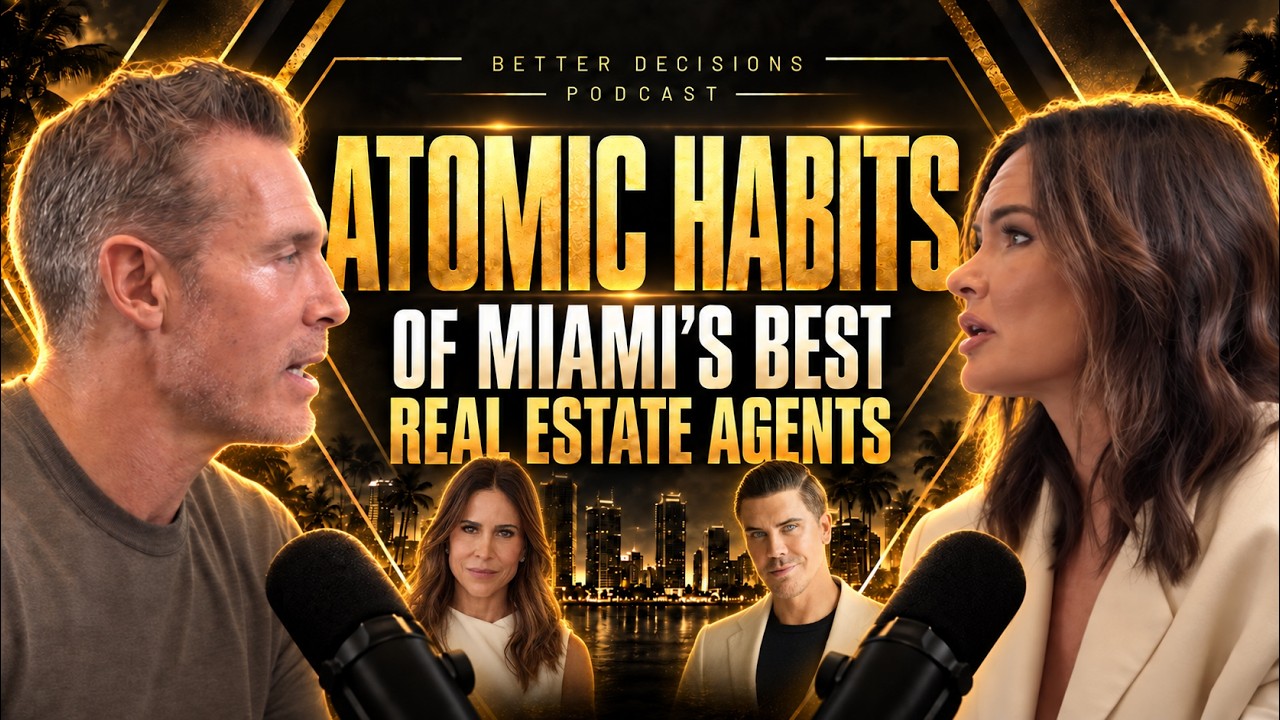
That’s why we sat down with Javier Vazquez for this episode of Better Decisions, our podcast for buyers, sellers, and developers navigating South Florida real estate. Javier has practiced land use and zoning law in Miami for 36 years and is part of Gunster, a 100-year-old South Florida law firm. He’s the attorney top developers call before they make an offer, and in this conversation he breaks down exactly what buyers, developers, and homeowners need to know before purchasing land, renovating a waterfront home, or investing in new construction anywhere in Miami-Dade County.
What Is the Live Local Act, and Why Should Every Miami Buyer Care?
If you have been paying attention to South Florida real estate over the last three years, you have heard about the Live Local Act. It is a Florida statute, first enacted in 2023 and revised several times since, designed to address the region’s affordability crisis. Here is how it works: any property zoned industrial, commercial, or mixed use automatically becomes eligible, by right, for the highest density and highest height allowed within a mile of that site. In exchange, the developer must commit 40 percent of the units to workforce housing for a minimum of 30 years.
How Workforce Housing Actually Works
Workforce housing is measured using Area Median Income, or AMI. Under Live Local, units must serve renters at or below 120 percent of AMI, with additional tax benefits available for developments that stay under 80 percent AMI. In plain terms, this housing is built for police officers, teachers, and firefighters, the people who keep a city running but are increasingly priced out of the neighborhoods they serve. Developers who use Live Local must prove, through annual audits, that 40 percent of their units are rented to qualifying tenants. In most buildings, these units occupy the lower floors, while market-rate and luxury units sit above.
Is Live Local Development Profitable for Builders?
According to Javier, profitability comes down to the math: higher density plus tax exemptions can offset the lower rents collected on workforce units. Sometimes the numbers work out better than a traditional development. Sometimes they do not. Either way, these calculations have to be run before a developer ever makes an offer, which is exactly the kind of due diligence a knowledgeable local team should be running on your behalf, whether you are the developer or the neighbor next door wondering what is coming.
Zoning Rules Vary Dramatically by Miami Neighborhood
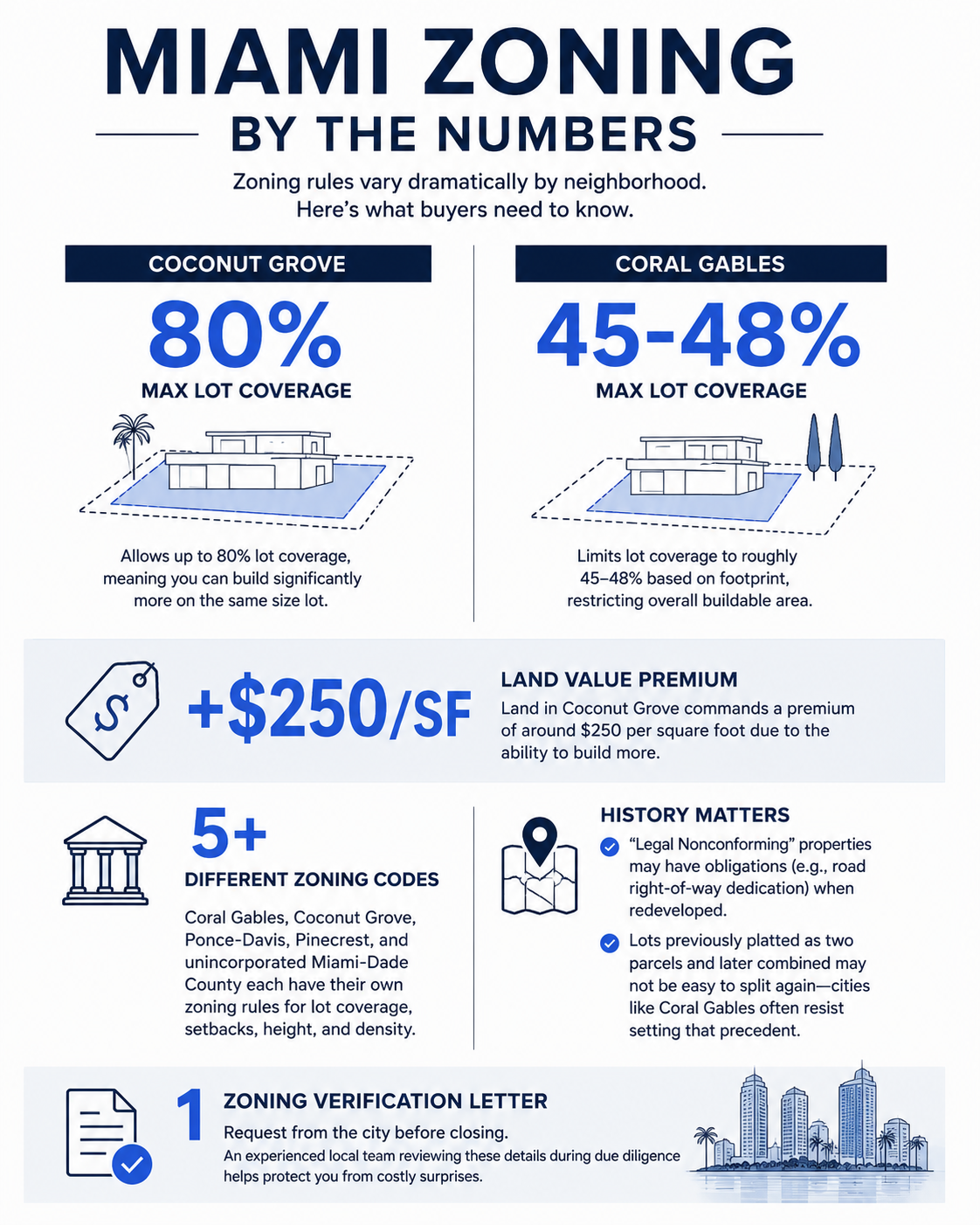
One of the most important things buyers get wrong is assuming that zoning works the same way across Miami. It does not. Coral Gables, Coconut Grove, Ponce-Davis, Pinecrest, and unincorporated Miami-Dade County each have their own rules governing lot coverage, setbacks, height, and density.
For example, Javier pointed out that Coconut Grove allows lot coverage up to 80 percent, while Coral Gables limits it to roughly 45 to 48 percent based on footprint. That difference alone helps explain why land in the Grove commands a premium of around $250 per square foot: buyers can build significantly more on the same size lot. Buyers also need to understand whether a property is “legal nonconforming,” meaning it predates current code and may have obligations, like dedicating land for road right-of-way, once redevelopment begins. And if a lot was previously platted as two parcels and later combined, do not assume a lot split will be simple. Some cities, Coral Gables among them, resist setting that precedent regardless of the property’s history.
This is precisely why buyers benefit from requesting a zoning verification letter from the city before closing, and why having an experienced local team review these details during due diligence protects you from costly surprises after the fact.
The FEMA 50% Rule: A Costly Surprise for Waterfront Renovators
Perhaps the most eye-opening story from our conversation involved a client who purchased an older home on the Venetian Islands, planning a $3 to $4 million renovation to compete with the $20 million-plus homes surrounding it. What no one told them before closing: under FEMA’s 50 percent rule, if renovation costs exceed 50 percent of the structure’s value, not the land, not the full purchase price, just the structure, the entire home must be brought up to current flood code. In this case, the structure was valued at roughly $1.5 million, meaning the buyer had only $750,000 to work with before triggering a full teardown and rebuild requirement.
The result: what was supposed to be a renovation became a full demolition and rebuild, at a fraction of the budget they had planned for.
This is exactly the kind of risk that should be identified during the due diligence period, before a contract goes hard, not after. It is also why the right purchase agreement should include specific provisions and extended inspection periods that protect buyers from these exact scenarios.
Don't let a surprise like this happen to you.
Before you make an offer on a Miami property, our team can help you understand exactly what zoning, flood code, and land use rules apply, so there are no costly surprises after closing.
Call 305.508.0899 or email [email protected]
Why Your Due Diligence Timeline Matters More Than Ever
In a competitive market where bidding wars are common, buyers often feel pressure to waive inspection periods entirely. Javier’s advice: even in a fast-moving deal, certain protective provisions should survive the inspection period regardless of how short it is. Most transactions warrant at least a 30-day due diligence window, though straightforward land deals can sometimes move faster.
The bottom line is that skipping this step to win a bidding war can cost far more than losing the deal in the first place, which is why partnering with a team who understands zoning, platting, environmental regulation, and flood code from day one is essential.
Condo Buyers: What the 40-Year Recertification Means for You
Since the Surfside tragedy, every municipality in South Florida has strengthened 40-year recertification requirements for condominium buildings. This has driven capital reserve requirements, insurance costs, and monthly HOA fees sharply higher, and it is reshaping how buyers compare a condo purchase against a single-family home.
Javier also notes a rising trend of investors buying up older, non-conforming condo buildings outright because retrofitting them to meet current safety standards is no longer economically viable. If you are considering a condo purchase, ask about the building’s recertification status and reserve funding as part of your due diligence, not after closing.
Where Is Miami Real Estate Heading? Hot Growth Pockets to Watch
When asked which areas are changing the fastest, Javier pointed to two very different stories. On the luxury end, Coral Gables, Cutler Bay, and unincorporated waterfront communities remain in high demand thanks to their protection from higher-density development nearby. On the growth end, Homestead is exploding, with senior living facilities, home builders, commercial developers, and major projects like the Sports Performance Hub reshaping South Dade into a true live-work-play community.
The Urban Development Boundary and Miami’s Next Decade
Beyond the urban core, Miami-Dade’s Urban Development Boundary determines where development is even feasible. As pressure builds to push that boundary outward, infrastructure, sewer capacity, road concurrency, and school capacity all have to keep pace. According to Javier, the pace of these incentives will continue until affordability numbers level off, meaning the next ten years of Miami’s skyline and neighborhoods will be shaped as much by infrastructure capacity as by zoning policy itself.
The Bottom Line: Know Before You Buy
Whether you are purchasing a single-family lot in Ponce-Davis, a waterfront property on the Venetian Islands, or a commercial parcel for a mixed-use development, the message from this conversation is clear: zoning, land use, and environmental regulation should shape your offer and your contract terms from day one, not become a surprise after closing. This is exactly the kind of guidance our team provides every buyer and seller we work with. We do not just help you find a property, we help you understand what you can and cannot do with it before you ever sign a contract.
Have a property you’re considering, or questions about zoning, land use, or development potential in Miami?
Call us at 305.508.0899 and we will walk you through it, or request a consultation here and a member of our team will reach out.
FAQ
Frequently Asked Questions About Miami Zoning and Land Use
What is the Live Local Act in Florida?
The Live Local Act is a Florida statute, first passed in 2023, that allows developers to build at the highest density and height allowed within a mile of a property zoned industrial, commercial, or mixed use, by right, as long as 40 percent of the units are committed to workforce housing for at least 30 years.
What qualifies as workforce housing in Miami?
Workforce housing serves renters at or below 120 percent of Area Median Income (AMI), with extra tax benefits for developments that stay under 80 percent AMI. It typically houses police officers, teachers, firefighters, and other essential workers being priced out of South Florida.
What is the FEMA 50% rule, and how does it affect renovations?
If planned renovation costs exceed 50 percent of a structure’s value (not the land or full purchase price), FEMA requires the entire home to be brought up to current flood code, often meaning a full teardown and rebuild rather than a renovation. This should be identified during due diligence, before a contract goes hard.
How long should a due diligence period be when buying land or a home in Miami?
Most transactions warrant at least a 30-day due diligence period, though straightforward land deals can move faster, sometimes 10 to 15 days. Certain protective provisions, like flood zone and title review, should survive the inspection period regardless of its length.
Do zoning rules differ between Miami neighborhoods?
Yes, significantly. Lot coverage, setbacks, height, and density rules vary city by city and even street by street. Coconut Grove, for example, allows up to 80 percent lot coverage, while Coral Gables limits coverage to roughly 45 to 48 percent, which directly affects land value and what you can build.
What is condo recertification, and why does it matter to buyers?
Since the Surfside collapse, municipalities have strengthened 40-year recertification requirements for condo buildings, driving up capital reserve requirements, insurance costs, and HOA fees. Buyers should confirm a building’s recertification status and reserve funding before purchasing.
What is the Urban Development Boundary in Miami-Dade County?
The Urban Development Boundary marks the line beyond which development is not considered feasible under current infrastructure. As pressure builds to push it outward, sewer capacity, road concurrency, and school capacity must keep pace, which shapes where and how fast new growth can happen.
Should I hire a land use and zoning attorney before buying property in Miami?
Yes. Zoning, platting, environmental regulation, and flood code all affect what you can build or renovate on a property. Reviewing these details before you make an offer, rather than after closing, protects your investment and avoids costly surprises.
WHY WORK WITH DAVID? THINGS YOU SHOULD KNOW...
For all our analytics we are agents driving some very unique and advanced tech. We Provide a granular and custom experience that empower our clients with the insight and tools to understand the most complex behaviors of any local markets.
-
Analytical
Over 100 reports produced to date
-
Knowledgeable
Over 1800 published articles and counting


Related Articles

Greenview at Presidential Aventura
The Best Real Estate Agent in Ponce Davis
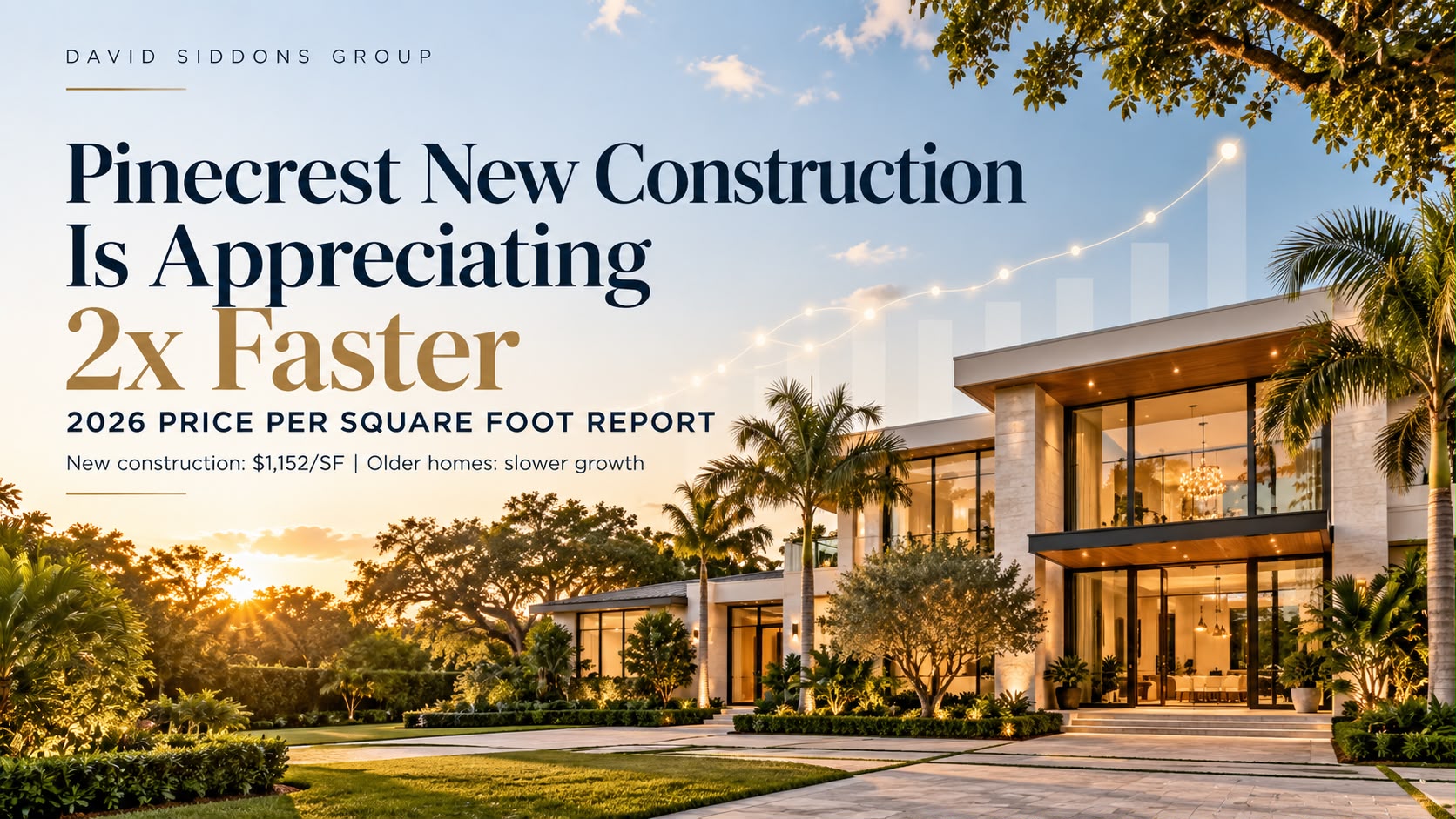
Pinecrest New Construction Is Appreciating 2x Faster Than Older Homes

Inside 1428 Brickell: Why Ytech Skipped the Hotel Brand to Build Brickell’s Best Finishes
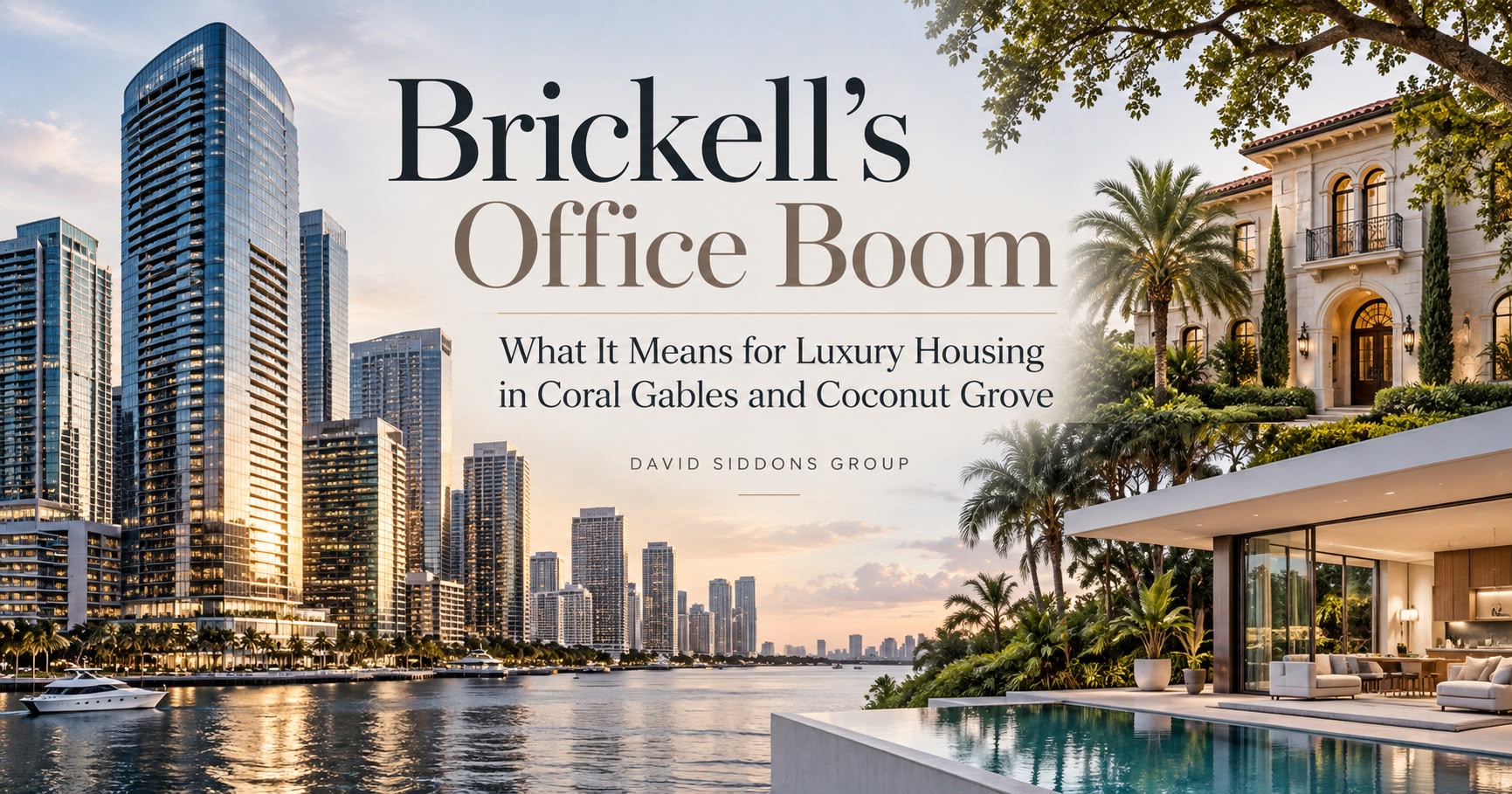
Brickell’s Office Boom: What It Means for Luxury Housing in Coral Gables and Coconut Grove
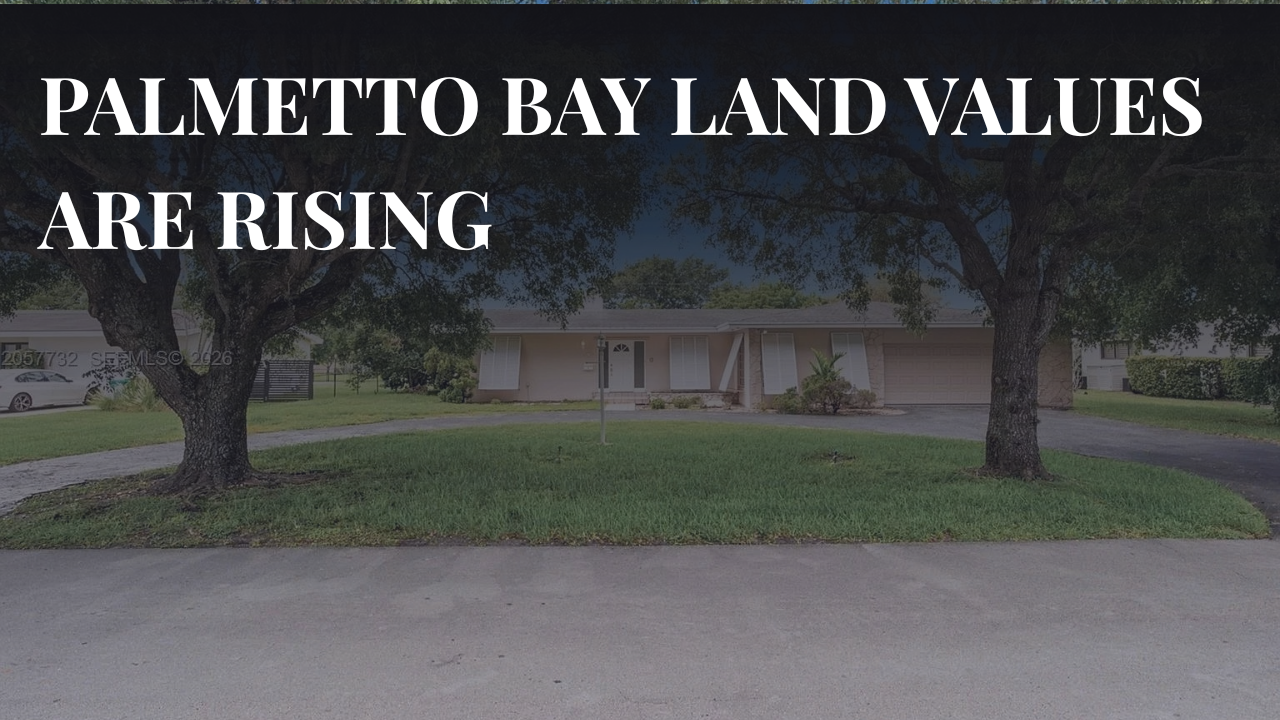
Palmetto Bay Land Values Are Rising. Is Your Home Worth More as Land?

Killian Drive: Kendall’s Luxury New Construction Corridor Hits $1,000/SF

Pinecrest’s 4 Best Streets in 2026
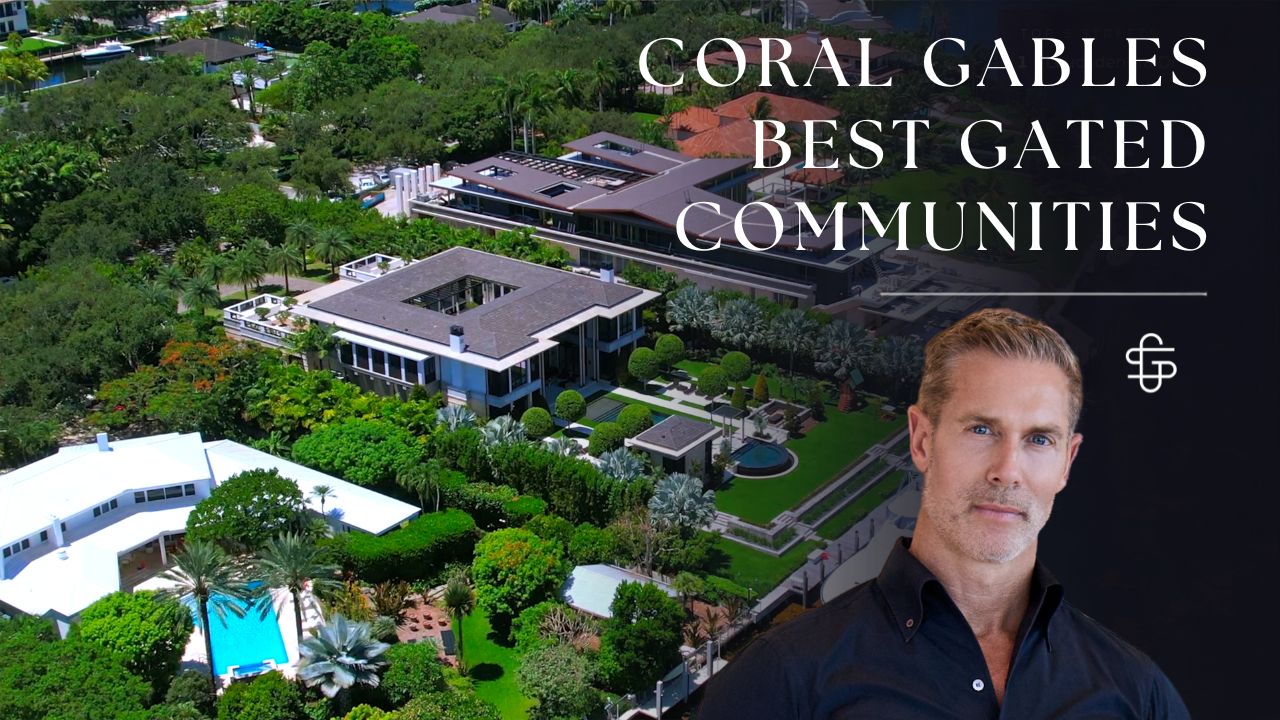
The 5 Best Luxury Streets in Miami’s Gated Communities
The Real Estate Team Behind the Agent: Why Systems Matter More Than Star Power

Selling a Home in Pinecrest: Why Some Homes Sell for $1,500/SF and Others Sit

We Built the Largest YouTube Audience of Any Miami Real Estate Team.

Empty Nesters in Miami: What Comes After the Big Family Home?

Palmetto Bay Has Almost No Inventory. So Why Are Homes Still Sitting?
Please fill in your details and David Siddons will contact you

Search related videos

Are St. Regis Sunny Isles Residences Worth the Brand Premium?
Coral Gables Market Report 2025: What the Headlines Aren’t Telling You!
How David Siddons’ Power Team Drives Miami’s Luxury Market
Mid‑Year 2025 Coconut Grove Report: The Truth About What’s Selling Now
Brickell Mid‑Year Market Report 2025 | Is Brickell’s Luxury Market in Trouble?
Pinecrest Mid-Year Market Report 2025 | What’s Selling, What’s Sitting & Why
Miami Beach Condo Market Mid-Year Report 2025 | What Buyers & Sellers Need to Know
How to Lose $1M in The Miami Condo market | Top Mistakes That Cost Miami Condo Buyers Millions
The Well Project EXPOSED Coconut Grove’s Hottest Units
Miami Real Estate in 2025 Is NOT What You Think 😱 | Midyear Must Knows for Buyers & Sellers!
7 Things You Should Never Say to a Real Estate Agent in Miami!
Landmark Victoria Park Residence in Fort Lauderdale: Inside 420 NE 11th Ave 🌴✨
Luxury Living on 2355 S. Miami Ave | Fully Furnished 4-Bed Home w/ Resort-Style Pool 🏊
Is Mandarin Oriental Residences Miami a Smart Condo Investment? Prices, Floorplans, Views & Finishes


- Get our Newsletter
- Subscribe
- No Thanks
Get the latest news from Miami Real Estate News
Close
Edit Search
Close
2 of 14
Share this property
Recomend this to a friend, just enter their email below.
Close
Your email was sent successfully
Close
 COMPARE WITH CONDOGEEKS