



















- Best of All
- Best Miami Luxury Condos
- Most popular
- Relocating to Miami
- Private Schools
- Investments
- Gated communities
- Waterfront information
- Luxury homes
- Luxury Condos
- New Construction Condos in South Florida
- Independent Pre-Construction condo reviews for Miami
- Independent Pre-Construction condo reviews for Fort Lauderdale
The Long Game of Investing in Miami Real Estate (2026 Guide)
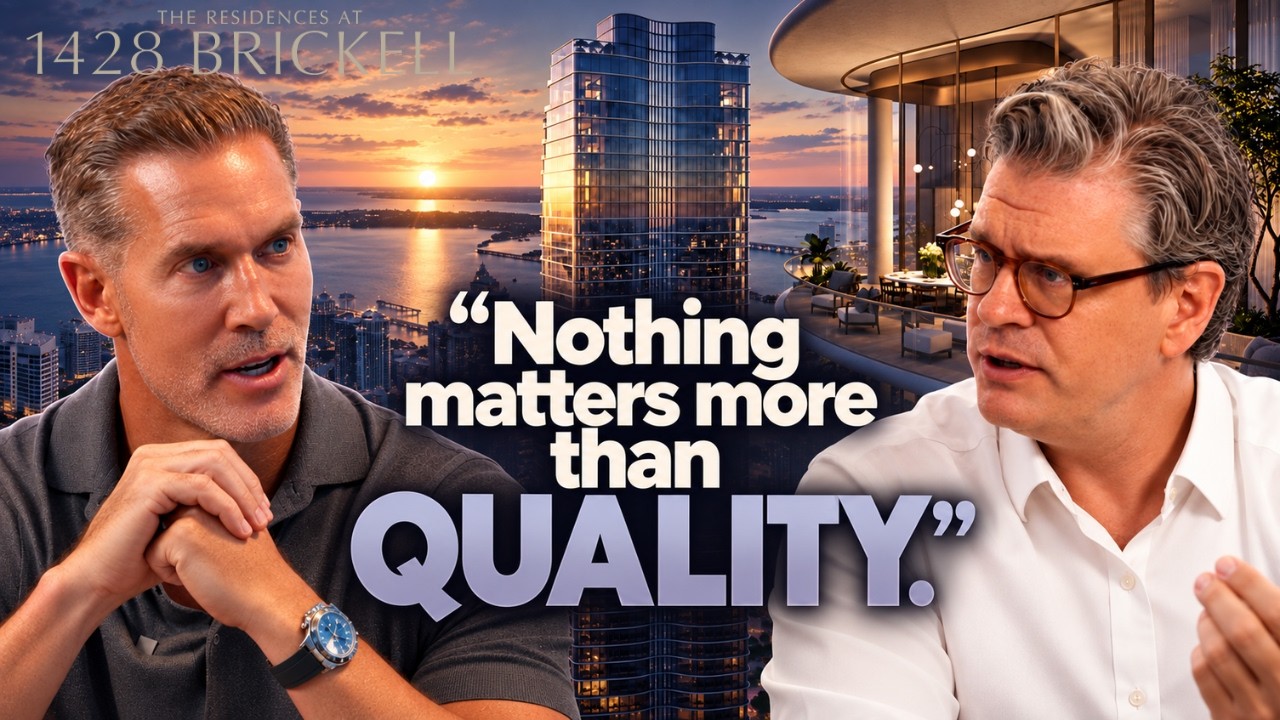
In this episode of the Better Decisions Podcast, David Siddons sits down with investor and podcast host Jay Roberts to break down a concept most people in real estate completely misunderstand: real wealth is built slowly—not through quick wins, but through playing the long game. While much of the market is driven by hype, flipping, and short-term thinking, the reality at the highest levels looks very different. Drawing from conversations with top developers, investors, and operators, Jay shares the patterns, behaviors, and mindset that consistently separate those who build lasting wealth from those chasing fast money. This is not about trends—it’s about how the best in the business actually think, operate, and win over time.
Executive Summary
Miami real estate in 2026 is no longer a market driven by short-term gains—it is defined by long-term positioning, wealth migration, and highly selective demand. The most successful investors are not chasing quick flips or speculative trends; they are targeting supply-constrained neighborhoods, high-quality assets, and micro-markets where long-term value is supported by scarcity and lifestyle.
As higher-income buyers continue relocating to South Florida, demand is concentrating in specific areas such as Coconut Grove, Coral Gables, and Miami Beach, while generic, high-density developments face slower growth and increased risk. At the same time, interest rates, inflation, and shifting affordability are reshaping buyer behavior, creating a narrow window where strategic acquisitions can outperform over the next cycle.
The key takeaway: Miami is now a segmented market where outcomes are driven by precision. Investors who understand pricing, product quality, and long-term demand drivers—and who are willing to play the long game—are the ones positioned to win in 2026 and beyond.
Why the Smartest Investors Play Long
Most people enter real estate chasing speed; quick flips, rapid appreciation, and easy wins. But that mindset is exactly what prevents them from building real wealth. The most successful investors think differently. They play the long game, measuring success in decades, not deals, and understanding that what looks like overnight success is almost always the result of years of disciplined execution, patience, and strategic positioning.
This shift is even more critical in 2026, where old, momentum-driven strategies no longer deliver the same results. After working with and interviewing top developers, investors, and operators, one pattern becomes clear: success leaves clues. At the highest level, the same traits consistently show up—high integrity, radical transparency, speed in execution, and elite communication. These are not soft skills; they are competitive advantages.
The investors who win today are not the ones chasing trends, but the ones building trust, moving decisively, and positioning themselves for long-term compounding. In a more connected and more transparent market, reputation scales just like capital—and how you operate has become just as important as what you buy.
The math is simple—the risk is in everything you can’t control.
One of the most valuable insights Jay Roberts shared was a real-world breakdown of a Miami development deal—reduced to its simplest form. After acquiring a waterfront site for $30 million, he walked through the core economics: land cost, construction, financing, unit pricing, and projected sellout—arriving at roughly $105 million in profit, or a 30% margin. His point wasn’t to impress with the numbers, but to demystify the process. At a high level, development can often be understood with surprisingly simple math—sometimes even worked out on a single sheet of paper.
But what separates experienced investors from the rest is understanding that the math is only the starting point. Every input—pricing, timing, absorption, and costs—is based on assumptions about the future. And in a cyclical market like Miami, those assumptions can shift. The real discipline, he emphasizes, is not just making a deal “work” on paper, but structuring it with enough margin and resilience to withstand change. Because in the end, the most important advantage any investor can have isn’t finding the perfect deal—it’s having the staying power to see it through.
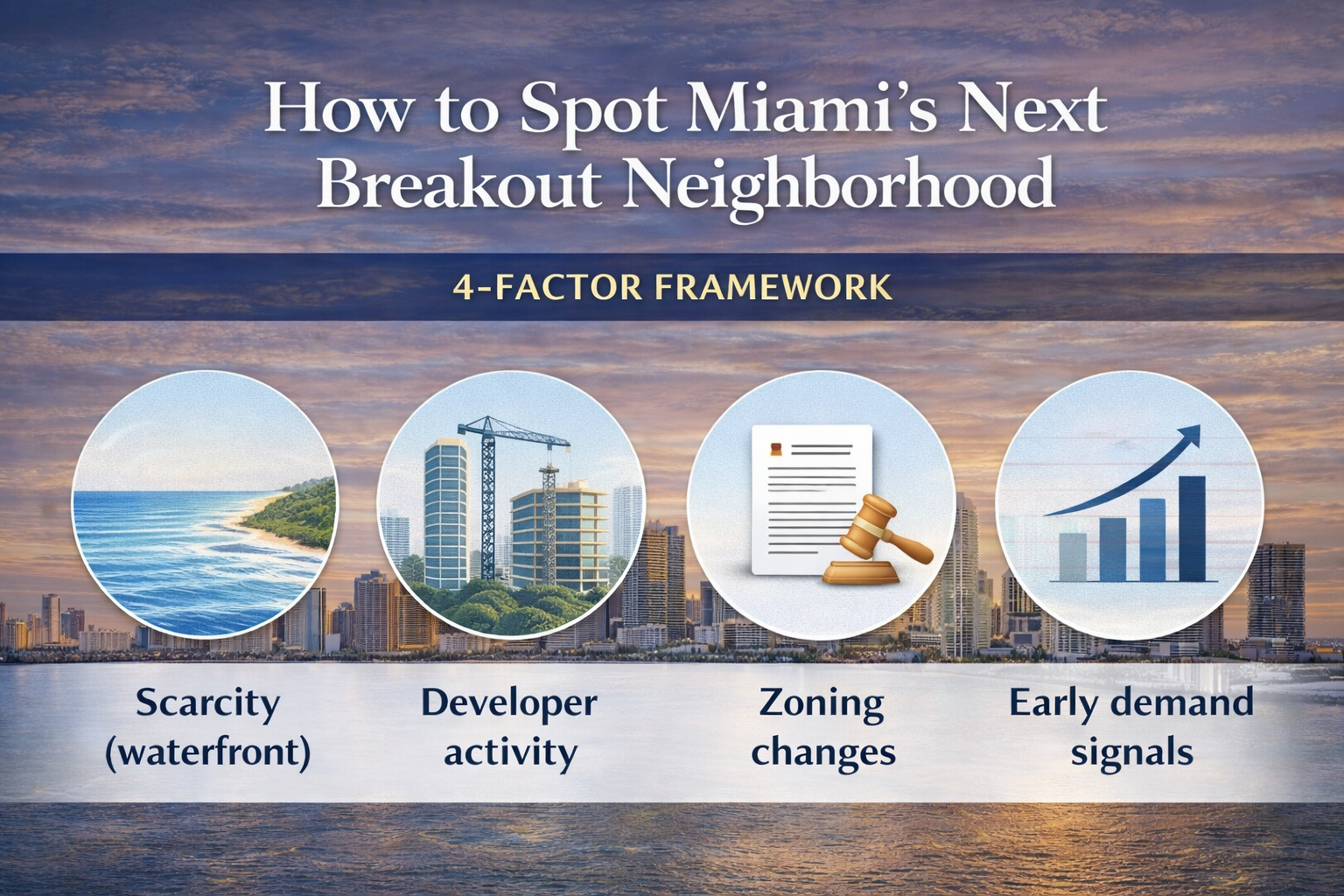
How to Spot Miami’s Next Breakout Neighborhood Before Everyone Else
When evaluating a neighborhood, Jay Roberts isn’t reacting to headlines, he’s identifying early signals of long-term transformation. It starts with scarcity, prioritizing waterfront locations or properties with water views, where limited supply creates structural pricing power. From there, he looks closely at who else is investing. The presence of experienced, well-capitalized developers is a critical indicator, as their conviction, and the scale of their projects, can fundamentally change a neighborhood’s trajectory. He also pays close attention to zoning and density changes, understanding that increased development rights can unlock value and attract new waves of capital, accelerating growth.
But beyond these metrics, his approach is rooted in pattern recognition. The neighborhoods that define Miami today, whether Brickell or South of Fifth, were not always obvious winners. They were early-stage markets before momentum, before demand, and before pricing caught up. That’s the real edge: identifying where the “story” is forming before it becomes consensus. The takeaway for investors is clear, stop analyzing neighborhoods based solely on current conditions, and instead focus on direction, catalysts, and long-term positioning. Because in a market like Miami, value isn’t created in the present, it’s captured by those who can see where things are going next.
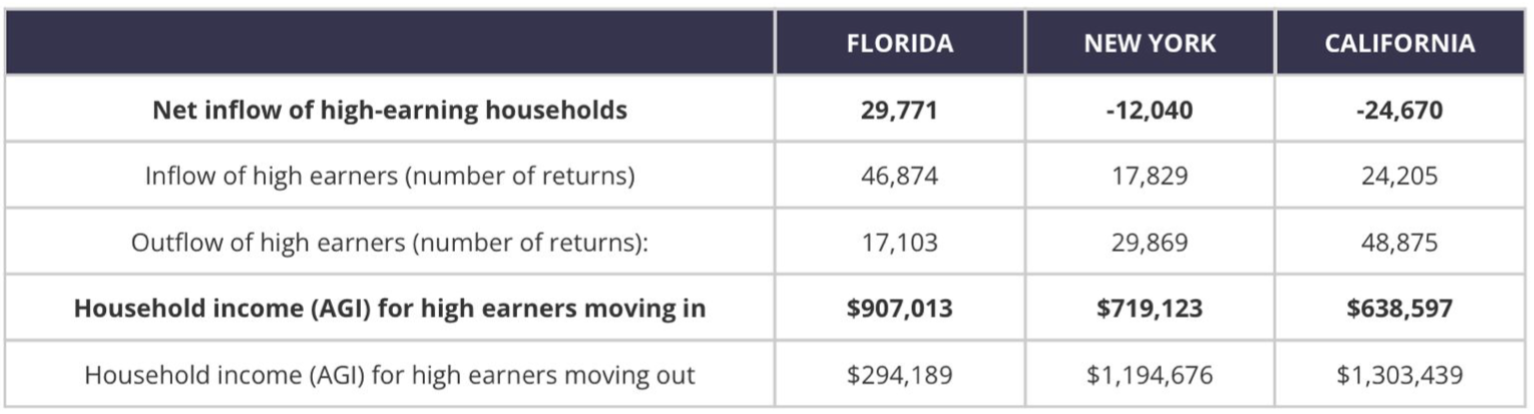
Higher-Income Migration Is Redefining Demand
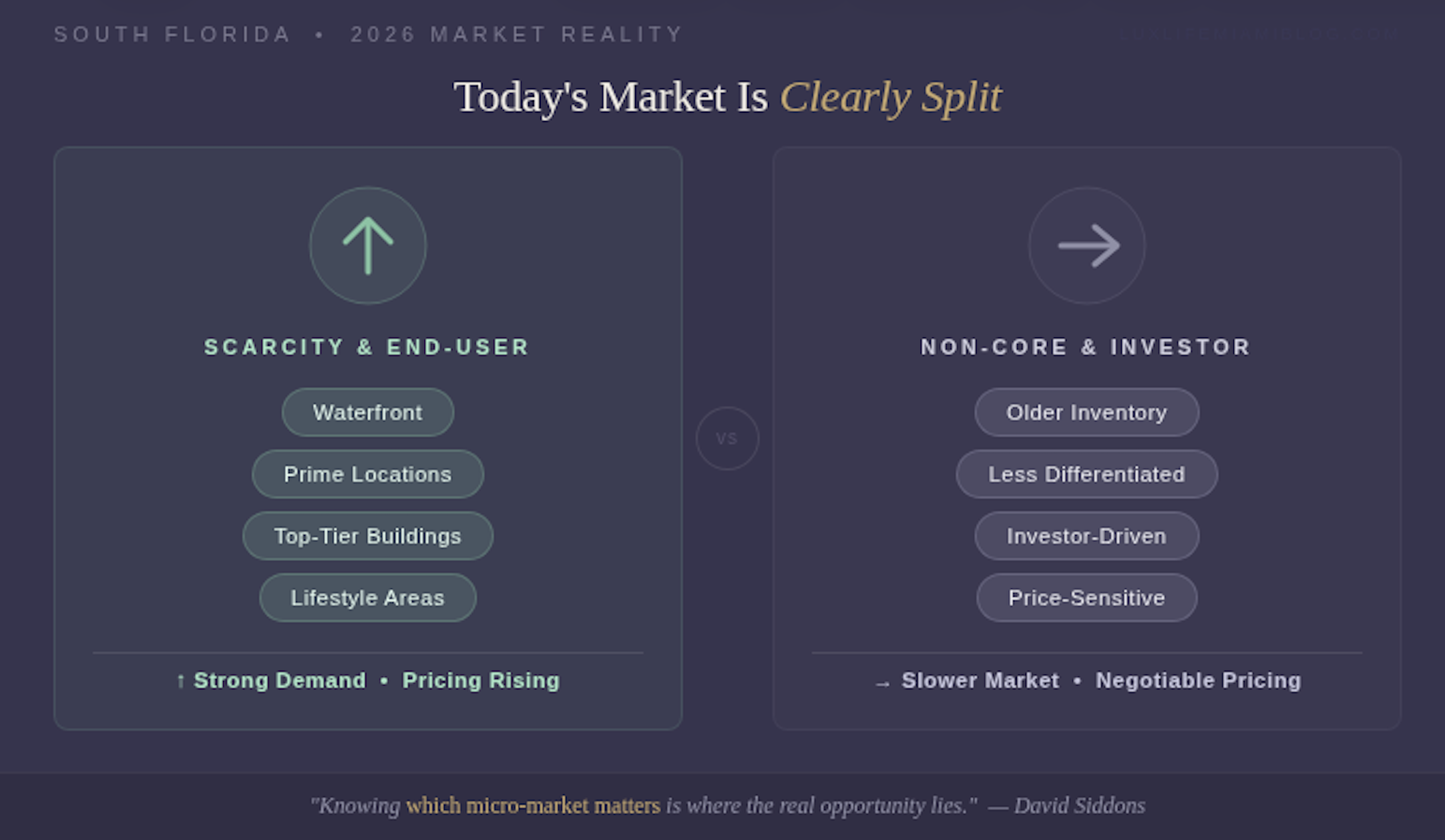
Micro-Markets Are Driving South Florida’s Next Growth Cycle
If you’re still analyzing South Florida as one single market, you’re missing where real growth is happening. Fifteen years of data, especially post-2020, shows a clear shift: the market has fragmented into highly targeted micro-markets, each driven by wealth, lifestyle, and scarcity. This isn’t broad appreciation anymore, it’s selective acceleration. The pandemic didn’t just push prices higher; it redirected demand. Massive wealth migration into Miami compressed buying activity into specific neighborhoods, buildings, and property types that meet the expectations of ultra-high-net-worth buyers.
That’s why a $7M waterfront home can become a $20M+ asset in just a few years—not due to speculation, but because to incoming global buyers, it’s still relative value. But this growth is not universal.
Today’s market is clearly split:
- Scarcity, end-user product (prime locations, waterfront, top-tier buildings, lifestyle-driven areas)
→ continues to attract strong demand and push pricing - Non-core, investor-driven product (older inventory, less differentiated assets)
→ operates in a slower, more price-sensitive market
Even within the same neighborhood, only a small segment truly performs, because today’s buyer is not just purchasing property, but a complete lifestyle ecosystem: walkability, top-tier dining, schools, privacy, and irreplaceable locations. And the key signal is this: The world’s wealthiest buyers (who can live anywhere) are choosing specific parts of Miami. When that level of capital concentrates, those areas don’t just grow, they separate from the rest of the market. This is the new reality:
South Florida is no longer one market, it’s a collection of micro-markets. And knowing which ones matter is where the real opportunity lies.
Where Smart Money Actually Lives (If You’re Not a Billionaire)
For the $5M–$10M buyer, the playbook isn’t about chasing headlines—it’s about owning scarcity. The strongest long-term positions are still found in high-quality, supply-constrained neighborhoods like Coconut Grove, Coral Gables, and Miami Beach, where true single-family inventory remains limited and demand continues to deepen. These are not speculative trades; they’re lifestyle-driven assets in locations where the buyer profile is steadily upgrading. The key is simple but often ignored: buy quality, buy location, and give it time. Over a five-year horizon, appreciation is driven less by timing the market and more by being anchored in neighborhoods that consistently attract higher-income residents. If you’re trying to flip in 12 months, you’re gambling. If you’re buying where you actually want to live, and holding through cycles—you’re aligning with the fundamental growth of Miami itself.

The Real Risks No One Wants to Talk About
The biggest threat in this market isn’t a crash—it’s behavior. Short-term thinking, overleverage, and buying based on the assumption you can exit in a year is where people get hurt. But beyond mindset, risk becomes very real in specific product types—especially generic, high-density developments and rental-dependent condos. The more units a building has, the more it tends to become interchangeable, and in real estate, anything easily replicated struggles to hold long-term value. This is where “faux luxury” creeps in: projects marketed with premium branding but lacking true quality, scarcity, or differentiation. These are the assets most exposed to oversupply, rent fluctuations, and shifting demand—and where investors are most likely to lose money over the next cycle.
At the same time, the top end of the market quietly defines the ceiling for everything below it. Buildings with true scarcity—exceptional construction, irreplaceable locations, and institutional-grade execution—don’t just perform better, they reset pricing benchmarks. When ultra-luxury assets begin trading at $5,000, $6,000, or even $8,000 per square foot, that’s not an anomaly—it’s a signal. It establishes the upper boundary of value for the broader market. But here’s the disconnect: many mid-market developments try to price against that ceiling without having the fundamentals to justify it. That gap—between perceived luxury and actual intrinsic value—is where the real risk lives. In the long run, markets reward what is rare and punish what is easily duplicated.
Rates Don’t Just Move Markets—They Decide Who Gets to Play
Since March 2022, real estate has been defined by one force above all else: the cost of capital. As interest rates climbed, affordability didn’t just tighten—it snapped. For the same home, monthly mortgage payments effectively doubled, wiping out a massive portion of demand, particularly in the $1M–$5M “working wealthy” segment. While ultra-luxury buyers remained largely insulated, the broader market entered a holding pattern. Transactions slowed, mobility froze, and a generation of homeowners became “rate-locked”—sitting on low-interest mortgages they can’t afford to give up. But markets don’t stay frozen forever. As rates begin to ease, even gradually the math shifts quickly: more buyers qualify, sidelined demand reactivates, and institutional capital starts flowing back in. That’s why many sophisticated investors are already positioning ahead of rate cuts—not chasing the recovery, but anticipating it.
The Hidden Squeeze: Why Waiting Could Cost You More Than Acting
Here’s where it gets uncomfortable for many buyers: lower rates don’t necessarily mean better opportunities—they often mean more competition and higher prices. Especially in South Florida, where demand is structurally strong, a drop in rates can accelerate price growth faster than it improves affordability. Now layer in a second dynamic: the widening gap between condos and single-family homes. Over the past few years, houses in prime neighborhoods have significantly outperformed generic condo product, creating a growing pricing divide. Many buyers sitting in condos today are waiting for rates to drop before upgrading—but as rates fall, that gap is likely to widen even further. In other words, the home you’re waiting to afford may move further out of reach. Add to that life pressure—growing families, limited school availability, the need for space—and you have a wave of pent-up demand ready to move the moment financing loosens. The takeaway is simple: timing the rate cycle is far less important than understanding how it reshapes pricing power.
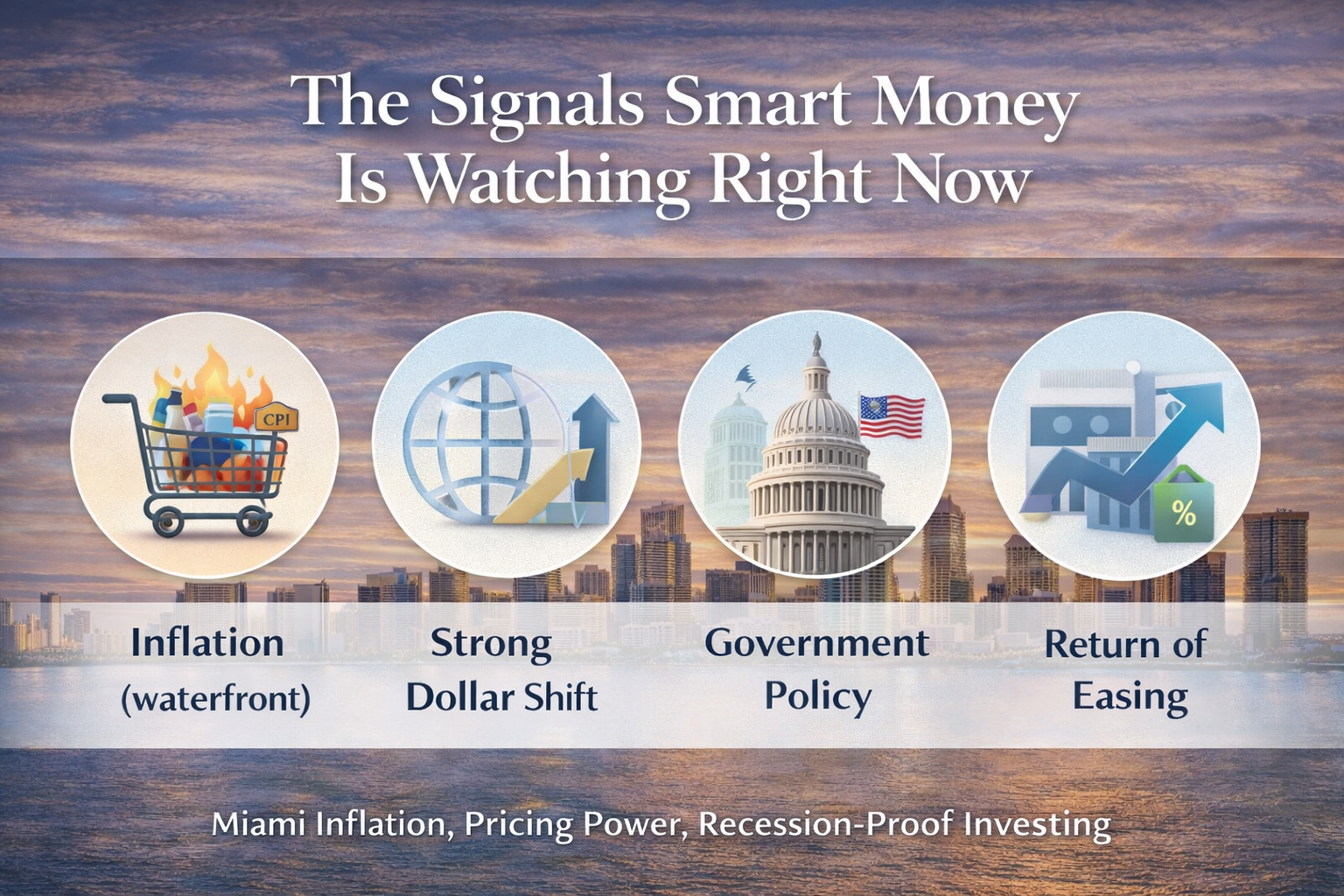
The Signals Smart Money Is Watching Right Now
Beyond interest rates, the conversation has shifted to something far more subtle—but just as powerful: the erosion of purchasing power. Inflation isn’t just a headline number; it’s showing up in everyday life, from construction costs to dining, labor, and lifestyle. In a market like Miami, where wealth concentration is accelerating, this effect is amplified—what some are calling “Miami inflation.” Prices aren’t just rising; they’re being pulled upward by a higher-spending buyer base that resets the baseline for everything. At the same time, the strength (and direction) of the dollar, government policy, and the potential return of monetary easing are all influencing how capital is being deployed. The common thread among experienced investors is clear: cash is no longer a safe position—it’s a deteriorating one. You may not see the loss on paper, but you feel it in what your money can no longer buy. That’s why the most sophisticated players aren’t waiting—they’re actively deploying capital into assets that can absorb and outpace inflation.
Final Thought: This Is a Positioning Window, Not a Waiting Game
If there’s one consistent theme across everything we’ve discussed, it’s this: the people who win in markets like this aren’t reacting—they’re positioning. The next 6 to 12 months won’t be defined by a single event, but by a convergence of forces—rates adjusting, capital returning, and demand reactivating. And while it’s tempting to wait for clarity, the reality is that clarity usually comes after the opportunity has passed. The long-term players—the ones who’ve built real wealth—understand cycles, but more importantly, they understand behavior. They don’t try to perfectly time the market; they make calculated moves when conditions are shifting in their favor. Miami continues to evolve into a global wealth hub, and with that comes both opportunity and complexity. The question isn’t whether the market will move—it’s whether you’re positioned correctly when it does.
Position Yourself in Miami’s 2026 Market
If you’re looking at Miami real estate in 2026, the biggest mistake you can make is treating this as a general market—it isn’t. Every neighborhood, property type, and price point is behaving differently, and the difference between a strong investment and a weak one often comes down to details most buyers overlook.
At the David Siddons Group, we don’t rely on headlines or assumptions. We analyze real transaction data, micro-market trends, and buyer behavior to help you understand exactly where value exists—and where risk is building.
Whether you’re relocating, investing, or upgrading, we’ll help you:
- Identify the neighborhoods and properties with real long-term upside
- Avoid overpaying in markets driven by hype or oversupply
- Build a strategy based on your timeline, budget, and goals
Schedule a call or request a custom strategy to position yourself correctly in today’s market.
FAQ
These are the most commonly Miami Real Estate Related questions
What should relocation buyers know before buying real estate in Miami?
HOME BUYERS
Relocation buyers looking at homes in Miami should understand that choosing the right house is less about the property itself and more about location, schools, and long-term value. Many buyers make the mistake of focusing on price or finishes, while the real driver of value is the neighborhood and micro-location. Older homes often represent better value, but may also be part of a future redevelopment cycle. Newer homes command premiums, but don’t always sell faster if pricing is ahead of the market. Commute time, school access, and community dynamics are critical and often underestimated. The key is to evaluate homes not just as lifestyle purchases, but as long-term assets within a very localized market.
Sources:
https://luxlifemiamiblog.com/relocating-to-miami/
https://luxlifemiamiblog.com/relocating-to-miami-with-a-family/
CONDO BUYERS:
Relocation buyers should understand that Miami is a highly segmented, building-driven market, not a uniform one. Pricing can vary significantly between similar properties depending on building quality, layout, and financial health. Many buyers assume newer construction equals better investment, but that is often not the case. Factors like HOA fees, reserves, and rental policies can materially impact long-term value and liquidity. Negotiation opportunities often exist, especially in slower segments, but require precise market knowledge. The key is to evaluate micro-markets and individual buildings, not just neighborhoods or price per square foot.
Sources:
https://luxlifemiamiblog.com/miami-real-estate-market-report/
https://luxlifemiamiblog.com/new-construction-miami-guide/
What are the best areas for relocating families with children
For families relocating to Miami with young children, the most recommended neighborhoods are Coral Gables, Coconut Grove, and Pinecrest. Coral Gables offers the best balance of top schools, safety, and long-term value. Coconut Grove is ideal for younger families seeking walkability, greenery, and a lifestyle-driven environment. Pinecrest provides larger homes, excellent schools, and better value for space, making it ideal for growing families. The key driver across all three is access to strong schools and primary residential stability. Relocation decisions are less about new construction and more about long-term livability and resale strength.
Sources:
https://luxlifemiamiblog.com/best-neighborhoods-miami/
https://luxlifemiamiblog.com/what-are-the-best-family-neighborhoods-in-miami-in-2023/
Are new construction condos in Miami a good investment?
New construction condos in Miami can be a good investment—but only if you understand that not all buildings perform the same. According to the David Siddons Group, many buyers assume “new = better,” but in reality, performance depends on pricing, layout, building quality, and long-term demand. Some new developments set future price benchmarks and can drive long-term appreciation, especially in top-tier projects. However, many are priced aggressively at launch, and buyers relying on marketing instead of data often overpay.
The market is highly segmented, meaning two new buildings next to each other can perform very differently.
The best opportunities typically come from selecting the right building early or negotiating correctly in later phases.
In short: new construction is not automatically a good investment—it becomes one only with building-level analysis and disciplined entry pricing.
Sources:
https://luxlifemiamiblog.com/how-to-buy-a-luxury-condo-in-miami/
https://luxlifemiamiblog.com/category/independent-new-construction-condo-reviews/
https://luxlifemiamiblog.com/beyond-clickbait-real-insights-into-miamis-luxury-condo-market/
Why is buying a Miami condo riskier than buyers think?
Buying a Miami condo is often riskier than buyers expect because the true risks are at the building level—not visible in the listing price. Many buyers focus on finishes and views, while overlooking HOA reserves, insurance exposure, and potential special assessments. In reality, two identical units in different buildings can perform completely differently over time. Rising HOA fees and stricter regulations are also increasing the true cost of ownership, especially in older buildings. Liquidity can be affected by factors like financial health, rental policies, and ongoing repairs. The key risk is not the condo itself—but buying into the wrong building without proper due diligence.
Sources:
https://luxlifemiamiblog.com/how-to-buy-a-luxury-condo-in-miami/
https://luxlifemiamiblog.com/miami-condo-market-risks/
What are Miami's Safest Areas?
Which Miami Areas Still offer Great Value (Budget Friendly alternatives to Coral Gables and Pinecrest)
If you’re looking for better value than Coral Gables or Pinecrest, the answer (in true Siddons style) is not “go cheaper”—it’s go one layer outside the obvious markets.
The strongest value plays are:
- Schenley Park → closest substitute to Coral Gables at ~20% discount while maintaining similar character and location
- Biltmore Heights → almost identical feel to the Gables but ~25–30% cheaper on a $/SF basis
- Glenvar Heights → central location with larger lots and ~25% pricing advantage vs South Miami/Gables
- Baptist / Galloway (Kendall) → Pinecrest-style living (space, schools, land) at up to ~30% lower pricing
The pattern is consistent:
👉 Buyers are shifting west and slightly off-market to gain land, scale, and pricing efficiency. You don’t find value by going to a “cheaper neighborhood”—you find it by identifying adjacent micro-markets that offer the same lifestyle fundamentals without the brand premium.
Sources:
https://luxlifemiamiblog.com/best-value-neighborhoods-miami/
https://luxlifemiamiblog.com/category/miami-neighborhoods/
Is NOW a good time to buy in Miami?
Are Miami real estate prices going down in 2026?
No—but that’s the wrong way to look at it. Miami is not one market anymore, so prices are not moving in one direction. In 2026, the market is split into two: ultra-luxury, scarcity-driven areas (like waterfront and top-tier neighborhoods) are still holding or even rising, while mid-tier condos and oversupplied segments are flat or correcting. What we’re seeing is price divergence, not a crash—some properties are gaining value while others are quietly adjusting downward. Rising inventory and more selective buyers are putting pressure on pricing in certain segments, especially older condos or buildings with weaker fundamentals.
At the same time, global wealth and cash buyers continue to support pricing at the top end of the market. So the real answer: prices aren’t broadly dropping—they’re being repriced based on quality, location, and supply.
Should I buy a house or a condo when relocating to Miami?
The decision comes down to lifestyle first, investment second—and most relocation buyers get that backwards. If you want space, privacy, schools, and long-term family living, a single-family home in areas like Coral Gables or Coconut Grove is typically the stronger choice. If you prioritize walkability, low maintenance, and proximity to business districts, a condo in Brickell or waterfront markets makes more sense.
From an investment perspective, homes tend to be more stable, while condos are more building-dependent and cyclical. Most relocation clients underestimate how much building quality, HOA structure, and future costs impact condo performance. The right answer isn’t “house vs condo”—it’s which asset fits your lifestyle AND holds value within its micro-market.
How do I choose the right Miami neighborhood for my lifestyle?
Why are Miami condo prices so different between buildings?
Miami condo pricing varies widely because value is determined at the building level, not just by location. Two buildings next to each other can have major differences in financial health, reserves, HOA fees, and management quality. Buyers also pay premiums for better layouts, views, amenities, and newer construction—but not all “new” buildings perform equally. Factors like rental policies, upcoming assessments, and building reputation can significantly impact resale value. This is why price per square foot alone is misleading in Miami’s condo market. The real driver of value is how that specific building competes within its micro-market over time.
Sources:
https://luxlifemiamiblog.com/how-to-buy-a-luxury-condo-in-miami/
https://luxlifemiamiblog.com/category/independent-new-construction-condo-reviews/
WHY WORK WITH DAVID? THINGS YOU SHOULD KNOW...
For all our analytics we are agents driving some very unique and advanced tech. We Provide a granular and custom experience that empower our clients with the insight and tools to understand the most complex behaviors of any local markets.
-
Analytical
Over 100 reports produced to date
-
Knowledgeable
Over 1800 published articles and counting


Related Articles

The Real Estate Team Behind the Agent: Why Systems Matter More Than Star Power
The Decisions That Set Your Miami Condo’s Price, Years Before You Ever See It
Miami Zoning Laws Explained: What Every Buyer Must Know Before You Purchase
Miami’s New Construction Condo Boom Comes With Risks Most Buyers Never Ask About
Best Neighborhoods to Invest in Miami 2026: Where Smart Money Is Really Buying and What the Headlines Miss

Selling Your Home in Miami?

The Long Game of Investing in Miami Real Estate (2026 Guide)
Real Estate Investing in 2026: Why the Old Strategies No Longer Work

What the Top 1% Do Differently — Lessons from Hosting the World’s Biggest Stars
From Law to Business Leadership: Inside John Ruiz’s Rise Amid Miami’s Wealth Migration Boom

When Grief Meets Real Estate: Avoiding Costly Probate Mistakes in Miami

How The Well & Coconut Grove Are Redefining Wellness Real Estate in Miami

The Visionary Architect of Instant Luxury: How Paulo Bacchi Reshaped Miami Luxury Living

The Rise of Miami’s Most Disruptive New School | 2 Hours of Academics, 10x Faster Results
Please fill in your details and David Siddons will contact you

Search related videos

Are St. Regis Sunny Isles Residences Worth the Brand Premium?
Coral Gables Market Report 2025: What the Headlines Aren’t Telling You!
How David Siddons’ Power Team Drives Miami’s Luxury Market
Mid‑Year 2025 Coconut Grove Report: The Truth About What’s Selling Now
Brickell Mid‑Year Market Report 2025 | Is Brickell’s Luxury Market in Trouble?
Pinecrest Mid-Year Market Report 2025 | What’s Selling, What’s Sitting & Why
Miami Beach Condo Market Mid-Year Report 2025 | What Buyers & Sellers Need to Know
How to Lose $1M in The Miami Condo market | Top Mistakes That Cost Miami Condo Buyers Millions
The Well Project EXPOSED Coconut Grove’s Hottest Units
Miami Real Estate in 2025 Is NOT What You Think 😱 | Midyear Must Knows for Buyers & Sellers!
7 Things You Should Never Say to a Real Estate Agent in Miami!
Landmark Victoria Park Residence in Fort Lauderdale: Inside 420 NE 11th Ave 🌴✨
Luxury Living on 2355 S. Miami Ave | Fully Furnished 4-Bed Home w/ Resort-Style Pool 🏊
Is Mandarin Oriental Residences Miami a Smart Condo Investment? Prices, Floorplans, Views & Finishes


- Get our Newsletter
- Subscribe
- No Thanks
Get the latest news from Miami Real Estate News
Close
Edit Search
Close
2 of 14
Share this property
Recomend this to a friend, just enter their email below.
Close
Your email was sent successfully
Close
 COMPARE WITH CONDOGEEKS