














- Best of All
- Best Miami Luxury Condos
- Most popular
- Relocating to Miami
- Private Schools
- Investments
- Gated communities
- Waterfront information
- Luxury homes
- Luxury Condos
- New Construction Condos in South Florida
- Independent Pre-Construction condo reviews for Miami
- Independent Pre-Construction condo reviews for Fort Lauderdale
Sunny Isles Real Estate Market Q1 2026
Sunny Isles Is More Affordable Than Ever—But Deeply Polarized and Widely Misread
Sunny Isles Market Analysis by David Siddons
This report is part of a 12-part series of in-depth market analyses authored by David Siddons, a real estate advisor specializing in Miami’s luxury residential markets. His work focuses on interpreting pricing trends, supply dynamics, and buyer behavior across key high-end neighborhoods such as Sunny Isles Beach, Surfside, Pinecrest, Coral Gables, Miami Beach and Coconut Grove, providing clients with a structured, data-driven framework for making real estate decisions.
The following section includes insights contributed by Nada Serry, supporting the broader analysis with additional perspective on current market dynamics. Unlike generic market updates, this analysis is designed to break down the underlying forces driving value within Sunny Isles Beach’s luxury condominium market. It helps buyers and sellers understand not just where the market stands today, but how it is evolving across the broader luxury landscape—and where the most compelling opportunities and risks are emerging.
Introduction
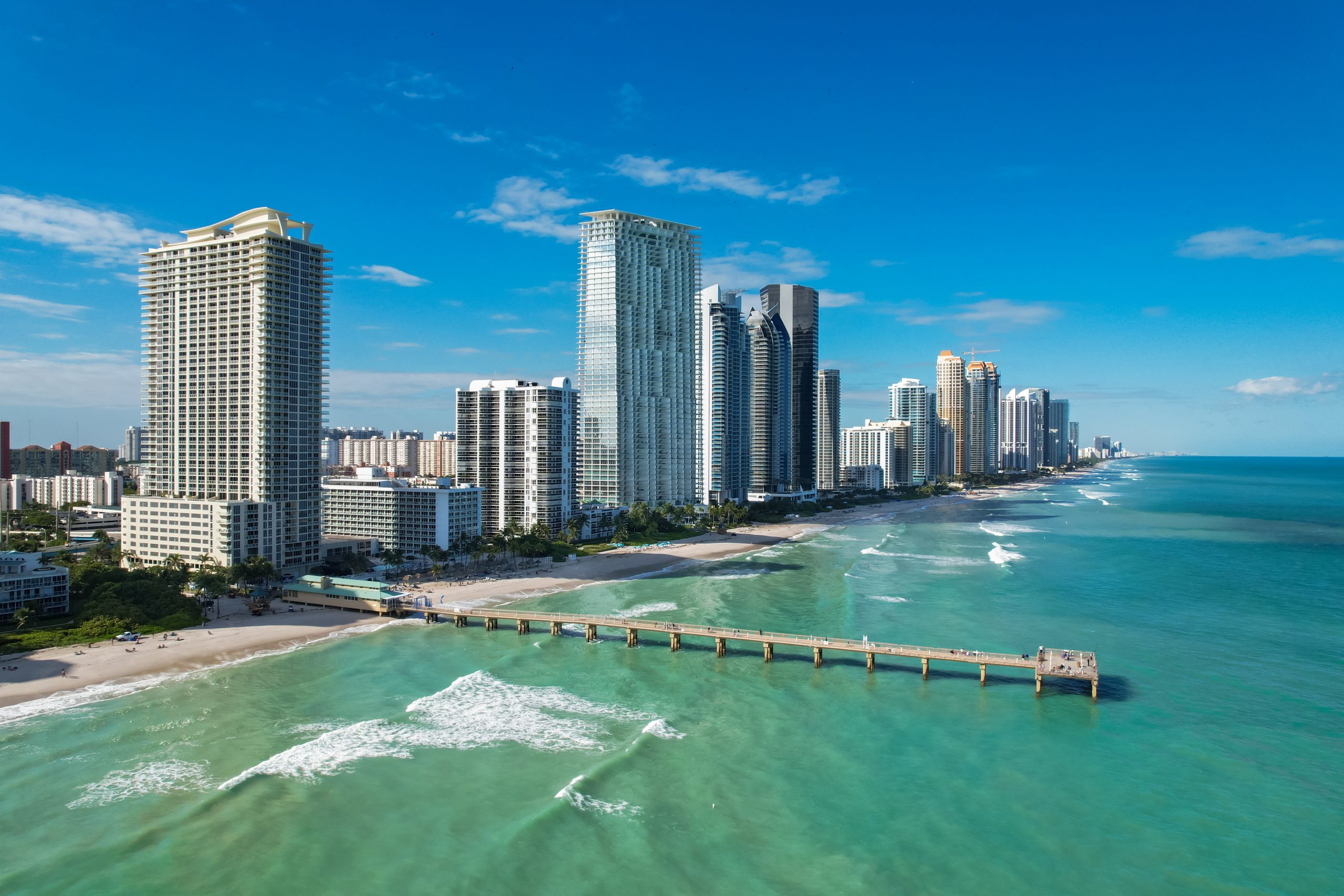
Sunny Isles Beach (SIB) remains one of Miami’s most affordable and globally recognized luxury coastal markets, defined by iconic oceanfront towers, international demand, and a lifestyle centered on second homes and seasonal living rather than full-time residency.
It continues to offer some of the lowest average $/SF across Miami’s prime coastal markets, including for newer condominiums built within the past decade. Yet even within this 2-mile trophy oceanfront corridor; market cycles persist. Over the past 24 months, particularly in the second half of 2025—the market has entered a transition phase and unless demand shifts meaningfully, is expected to move toward a buyer’s market. This transition is being delayed by two key factors: a predominantly cash-based, second-home buyer profile—which reduces seller urgency and price sensitivity, and the market’s inherent polarization.
SIB operates as a highly polarized “iceberg” market, where surface-level stability often masks deeper divergence across buildings and asset classes. At first glance, fundamentals remain stable: pricing is resilient, cash transactions dominate, and seasonal premiums hold. However, beneath that surface, the market is quietly recalibrating. Inventory is rising, absorption is slowing, expired listings are increasing, buyer selectivity is intensifying and performance is diverging between newer, amenity-rich towers and older buildings facing increasing ownership costs. Buyer composition is also seeing a shift toward more domestic U.S. and Canadian cash purchasers than was previously dominated by international buyers.
Success in this market in 2026 is contingent on understanding both layers—what is visible above the “iceberg waterline” and what lies “beneath” it. Sellers must understand where their property sits within this segmentation and price with precision, while buyers must identify assets that offer genuine long-term value within an increasingly selective landscape. There are 10 key points to discuss, so let’s dive into it.
1. Prices Are Holding Their Ground—But For How Long?
“Price Resilience As Average $/SF Rises In Second Half Of 2025”
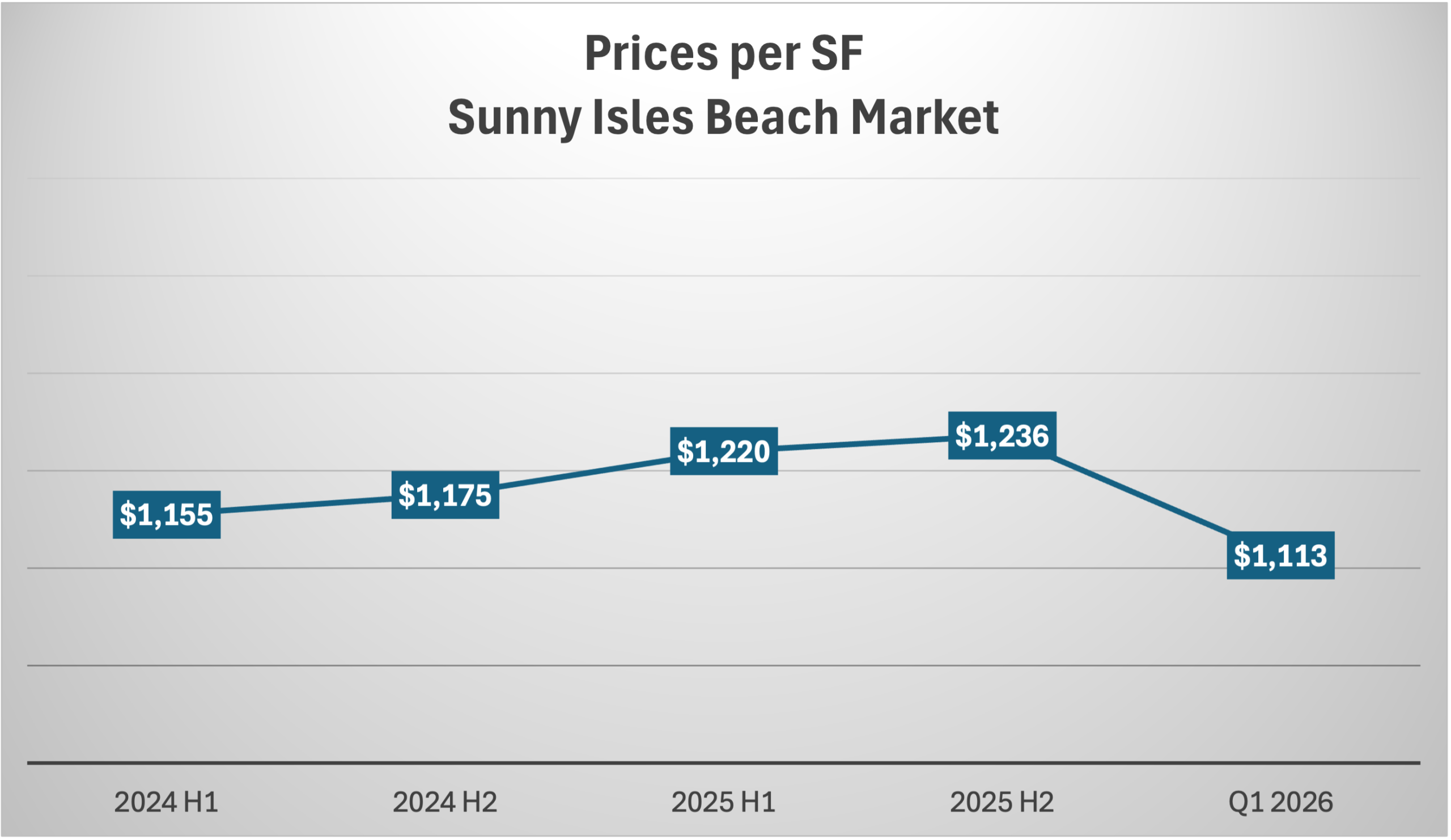
Sunny Isles Beach continues to show pricing resilience despite broader inventory growth. Full-year pricing rose from $1,163/SF in 2024 to $1,228/SF in 2025, with second half of the year peak performance also rising from $1175/SF to $1236/SF from 2024 to 2025. Top price performance was recorded in January 2025 at $1,430/SF—reflecting a concentration of high-end closings rather than a systemic change. January 2026 prices stabilized and returned in line with January 2024 averages.
Transaction volume remains dominant in the $1–3M or $3–6M segments, while the $10M+ segment has seen notable growth.
However, resilience should not be mistaken for immunity. Pricing stability is largely supported by newer, premium buildings and high-value transactions, while older inventory face increasing pressure. Macroeconomic conditions and rising ownership costs suggest potential downward pricing pressure ahead unless demand strengthens meaningfully.
For sellers that position their properties with intent to “test the market” with aspirational pricing, they ultimately pay the price—Pun intended. The market rewards properties that retain premium positioning and meet the expectations of predominantly cash-driven lifestyle buyers. For buyers, understanding seasonality and segmentation is key, and allows buyers to align acquisition timing strategically
2 Transition Market Emerging As Inventory Dramatically Surges
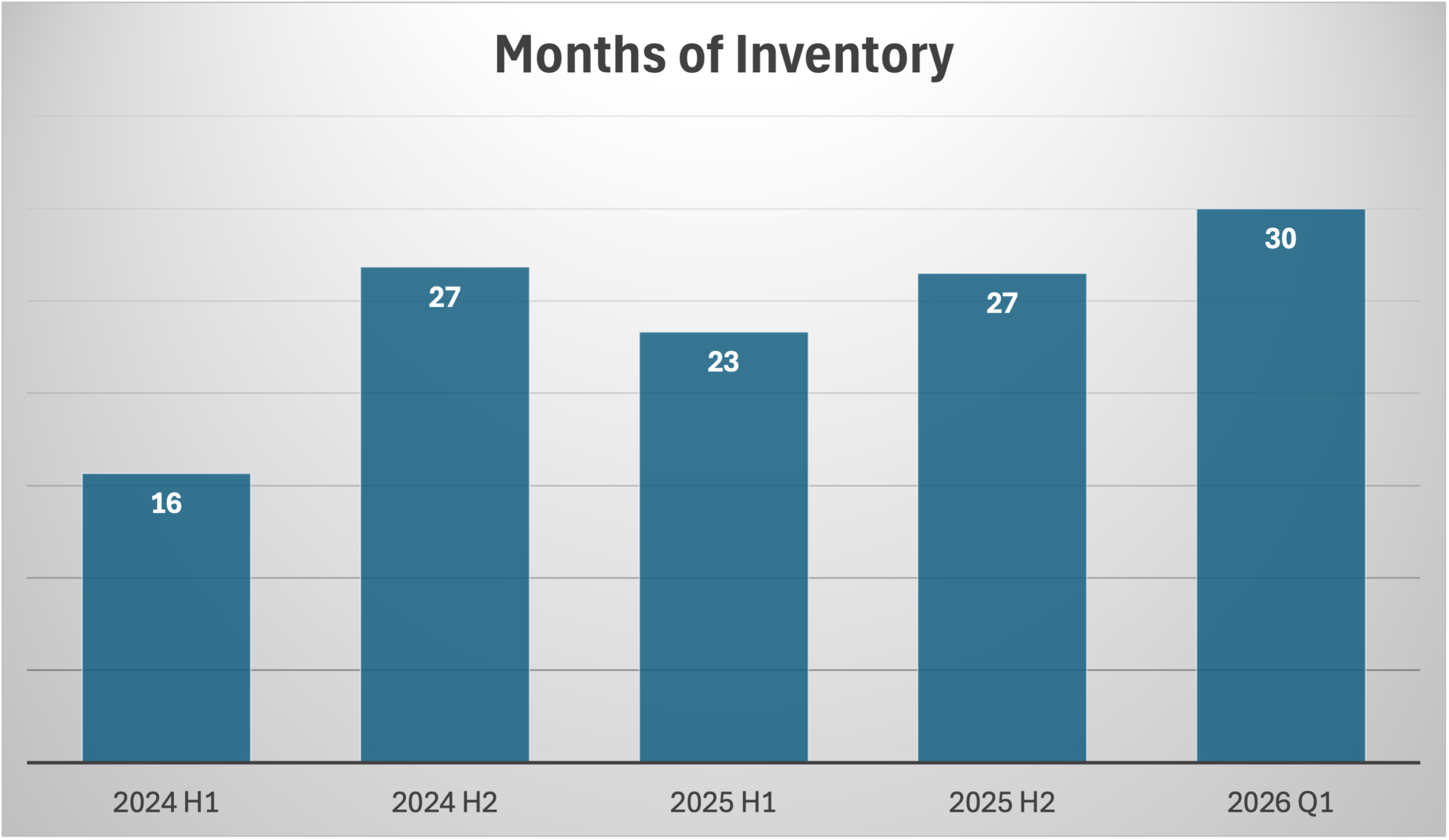
“22 Months of Inventory: The Market Metric You Can’t Ignore”
Sunny Isles Beach has entered a transition phase, marked by a significant rise in months of inventory, which measures how long it would take to sell all available listings at the current sales pace. Months of inventory rose to 22 months in the second half of 2025, and despite transaction volume also increasing in comparison to 2024, demand is struggling to absorb this rising supply.
Sale-to-list ratios softened from 0.94 to 0.92, indicating that buyers are gaining negotiation leverage. However, this shift is not uniform. Well-positioned properties—particularly in newer, amenity-rich buildings or fully renovated units—continue to transact at strong values. In contrast, older inventory or units priced aspirationally are experiencing extended marketing periods and deeper discounts in order to transact.
For sellers, this underscores the importance of precision in pricing and positioning. For buyers, it introduces greater optionality, patience, and leverage—especially within mid-tier or older segments. The key takeaway is that Sunny Isles is no longer a uniform market; outcomes are increasingly dictated by building-specific performance rather than broad market trends when evaluating value and reinforce the importance of strategic alignment rather than reactive price adjustments.
3. Increased Transaction Volume and Days on Market
“The $6M–$10M Tier Is Where Buyers Get Selective”
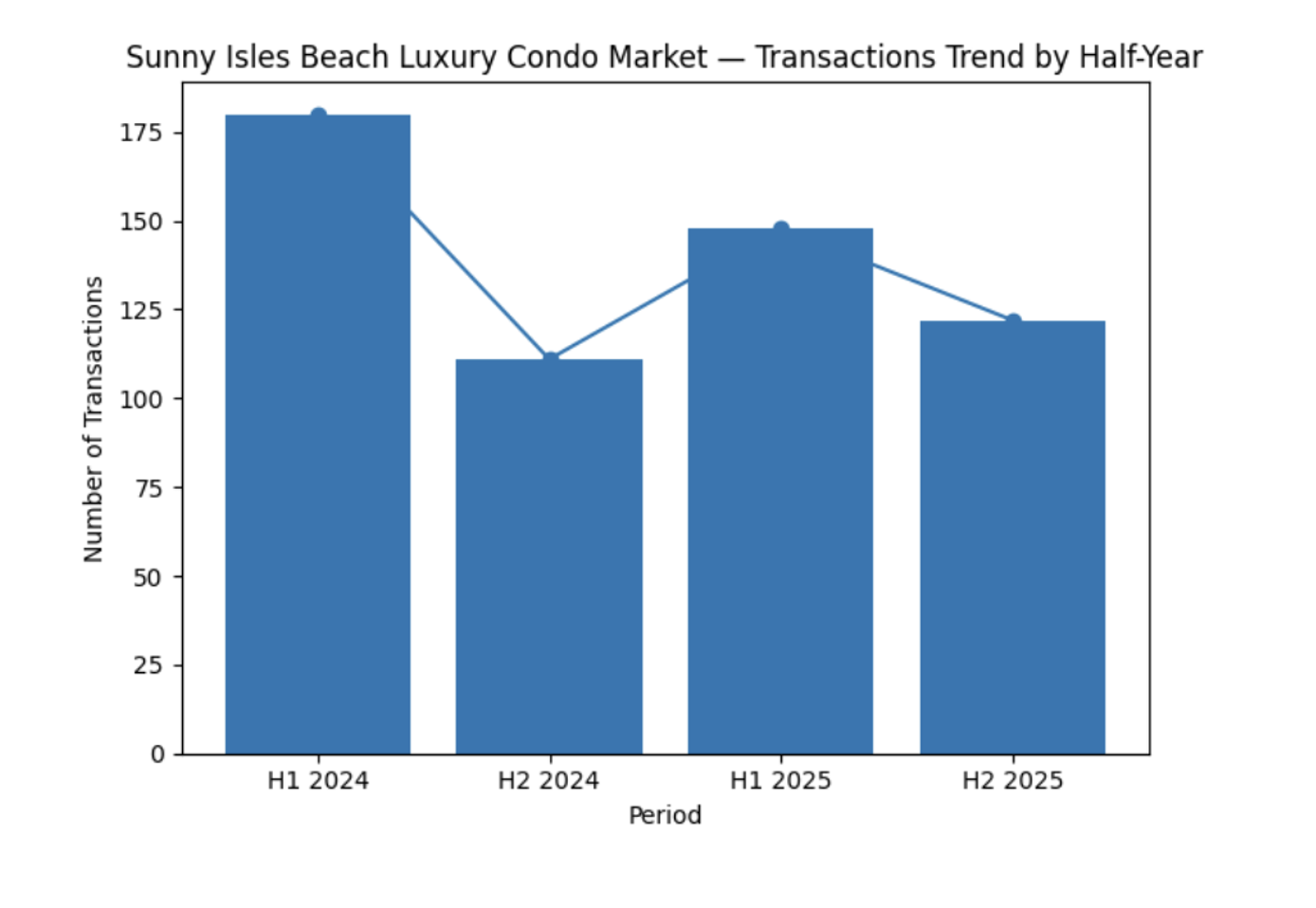
Transaction activity in Sunny Isles increased in the second half of 2025, reaching 122 closings—up from 111 in the same period of 2024. At the same time, average days on market rose from 236 to 263, reflecting a more deliberate and selective buyer pool. Buyers are taking longer to evaluate options, compare competing inventory, and negotiate terms.
This trend is particularly evident in the $6M–$10M segment, where absorption has slowed relative to other tiers. Buyers in this range tend to cross-shop across adjacent luxury markets, increasing competition and extending transaction timelines. Meanwhile, the $1–3M segment continues to drive the majority of activity, with the $3–6M tier remaining stable. The ultra-luxury $10M+ segment continues to gain momentum, supported by limited supply and increasing long-term demand, as new construction projects are anticipated to hit the market in the coming 2-5 years.
For sellers, differentiation and positioning are critical. Mid-tier units lacking upgrades or unique positioning face longer timelines and greater negotiation pressure, while renovated units, ultra luxury, or units with desirable layouts/lines still command strong offers. Buyers, on the other hand, benefit from increased leverage—but must carefully assess true value, particularly in undifferentiated inventory. It is anticipated that there will be a slight reduction in transaction volume as demand softens and ultimately prices will adjust accordingly.
4. Supply Shock Signals Major Inflection Point For Sunny Isles
“Increase in new listings—Brace for a Wave of New Inventory”
The rise in active listings to 189 in the second half of 2025 represents a clear supply shock and inflection point for Sunny Isles Beach. This shift has moved the market from a constrained, seller-driven environment into a more inventory-heavy, transitional phase.
Importantly, this increase is not evenly distributed. Approximately 85% of new supply originates from older or mid-tier buildings facing financial pressure from rising HOA fees, insurance volatility, and upcoming capital requirements such as milestone recertifications and special assessments. These factors are prompting long-time owners to exit, increasing supply in specific segments.
For sellers in these buildings, pricing discipline is essential. Without strategic repositioning, extended timelines and concessions are inevitable. Newer buildings remain more insulated but competing supply must still be monitored.
For buyers, this environment presents opportunity—particularly in segments with higher carrying costs and slower absorption. However, not all inventory is equal. Newer, well-capitalized buildings continue to command premiums, while older properties face growing pricing pressure. This divergence is expected to intensify, with Rising inventory, increased months of supply, declining sale-to-list ratios, and longer marketing times all reinforce expectations of continued downward pressure unless demand strengthens significantly.
Find the Best Sunny Isles Condos
5. Seller’s Aspirational Pricing Causing Reactionary Mass Price Reductions
“Nearly 50% of Active Listings And 93% Of Closed Transactions Underwent Price Reductions”
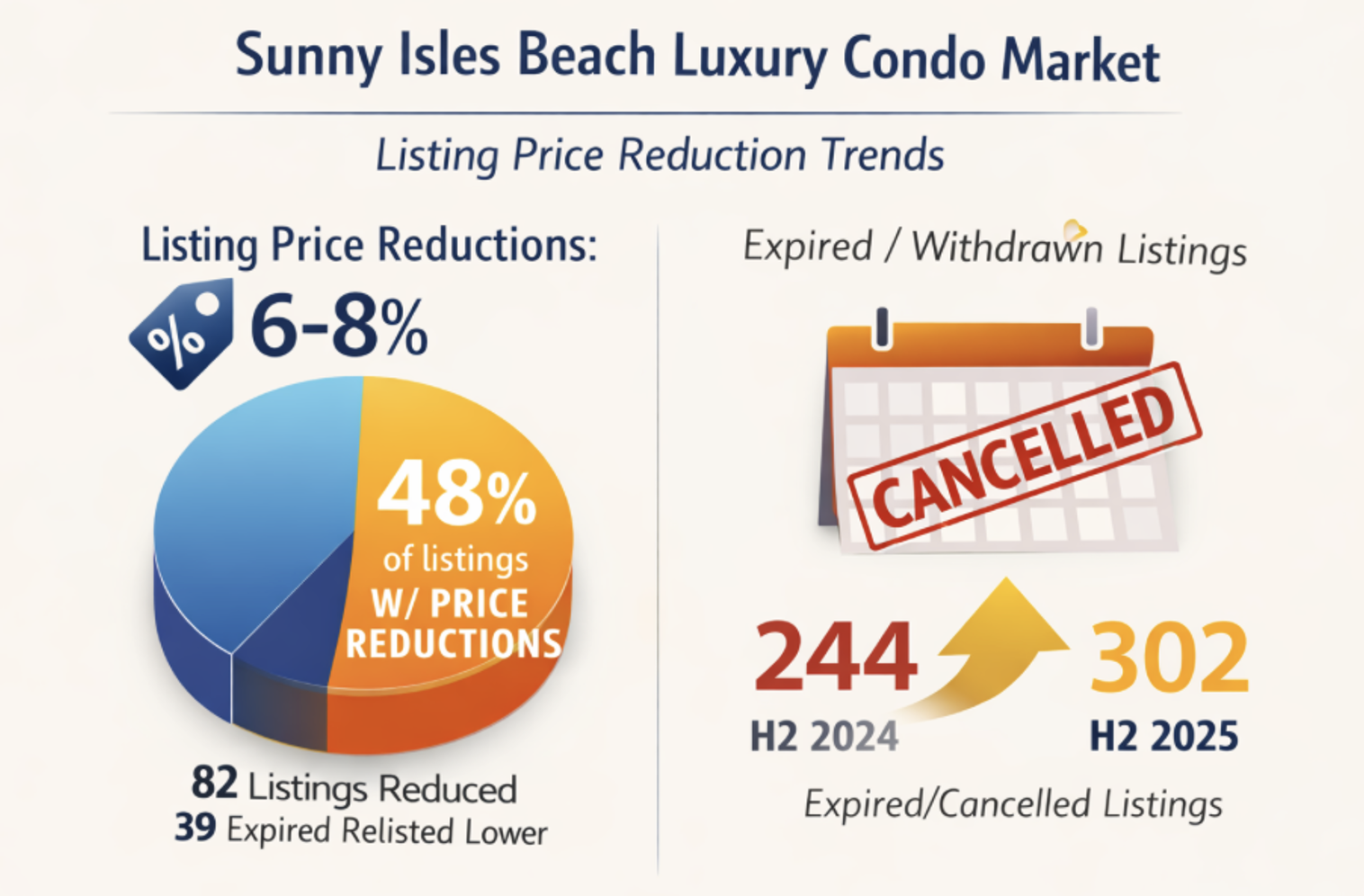
A key behavioral trend in Sunny Isles Beach is the prevalence of aspirational pricing followed by reactive price reductions. While 32% of listings recorded price reductions in the second half of 2025, the true figure rises to approximately 48% when accounting for cancelled, expired and subsequently relisted properties at lower prices.
Even more telling, 93% of closed transactions underwent price reductions averaging 6–8% prior to sale. This highlights a consistent pattern: sellers initially test pricing above market expectations, only to adjust later in response to limited buyer activity.
Expired and cancelled listings increased by 25% year-over-year from 244 to 302 from the second half of 2024 and 2025 respectively, reflecting a buildup of inventory that failed to transact under initial pricing strategies and listing term. This reactive approach often results in longer days on market, diminished perceived value, and ultimately deeper concessions.
For sellers, the lesson is clear—pricing correctly from the outset is critical. For buyers, these patterns create opportunity to identify motivated sellers and negotiate more effectively. In a market with rising supply and increased selectivity, proactive strategy consistently outperforms reactive pricing adjustments.
6 Sunny Isles Vs. Adjacent Competing Markets
“The Most Affordable Luxury Coastal Pricing In South Florida”
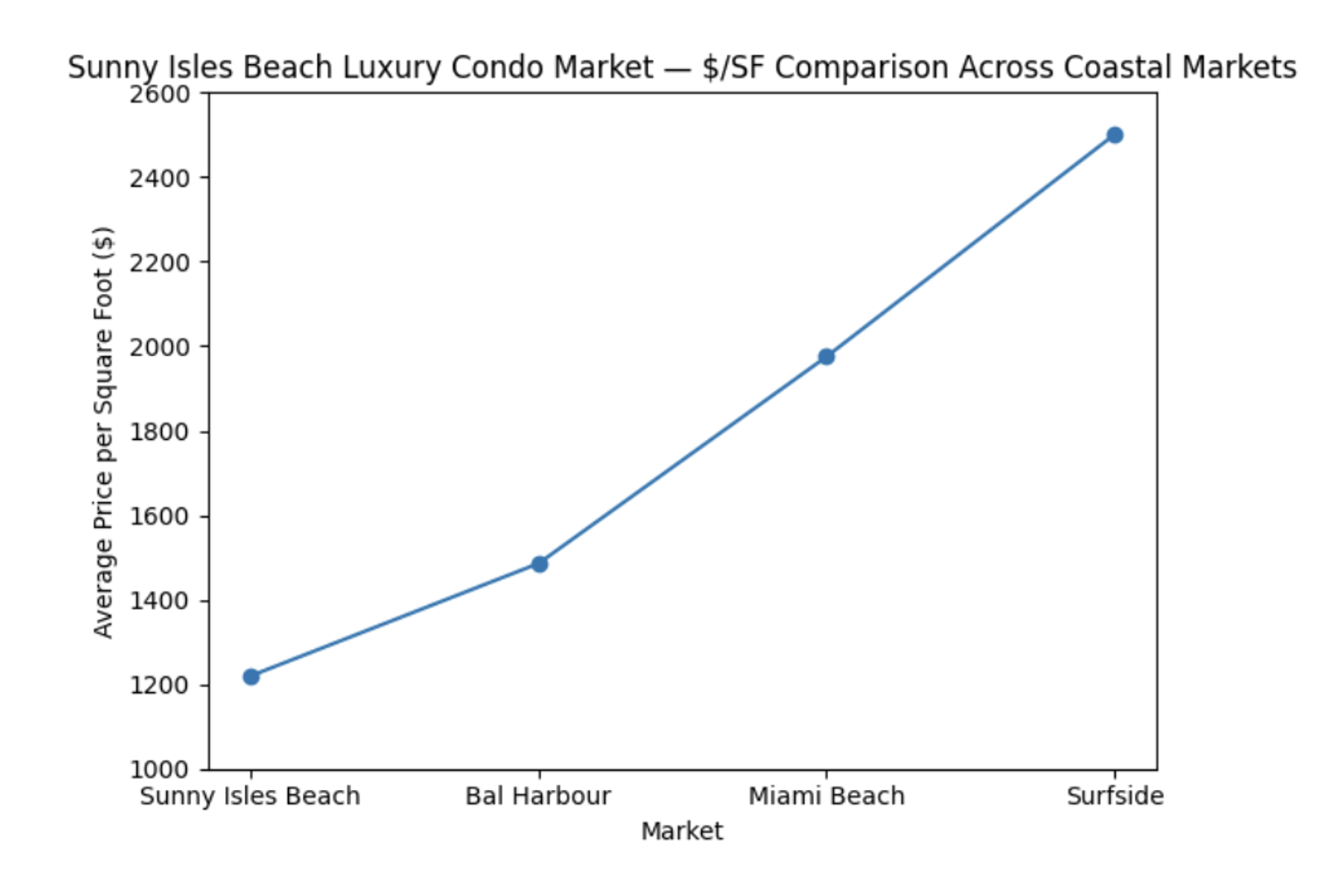
At just over $1,220/SF, Sunny Isles Beach remains one of the most affordable luxury coastal markets in South Florida. Compared to neighboring markets such as Bal Harbour, Surfside, and Miami Beach, it offers oceanfront living, modern towers, and extensive amenities at a relatively lower price point.
This value proposition continues to attract high-net-worth domestic and international buyers seeking long-term lifestyle assets in a less dense, less touristic environment. However, average pricing alone does not capture the full picture.
Sunny Isles is highly polarized, with transactions in the second half of 2025 ranging from approximately $420/SF to $2,750/SF. This wide spread reflects significant variation in building quality, financial health, amenities, and positioning.
For sellers, understanding this positioning relative to competing markets is critical for pricing strategy. For buyers, it reinforces the importance of evaluating not just price per square foot, but the underlying asset quality and long-term value. In this market, perceived value is shaped as much by building fundamentals as by location.
7. Cash Dominance Insulates the Market From Interest Rate Volatility
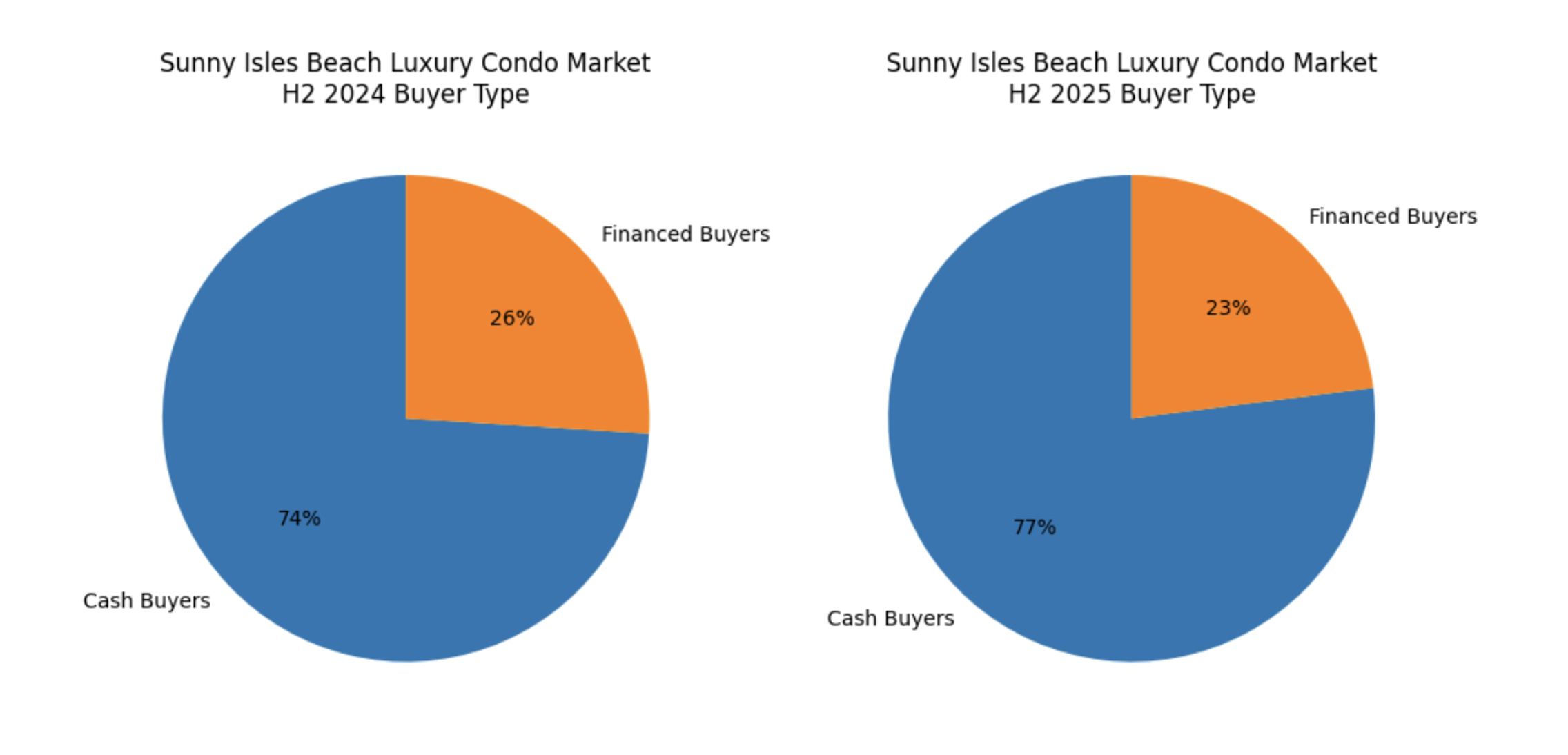
“Cash Is King: Nearly 80% of Buyers Are Paying in Cash”
Nearly 80% of transactions in the second half of 2025 closed without financing, reinforcing Sunny Isles Beach as a cash-dominant market and insulating it from the interest-rate volatility affecting many other housing markets. This dynamic, combined with the market’s second-home profile, supports pricing resilience despite rising inventory, as many owners—particularly in newer buildings—purchased with cash and exhibit less price sensitivity or urgency to sell. Cash buyers—typically high-net-worth domestic and international purchasers—prioritize lifestyle and long-term ownership over financing considerations.
Buyers relying on financing represent a smaller share of activity, concentrating negotiation leverage in older or mid-tier segments where supply is greater. While interest rates have limited direct impact on the dominant cash buyer pool, reduced participation from financed domestic buyers can soften absorption in certain tiers.
For sellers, this distinction is critical. Cash buyers tend to prioritize lifestyle and long-term ownership over financing considerations, they move faster and with fewer contingencies and that allows sellers to prioritize certainty of closing. In older or higher-cost buildings, some owners accept deeper concessions in exchange for speed and liquidity, while sellers in newer, well-positioned towers often maintain stronger pricing discipline and are willing to wait for offers that align with perceived value.
8. The Hidden Risks Of Ownership
“Rising HOA Fees and Insurance Volatilities Increase Cost Of Ownership”
In Sunny Isles Beach, some of the most significant risks are not reflected in listing prices but embedded in building-level financials. Rising HOA fees, insurance volatility tied to coastal exposure, and stricter reserve requirements are increasingly shaping buyer decisions. These pressures are most pronounced in older buildings, where aging infrastructure and capital improvement needs can significantly increase carrying costs. Buyers are now conducting deeper due diligence, reviewing reserves, budgets, and future assessments before committing. As a result, well-capitalized buildings with stable reserves maintain stronger liquidity and pricing power, while financially strained buildings face longer marketing periods and greater negotiation pressure. Construction and recertification cycles also impact liquidity, temporarily reducing demand during periods of disruption. However, once completed, these improvements can restore value and pricing power.
For buyers, these dynamics represent both risk and opportunity. Mispriced assets in financially challenged buildings may offer negotiation potential, but only with careful evaluation of long-term costs. Sellers must ask themselves if current pricing reflects the building’s financial reality, or is it still anchored to historical price-per-square-foot benchmarks that no longer account for today’s ownership costs? Understanding true cost of ownership is no longer merely optional.
9 Timing Strategy: Does Patience Help Or Hinder?
“Patience Is Not Always A Virtue”
Timing plays an increasingly important role in Sunny Isles Beach, but its impact varies by segment. For buyers, patience can be advantageous in areas where inventory is rising—particularly in older or mid-tier buildings. As supply builds and absorption slows, sellers may adjust expectations through price reductions or concessions.
However, patience must be applied strategically. Buyers must distinguish between temporary oversupply and structural challenges such as rising HOA fees or pending assessments.
For sellers, patience carries greater risk in oversupplied segments. Extended time on market can weaken negotiating power as competing listings emerge. In these cases, proactive pricing adjustments may preserve value.
Conversely, sellers in newer, well-amenitized buildings with limited supply may benefit from patience, maintaining pricing discipline until the right buyer emerges.
Ultimately, timing is not universally advantageous—it depends on positioning. Understanding where a property sits within the market determines whether patience strengthens or weakens negotiating leverage.
10. The Buyer Profile Driving Sunny Isles: Long-Term Owners
“End-User Dominance: Cash-Driven Lifestyle Buyers Continue to Shape Demand”
Sunny Isles Beach attracts predominantly long-term lifestyle and seasonal end-user purchasers—typically high-net-worth domestic or international buyers who prioritize oceanfront living, modern amenities, and stability over short-term financial returns. Most purchasers are in it for the long haul, purchasing generational trophy assets rather than considering properties as short-term investment vehicles. Carrying costs, building-specific expenses, and fluctuating inventory can dilute near-term returns, but these factors matter less for buyers focused on lifestyle value and long-term ownership. The strategic question for buyers is therefore not simply price timing, but which buildings offer the strongest long-term resilience—and the answer is simple: newer, well-amenitized towers with stable reserves maintain enduring desirability.
For owners considering a sale, understanding this buyer profile is critical to positioning and marketing strategy. Properties that highlight lifestyle attributes—direct oceanfront access, resort-level amenities, privacy, and modern design—are more likely to resonate with the cash-dominant end-user pool that drives demand in Sunny Isles. Sellers who align pricing and lifestyle narrative often attract more decisive buyers and stronger offers for desirable units.
Conclusion of the Sunny Isles Real Estate Market in Q1 2026
Sunny Isles Beach remains one of South Florida’s most globally recognized luxury coastal markets—but it no longer operates uniformly as a single market. Over the past 24 months, particularly through the second half of 2025, it has entered a transition phase defined by growing segmentation across buildings, pricing tiers, and asset quality.
While inventory has increased and absorption slowed—resulting in longer days on market and more frequent concessions—the broader market has remained resilient. Average price per SF has held relatively stable with slight appreciation, transaction volume increased in the second half of the year in comparison to previous year, and the buyer pool is still dominated by cash purchasers seeking long-term, generational oceanfront assets rather than short-term investments.
In this environment, building-level performance is critical, as adjacent towers can behave like entirely different asset classes. Newer, well-capitalized, amenity-rich buildings continue to command premiums and attract consistent demand, while older or financially strained properties—facing rising HOA fees, insurance volatility, and capital improvement requirements—experience slower absorption and greater pricing pressure. These factors are increasingly shaping buyer behavior, making due diligence and building-specific analysis essential.
For sellers, success depends on aligning pricing and strategy with micro-market realities. For buyers, opportunity exists in segments where supply pressure creates leverage.
Towers like Acqualina Mansions and Estates, Ritz Carlton, Jade Signature and Turnberry Ocean, remain top performers, offering limited inventory, high-end amenities and premium oceanfront positioning for buyers seeking strong long-term value and liquidity. Conversely, older or financially strained buildings such as Winston Towers, Pinnacle, Trump Towers, Sands Pointe and Ocean Towers carry higher carrying costs, slower absorption, and may require deeper concessions—making them less ideal unless buyers are seeking negotiation opportunities.
Sunny Isles is no longer a market where broad assumptions work, it is a micro-market where precision, data, and building-specific insight are essential.
What Relocation Buyers Need to Know — and How David Siddons Adds Value
Relocating into Miami’s condominium markets—whether in Aventura, Sunny Isles Beach, Brickell, or South of Fifth—is not simply about choosing a building or a view. It requires understanding how each submarket operates, how buildings compete with one another, and how factors such as age, amenities, reserves, and rental policies directly impact both lifestyle and long-term value.
Many relocation buyers assume that newer buildings or higher prices equate to better investments. In reality, these markets are highly segmented. Pricing can vary significantly between buildings with similar locations, and the difference between a strong purchase and an average one often comes down to building-specific dynamics, line selection, and timing within the market cycle.
David Siddons advises relocation buyers by applying a building-by-building analytical framework—evaluating pricing trends, supply levels, and buyer demand within each condominium. His approach helps clients identify which buildings are outperforming, where value exists, and where risks may be hidden beneath the surface. From Brickell’s high-density urban core to the lifestyle-driven markets of Sunny Isles Beach and South of Fifth, each decision is guided by real-time data and active market experience.
With extensive experience advising relocation clients into Miami’s most competitive condominium markets, David provides a structured process that simplifies decision-making—helping buyers move quickly when needed, while avoiding overpaying or selecting the wrong asset.
Work with the David Siddons Group, The Sunny Isles Beach Market Specialist
FAQ
These are the most commonly Miami Real Estate Related questions
1. Is Sunny Isles Beach a buyer’s market in 2026?
Yes—Sunny Isles Beach is transitioning into a buyer’s market in 2026, primarily due to rising inventory levels, which reached approximately 22 months of supply. This increase has given buyers more negotiating leverage, particularly in older or mid-tier buildings where competition is highest. However, the market is not uniform—well-positioned properties in newer, amenity-rich towers still command strong pricing and transact efficiently. In short, it’s a selective buyer’s market where opportunities depend heavily on the specific building and asset quality.
2. Why is Sunny Isles Beach considered one of the most affordable luxury oceanfront markets in Miami?
Sunny Isles Beach remains one of the most affordable luxury coastal markets because it offers oceanfront living, modern high-rise towers, and resort-style amenities at a lower average price per square foot compared to nearby areas like Bal Harbour or Miami Beach. Despite average pricing around $1,200 per square foot, the market spans a wide range—from older units below $500/SF to ultra-luxury properties exceeding $2,700/SF. This wide pricing spectrum creates accessibility, but also highlights the importance of understanding building quality and long-term value.
3. What is driving the increase in inventory in Sunny Isles Beach?
The surge in inventory in Sunny Isles Beach is largely driven by older buildings facing rising HOA fees, insurance costs, and upcoming capital improvements such as recertifications and special assessments. These financial pressures are prompting many long-term owners to sell, increasing supply—especially in mid-tier and older properties. This influx of listings is shifting market dynamics, creating more competition among sellers and more options for buyers.
4. Are prices in Sunny Isles Beach going up or down?
Prices in Sunny Isles Beach have remained relatively stable, with slight increases recorded in 2025. However, this stability is largely supported by high-end transactions and newer luxury buildings. Beneath the surface, pricing pressure is building—especially for older or less competitive units. As inventory continues to rise and buyer selectivity increases, downward pressure may emerge in certain segments, while top-tier properties remain more resilient.
5. What are the biggest risks when buying a condo in Sunny Isles Beach?
The biggest risks in Sunny Isles Beach are often hidden at the building level rather than in the unit price. These include rising HOA fees, insurance volatility due to coastal exposure, special assessments, and insufficient reserve funds. Older buildings are particularly exposed to these risks, which can significantly increase the true cost of ownership and impact future resale value. Buyers today are conducting deeper due diligence, focusing on financial health, upcoming repairs, and long-term sustainability before making a purchase.
WHY WORK WITH DAVID? THINGS YOU SHOULD KNOW...
For all our analytics we are agents driving some very unique and advanced tech. We Provide a granular and custom experience that empower our clients with the insight and tools to understand the most complex behaviors of any local markets.
-
Analytical
Over 100 reports produced to date
-
Knowledgeable
Over 1800 published articles and counting


Related Articles
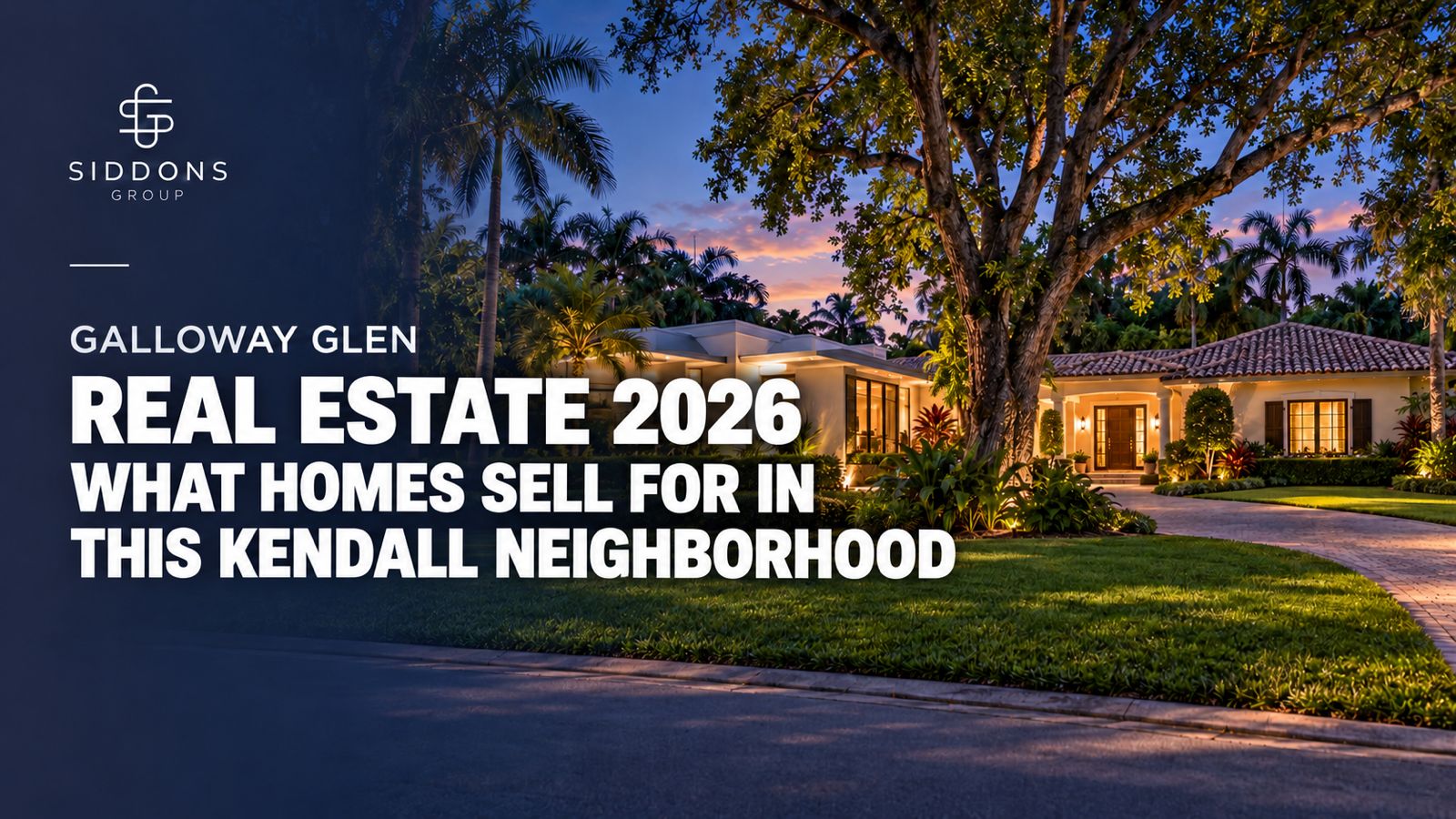
Galloway Glen Real Estate 2026: What Homes Sell for in This Kendall Neighborhood
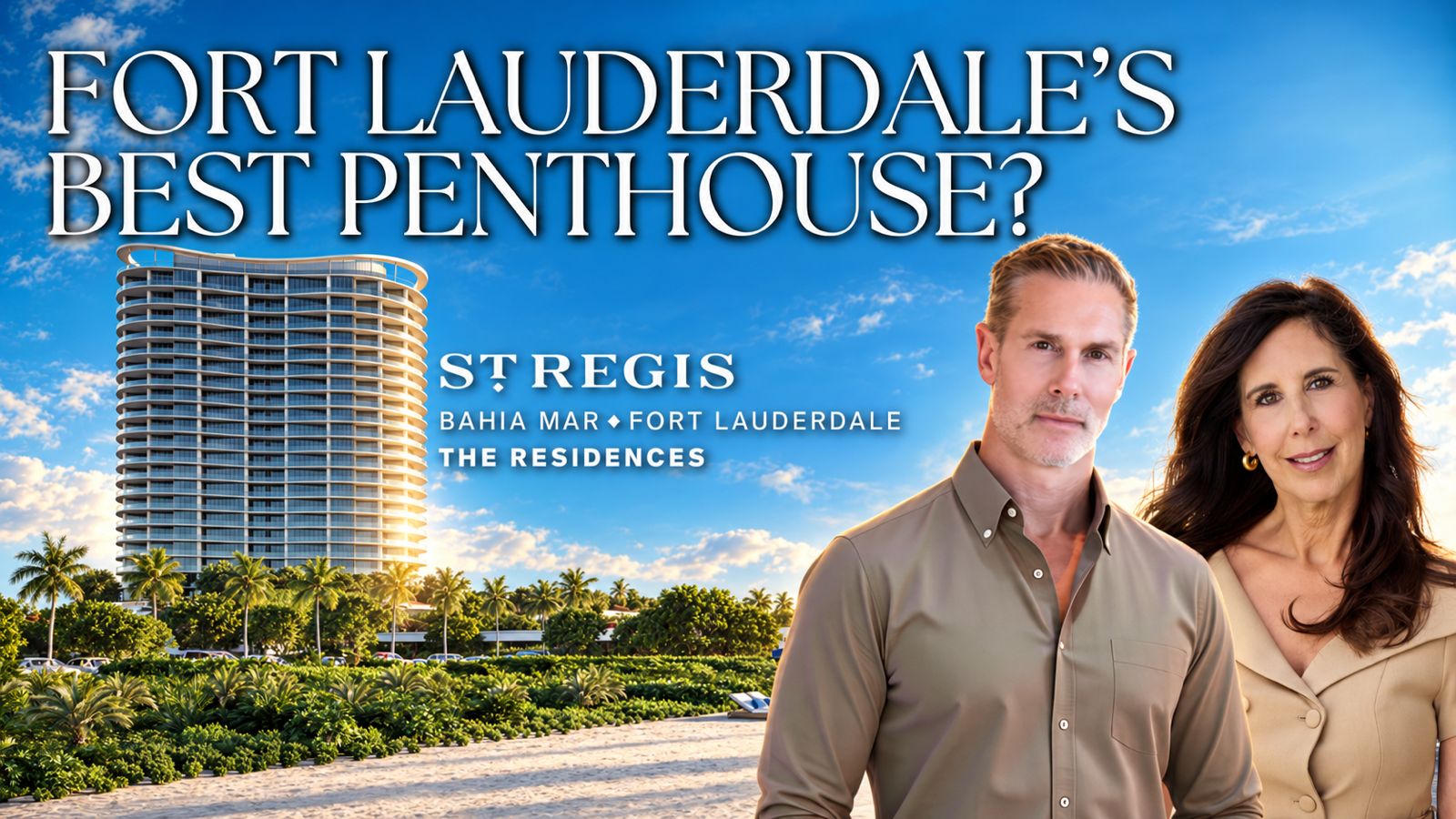
St. Regis Bahia Mar Penthouse Review: A $22M Fort Lauderdale Sky Home at Half the Price of Miami
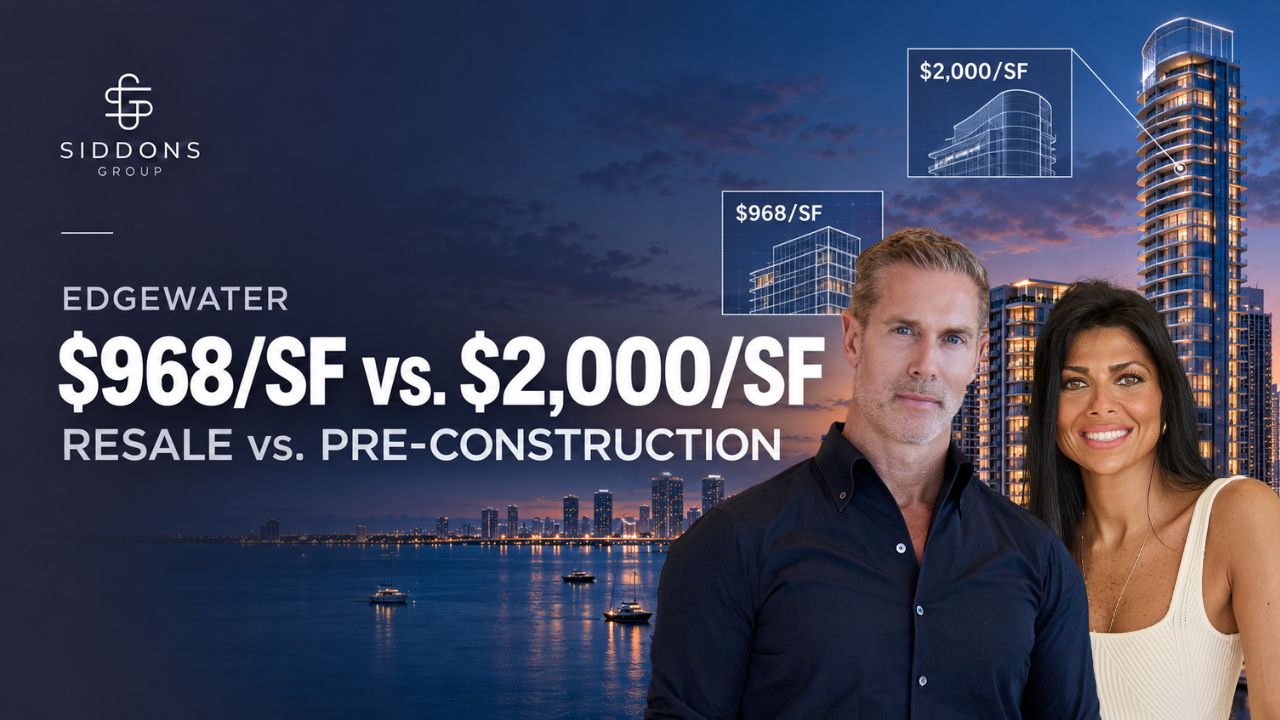
Edgewater Miami Condo Market 2026: $1M+ Resale at $968 a Foot vs. $2,000 for Pre-Construction

Buying or Selling a Condo in Litigation in South Florida: Red Flag or Opportunity?
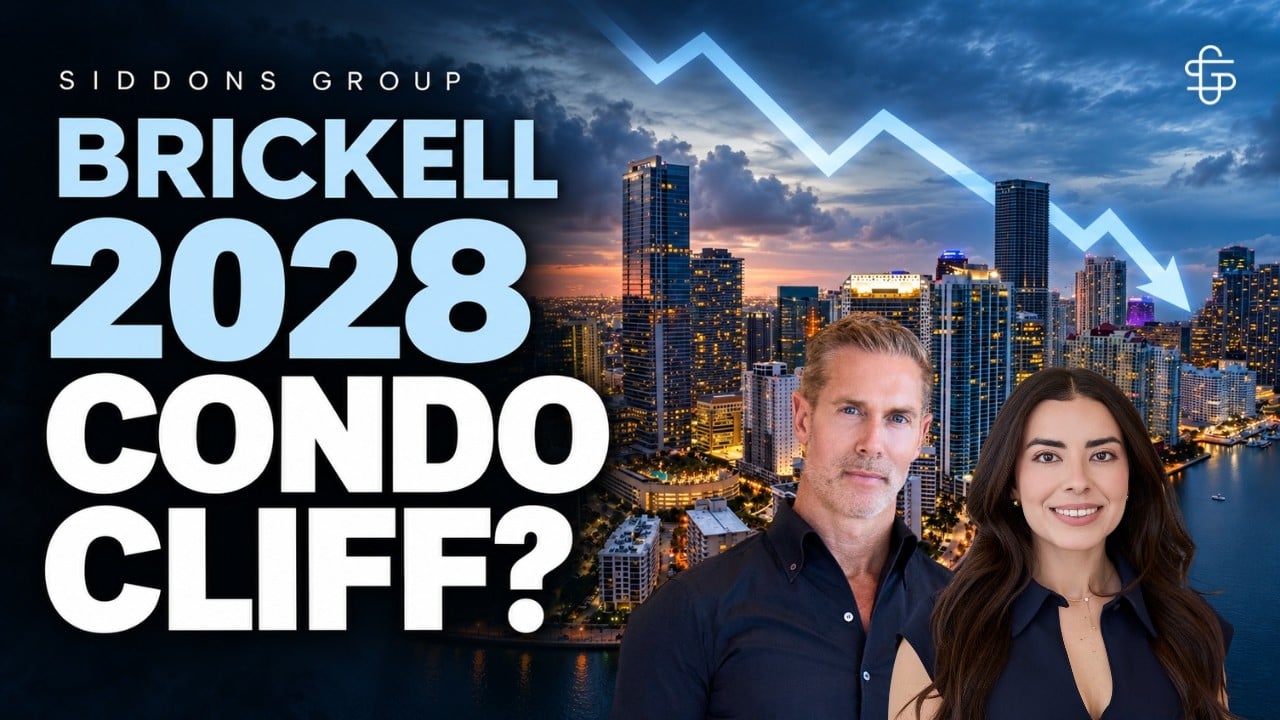
The 2028 Brickell Condo Cliff: Which Buildings Are at Risk and Where Smart Money Is Moving

Should You Stage Your Home Before Selling? What 1,266 Agents and Two Studies Found
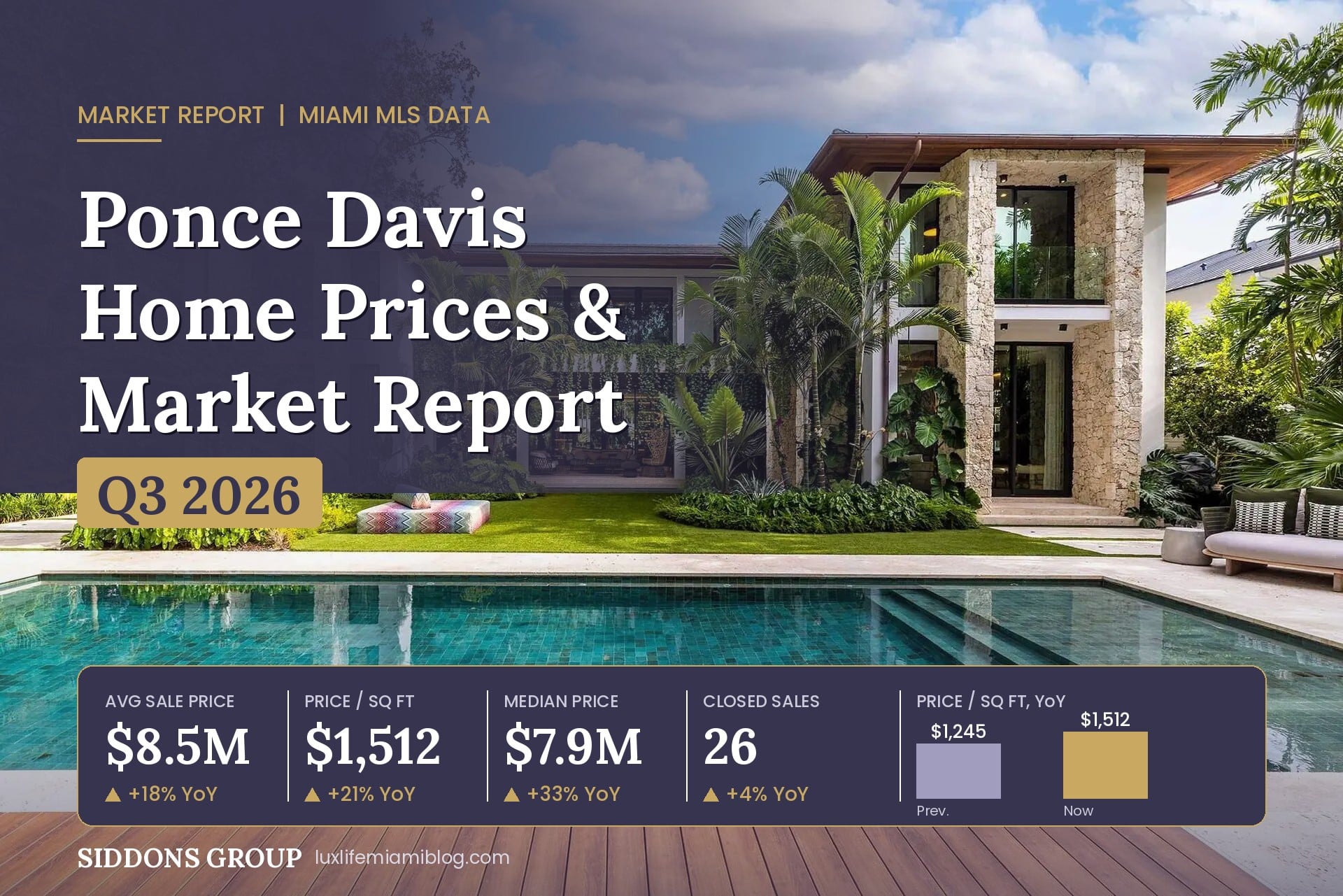
Ponce Davis Home Prices & Market Report: Q3 2026
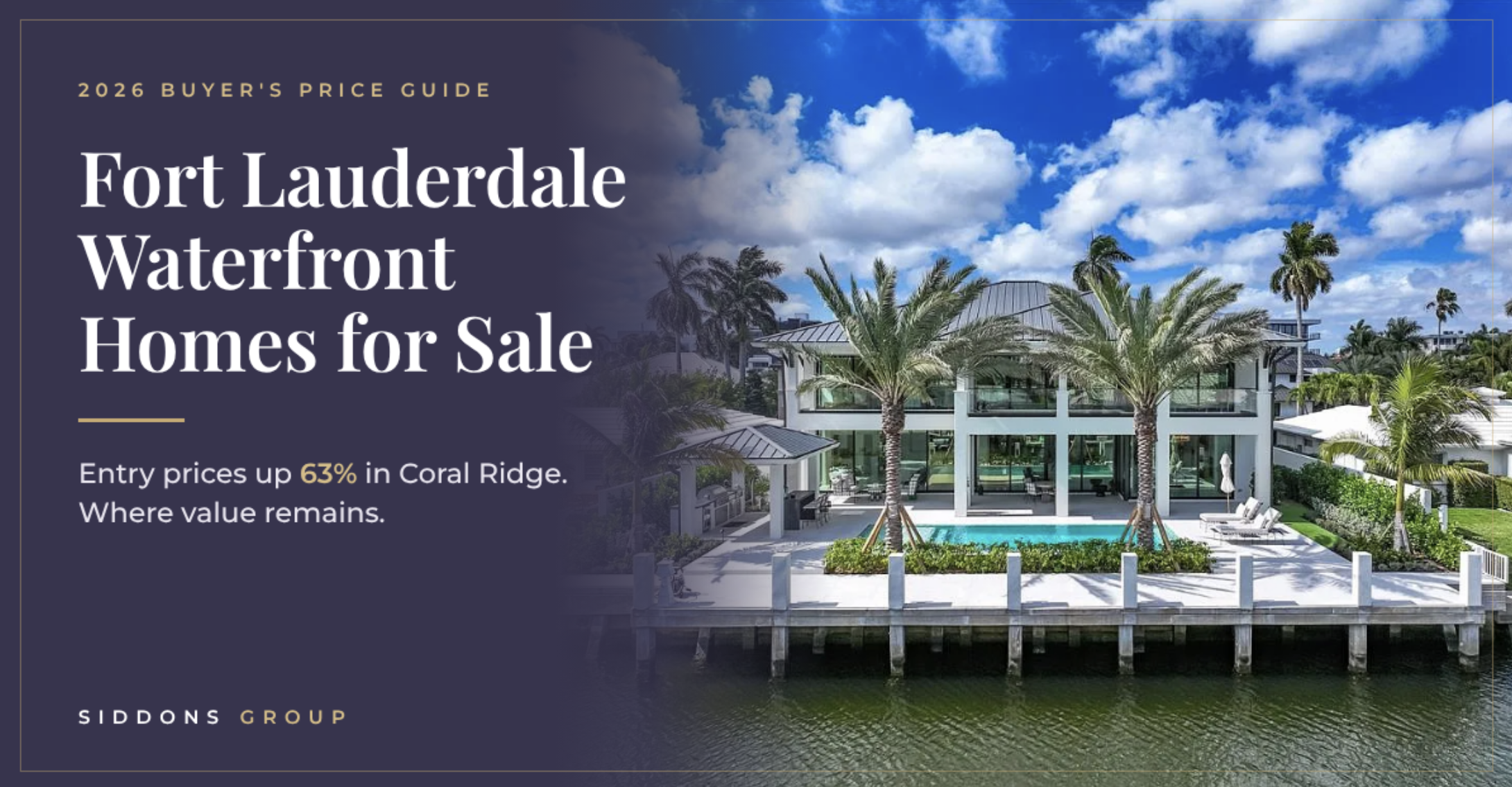
Fort Lauderdale Waterfront Homes in 2026

Greenview at Presidential Aventura
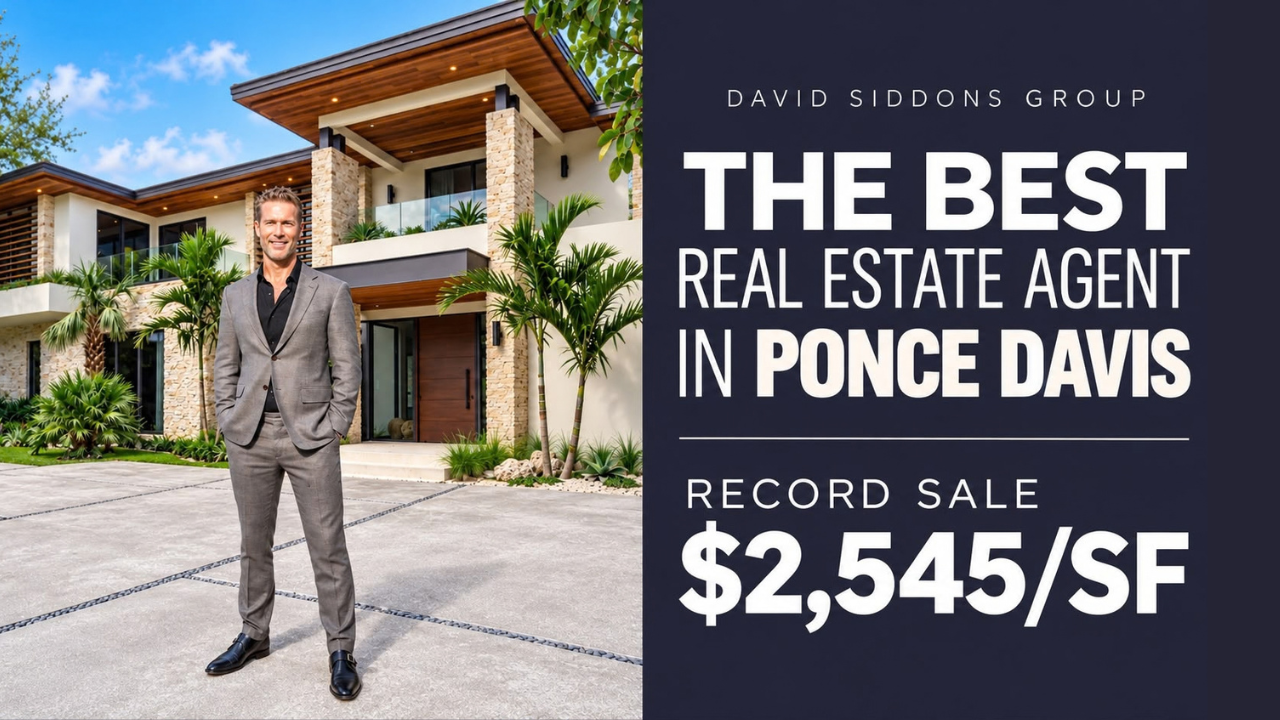
The Best Real Estate Agent in Ponce Davis
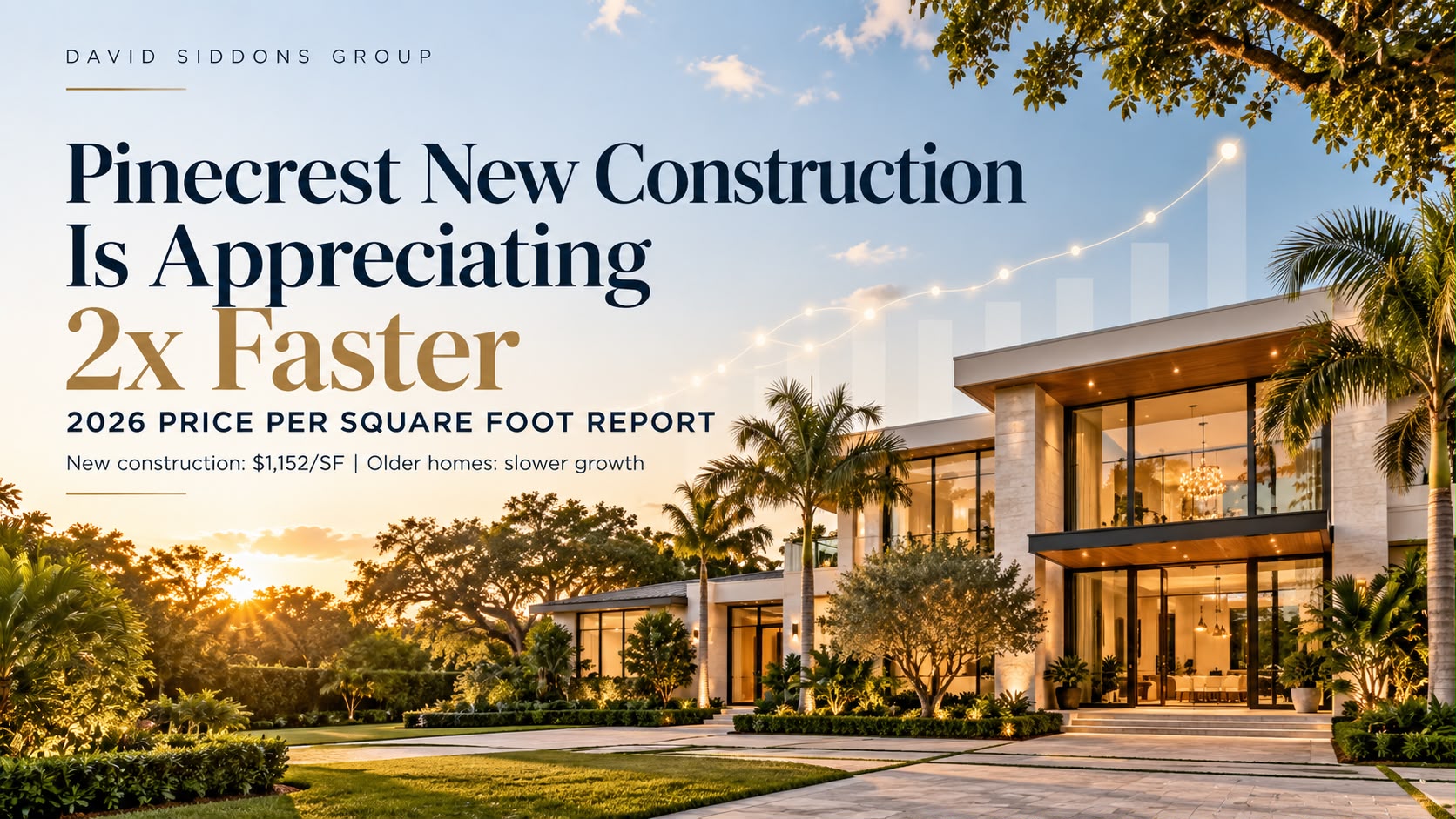
Pinecrest New Construction Is Appreciating 2x Faster Than Older Homes

Inside 1428 Brickell: Why Ytech Skipped the Hotel Brand to Build Brickell’s Best Finishes
Brickell’s Office Boom: What It Means for Luxury Housing in Coral Gables and Coconut Grove
Palmetto Bay Land Values Are Rising. Is Your Home Worth More as Land?
Please fill in your details and David Siddons will contact you

Search related videos

Are St. Regis Sunny Isles Residences Worth the Brand Premium?
Coral Gables Market Report 2025: What the Headlines Aren’t Telling You!
How David Siddons’ Power Team Drives Miami’s Luxury Market
Mid‑Year 2025 Coconut Grove Report: The Truth About What’s Selling Now
Brickell Mid‑Year Market Report 2025 | Is Brickell’s Luxury Market in Trouble?
Pinecrest Mid-Year Market Report 2025 | What’s Selling, What’s Sitting & Why
Miami Beach Condo Market Mid-Year Report 2025 | What Buyers & Sellers Need to Know
How to Lose $1M in The Miami Condo market | Top Mistakes That Cost Miami Condo Buyers Millions
The Well Project EXPOSED Coconut Grove’s Hottest Units
Miami Real Estate in 2025 Is NOT What You Think 😱 | Midyear Must Knows for Buyers & Sellers!
7 Things You Should Never Say to a Real Estate Agent in Miami!
Landmark Victoria Park Residence in Fort Lauderdale: Inside 420 NE 11th Ave 🌴✨
Luxury Living on 2355 S. Miami Ave | Fully Furnished 4-Bed Home w/ Resort-Style Pool 🏊
Is Mandarin Oriental Residences Miami a Smart Condo Investment? Prices, Floorplans, Views & Finishes


- Get our Newsletter
- Subscribe
- No Thanks
Get the latest news from Miami Real Estate News
Close
Edit Search
Close
2 of 14
Share this property
Recomend this to a friend, just enter their email below.
Close
Your email was sent successfully
Close
 COMPARE WITH CONDOGEEKS