



















- Best of All
- Best Miami Luxury Condos
- Most popular
- Relocating to Miami
- Private Schools
- Investments
- Gated communities
- Waterfront information
- Luxury homes
- Luxury Condos
- New Construction Condos in South Florida
- Independent Pre-Construction condo reviews for Miami
- Independent Pre-Construction condo reviews for Fort Lauderdale
Edgewater Real Estate Market Q1 2026
Edgewater buyers are growing up and moving on.
Edgewater Market Analysis by David Siddons
This report is part of a 12-part series of in-depth market analyses authored by David Siddons, a real estate advisor specializing in Miami’s luxury residential markets. His work focuses on interpreting pricing trends, supply dynamics, and buyer behavior across key high-end neighborhoods such as Brickell, Downtown Miami, Edgewater, Miami Beach, and Coral Gables—providing clients with a structured, data-driven framework for making real estate decisions.
The following section includes market insights contributed by Michael Mann, offering on-the-ground perspective into the evolving Edgewater condominium market. Unlike generic market updates, this analysis breaks down the underlying forces driving value in Edgewater’s luxury segment—helping buyers and sellers understand not just where the market stands today, but how it is shifting, and where the most compelling opportunities and risks are emerging.
Introduction to the Edgewater Real Estate Market Q1 2026
The Edgewater luxury condominium market in 2026 is best understood as a market undergoing recalibration rather than decline. When examining the four core indicators—price per square foot, months of inventory, days on market, and the spread between asking and closing prices—a consistent and cohesive narrative emerges. The market has clearly shifted away from the momentum-driven environment that defined the 2021 through early 2024 cycle and has entered a more measured, data-driven phase characterized by elevated supply, extended transaction timelines, and increased negotiation.
At a macro level, the market is firmly buyer-leaning. However, this broad characterization does not fully capture the complexity of current conditions. The more accurate description is that Edgewater has evolved into a fragmented, two-speed market where outcomes vary significantly depending on the specific unit, building, and pricing strategy. This distinction is critical, as it explains why some properties continue to transact efficiently while others remain stagnant despite similar pricing aspirations.
Pricing Trends and Market Positioning
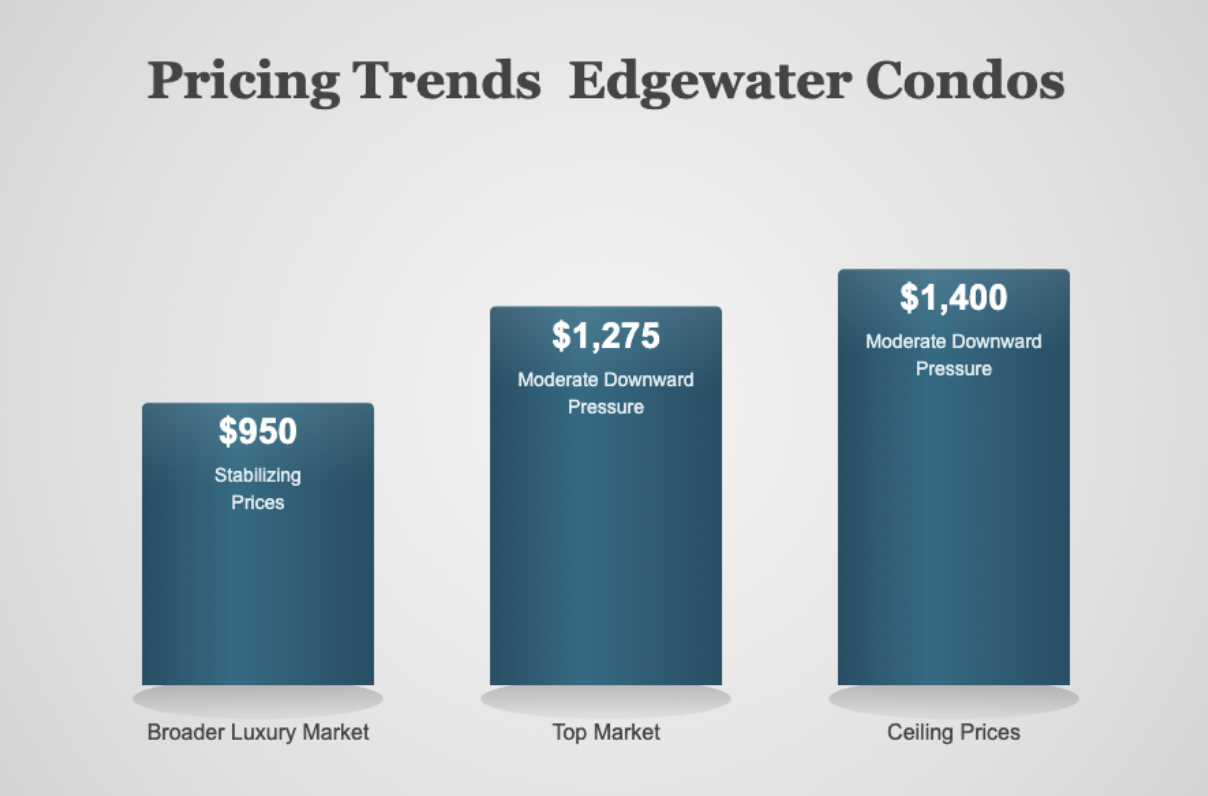
Price per square foot trends illustrate the transition clearly. Following a period of rapid appreciation that culminated in peak pricing between 2022 and 2023, the market entered a plateau phase in 2024 before shifting into modest adjustment and stabilization through 2025 and into 2026. At the peak, top-tier properties achieved pricing in the range of approximately $1,500 to $1,600 per square foot, reflecting strong demand, limited inventory, and buyer urgency.
In the current environment, top-end pricing has moderated to approximately $1,200 to $1,350 per square foot, with exceptional penthouse transactions occasionally exceeding this range, such as the Aria Reserve penthouse closing near $1,375 per square foot. Units positioned above the 50th floor in premier buildings are generally trading between $1,100 and $1,300 per square foot, while the broader inventory base is transacting closer to $900 to $1,000 per square foot.
This shift represents a compression of approximately ten to twenty percent at the top end rather than a broad-based decline. Importantly, pricing remains significantly elevated compared to pre-2021 levels, reinforcing the notion that the market has normalized rather than corrected sharply. The key change is not the level of pricing, but the loss of upward momentum. Pricing today must be supported by tangible attributes such as view, layout, building quality, and overall positioning rather than by market sentiment alone.
Supply Dynamics and Inventory Pressure
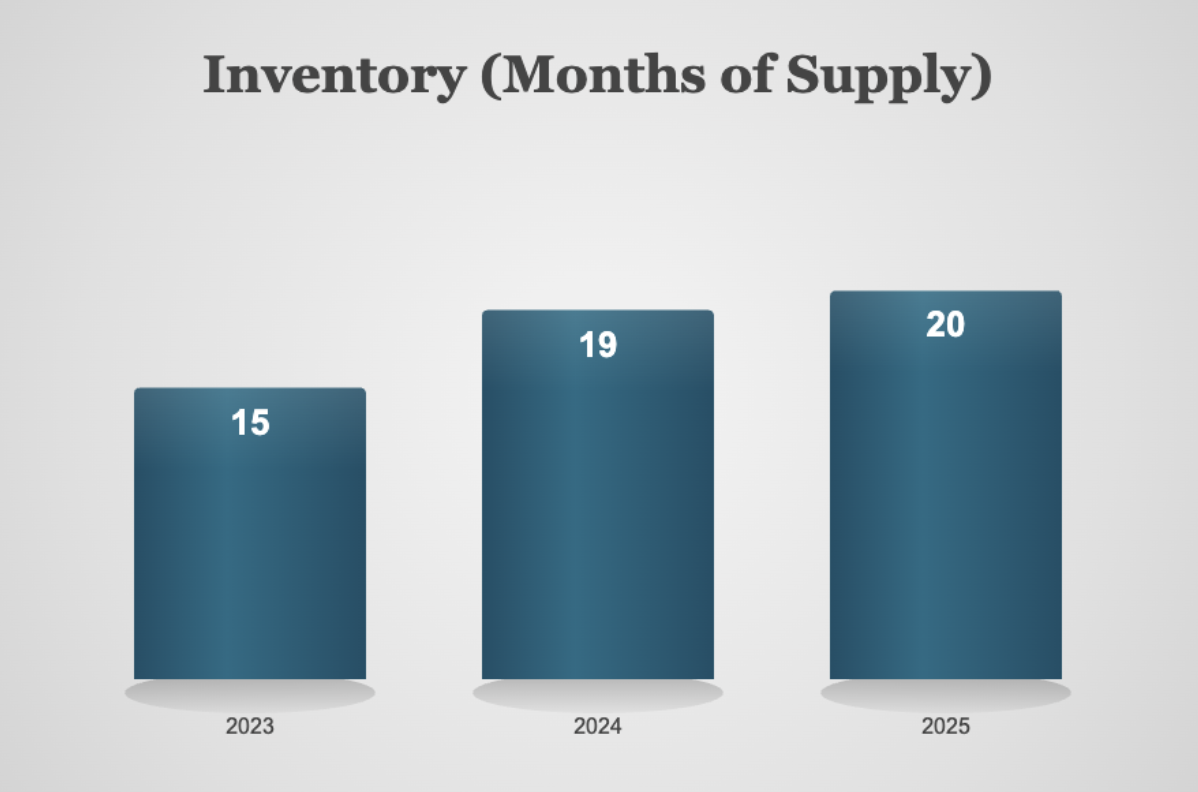
One of the most influential forces shaping the 2026 market is the expansion of inventory. Months of supply have risen into the twelve to twenty-plus month range across many segments, well above the six-month threshold typically associated with a balanced market. This increase is largely attributable to the completion of new developments such as Aria Reserve, combined with a growing number of resale listings entering the market.
The presence of substantial resale inventory within newly delivered buildings has intensified internal competition, as owners compete not only with other buildings but with identical or similar units within their own towers. Additionally, situations such as increased listings at Missoni Baia, partly influenced by owner dissatisfaction and legal disputes, have contributed to localized supply surges.
The implications of elevated inventory are significant. Buyers now benefit from increased choice, extended decision-making timelines, and enhanced negotiating power. Sellers, by contrast, must contend with greater competition and a diminished ability to rely on passive market appreciation. This imbalance between supply and demand is the clearest structural shift in the market and underpins many of the observed trends in pricing and transaction velocity.
Show me the Best Edgewater Properties
Transaction Velocity and Days on Market
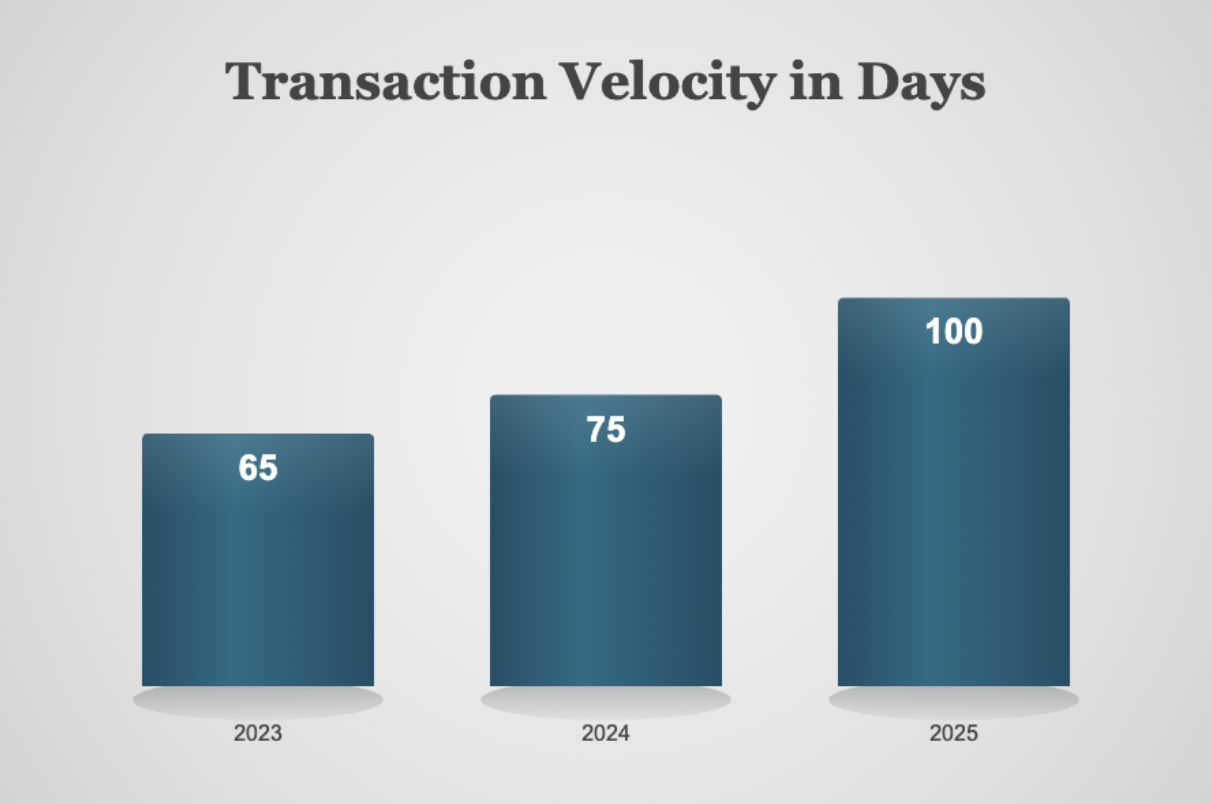
Days on market have extended considerably, reflecting a more deliberate and analytical buyer base. Where well-positioned properties in prior years could expect to transact within sixty to one hundred twenty days, current timelines have expanded to approximately one hundred twenty to two hundred forty days, with some listings exceeding these ranges.
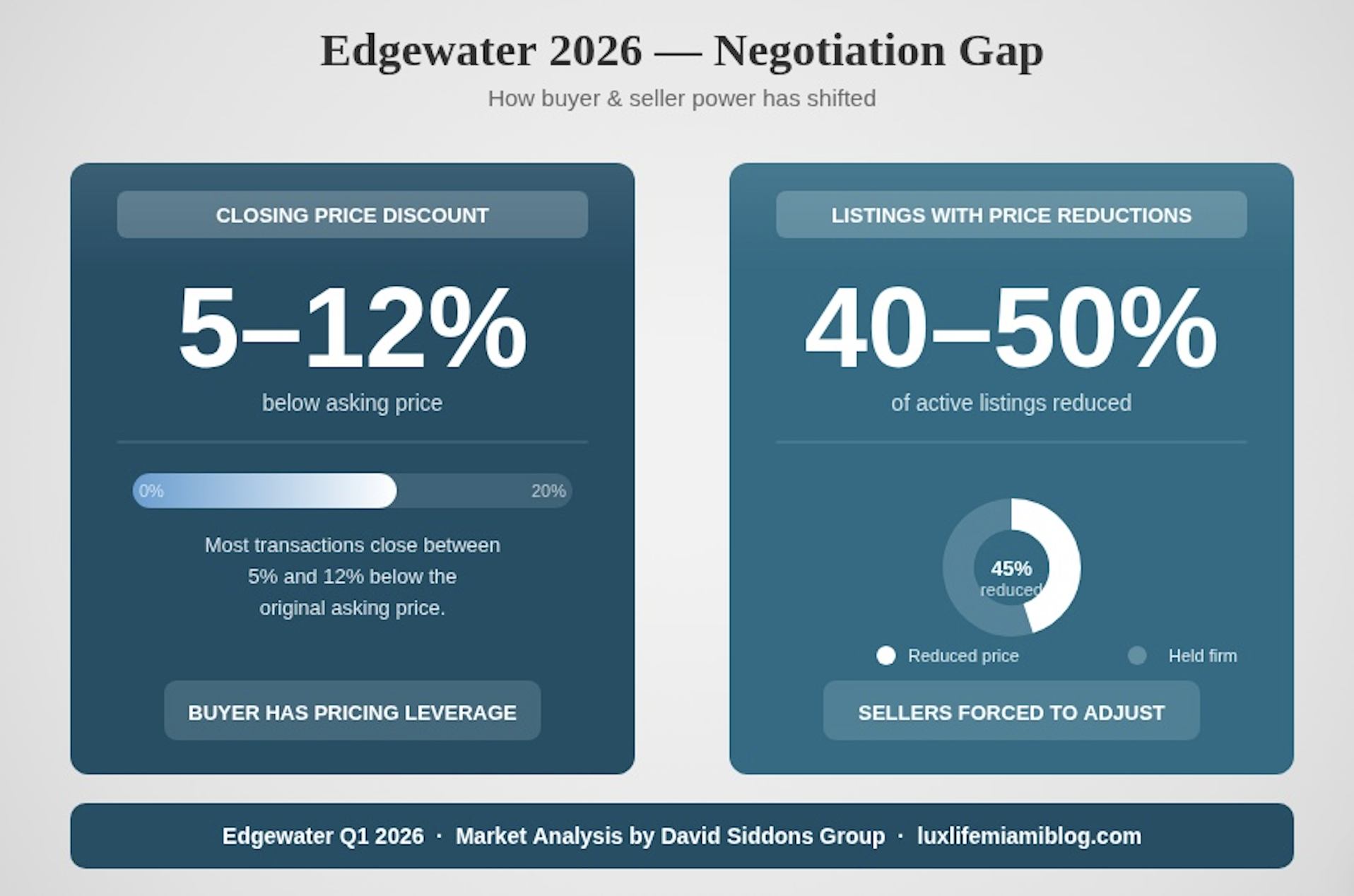
A significant portion of active listings undergo price reductions during their marketing period, with estimates indicating that approximately forty to fifty percent of listings in certain buildings have adjusted pricing after initial exposure. This pattern underscores the importance of accurate initial pricing, as overpricing often results in prolonged market exposure, reduced buyer interest, and ultimately a lower final sale price.
Despite these extended timelines, demand has not disappeared. Instead, it has become more selective. High-floor units, penthouses, and properties with exceptional views and layouts continue to transact relatively efficiently when priced in alignment with current market conditions. This reinforces the notion that the market is not illiquid, but rather discriminating.
Negotiation Trends and Price Discovery
The spread between asking prices and closing prices provides critical insight into market psychology. In 2026, most transactions are occurring at discounts of approximately five to twelve percent below asking, with larger discrepancies observed in cases involving prolonged market exposure, inferior product, or unrealistic initial pricing.
This widening spread reflects a market in active price discovery. Sellers often enter the market anchored to peak pricing achieved during the prior cycle, while buyers are anchored to current conditions, including elevated inventory, recent comparable sales, and increased carrying costs associated with interest rates, insurance, and homeowners’ association fees. The resulting gap between expectations necessitates negotiation as the primary mechanism for achieving equilibrium.
Importantly, this negotiation dynamic does not indicate market weakness but rather a rebalancing of power. Buyers are not engaging in opportunistic or aggressive discounting; instead, they are applying disciplined, data-driven approaches to valuation. Sellers who recognize and adapt to this environment early tend to achieve better outcomes than those who resist market signals.
The Emergence of a Two-Speed Market
Perhaps the most defining characteristic of the Edgewater market in 2026 is the clear divergence in performance between top-tier and average properties. This has created a two-speed market in which outcomes are highly dependent on quality, positioning, and pricing.
Top-tier properties, including newer buildings, high-floor units, premier lines, and residences with unobstructed water views, continue to demonstrate relative liquidity. These properties often transact with minimal discounts and within shorter timeframes, particularly when priced appropriately. Buildings such as Elysee, Aria Reserve, and Missoni Baia exemplify this segment, with certain units continuing to command near-peak pricing.
In contrast, secondary properties, including older buildings, lower-floor units, compromised layouts, and overpriced listings, experience significantly longer marketing periods and require more substantial price adjustments to achieve a sale. The performance gap between these segments has widened considerably compared to prior years, when broad market appreciation lifted most properties simultaneously.
Liquidity Patterns and Market Segmentation
Transaction data indicates that liquidity is concentrated within a specific price band, primarily between $900,000 and $2.2 million. This segment represents the core of market activity and is driven largely by one- and two-bedroom units ranging from approximately 800 to 1,500 square feet. These properties benefit from a larger buyer pool, more accessible financing, and lower carrying costs, resulting in relatively shorter days on market and more predictable transaction outcomes.
At higher price points, particularly above $3 million, the market remains active but is more conditional. Sales in this segment occur when properties are priced in alignment with current market realities, but timelines can extend significantly, often ranging from several months to over a year. Larger units and penthouses, while still desirable, are inherently less liquid due to a smaller buyer pool and higher financial thresholds.
The key takeaway is that liquidity is not solely determined by price level but by alignment with market expectations. A well-priced high-end property can transact efficiently, while an overpriced mid-market unit may remain unsold indefinitely.
Areas of Strength and Weakness
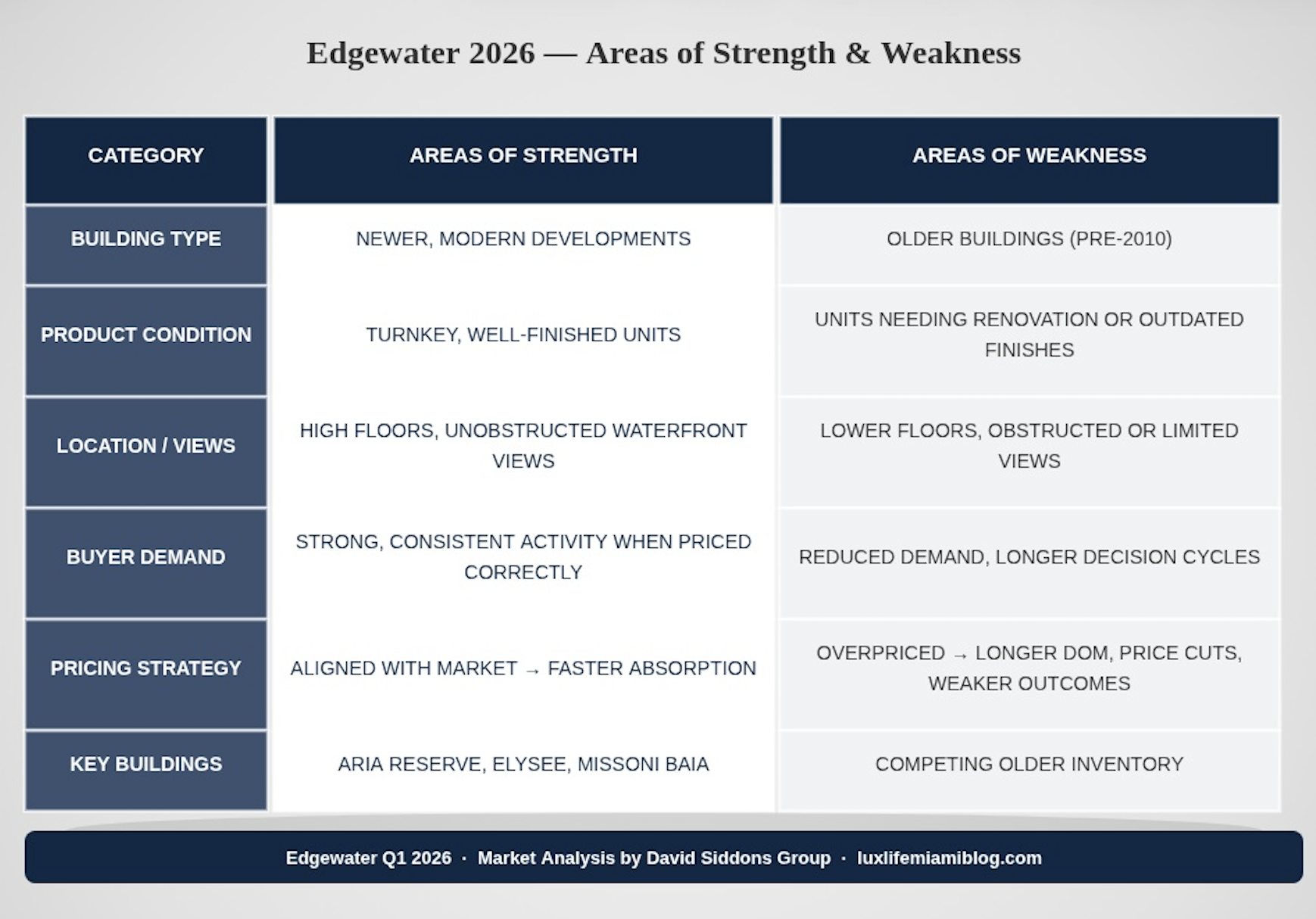
Within the broader market, certain buildings and product types have emerged as relative strengths. Newer developments with modern design, strong amenity packages, and desirable waterfront locations continue to attract buyer interest. Aria Reserve South Tower, Elysee Miami, and Missoni Baia exemplify this trend, each demonstrating consistent transaction activity across various unit types when pricing is appropriate.
Conversely, several segments exhibit slower performance. Older buildings constructed prior to 2010 face increased competition from newer developments and often require pricing concessions to remain competitive. Units requiring renovation or lacking modern finishes also experience reduced demand, as buyers increasingly prioritize turnkey properties. Additionally, lower-floor units or those with obstructed views underperform relative to higher-floor, view-oriented residences, even within otherwise desirable buildings.
Overpriced listings represent another significant challenge. Properties that enter the market above realistic valuation thresholds tend to accumulate extended days on market, undergo multiple price reductions, and ultimately transact at lower effective pricing than if they had been positioned correctly from the outset.
External Influences on Market Behavior
Several external factors are influencing buyer behavior and overall market dynamics. Elevated interest rates compared to the ultra-low-rate environment of 2021 through 2023 have increased financing costs, leading buyers to be more payment-sensitive and selective in their purchasing decisions. While many luxury buyers utilize cash, opportunity cost considerations still influence pricing decisions.
Rising insurance costs, particularly in coastal South Florida markets, have further impacted affordability and ongoing ownership expenses. Buyers are increasingly factoring these costs into their valuation models, effectively placing downward pressure on achievable sale prices.
At the same time, continued migration into South Florida from high-tax states and international markets provides underlying support for demand, particularly at the higher end of the market. This influx of capital helps sustain pricing for premium properties, even as broader market conditions become more competitive.
New development activity also plays a critical role by introducing high-quality inventory that raises buyer expectations and intensifies competition. This dynamic disproportionately affects older or less well-positioned properties, which must compete not only on price but on perceived value relative to new construction.
Outlook for the Next 6 to 12 Months
Looking ahead, the Edgewater luxury condo market is expected to continue operating within a framework of selective stability. Inventory levels are likely to remain elevated in the near term, particularly as additional units from recent developments enter the resale market. However, absorption is expected to continue, albeit at a measured pace.
Pricing for premium, well-positioned properties is expected to remain relatively stable, with potential for modest appreciation in select segments. In contrast, properties that are outdated, overpriced, or otherwise misaligned with buyer expectations may experience continued downward pressure or extended time on market.
Buyer leverage is expected to persist, particularly in segments with higher inventory levels, while competition for top-tier properties may remain more balanced. Overall, the market is likely to continue its transition toward equilibrium, characterized by disciplined pricing, informed buyers, and differentiated performance across product types.
Conclusion of the Edgewater Real Estate Market Q1 2026
The Edgewater luxury condominium market in 2026 is defined not by decline, but by transformation. It has moved from a period of rapid appreciation and broad-based demand to a more nuanced environment where outcomes are determined by alignment, quality, and strategy.
At the macro level, the market favors buyers, offering increased choice and negotiating power. At the micro level, however, competition remains strong for the best properties, reinforcing the importance of understanding the specific dynamics of each asset.
Ultimately, the central principle governing the market is that liquidity follows alignment. Sellers who accurately position their properties in terms of pricing and presentation can still achieve successful outcomes, while buyers who approach the market with discipline and insight can identify meaningful opportunities. In this environment, success is no longer driven by timing the market, but by understanding it.
What Relocation Buyers Need to Know — and How David Siddons Adds Value
Relocating into Miami’s condominium markets—whether in Edgewater, Brickell, Surfside or South of Fifth—is not simply about choosing a building or a view. It requires understanding how each submarket operates, how buildings compete with one another, and how factors such as age, amenities, reserves, and rental policies directly impact both lifestyle and long-term value.
Many relocation buyers assume that newer buildings or higher prices equate to better investments. In reality, these markets are highly segmented. Pricing can vary significantly between buildings with similar locations, and the difference between a strong purchase and an average one often comes down to building-specific dynamics, line selection, and timing within the market cycle.
David Siddons advises relocation buyers by applying a building-by-building analytical framework—evaluating pricing trends, supply levels, and buyer demand within each condominium. His approach helps clients identify which buildings are outperforming, where value exists, and where risks may be hidden beneath the surface. From Brickell’s high-density urban core to the lifestyle-driven markets of Sunny Isles Beach and South of Fifth, each decision is guided by real-time data and active market experience.
With extensive experience advising relocation clients into Miami’s most competitive condominium markets, David provides a structured process that simplifies decision-making—helping buyers move quickly when needed, while avoiding overpaying or selecting the wrong asset.
Work with the David Siddons Group, The Edgewater Market Specialist
FAQ
These are the most commonly Miami Real Estate Related questions
If prices have dropped in Edgewater, why are sellers still making money?
Because prices in Edgewater remain significantly higher than pre-2021 levels. What looks like a drop is actually a normalization from an exceptional peak. A seller who bought in 2019 and sells today at $1,100 per square foot is still realizing substantial gains, even though the same unit may have traded at $1,400 per square foot in 2022. The market has corrected relative to its peak, not relative to its baseline.
Why does asking more for your condo often result in getting less?
Overpriced listings accumulate days on market, which signals to buyers that something is wrong with the property. Buyers apply deeper discounts to stale listings, and sellers who hold out eventually accept lower offers than they would have received with accurate initial pricing. In the current Edgewater market, where 40 to 50 percent of listings have already reduced their price, an overpriced entry is one of the most reliable ways to achieve a lower final sale price.
Why is a brand new building sometimes harder to sell in than an older one?
Because in newly delivered buildings like Aria Reserve, sellers compete not just against other buildings but against identical units on different floors within their own tower. A buyer can compare two nearly identical apartments in the same building side by side, creating intense internal competition that drives prices down. Older buildings with more differentiated unit types and no identical new inventory often face less direct head-to-head competition.
If inventory is at 20 months of supply, why are some Edgewater condos still selling in weeks?
Because high inventory is a market average, not a universal condition. The Edgewater market operates at two speeds simultaneously. Top-floor units with unobstructed water views in buildings like Elysee or Missoni Baia continue to transact relatively quickly when priced correctly, because their supply is genuinely limited. The 20-month figure is dragged upward by overpriced listings and lower-floor units that sit unsold for extended periods, masking the real liquidity that exists at the top of the market.
Why are cash buyers in a high-interest-rate environment still affected by rising rates?
Because even cash buyers factor in the opportunity cost of their capital. Money deployed into a condominium purchase is money not earning returns elsewhere. When interest rates are high, alternative investments such as bonds or treasuries offer more attractive yields, raising the bar for what a real estate purchase must deliver in terms of value. This makes cash buyers more price-sensitive and more disciplined in negotiation, even though they are not directly subject to mortgage payments.
WHY WORK WITH DAVID? THINGS YOU SHOULD KNOW...
For all our analytics we are agents driving some very unique and advanced tech. We Provide a granular and custom experience that empower our clients with the insight and tools to understand the most complex behaviors of any local markets.
-
Analytical
Over 100 reports produced to date
-
Knowledgeable
Over 1800 published articles and counting


Related Articles
Fort Lauderdale Waterfront Homes in 2026

Greenview at Presidential Aventura

The Best Real Estate Agent in Ponce Davis
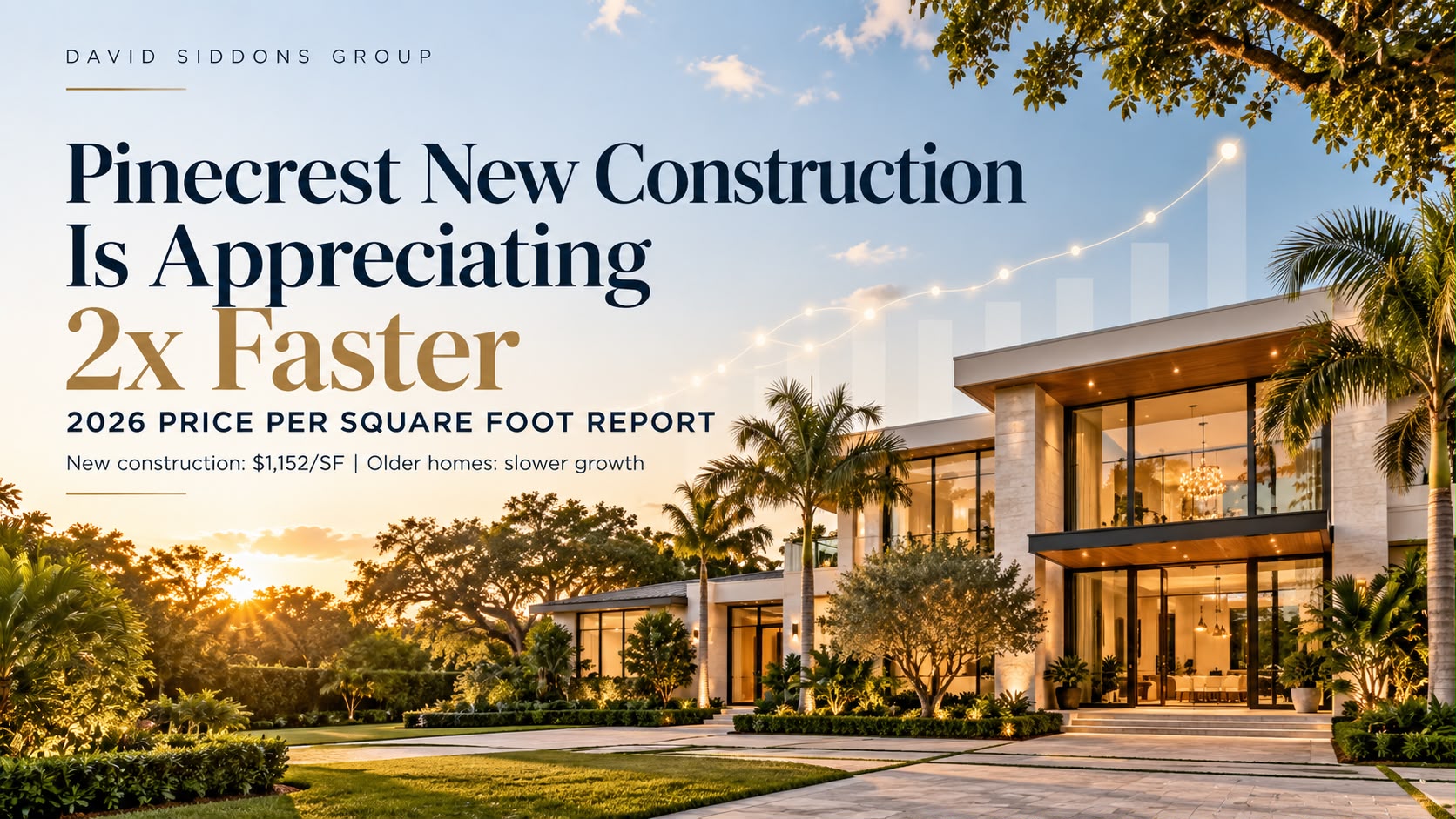
Pinecrest New Construction Is Appreciating 2x Faster Than Older Homes

Inside 1428 Brickell: Why Ytech Skipped the Hotel Brand to Build Brickell’s Best Finishes
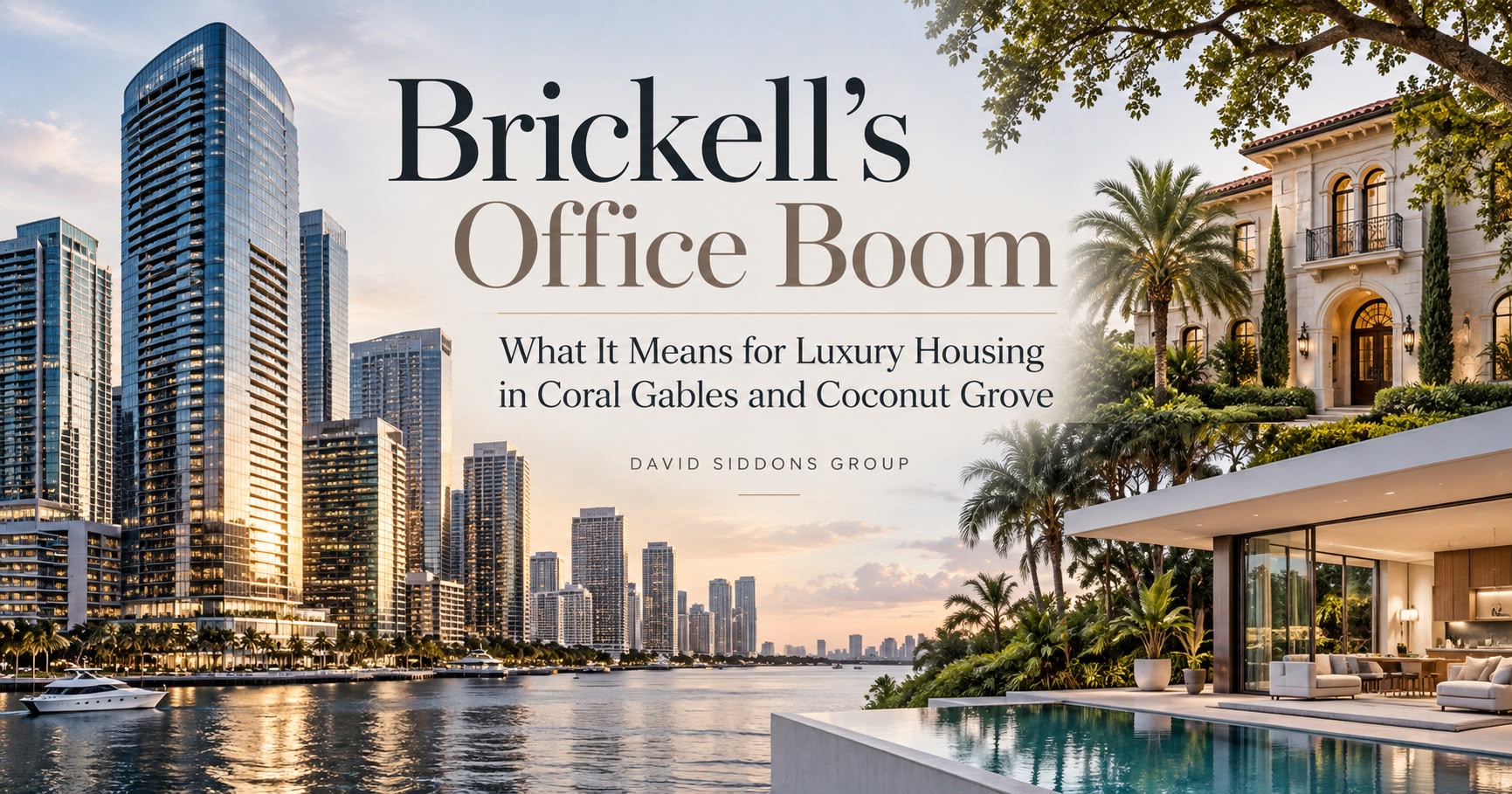
Brickell’s Office Boom: What It Means for Luxury Housing in Coral Gables and Coconut Grove
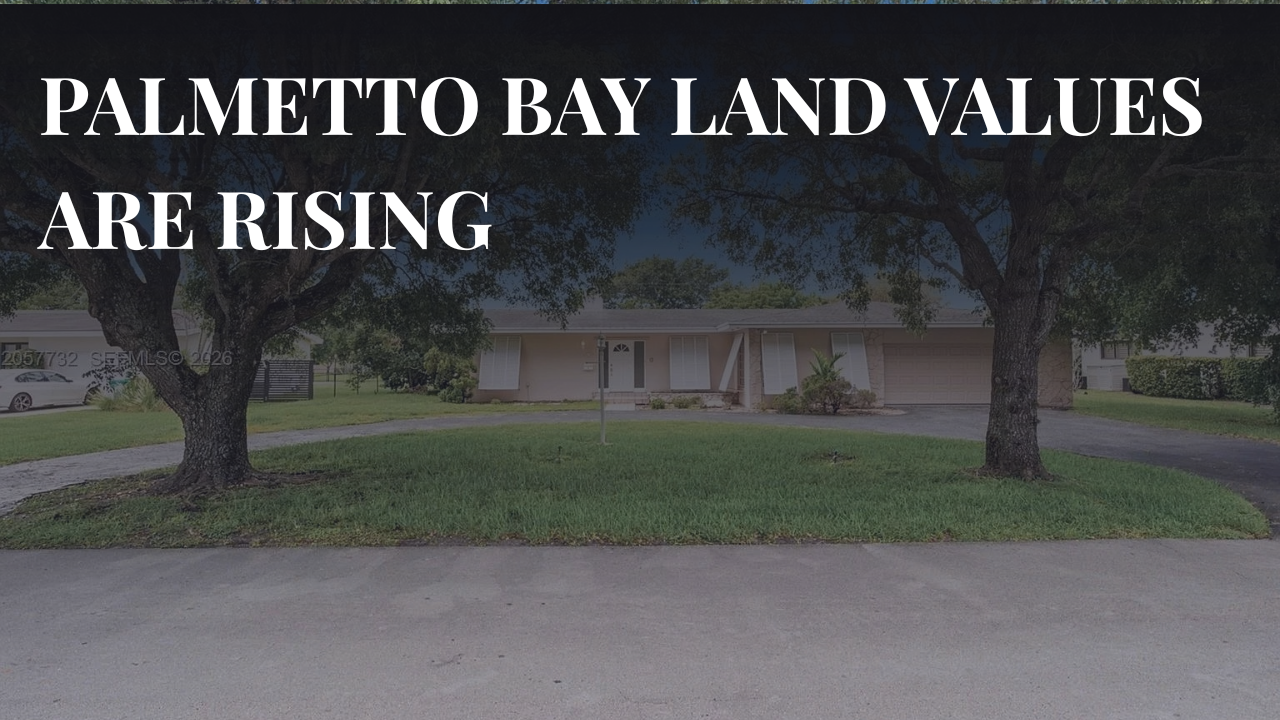
Palmetto Bay Land Values Are Rising. Is Your Home Worth More as Land?
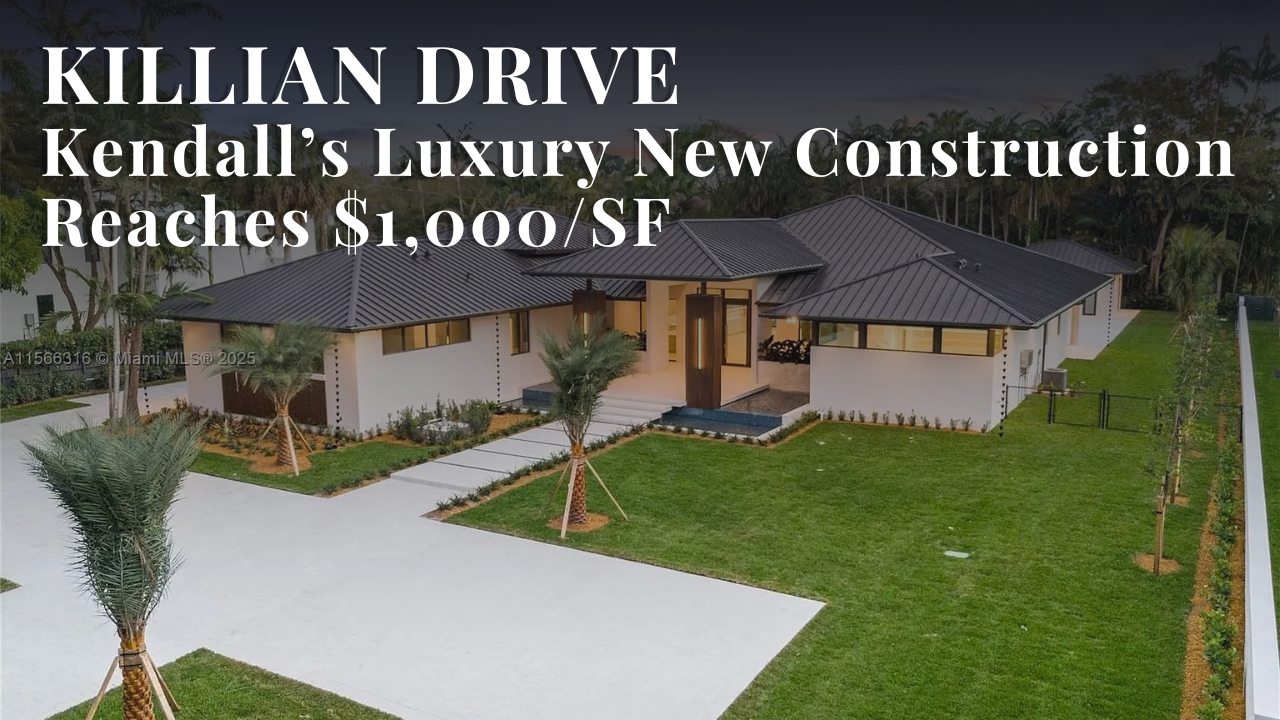
Killian Drive: Kendall’s Luxury New Construction Corridor Hits $1,000/SF

Pinecrest’s 4 Best Streets in 2026
The 5 Best Luxury Streets in Miami’s Gated Communities

The Real Estate Team Behind the Agent: Why Systems Matter More Than Star Power
Selling a Home in Pinecrest: Why Some Homes Sell for $1,500/SF and Others Sit

We Built the Largest YouTube Audience of Any Miami Real Estate Team.

Empty Nesters in Miami: What Comes After the Big Family Home?
Please fill in your details and David Siddons will contact you

Search related videos

Are St. Regis Sunny Isles Residences Worth the Brand Premium?
Coral Gables Market Report 2025: What the Headlines Aren’t Telling You!
How David Siddons’ Power Team Drives Miami’s Luxury Market
Mid‑Year 2025 Coconut Grove Report: The Truth About What’s Selling Now
Brickell Mid‑Year Market Report 2025 | Is Brickell’s Luxury Market in Trouble?
Pinecrest Mid-Year Market Report 2025 | What’s Selling, What’s Sitting & Why
Miami Beach Condo Market Mid-Year Report 2025 | What Buyers & Sellers Need to Know
How to Lose $1M in The Miami Condo market | Top Mistakes That Cost Miami Condo Buyers Millions
The Well Project EXPOSED Coconut Grove’s Hottest Units
Miami Real Estate in 2025 Is NOT What You Think 😱 | Midyear Must Knows for Buyers & Sellers!
7 Things You Should Never Say to a Real Estate Agent in Miami!
Landmark Victoria Park Residence in Fort Lauderdale: Inside 420 NE 11th Ave 🌴✨
Luxury Living on 2355 S. Miami Ave | Fully Furnished 4-Bed Home w/ Resort-Style Pool 🏊
Is Mandarin Oriental Residences Miami a Smart Condo Investment? Prices, Floorplans, Views & Finishes


- Get our Newsletter
- Subscribe
- No Thanks
Get the latest news from Miami Real Estate News
Close
Edit Search
Close
2 of 14
Share this property
Recomend this to a friend, just enter their email below.
Close
Your email was sent successfully
Close
 COMPARE WITH CONDOGEEKS