



















- Best of All
- Best Miami Luxury Condos
- Most popular
- Relocating to Miami
- Private Schools
- Investments
- Gated communities
- Waterfront information
- Luxury homes
- Luxury Condos
- New Construction Condos in South Florida
- Independent Pre-Construction condo reviews for Miami
- Independent Pre-Construction condo reviews for Fort Lauderdale
The Myth of the Miami Real Estate Bubble: What the UBS Report Gets Wrong — with Analyst Ana Bozovic
In this episode of Better Decisions, David sits down with Ana Bozovic, founder of Analytics Miami and one of South Florida’s most respected real estate analysts, to unpack the latest UBS Real Estate Bubble Index Report. Together, they cut through the clickbait and dig into what “bubble” really means , and whether Miami’s market fits the description. Expect data-driven insights, sharp opinions, and a clear-eyed look at the reality behind the hype.
UBS Claims Miami Is a Real Estate Bubble — The Reality Behind the Headline
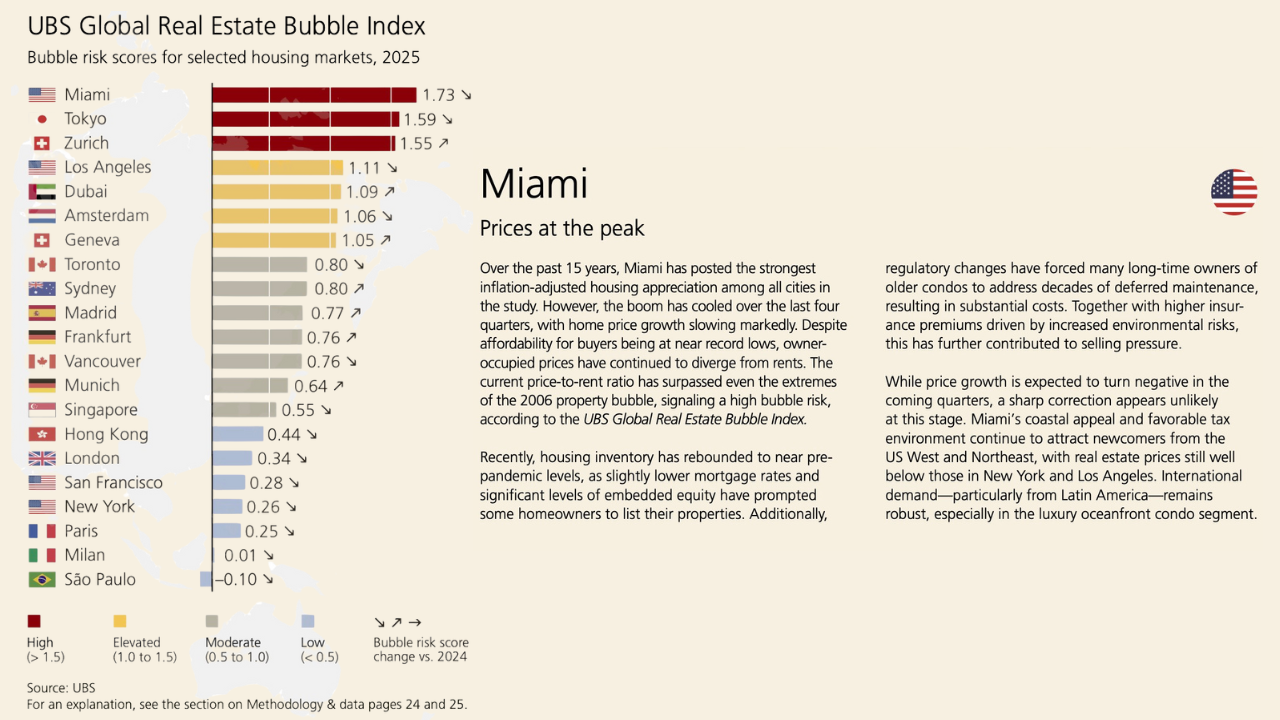
The 2025 UBS Real Estate Bubble Index grabbed global attention by naming Miami the city most at risk for a housing bubble. But the report’s logic doesn’t hold up under scrutiny. While UBS defines “bubble risk” as the chance of a large price correction, the same report admits that “a sharp correction appears unlikely at this stage.” It also notes strong ongoing demand, favorable tax migration, and international interest, factors inconsistent with a market on the verge of collapse.
The core problem isn’t that UBS analysts are overseas; it’s that the methodology is opaque and internally inconsistent. Miami is treated as a single monolithic market, when in reality it’s made up of nearly 20 submarkets, each behaving differently. This broad-brush approach makes for a sensational headline, but it distorts reality and risks misleading readers who rely on the report without digging into the fine print.
Is the Miami Real Estate Bubble Real? UBS Says Risky, But Unlikely
How UBS Misreads Miami: Price to Income / Rent
UBS’s “bubble risk” report paints Miami as a speculative market on the verge of collapse, but their conclusion rests on shaky ground. They only published two of the five sub-indices used to build the ranking: price-to-income and price-to-rent ratios. In both of those, ironically, Miami actually scored strongest, ranking first and second globally. That alone should raise questions about their methodology.
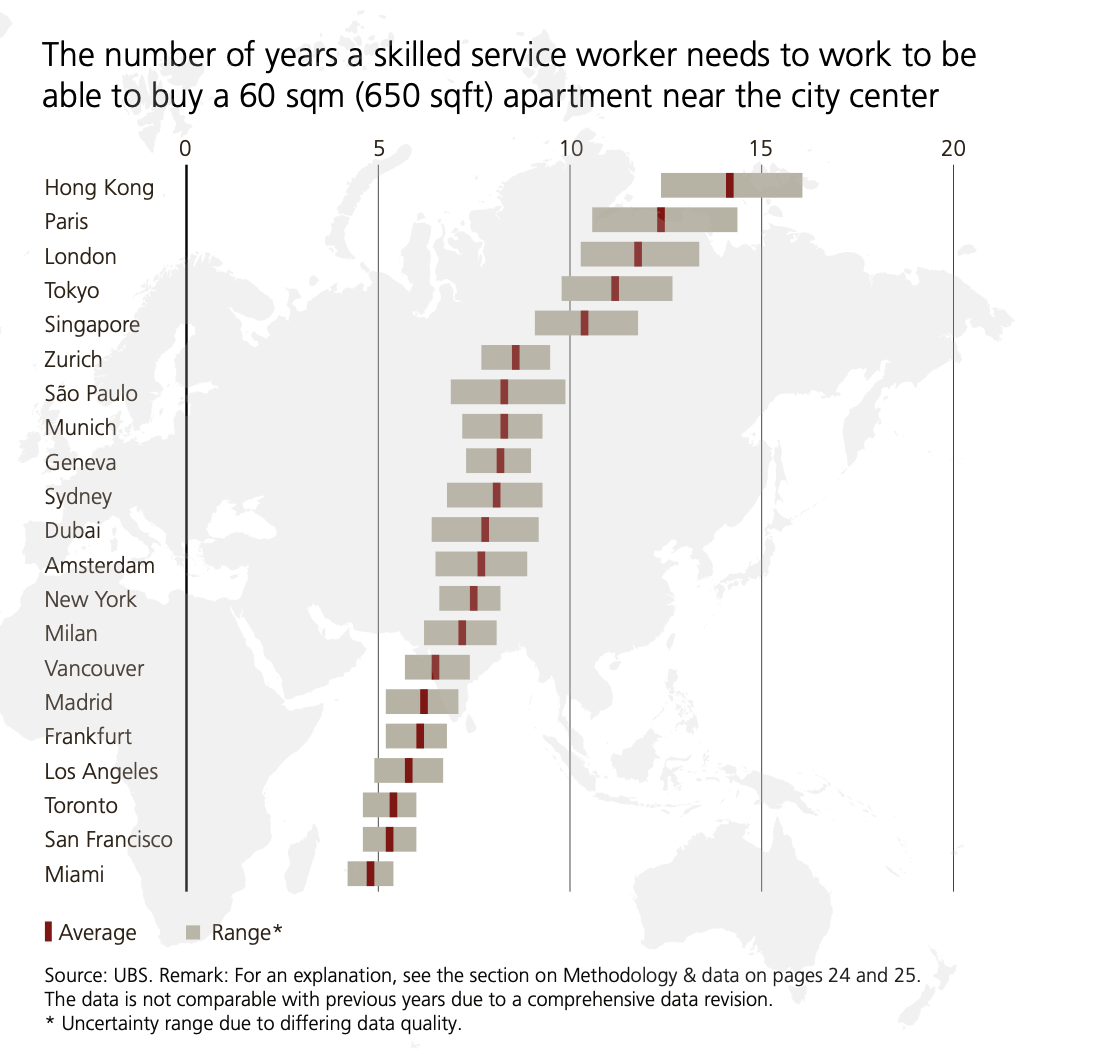
The bigger issue is context. UBS used average local income to measure affordability, which might make sense for Zurich or Toronto, but not for Miami, a city whose housing market is driven by global and domestic wealth migration, not local wages. Median household income in Miami-Dade hovers around $60,000, but the buyers driving transactions in Coconut Grove, Brickell, or Miami Beach are not earning local salaries, they’re moving here with millions in liquidity from New York, California, or abroad. By blending local income data with luxury market prices, UBS effectively merged two separate economies into one distorted picture. The result is a misleading “bubble” label that ignores Miami’s true demand base. What they’re really measuring is income inequality, not housing risk.
Why the Market Fundamentally Defies Miami Real Estate Bubble Fears
A true bubble occurs when prices rise on leverage and speculation, only to collapse when debt-fueled demand evaporates. That’s not the Miami story. Nearly 80% of condos over $2,000 per square foot and 74% of million-dollar units are purchased in cash. Liquidity, not debt, is driving price growth, and most buyers are long-term residents or relocating high-income earners.
Miami’s strength comes from structural trends: migration from high-tax U.S. states and global wealth hubs, coupled with lifestyle and economic opportunities that make the city a permanent home for new residents. For a real bubble to form, the city would need a dramatic reversal—wealth fleeing, safety declining, or livability deteriorating. None of these are remotely likely.
Rather than speculation-driven instability, Miami’s market reflects enduring demand, cash transactions, and genuine lifestyle appeal. It’s a collection of micro-markets thriving on real fundamentals, making it one of the country’s most resilient luxury real estate hubs, not the most at risk as UBS would suggest.
Better Measures of Bubble Risk
If we want to assess whether Miami is in a bubble, we need to focus on how homes are being purchased, not just how much they cost. The first critical measure is leverage—the percentage of sales financed with debt. During true bubbles, markets are fueled by risky loans and over-leveraged buyers. That’s not the case in Miami. In fact, roughly 60% of luxury transactions are all cash, and those financed typically have conservative loan-to-value ratios. The absence of speculative borrowing means prices aren’t being propped up by unstable credit.
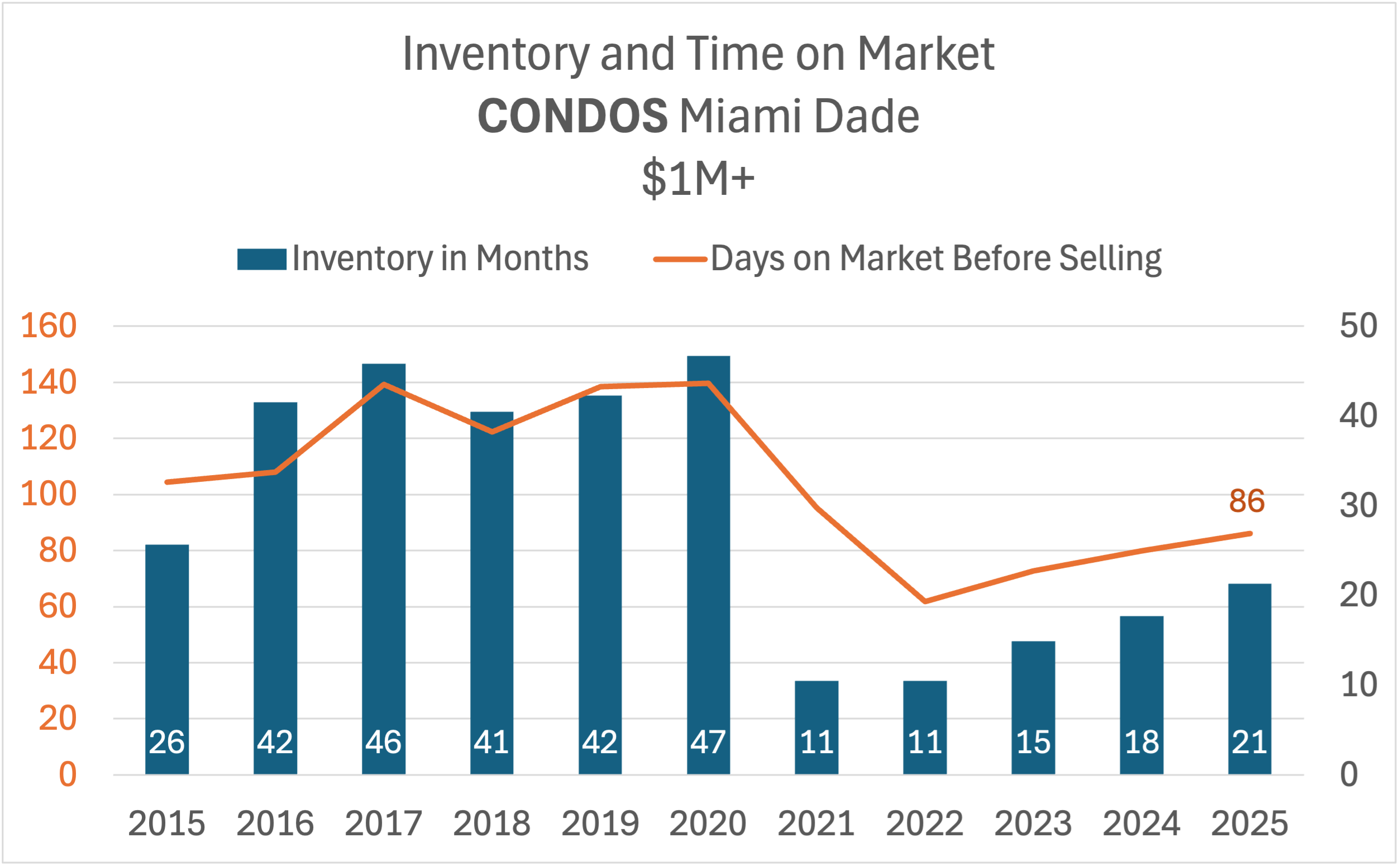
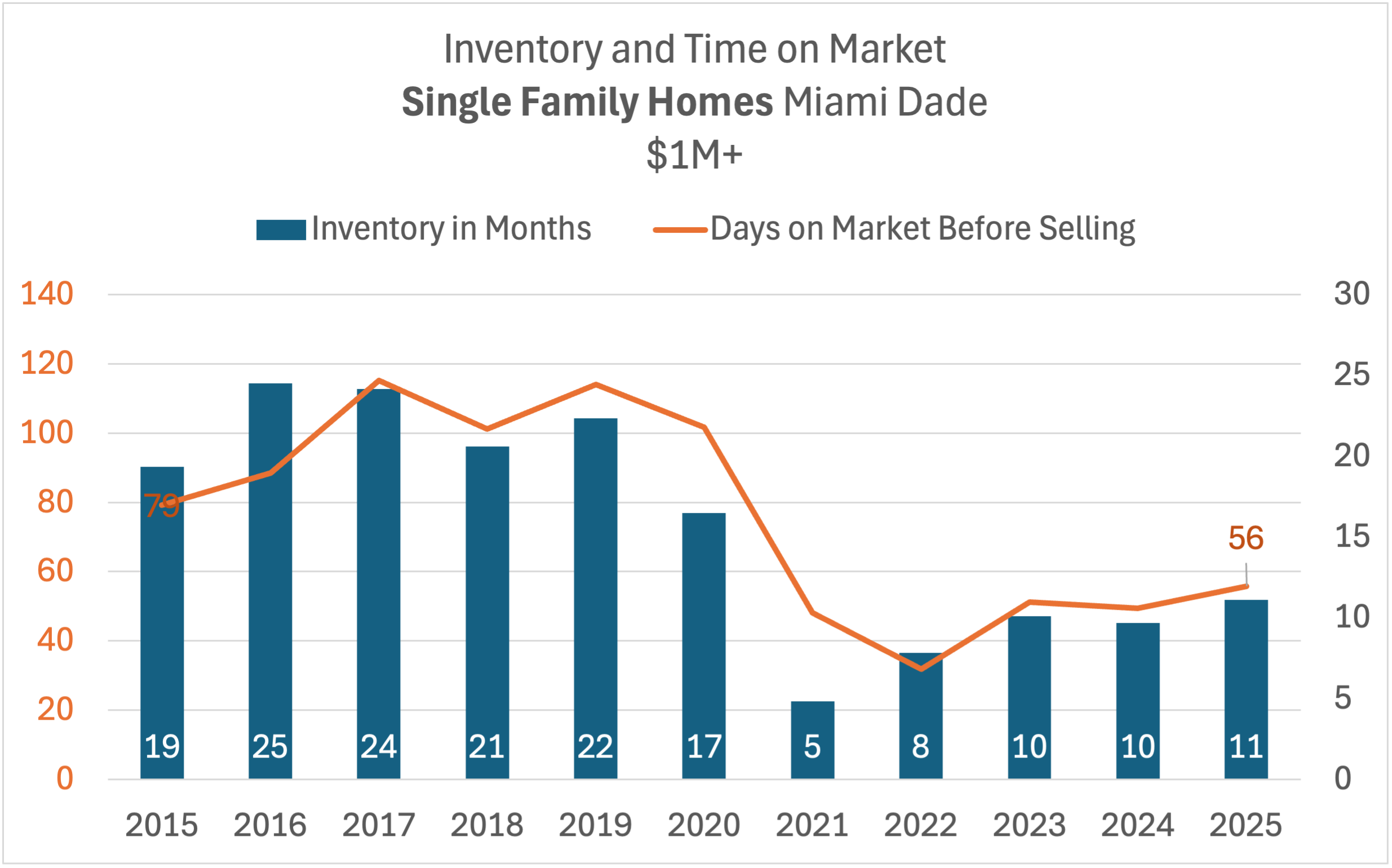
The second key indicator is inventory. Bubbles occur when supply balloons and demand collapses. In Miami, the opposite is true. Inventory under $500,000 has dropped more than 80% since 2019, and luxury supply remains significantly below pre-COVID levels. Even with new development, most projects are presold or selling faster than expected. When buyers are paying cash for limited inventory, and that inventory continues to shrink, it’s the opposite of bubble behavior. Inventory in Miami is often reported as a warning sign, but this can be misleading. Headlines focus on short-term slowdowns or specific units that aren’t selling, while overall inventory remains historically low. In small segments—like high-end or generic units—even a single sale (or lack of one) can make trends appear extreme, giving a distorted view of market risk.
The third, often overlooked, factor is time-on-market. During overheated speculation, listings sit longer as buyers vanish. Today, Miami’s absorption rate remains historically strong—well-priced properties in key neighborhoods often sell within weeks. This kind of velocity doesn’t point to a fragile market but to one with enduring demand strength.
Miami’s Reality: Wealth Migration and Demand Strength
To understand Miami’s current trajectory, you have to understand who’s moving here and why. Over the past five years, Miami has seen one of the most dramatic wealth migrations in the country. High-earning professionals, entrepreneurs, and family offices from states like New York, New Jersey, and California are relocating for tax efficiency, lifestyle, and the ability to work from anywhere. These buyers are not speculative—they’re end users creating genuine demand. This migration has fundamentally reshaped Miami’s buyer base. The market is now dominated by individuals purchasing primary residences or long-term assets, often with minimal financing. They’re building businesses, enrolling their kids in local schools, and anchoring their lives here. That’s not speculative froth—it’s sustainable population and capital inflow.
Meanwhile, Miami’s global positioning has evolved. It’s no longer a resort city dependent on foreign second-home buyers—it’s a year-round business and financial hub. Wealth from Latin America, Europe, and now the U.S. domestic elite all converge here. That diversity of demand insulates Miami from any single economic shock. So when UBS labels Miami “at bubble risk,” they’re not measuring risk—they’re misunderstanding transformation. The city isn’t inflating artificially; it’s restructuring upward into a wealth-based market. The fundamentals—cash-heavy demand, limited inventory, and long-term migration—suggest not a bubble about to burst, but a baseline that’s permanently higher than before.

It’s Not All Perfect: What to Avoid in Miami’s Market
If you want to stay out of trouble, focus on what not to buy. There are three main categories where risk is highest:
1. Older Condos with Rising Costs
Buildings 30–50+ years old carry hidden dangers. Post-Chaplin Tower, many require massive structural updates, new reserves, and skyrocketing HOA fees. Pools, lobbies, and infrastructure need constant attention. Some have doubled or tripled their fees in just a few years. These are the units where “throwing good money after bad” is a daily reality. Even if the location seems desirable, the maintenance burden and financial unpredictability make them high risk.
2. Oversaturated Rental and Micro-Unit Buildings
Small studios, micro-lofts, or buildings heavy on short-term rentals often face an oversupply problem. The market for these units is narrow, and any glut causes prices to stall or drop. Even newer buildings in these categories can struggle to sell, leaving owners chasing the bottom. Look for high rental concentration or repeated developer launches in the same submarket—this is a red flag for microbubbles.
3. Branded or Hype-Driven Condos
Beware of developments that sell on name recognition rather than quality. Brand-focused projects can inflate prices for marketing alone. The “psychological bubble” of a luxury brand often collapses once the market realizes finishes, layouts, and amenities do not justify the cost. These products may start high but quickly stagnate, leaving owners stuck with units that are hard to sell.
The Bottom Line:
Avoid old buildings with rising maintenance costs, micro or rental-heavy units, and hype-driven branded condos. These segments carry the greatest financial risk and market volatility. Stick to well-built, thoughtfully managed newer luxury developments that meet real buyer demand. Miami’s market rewards quality, location, and sustainability—not nostalgia, gimmicks, or overcrowded product types.
Final Words on the Myth of the Miami Real Estate Bubble
In short, Miami’s real estate market is not a bubble—it’s a highly segmented, thriving ecosystem driven by long-term migration patterns, global wealth, and demand for prime, well-built product. Headlines may scream “bubble,” but the fundamentals tell a different story. For a true market reversal, the city would have to become hostile to wealth, unsafe, or unattractive to live in—all highly unlikely scenarios.
Buyers should focus on long-term fundamentals: lifestyle, location, quality of construction, and sustainable value. Avoid old, poorly managed buildings, oversaturated rental units, or hype-driven branded condos. Instead, invest in well-designed, modern properties that satisfy the real, enduring needs of residents.
Thank you for joining us on this episode of Better Decisions. Don’t forget to subscribe to our channel and explore our neighborhood reports, where we break down markets with hyper-specific data, graphs, and predictive insights for the year ahead. If you have questions or want to dive deeper, reach out—we’re always here to help guide smarter real estate decisions.
Stay tuned for the next episode, and as always, make better decisions.
FAQ
These are the most commonly Miami Real Estate Related questions
What should relocation buyers know before buying real estate in Miami?
HOME BUYERS
Relocation buyers looking at homes in Miami should understand that choosing the right house is less about the property itself and more about location, schools, and long-term value. Many buyers make the mistake of focusing on price or finishes, while the real driver of value is the neighborhood and micro-location. Older homes often represent better value, but may also be part of a future redevelopment cycle. Newer homes command premiums, but don’t always sell faster if pricing is ahead of the market. Commute time, school access, and community dynamics are critical and often underestimated. The key is to evaluate homes not just as lifestyle purchases, but as long-term assets within a very localized market.
Sources:
https://luxlifemiamiblog.com/relocating-to-miami/
https://luxlifemiamiblog.com/relocating-to-miami-with-a-family/
CONDO BUYERS:
Relocation buyers should understand that Miami is a highly segmented, building-driven market, not a uniform one. Pricing can vary significantly between similar properties depending on building quality, layout, and financial health. Many buyers assume newer construction equals better investment, but that is often not the case. Factors like HOA fees, reserves, and rental policies can materially impact long-term value and liquidity. Negotiation opportunities often exist, especially in slower segments, but require precise market knowledge. The key is to evaluate micro-markets and individual buildings, not just neighborhoods or price per square foot.
Sources:
https://luxlifemiamiblog.com/miami-real-estate-market-report/
https://luxlifemiamiblog.com/new-construction-miami-guide/
What are the best areas for relocating families with children
For families relocating to Miami with young children, the most recommended neighborhoods are Coral Gables, Coconut Grove, and Pinecrest. Coral Gables offers the best balance of top schools, safety, and long-term value. Coconut Grove is ideal for younger families seeking walkability, greenery, and a lifestyle-driven environment. Pinecrest provides larger homes, excellent schools, and better value for space, making it ideal for growing families. The key driver across all three is access to strong schools and primary residential stability. Relocation decisions are less about new construction and more about long-term livability and resale strength.
Sources:
https://luxlifemiamiblog.com/best-neighborhoods-miami/
https://luxlifemiamiblog.com/what-are-the-best-family-neighborhoods-in-miami-in-2023/
Are new construction condos in Miami a good investment?
New construction condos in Miami can be a good investment—but only if you understand that not all buildings perform the same. According to the David Siddons Group, many buyers assume “new = better,” but in reality, performance depends on pricing, layout, building quality, and long-term demand. Some new developments set future price benchmarks and can drive long-term appreciation, especially in top-tier projects. However, many are priced aggressively at launch, and buyers relying on marketing instead of data often overpay.
The market is highly segmented, meaning two new buildings next to each other can perform very differently.
The best opportunities typically come from selecting the right building early or negotiating correctly in later phases.
In short: new construction is not automatically a good investment—it becomes one only with building-level analysis and disciplined entry pricing.
Sources:
https://luxlifemiamiblog.com/how-to-buy-a-luxury-condo-in-miami/
https://luxlifemiamiblog.com/category/independent-new-construction-condo-reviews/
https://luxlifemiamiblog.com/beyond-clickbait-real-insights-into-miamis-luxury-condo-market/
Why is buying a Miami condo riskier than buyers think?
Buying a Miami condo is often riskier than buyers expect because the true risks are at the building level—not visible in the listing price. Many buyers focus on finishes and views, while overlooking HOA reserves, insurance exposure, and potential special assessments. In reality, two identical units in different buildings can perform completely differently over time. Rising HOA fees and stricter regulations are also increasing the true cost of ownership, especially in older buildings. Liquidity can be affected by factors like financial health, rental policies, and ongoing repairs. The key risk is not the condo itself—but buying into the wrong building without proper due diligence.
Sources:
https://luxlifemiamiblog.com/how-to-buy-a-luxury-condo-in-miami/
https://luxlifemiamiblog.com/miami-condo-market-risks/
What are Miami's Safest Areas?
Which Miami Areas Still offer Great Value (Budget Friendly alternatives to Coral Gables and Pinecrest)
If you’re looking for better value than Coral Gables or Pinecrest, the answer (in true Siddons style) is not “go cheaper”—it’s go one layer outside the obvious markets.
The strongest value plays are:
- Schenley Park → closest substitute to Coral Gables at ~20% discount while maintaining similar character and location
- Biltmore Heights → almost identical feel to the Gables but ~25–30% cheaper on a $/SF basis
- Glenvar Heights → central location with larger lots and ~25% pricing advantage vs South Miami/Gables
- Baptist / Galloway (Kendall) → Pinecrest-style living (space, schools, land) at up to ~30% lower pricing
The pattern is consistent:
👉 Buyers are shifting west and slightly off-market to gain land, scale, and pricing efficiency. You don’t find value by going to a “cheaper neighborhood”—you find it by identifying adjacent micro-markets that offer the same lifestyle fundamentals without the brand premium.
Sources:
https://luxlifemiamiblog.com/best-value-neighborhoods-miami/
https://luxlifemiamiblog.com/category/miami-neighborhoods/
Is NOW a good time to buy in Miami?
Are Miami real estate prices going down in 2026?
No—but that’s the wrong way to look at it. Miami is not one market anymore, so prices are not moving in one direction. In 2026, the market is split into two: ultra-luxury, scarcity-driven areas (like waterfront and top-tier neighborhoods) are still holding or even rising, while mid-tier condos and oversupplied segments are flat or correcting. What we’re seeing is price divergence, not a crash—some properties are gaining value while others are quietly adjusting downward. Rising inventory and more selective buyers are putting pressure on pricing in certain segments, especially older condos or buildings with weaker fundamentals.
At the same time, global wealth and cash buyers continue to support pricing at the top end of the market. So the real answer: prices aren’t broadly dropping—they’re being repriced based on quality, location, and supply.
Should I buy a house or a condo when relocating to Miami?
The decision comes down to lifestyle first, investment second—and most relocation buyers get that backwards. If you want space, privacy, schools, and long-term family living, a single-family home in areas like Coral Gables or Coconut Grove is typically the stronger choice. If you prioritize walkability, low maintenance, and proximity to business districts, a condo in Brickell or waterfront markets makes more sense.
From an investment perspective, homes tend to be more stable, while condos are more building-dependent and cyclical. Most relocation clients underestimate how much building quality, HOA structure, and future costs impact condo performance. The right answer isn’t “house vs condo”—it’s which asset fits your lifestyle AND holds value within its micro-market.
How do I choose the right Miami neighborhood for my lifestyle?
Why are Miami condo prices so different between buildings?
Miami condo pricing varies widely because value is determined at the building level, not just by location. Two buildings next to each other can have major differences in financial health, reserves, HOA fees, and management quality. Buyers also pay premiums for better layouts, views, amenities, and newer construction—but not all “new” buildings perform equally. Factors like rental policies, upcoming assessments, and building reputation can significantly impact resale value. This is why price per square foot alone is misleading in Miami’s condo market. The real driver of value is how that specific building competes within its micro-market over time.
Sources:
https://luxlifemiamiblog.com/how-to-buy-a-luxury-condo-in-miami/
https://luxlifemiamiblog.com/category/independent-new-construction-condo-reviews/
WHY WORK WITH DAVID? THINGS YOU SHOULD KNOW...
For all our analytics we are agents driving some very unique and advanced tech. We Provide a granular and custom experience that empower our clients with the insight and tools to understand the most complex behaviors of any local markets.
-
Analytical
Over 100 reports produced to date
-
Knowledgeable
Over 1800 published articles and counting


Related Articles

The Real Estate Team Behind the Agent: Why Systems Matter More Than Star Power
The Decisions That Set Your Miami Condo’s Price, Years Before You Ever See It
Miami Zoning Laws Explained: What Every Buyer Must Know Before You Purchase
Miami’s New Construction Condo Boom Comes With Risks Most Buyers Never Ask About
![Aventura luxury condo market 2026 [June]: What Sellers and Buyers Need to Know Right Now](https://luxlifemiamiblog.com/wp-content/uploads/2026/06/Pricing-39.png)
Aventura luxury condo market 2026 [June]: What Sellers and Buyers Need to Know Right Now
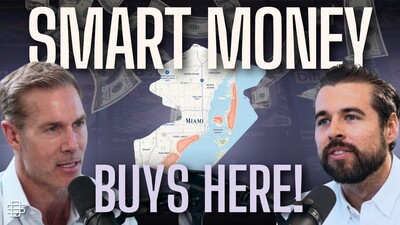
Best Neighborhoods to Invest in Miami 2026: Where Smart Money Is Really Buying and What the Headlines Miss

Selling Your Home in Miami?
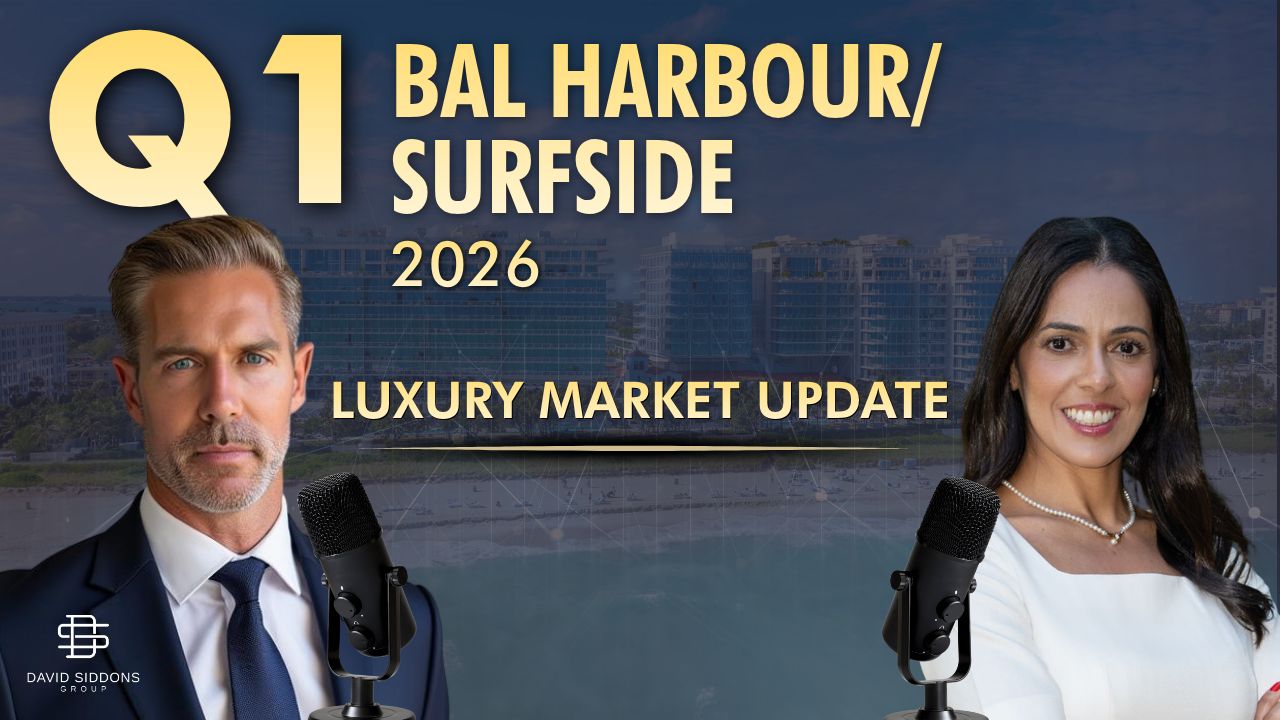
Bal Harbour & Surfside Real Estate Market Q1 2026

The Long Game of Investing in Miami Real Estate (2026 Guide)

Coral Gables Real Estate Market Q1 2026
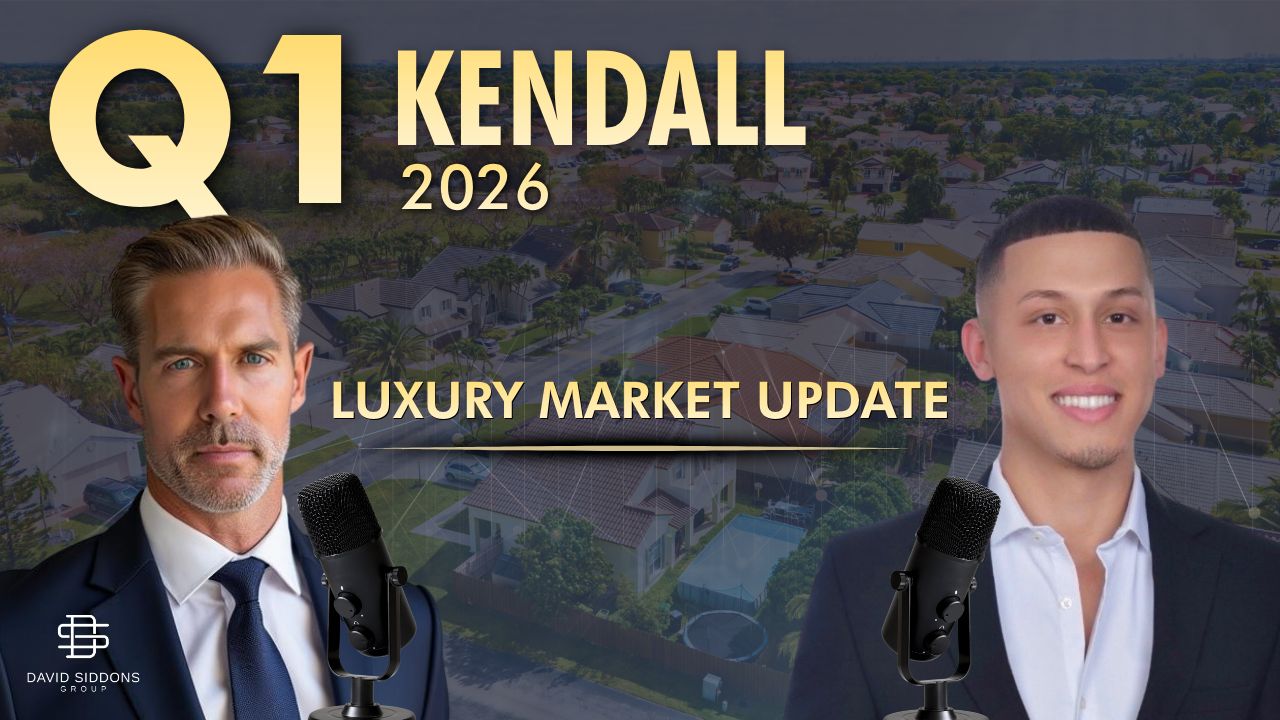
Kendall Luxury Real Estate Market Update Q1 2026
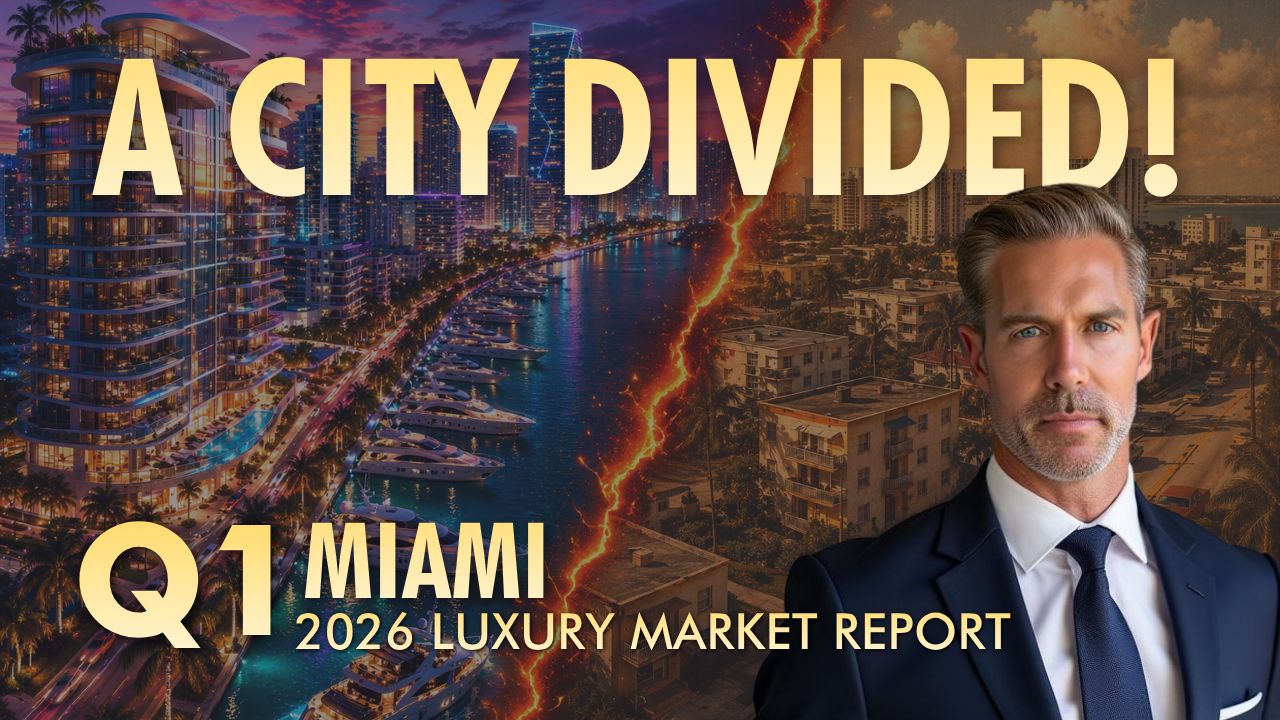
Miami Real Estate Market Report Q1 2026: The Two-Market Reality Driving Prices

Sunny Isles Real Estate Market Q1 2026

Pinecrest Real Estate Market Update Q1 2026
Please fill in your details and David Siddons will contact you

Search related videos

Are St. Regis Sunny Isles Residences Worth the Brand Premium?
Coral Gables Market Report 2025: What the Headlines Aren’t Telling You!
How David Siddons’ Power Team Drives Miami’s Luxury Market
Mid‑Year 2025 Coconut Grove Report: The Truth About What’s Selling Now
Brickell Mid‑Year Market Report 2025 | Is Brickell’s Luxury Market in Trouble?
Pinecrest Mid-Year Market Report 2025 | What’s Selling, What’s Sitting & Why
Miami Beach Condo Market Mid-Year Report 2025 | What Buyers & Sellers Need to Know
How to Lose $1M in The Miami Condo market | Top Mistakes That Cost Miami Condo Buyers Millions
The Well Project EXPOSED Coconut Grove’s Hottest Units
Miami Real Estate in 2025 Is NOT What You Think 😱 | Midyear Must Knows for Buyers & Sellers!
7 Things You Should Never Say to a Real Estate Agent in Miami!
Landmark Victoria Park Residence in Fort Lauderdale: Inside 420 NE 11th Ave 🌴✨
Luxury Living on 2355 S. Miami Ave | Fully Furnished 4-Bed Home w/ Resort-Style Pool 🏊
Is Mandarin Oriental Residences Miami a Smart Condo Investment? Prices, Floorplans, Views & Finishes


- Get our Newsletter
- Subscribe
- No Thanks
Get the latest news from Miami Real Estate News
Close
Edit Search
Close
2 of 14
Share this property
Recomend this to a friend, just enter their email below.
Close
Your email was sent successfully
Close
 COMPARE WITH CONDOGEEKS