















- Best of All
- Best Miami Luxury Condos
- Most popular
- Relocating to Miami
- Private Schools
- Investments
- Gated communities
- Waterfront information
- Luxury homes
- Luxury Condos
- New Construction Condos in South Florida
- Independent Pre-Construction condo reviews for Miami
- Independent Pre-Construction condo reviews for Fort Lauderdale
Kendall Luxury Real Estate Market Update Q1 2026
Kendall is no longer Pinecrest’s Plan B
Kendall Market Analysis by David Siddons
This report is part of a 12-part series of in-depth market analyses authored by David Siddons, a real estate advisor specializing in Miami’s luxury residential markets. His work focuses on interpreting pricing trends, supply dynamics, and buyer behavior across key high-end neighborhoods such as Kendall, Pinecrest, Coral Gables, and Coconut Grove—providing clients with a structured, data-driven framework for making real estate decisions.
The following section includes insights contributed by Jaime Castro, supporting the broader analysis with additional perspective on current market dynamics. Unlike generic market updates, this analysis is designed to break down the underlying forces driving value within Kendall’s luxury segment. It helps buyers and sellers understand not just where the market stands today, but how it is evolving across the broader luxury landscape—and where the most compelling opportunities and risks are emerging.
Introduction
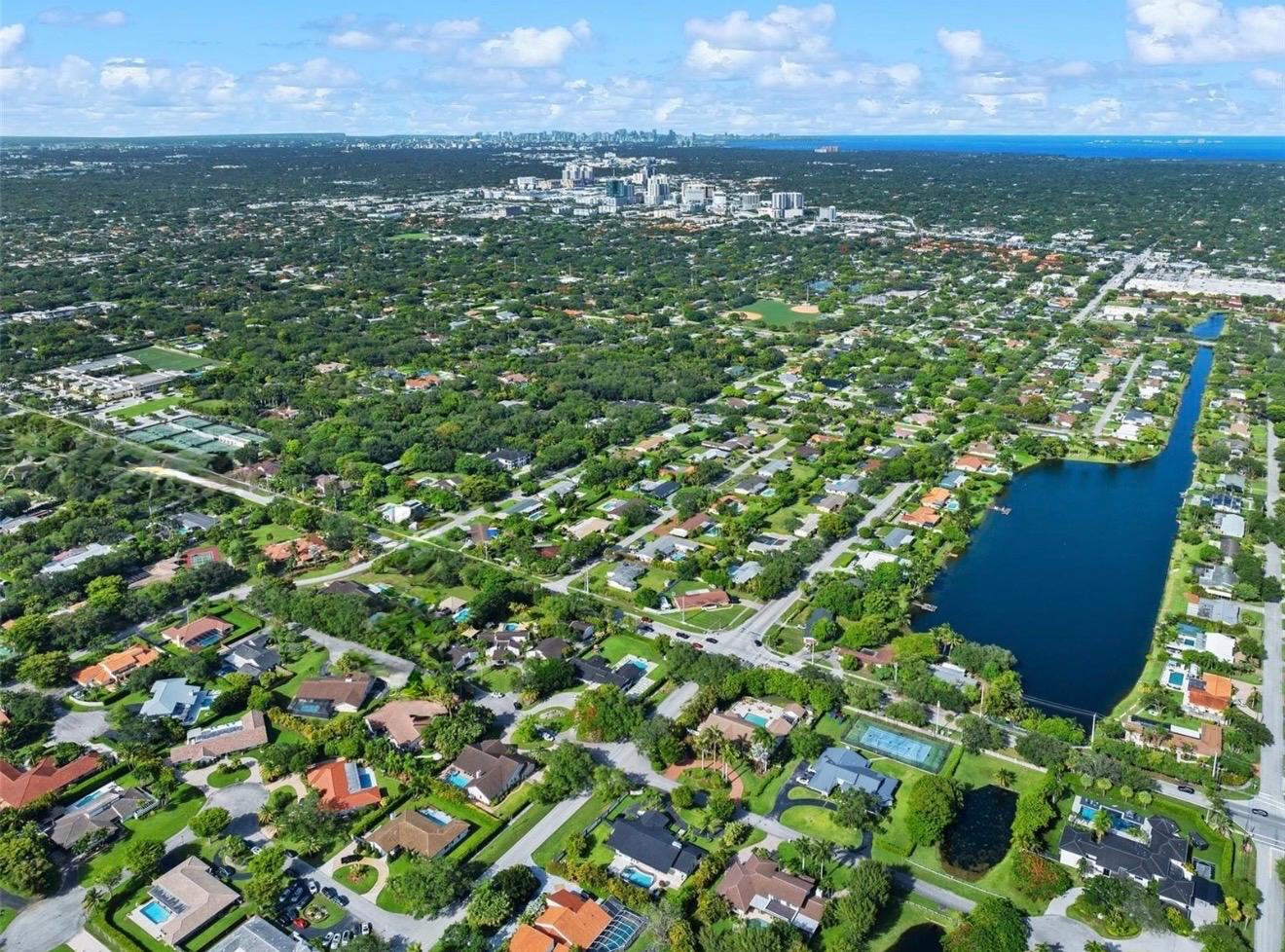
For a long time, Kendall was the backup plan the market buyers settled for only after being priced out of Miami’s legacy luxury markets. That story is over. Today, Kendall has emerged as a destination in its own right. It offers a version of Miami luxury built less on prestige signaling and more on space, convenience, and daily livability. Buyers are no longer ‘landing’ here; they are crossing US-1 on purpose. They’re drawn to the expansive lots, top-tier schools, and a lifestyle anchored by private clubs and the retail powerhouses of Dadeland and The Falls. For the modern family, Kendall isn’t a compromise, it’s the more practical, financially sound version of the high life. But a market with a new identity requires a new set of rules, and too many people are still viewing Kendall through an outdated lens. The mistake is treating Kendall like a monolith when it is actually a collection of distinct, nuanced luxury pockets. Most analysts are still relying on blended averages that blur real-time shifts and confusing aspirational asking prices with executed reality. In a market this misunderstood, precision is the only way to find value. That is why this report is needed. There are 8 key points to discuss, so let’s dive into it.
1. Sellers Are Asking More Than Buyers Are Paying.
The most important truth in Kendall’s luxury market right now is simple: buyers are still active, but many sellers are still pricing ahead of where the market is actually clearing. The 49 homes currently active are asking a median of $642 per square foot. The 36 homes that closed in the last six months sold at a median of $609 per square foot. That is a real-time gap of $33 per square foot. On a 4,000-square-foot home, that is $132,000.
This gap is where time, leverage, and negotiating power start to slip. Across the three main pockets the conversations carrying the weight of Kendall’s $1.5M+ market, active sellers are often asking materially more than buyers have recently been willing to pay based on closed sales. The exact spread changes by pocket, but the pattern is the same: active pricing is often running ahead of closed pricing. That is why the market feels more frustrating than weak. The homes that are sitting are often not bad homes. They are homes priced just above where buyers have already shown they are willing to close.
The market is not rejecting Kendall. It is rejecting misalignment.
| Area / Segment | Active Median Asking ($/SF) | Closed Median ($/SF) | Gap ($/SF) | Gap (Percentage) | Example Impact (4,000 SF) |
| Overall Market | $642 | $609 | $33 | -5,5% | ~$132,000 |
| Baptist / Galloway Corridor | $658 | $558 | $100 | -18% | ~$400,000 |
| Killian Corridor | $766 | $697 | $69 | -10% | ~$276,000 |
| The Falls Corridor | $521 | $515 | $6 | -1% | ~$24,000 |
Find the Best Kendall Homes for Sale
2. In 2026, It’s Not the Market, It’s Time That’s Costing Sellers
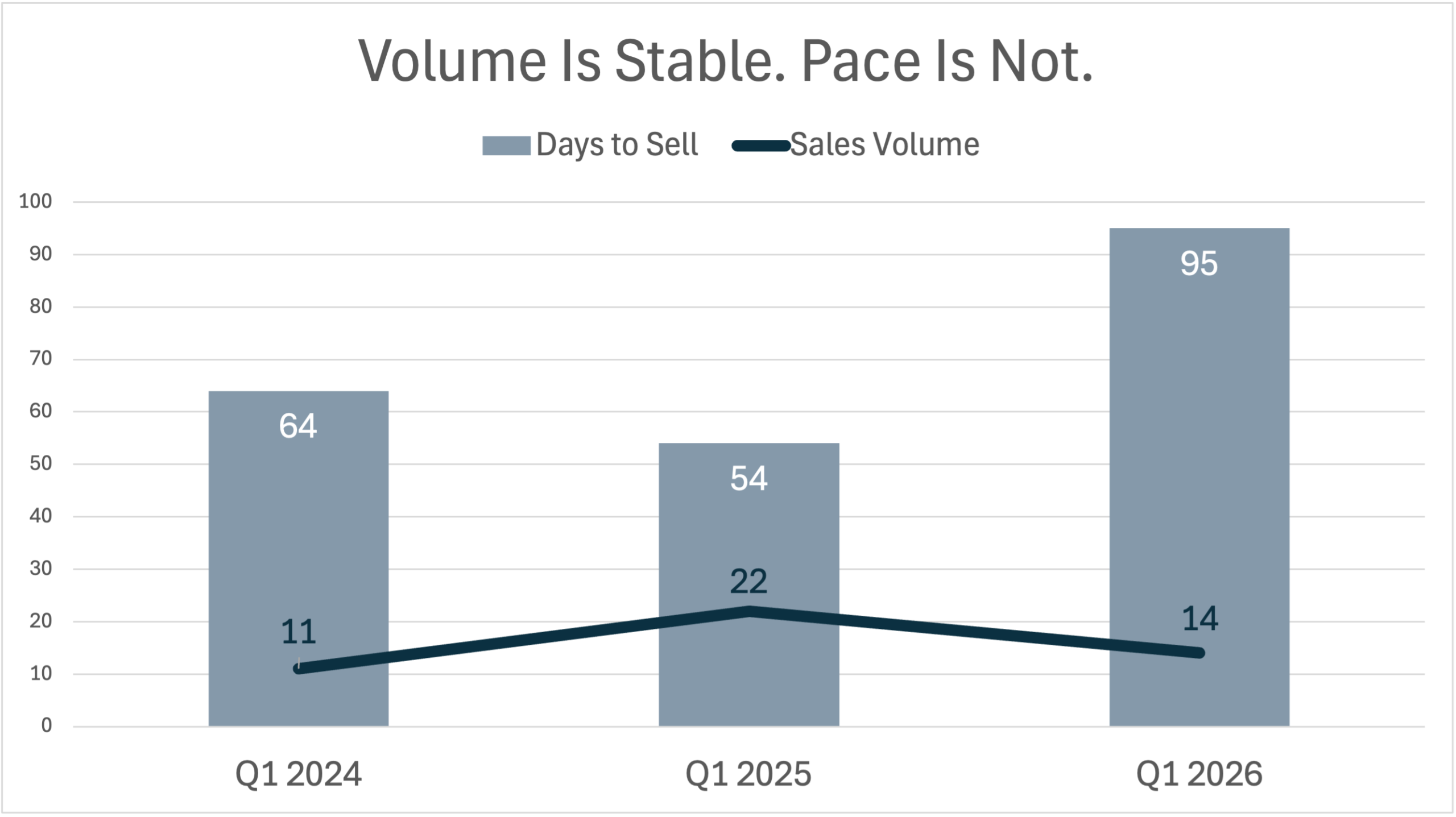
A clear way to read Kendall’s luxury market is to compare the first quarter of each year. In Q1 2024, Kendall recorded 11 luxury sales, a $2.15 million median sale price, $541 median $/SqFt, and 64 median days to sell. In Q1 2025, volume doubled to 22 sales, median pricing improved to $600 per square foot, and median days to sell improved to 54 days. That was the strongest opening quarter in the data. Q1 2026 gave back that momentum. The market returned to 14 closings, matching Q1 2024 in volume. Median pricing dropped to $523 per square foot, median sale price came in at $1.96 million, and median days to sell climbed to 95. More than half of all closings required a price reduction before they got done. That does not mean Kendall has weakened structurally. It means Q1 2025 was the high point, and Q1 2026 is slower, more selective, and more demanding. The point is simple: Volume has not collapsed. Pace has. Time is the new currency. In 2025, prestige helped sell homes. In 2026, homes sell on math.
3. Inventory Is Expanding Choice, and Raising the Bar for Sellers.
Kendall is not oversupplied in a distressed sense. But it is carrying enough inventory to create real competition, and that competition is exposing pricing mistakes faster. At 7.5 months of supply, this is no longer a market where sellers can expect automatic absorption simply because they are in a desirable part of Kendall. Buyers have options. And when buyers have options, the urgency starts to fade. The buyer no longer feels the same pressure to act quickly. The fear of missing out weakens. More comparison happens. More waiting happens. More negotiation happens. The most crowded pricing bands are also the ones where homes are taking the longest to move. Sellers can still list aggressively, but that no longer means buyers will follow. More often, it means the property sits, reductions follow, and the leverage shifts. Seller’s warning: when inventory crosses six months, leverage starts shifting from the front door to the closing table. That is what heavier inventory is doing in Kendall right now. It is not breaking the market. It is forcing a discipline change that sellers need to understand.
4. Older Homes Are Closing. But Some May Not Stay Older Homes for Long.
On the closed side, older homes are still doing most of the work. Of the 14 luxury closings in the last 90 days, only one was built in 2020 or later. The rest were older homes, many built between the 1950s and 1980s. That tells us the homes actually getting to the finish line right now are mostly older product. But the pending and active-with-contract pipeline tells a different story. Of the 16 homes currently pending or under contract, several are newer or more modern homes, including properties built in 2016, 2023, 2024, and 2026. In other words, newer product is still attracting
buyers. It is just not converting as quickly. That raises the more important question: what kind of demand is actually driving those older- home sales? Are buyers purchasing these homes as end-user opportunities because they represent relative value? Or are some of these transactions part of the redevelopment cycle, where older
homes on strong lots eventually return to the market as new construction? That distinction matters because it changes how we interpret the activity. If these sales are primarily end-user purchases, the takeaway is that buyers are prioritizing value and tolerating older product. But if some of these homes are being acquired for eventual redevelopment, then today’s older-home sales may also be feeding tomorrow’s new-construction supply. That is the observation: some of today’s older-home sales may become tomorrow’s new- construction inventory.
5. Newer Homes Command the Premium. Older Homes Drive the Market.
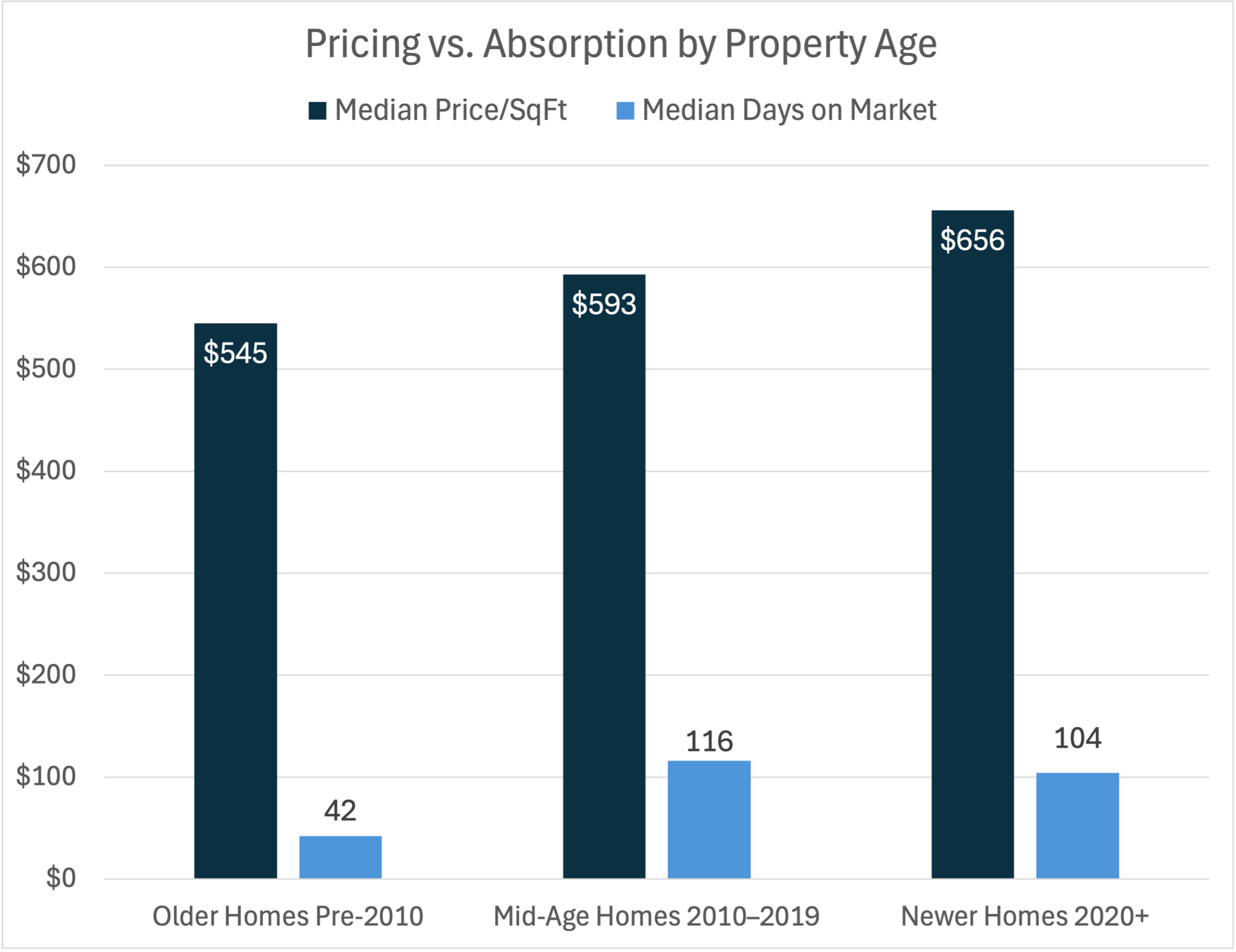
The pricing difference between newer and older homes is real. Homes built in 2020 or later closed at a median of $656 per square foot. Homes built before 2010 closed at $545 per square foot. That is a premium of more than $100 per square foot for newer product. But the premium does not translate into faster absorption. Newer homes took a median of 104 days to sell. The 2010–2019 cohort took even longer at 116 days. Pre-2010 homes moved fastest, at 42 days. That tells you something important about how the market is behaving. Newer homes command the premium. Older homes drive the market. One gets the attention. The other gets the deal done. Why? Because newer homes are often burdened by sellers or developers trying to set a new high for the neighborhood. The product may be better, but the pricing is often trying to force a premium the market has not yet confirmed. Older homes are still getting deals done because they are often priced more realistically, and in some cases buyers are underwriting the land as much as the structure.
The point is simple: Product type matters, but pricing alignment matters more.
6. The Ceiling Is Not the Baseline.
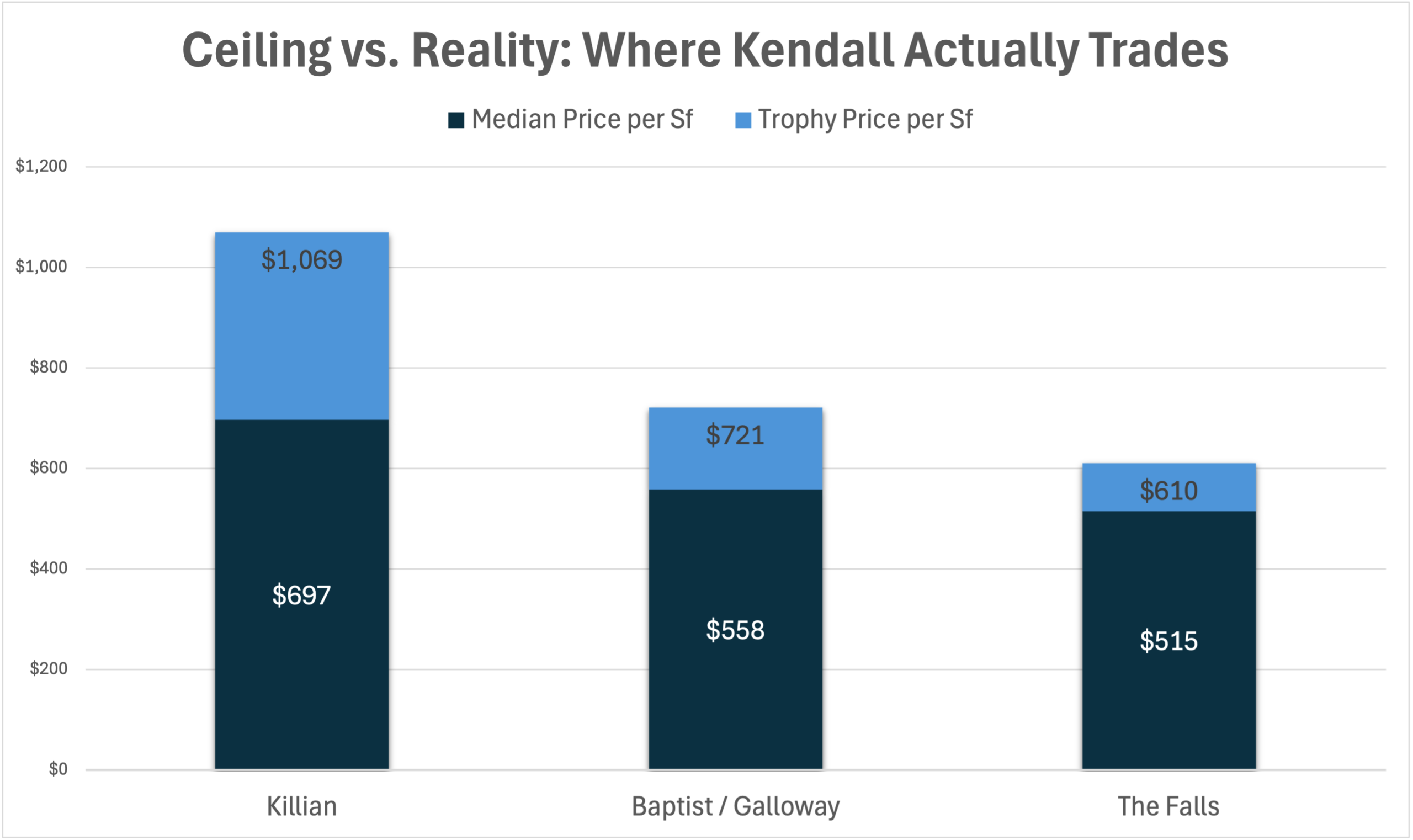
Kendall can support premium even exceptional price-per-square-foot sales. But those numbers are not the baseline. They are the ceiling. And each pocket has a different ceiling. In Baptist / Galloway, the highest closed sale in the
sample reached about $721 per square foot. In Killian, the ceiling reached about $1,069 per square foot, led by 8998 SW 108 Street. In The Falls, the ceiling reached about $610 per square foot, led by 9130 SW 140th St. That matters because it exposes one of the biggest mistakes sellers make in Kendall: confusing the Ceiling with the baseline of the market. The clearest example is 8998 SW 108 Street, which closed at $5,000,000, or about $1,069 per square foot. That sale proves Killian can support true luxury pricing but only for very specific product, not as a market-wide baseline. It is a trophy, not a trend. A more practical benchmark may be 11220 SW 95th St, which closed at $4,510,000, or about $759 per square foot. That matters because it reflects a level the market appears more consistently willing to support for well-executed new construction on a meaningful lot.
The lesson is simple: Kendall has a ceiling. Sellers get into trouble when they price from the exception instead of the level their corridor and product type can actually support. If your home does not have the exact pedigree of a record-breaker, pricing it like one is usually a recipe for an extended listing.
7 Is Kendall Now Competing With Pinecrest?
In some parts of the market, yes. In most of Kendall, no. That distinction matters. Buyers above $2 million are no longer underwriting Kendall in isolation. Many are moving through a predictable value path. They begin in markets like Coconut Grove, then Coral Gables, then South Miami, and eventually start comparing Glenvar Heights, Pinecrest-adjacent pockets, and parts of Kendall where the value proposition becomes hard to ignore. That migration is not random. It is a search for better land, better scale, and better pricing efficiency. But the Pinecrest comparison only works when Kendall preserves a real advantage. That usually means larger lots, strong product, and a location within Kendall that still feels competitive against eastern alternatives. Kendall is not “lesser Pinecrest.” It becomes a real Pinecrest alternative only when it offers something the eastern market cannot easily replicate usually land scale, privacy, and newer product at a better value equation. For many family buyers, Kendall’s luxury appeal is not only financial. It is logistical. Proximity to schools such as Gulliver, Palmer Trinity, and Riviera, along with access to The Falls retail corridor, nearby fitness clubs, and a more frictionless day-to-day routine, creates a real time advantage. In that sense, Kendall is not just selling bigger lots. It is selling a more efficient version of family luxury. That case is much easier to make in Baptist / Galloway, Killian, and parts of The Falls than it is in weaker or more price-sensitive pockets.
So yes, Kendall is competing with Pinecrest. But only in certain corridors. And only when the value proposition is real.
8 Kendall’s Next Phase Will Be Decided by Pricing Alignment.
The future of Kendall’s $1.5M+ market will be shaped by alignment. Baptist / Galloway is likely to remain the market’s liquidity engine, but sellers there will need to stay more disciplined because the ask-over-close gap is showing up there most clearly. Killian will likely continue to support the highest pricing in Kendall, but it will remain a narrow market where land, scarcity, and execution matter more than hype. The Falls should remain the most lifestyle-sensitive of the three, with buyers who are still selective and willing to wait for the right product.
Taken together, the message is clear: Kendall is not weak. It is segmented, selective, and increasingly unforgiving of sellers who price from the ceiling instead of the reality of their corridor. This is why 2026 belongs to the realist. The opportunity is not in pretending the market is hotter than it is. The opportunity is in understanding where buyers still see value, where sellers are still anchored too high, and where the next phase of product will emerge.
Conclusion
The 2026 Opportunity Belongs to the Realist. Kendall’s $1.5M+ market is not being carried by one number, one corridor, or one kind of buyer. It is being shaped by three core corridor conversations, each with its own logic, but all increasingly governed by the same rule: buyers are willing to pay for real value, not assumed value.That is why the gap between asking price and closed price matters so much. It is not just a pricing issue. It is the market’s clearest signal about what is working, what is not, and what kind of product will define Kendall’s next phase. Some homes will still move with confidence. Some will sit, reduce, and lose momentum. Some older-home trades may become the seedbed for future new construction. And some sellers will continue to confuse the ceiling with the baseline. In this market, the opportunity belongs to the realist — the buyer who understands value, the seller who understands their corridor, and the developer who understands that pricing must be earned, not assumed. In Kendall today, the sellers who win are not the ones who price from the headline sale.They are the ones who price from the reality of their corridor.
Work with the David Siddons Group, The Kendall Market Specialist
FAQ
These are the most commonly Miami Real Estate Related questions
1. Is Kendall a buyer’s or seller’s market in 2026?
Kendall is a selective, negotiation-driven market in 2026, leaning toward buyers in many segments. With approximately 7.5 months of inventory and a clear gap between asking and closing prices, buyers have more leverage—especially when properties are overpriced. However, well-priced homes still sell efficiently, meaning success depends more on pricing alignment than overall market direction.
2. Why are homes in Kendall taking longer to sell in 2026?
Homes in Kendall are taking longer to sell because the market has shifted from momentum to precision. Median days on market increased significantly, and more than half of recent sales required price reductions. The issue is not lack of demand—it’s misalignment between seller expectations and what buyers are actually willing to pay based on recent comparable sales.
3. Are home prices in Kendall going up or down?
Home prices in Kendall are adjusting rather than rising, with recent data showing a decline in price per square foot compared to the 2025 peak. While demand remains active, buyers are more price-sensitive, and many properties are selling below initial asking prices. The result is a market where pricing is being tested rather than expanding.
4. Is Kendall competing with Pinecrest in the luxury market?
In certain corridors, Kendall is increasingly competing with Pinecrest—but not across the entire market. Higher-end areas like Baptist/Galloway, Killian, and parts of The Falls offer larger lots, newer homes, and better value per square foot, making them viable alternatives for buyers seeking space and practicality. However, this competition only holds where Kendall delivers a clear value advantage.
5. What types of homes are selling fastest in Kendall right now?
In Kendall, older homes are currently selling faster than new construction, primarily because they are priced more realistically. While newer homes command a premium—often over $100 per square foot higher—they tend to sit longer due to aspirational pricing. This highlights a key trend: product quality attracts attention, but pricing alignment is what actually closes deals.
WHY WORK WITH DAVID? THINGS YOU SHOULD KNOW...
For all our analytics we are agents driving some very unique and advanced tech. We Provide a granular and custom experience that empower our clients with the insight and tools to understand the most complex behaviors of any local markets.
-
Analytical
Over 100 reports produced to date
-
Knowledgeable
Over 1800 published articles and counting


Related Articles
Galloway Glen Real Estate 2026: What Homes Sell for in This Kendall Neighborhood

St. Regis Bahia Mar Penthouse Review: A $22M Fort Lauderdale Sky Home at Half the Price of Miami
Edgewater Miami Condo Market 2026: $1M+ Resale at $968 a Foot vs. $2,000 for Pre-Construction

Buying or Selling a Condo in Litigation in South Florida: Red Flag or Opportunity?
The 2028 Brickell Condo Cliff: Which Buildings Are at Risk and Where Smart Money Is Moving

Should You Stage Your Home Before Selling? What 1,266 Agents and Two Studies Found
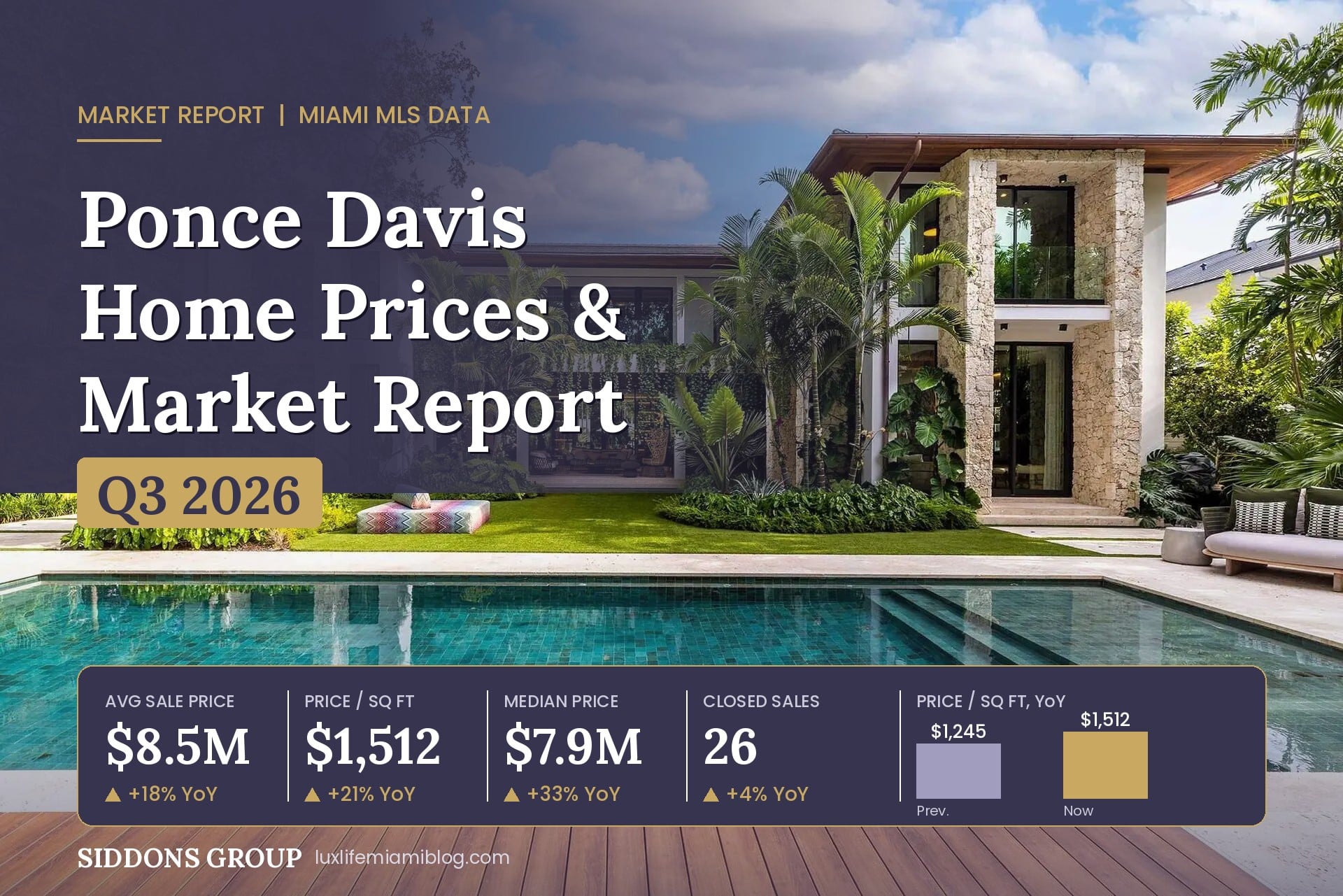
Ponce Davis Home Prices & Market Report: Q3 2026
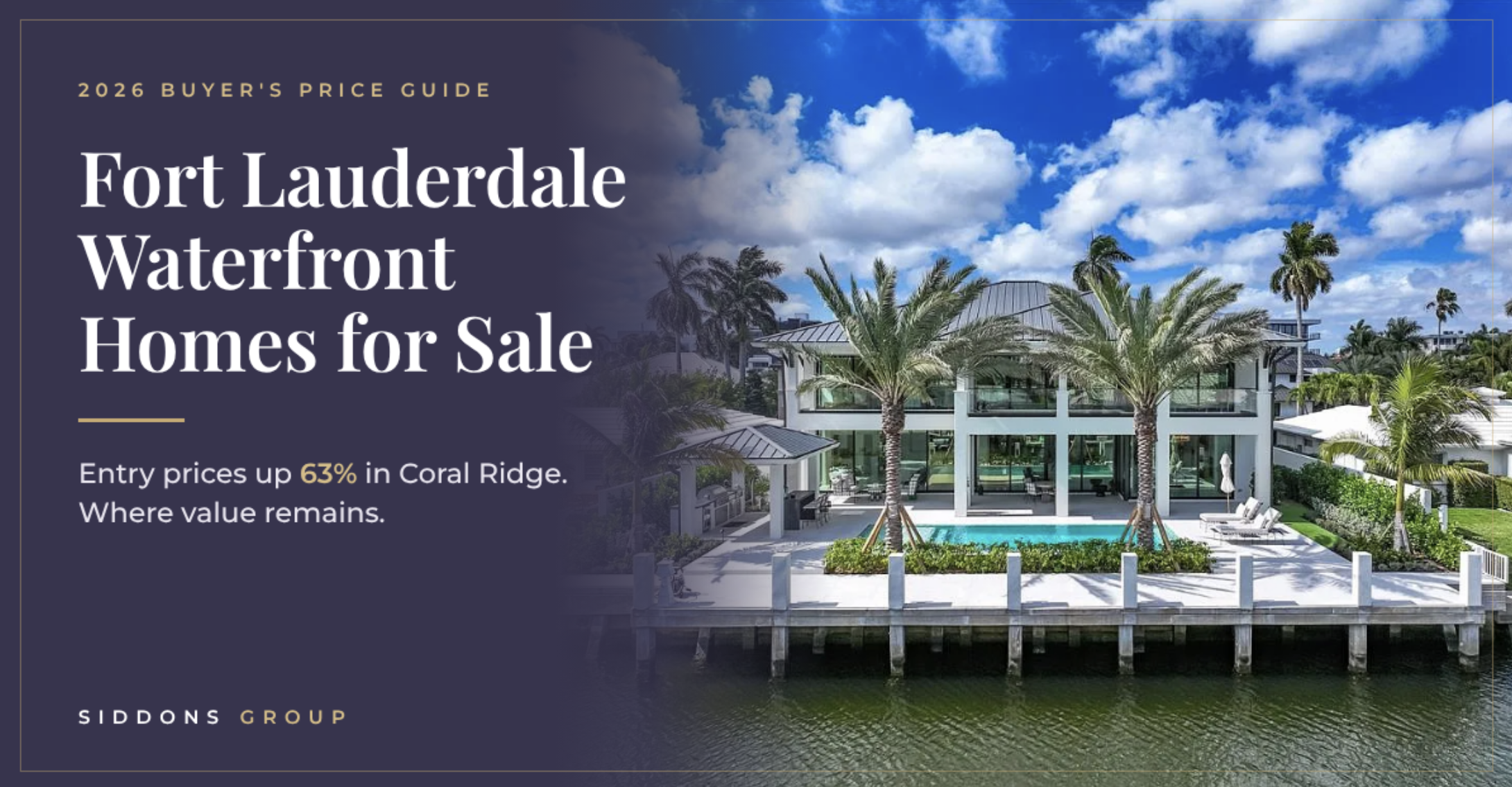
Fort Lauderdale Waterfront Homes in 2026

Greenview at Presidential Aventura
The Best Real Estate Agent in Ponce Davis
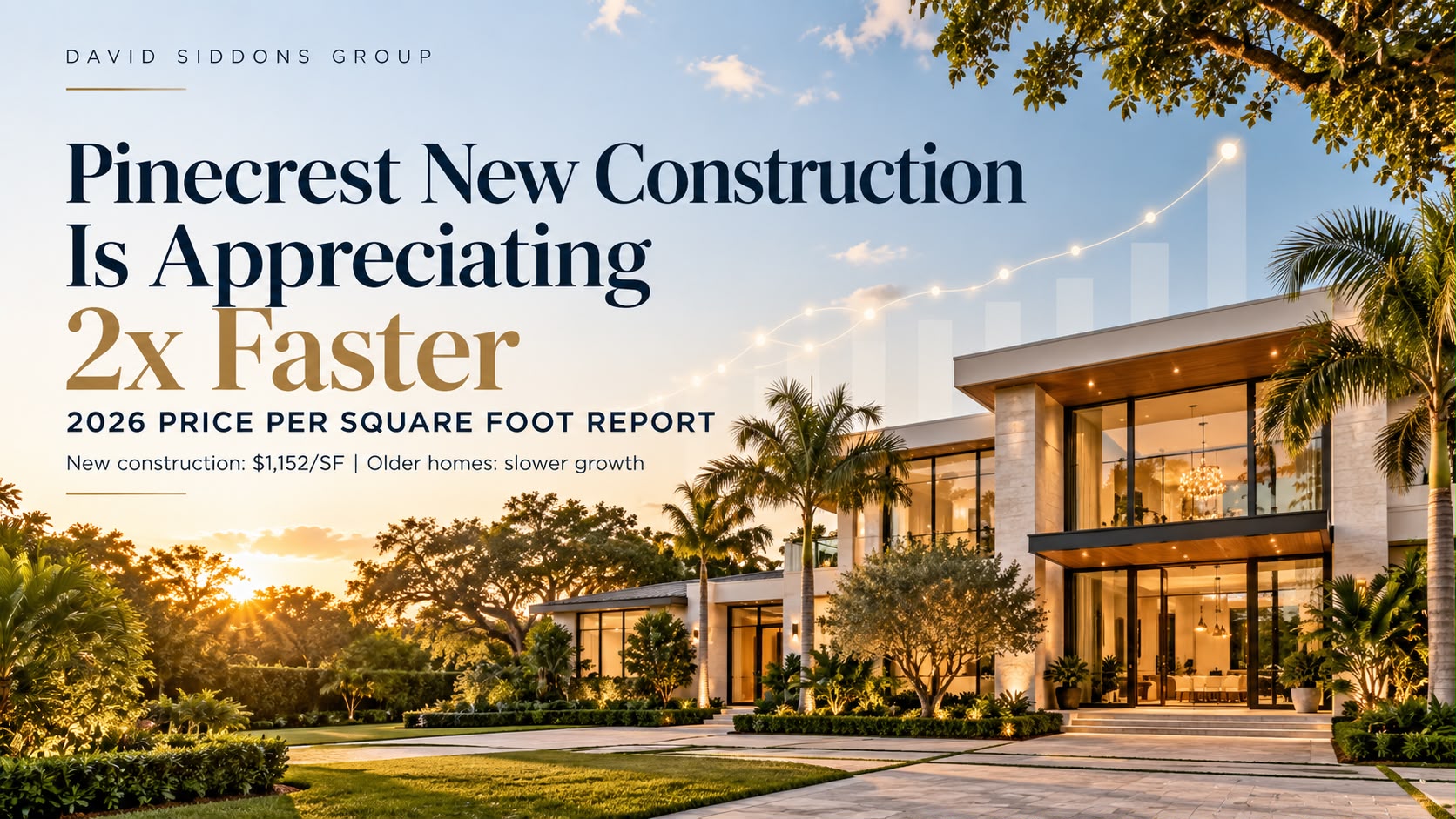
Pinecrest New Construction Is Appreciating 2x Faster Than Older Homes
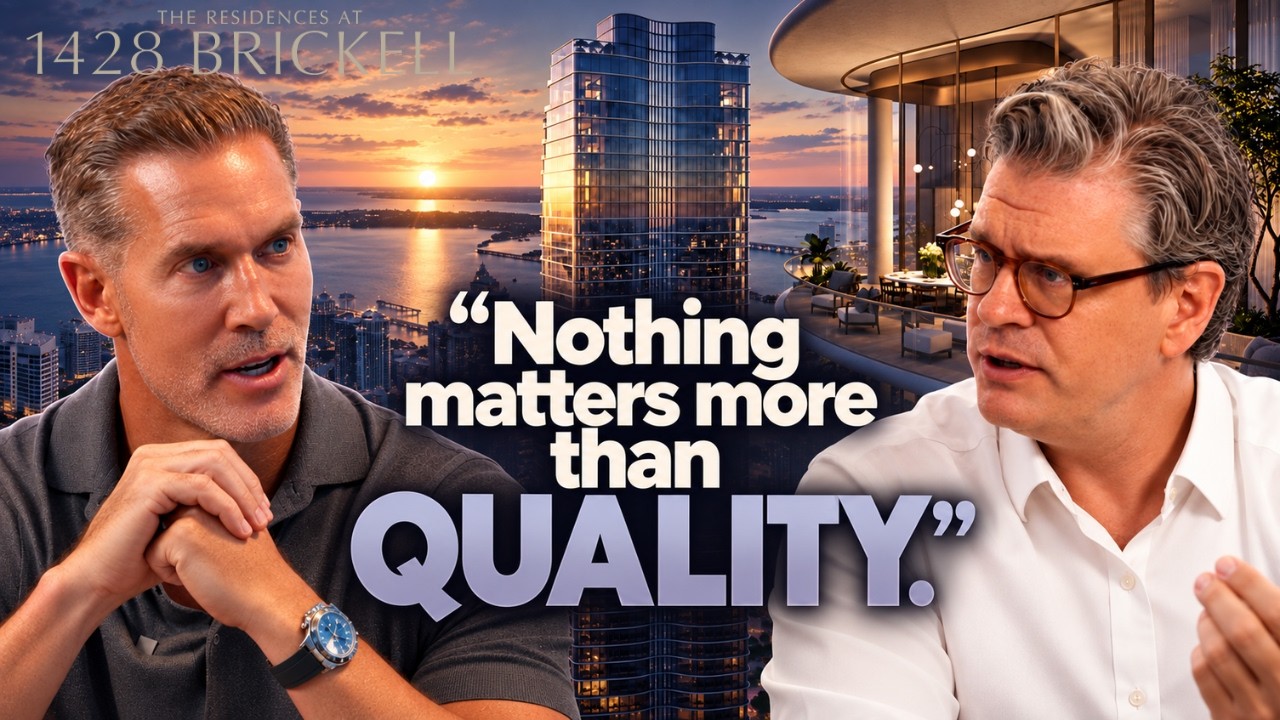
Inside 1428 Brickell: Why Ytech Skipped the Hotel Brand to Build Brickell’s Best Finishes
Brickell’s Office Boom: What It Means for Luxury Housing in Coral Gables and Coconut Grove
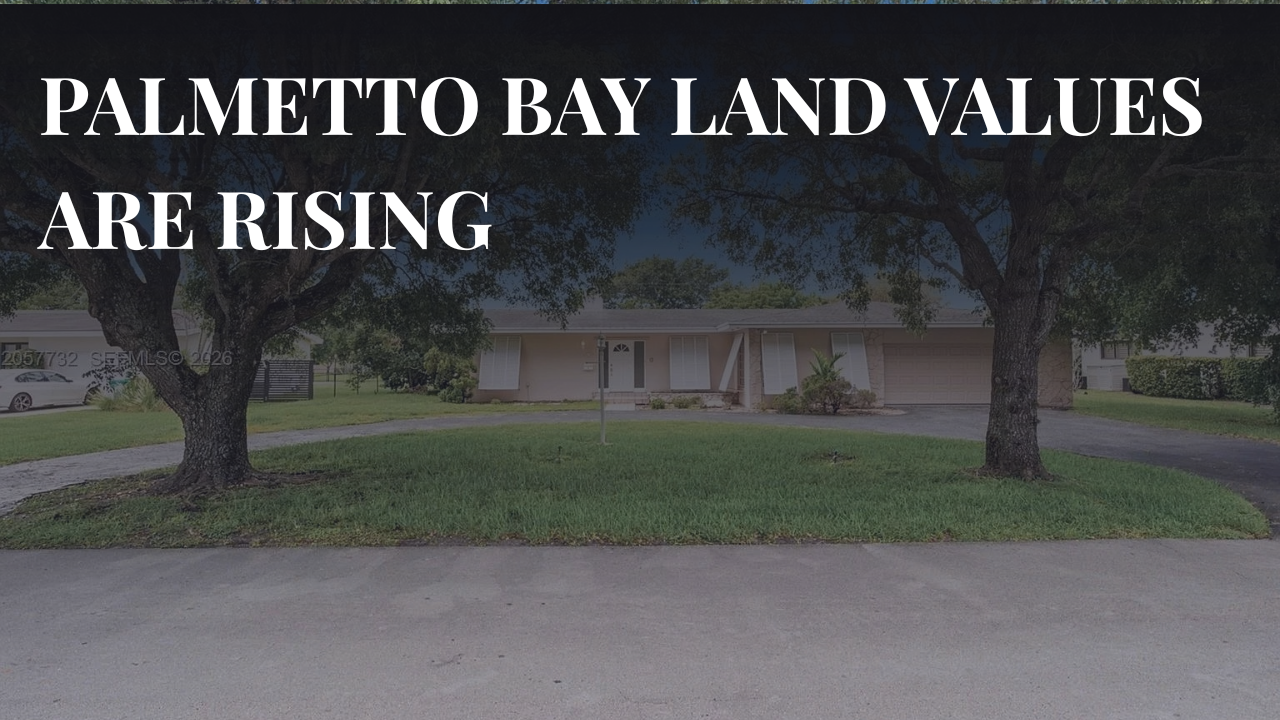
Palmetto Bay Land Values Are Rising. Is Your Home Worth More as Land?
Please fill in your details and David Siddons will contact you

Search related videos

Are St. Regis Sunny Isles Residences Worth the Brand Premium?
Coral Gables Market Report 2025: What the Headlines Aren’t Telling You!
How David Siddons’ Power Team Drives Miami’s Luxury Market
Mid‑Year 2025 Coconut Grove Report: The Truth About What’s Selling Now
Brickell Mid‑Year Market Report 2025 | Is Brickell’s Luxury Market in Trouble?
Pinecrest Mid-Year Market Report 2025 | What’s Selling, What’s Sitting & Why
Miami Beach Condo Market Mid-Year Report 2025 | What Buyers & Sellers Need to Know
How to Lose $1M in The Miami Condo market | Top Mistakes That Cost Miami Condo Buyers Millions
The Well Project EXPOSED Coconut Grove’s Hottest Units
Miami Real Estate in 2025 Is NOT What You Think 😱 | Midyear Must Knows for Buyers & Sellers!
7 Things You Should Never Say to a Real Estate Agent in Miami!
Landmark Victoria Park Residence in Fort Lauderdale: Inside 420 NE 11th Ave 🌴✨
Luxury Living on 2355 S. Miami Ave | Fully Furnished 4-Bed Home w/ Resort-Style Pool 🏊
Is Mandarin Oriental Residences Miami a Smart Condo Investment? Prices, Floorplans, Views & Finishes


- Get our Newsletter
- Subscribe
- No Thanks
Get the latest news from Miami Real Estate News
Close
Edit Search
Close
2 of 14
Share this property
Recomend this to a friend, just enter their email below.
Close
Your email was sent successfully
Close
 COMPARE WITH CONDOGEEKS