















- Best of All
- Best Miami Luxury Condos
- Most popular
- Relocating to Miami
- Private Schools
- Investments
- Gated communities
- Waterfront information
- Luxury homes
- Luxury Condos
- New Construction Condos in South Florida
- Independent Pre-Construction condo reviews for Miami
- Independent Pre-Construction condo reviews for Fort Lauderdale
South of Fifth Real Estate Market Report Q1 2026
The Neighborhood Where True Scarcity Still Drives Value
South of Fifth Market Analysis by David Siddons
This report is part of a 12-part series of in-depth market analyses authored by David Siddons, a real estate advisor specializing in Miami’s luxury residential markets. His work focuses on interpreting pricing trends, supply dynamics, and buyer behavior across key high-end neighborhoods such as South of Fifth, Miami Beach, Surfside, and Coral Gables and Pinecrest providing clients with a structured, data-driven framework for making real estate decisions.
The following section includes market insights contributed by Stefania Cambarau, adding perspective on current dynamics within the South of Fifth luxury condominium market. Unlike generic market updates, this analysis is designed to break down the underlying forces driving value within South of Fifth’s luxury segment. It helps buyers and sellers understand not just where the market stands today, but how it is evolving across the broader luxury landscape—and where the most compelling opportunities and risks are emerging.
Introduction
South of Fifth (SoFi) remains one of Miami’s most exclusive residential enclaves, a compact oceanfront neighborhood defined by limited supply, walkable lifestyle density, and some of the city’s most prestigious condominium buildings. This quarterly report analyzes transaction activity, pricing trends, supply dynamics, and buyer behavior to provide a clear view of the market entering 2026.
This South of Fifth Market Report isn’t just a summary of recent closings. It’s a strategic assessment, highlighting where values are stable, where vulnerabilities exist, and where asymmetric opportunities lie for the most sophisticated buyers. South of Fifth offers not only oceanfront access and walkability but also proximity to world-class dining, boutique retail, and a lifestyle density that is impossible to replicate elsewhere. Even in a market that feels at the top of the luxury cycle, cycles exist within it. Different buildings move differently, price bands behave differently, and timing matters more than ever. There are 9 key points to discuss, so let’s dive into it.
“Whether you’re buying, selling, or simply tracking this exclusive market, this South of Fifth condo report is designed to give you clarity. For tailored insights specific to your goals, schedule a private consultation today. Click on the button below, and speak directly to myself or David on what matters to you.
1. Pricing Dynamics: A Rising Luxury Ceiling
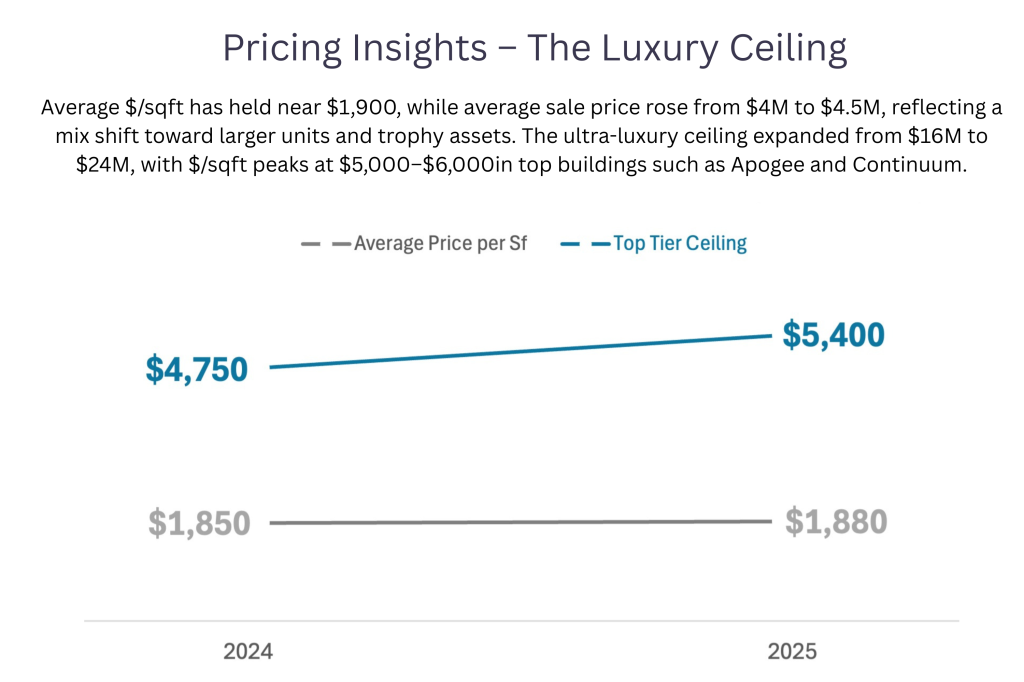
Average price per square foot has remained relatively stable near $1,900 across 2024 and 2025, while average sale price increased modestly from approximately $4 million to $4.5 million. This shift reflects a change in the composition of transactions, larger units and trophy properties,,rather than broad-based appreciation.
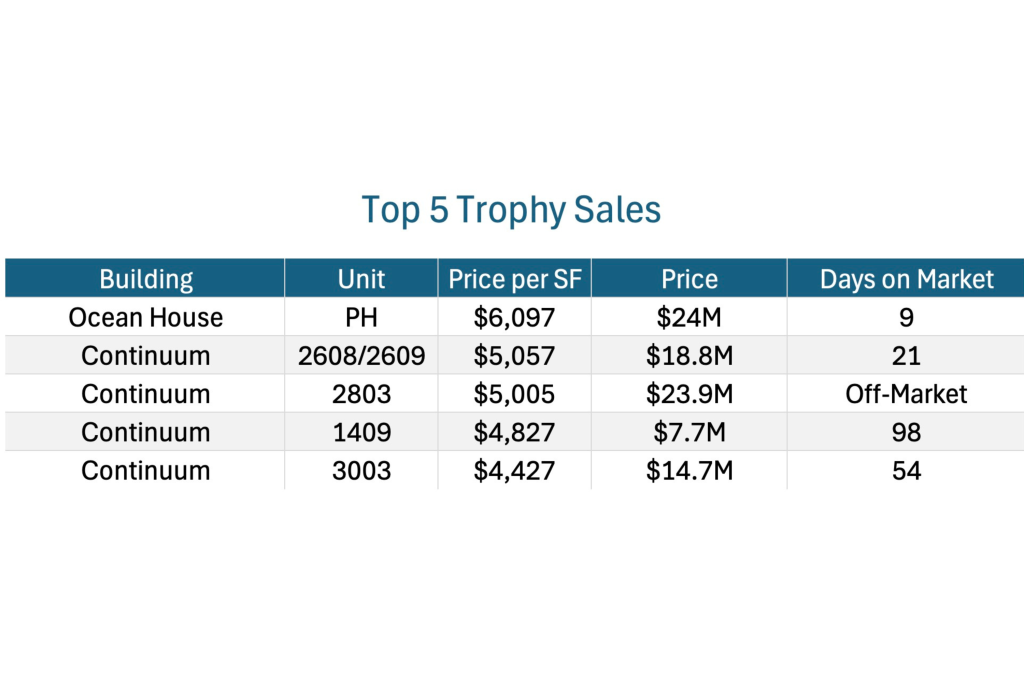
In 2024, the highest sales in South of Fifth approached $16 million. By 2025, that ceiling had expanded to approximately $24 million. Premium units in buildings such as Apogee, Continuum and Ocean House have achieved prices between $5,000 and $6,000 per square foot. This does not represent widespread inflation across the market. Instead, it reflects a concentration of capital in the most scarce and differentiated properties. For sellers of trophy assets, this rising ceiling is meaningful. For most other units, however, the impact is limited. A record price in one building does not automatically lift valuations throughout the neighborhood.
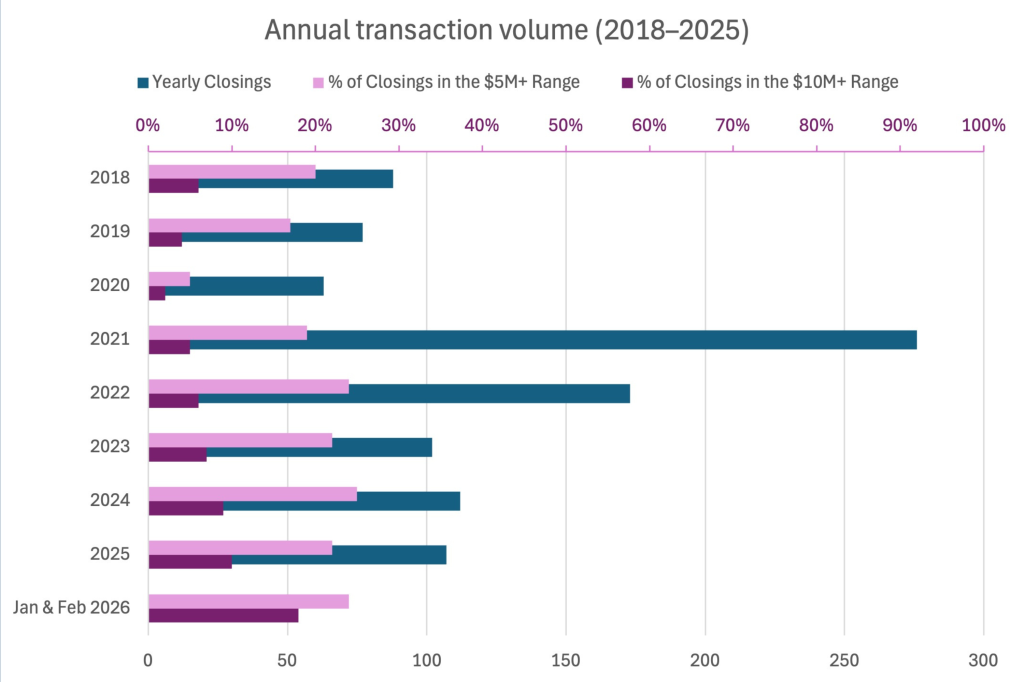
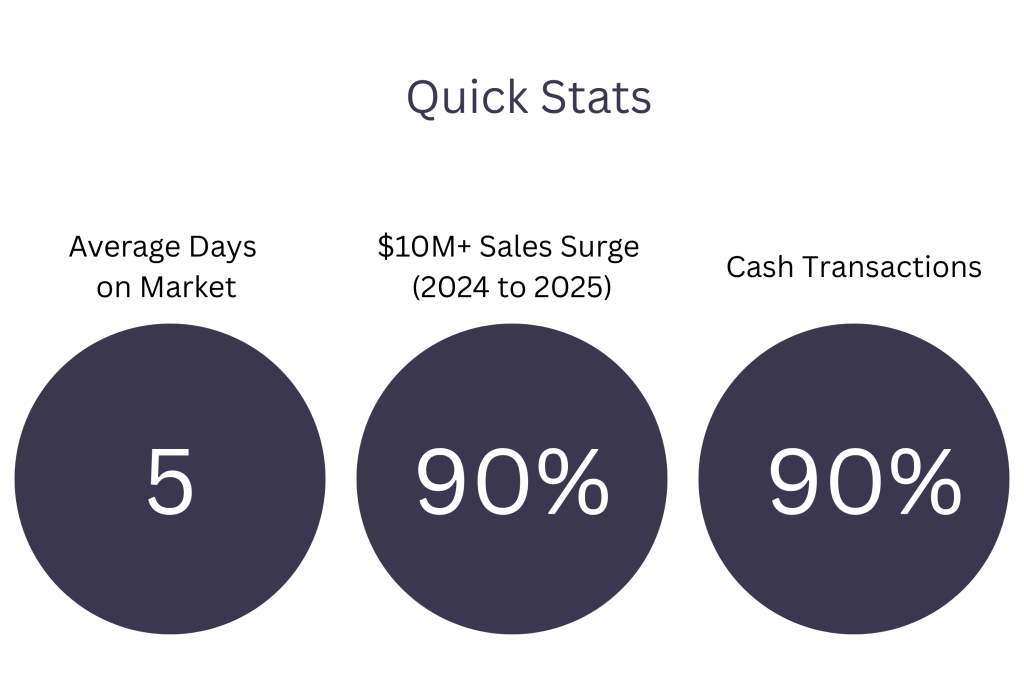
Roughly 70% of South of Fifth condominiums sell within six months, while only about 8% remain on the market longer than a year. With average inventory absorbing in approximately five months, the neighborhood continues to outperform the broader Miami Beach market, where absorption typically averages closer to six and a half months. These statistics reinforce a central theme of the South of Fifth market: correctly priced assets continue to transact efficiently.
2. Market Alignment: Pricing vs. Psychology
In South of Fifth, the divide in the market is not between buyers and sellers—it is between those aligned with current market realities and those anchored to past cycles. Sophisticated sellers focus on executed transactions rather than headline listing prices. When units are priced in line with recent comparable sales, they tend to transact within reasonable marketing periods. Conversely, some sellers remain psychologically tied to the extraordinary liquidity of 2021 and early 2022, when urgency often drove pricing. This anchoring can widen the gap between asking prices and market clearing levels.
For buyers, that gap can create opportunities—not distress, but pockets of leverage where analysis, patience, and timing intersect. Timing is particularly important in South of Fifth because many buildings periodically undergo major recertification programs, renovations, and amenity upgrades. These cycles can temporarily affect lifestyle conditions and therefore influence buyer psychology and pricing. When a building is in the early or middle stages of a lengthy remodeling or recertification, the disruption can last several years. Noise, construction activity, and reduced amenity access may temporarily impact the living experience. Buyers who are willing to tolerate these inconveniences may find attractive opportunities, but typically only at discounted prices that compensate for the temporary lifestyle disruption.
For sellers, listing during these periods can therefore place downward pressure on pricing expectations. Even if the long-term value of the building is improving, the short-term inconvenience often becomes part of the negotiation dynamic. At the same time, the later stages of a renovation or recertification cycle can create a different type of opportunity. When projects are nearing completion, buyers can sometimes acquire units at competitive prices before the full impact of the improvements is reflected in comparable sales. Once renovations are completed and new transactions establish higher benchmarks, pricing often resets upward.
Understanding where a building sits within its capital improvement cycle is therefore critical for both buyers and sellers. Entering during the disruption phase may offer discounted entry points, while positioning assets toward the end of renovation cycles can capture the value created by the improvements. In a market as nuanced as South of Fifth, timing is not just about broader market cycles—it is about the renovation timeline of each individual building.
3. Cash Dominance and Market Insulation
Another defining feature of the South of Fifth market is the dominance of cash transactions. In 2025, roughly 90% of purchases were completed in cash, a level even higher than the already cash-heavy Miami Beach average of approximately 82%. This structural characteristic provides significant insulation from interest-rate fluctuations. Financing conditions therefore play a relatively small role in shaping buyer behavior. Instead, negotiation leverage tends to revolve around building-specific factors such as inventory levels, renovation schedules, reserve strength, and pricing alignment.
Shoe me the Best South of Fifth Properties
4. Supply Dynamics: Limited Inventory and Tiered Product
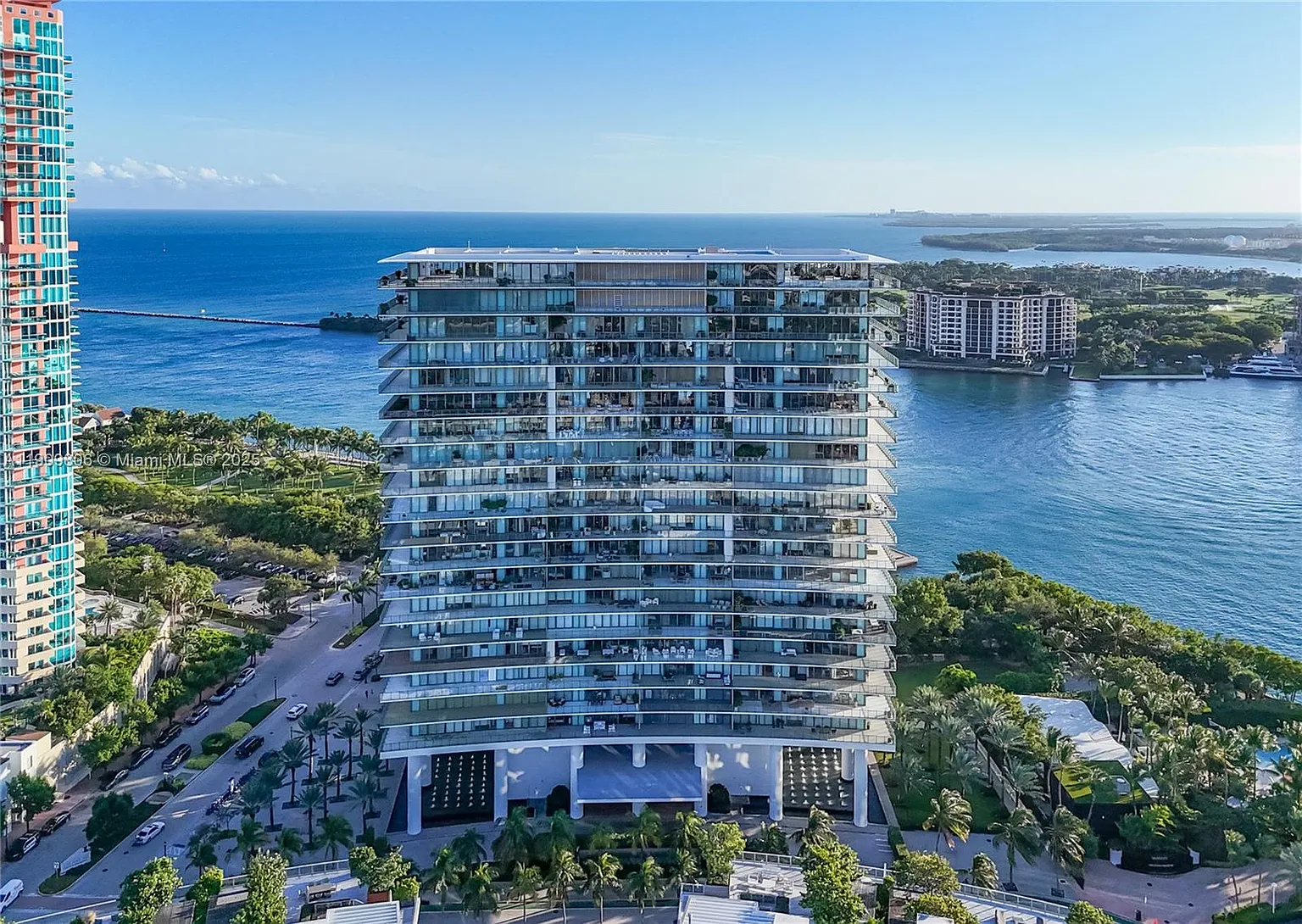
Another defining characteristic of South of Fifth is its limited development pipeline. Unlike other Miami submarkets that have absorbed waves of new construction, SoFi has seen only one major addition in recent years: Five Park, a 226-unit tower completed in 2024 just north of Fifth Street. Boutique developments such as Glass, Louver House, and 300 Collins have added small numbers of highly curated residences, but these projects represent refined niche offerings rather than large-scale inventory expansions.
This limited supply environment produces two key outcomes. First, it reinforces pricing discipline. With relatively few competing properties, scarcity supports long-term value stability. Second, supply has evolved through quality segmentation rather than volume expansion. The 2025 penthouse sale at Ocean House, which surpassed $6,000 per square foot, illustrates this dynamic. The premium achieved was driven not by new construction but by exceptional positioning, finishes, and rarity. In short, South of Fifth is not experiencing a supply surge. Instead, value creation is occurring through differentiation and scarcity.
5. Market Resilience: Stability in a Higher-Rate Environment
One of the most striking characteristics of South of Fifth is the consistency of transaction activity. Over the past two years, the market has averaged roughly 110 sales annually, a remarkable level of liquidity given the broader shift to higher interest rates. In many markets, rising rates quickly expose structural weaknesses. South of Fifth, however, has remained resilient. This stability highlights an important dynamic: liquidity is real, but it is increasingly disciplined. Buyers today are analytical and selective, showing far less tolerance for aspirational pricing than during the peak years of 2021–2022. Sellers with realistic pricing, desirable floor plans, and strong building financials continue to transact successfully, while those anchored to past market highs often see longer marketing periods.
At the high end of the market, approximately 25% of all transactions occur above $5 million, a proportion that has remained relatively stable between 2024 and 2025. The most notable shift, however, has occurred in the ultra-luxury segment. Sales above $10 million increased by nearly 90% in 2025, reflecting a growing influx of high-net-worth buyers relocating to Florida for lifestyle and tax advantages. Many of these purchases are not discretionary second homes but primary residences. The top tier of the market has remained particularly stable, with premium properties maintaining an average price of roughly $4,000 per square foot across both years. This consistency confirms that the market’s strength is not being supported by lower-tier activity but rather by patient capital concentrated at the highest end. South of Fifth isn’t booming or crashing. It’s becoming a disciplined luxury market where only well-priced, high-quality properties sell quickly, while overpriced listings sit.
South of Fifth remains a resilient, selective, and highly desirable luxury micro-market. With roughly 110 annual transactions and a concentrated ultra-luxury segment, liquidity is real—but only for correctly positioned assets.
6. Building-Level Performance: Micro-Markets Within SoFi
Miami’s luxury crown has shifted north, with Surfside and Bal Harbour regularly setting new $/sqft benchmarks. Buildings like The Surf Club Four Seasons, Ocean House, and Rivage achieve headline valuations for ultra-prime buyers. Yet South of Fifth’s advantage isn’t headline pricing; it’s functional luxury. Residents enjoy a compact, walkable, ocean-to-bay neighborhood dense with daily amenities. South Pointe Park, marina access, cafés, restaurants, and boutique retail all exist within a small footprint. This layering of lifestyle cannot be replicated in Surfside or Bal Harbour, which may offer higher ceilings but narrower community integration.
In practical terms, South of Fifth delivers liquidity, daily usability, and a mature luxury ecosystem. While other neighborhoods push the upper $/sqft boundaries, SoFi reinforces the foundation for long-cycle wealth preservation, proving that functional luxury often outperforms architectural fireworks.
| Condo | Year built | Average Days on Market | Average Sales Price per SF | % of Cash Deals | Months of Inventory |
| Apogee | 2002 | 400 | $3,464 | 80% | 3 |
| Continuum South & North | 2002 & 2008 | 240 | $3,343 | 95% | 14 |
| Murano at Portofino | 2001 | 186 | $1,645 | 100% | 62* |
| Portofino | 1996 | 220 | $1,237 | 93% | 7.5 |
| South Pointe Tower | 1987 | 62 | $1,279 | 78% | 13 |
| Murano Grande | 2003 | 146 | $1,400 | 100% | 8 |
| Icon | 2005 | 123 | $1,391 | 90% | 3 |
| * the High months of inventory is Due to the fact that the building is going through remodeling a, which is stalling the sales. | |||||
7. Renovation Cycles and Strategic Opportunity
Luxury markets rarely experience abrupt corrections. Instead, pricing adjustments often occur during reinvestment cycles. In South of Fifth, recertification programs and capital improvement projects can temporarily influence buyer sentiment. Buildings such as Portofino Tower, which have completed major upgrades, often see renewed pricing strength afterward. Others undergoing renovation—such as Murano at Portofino and Continuum South Beach, may experience short-term friction as construction temporarily affects lifestyle conditions. For buyers who can tolerate these temporary inconveniences, such periods can create opportunities to acquire assets at favorable pricing. Sellers, meanwhile, must carefully align expectations with the stage of renovation. Units marketed during active construction may require pricing adjustments, while post-renovation clarity often supports premium valuations.
8. Strategic Patience in a Selective Market
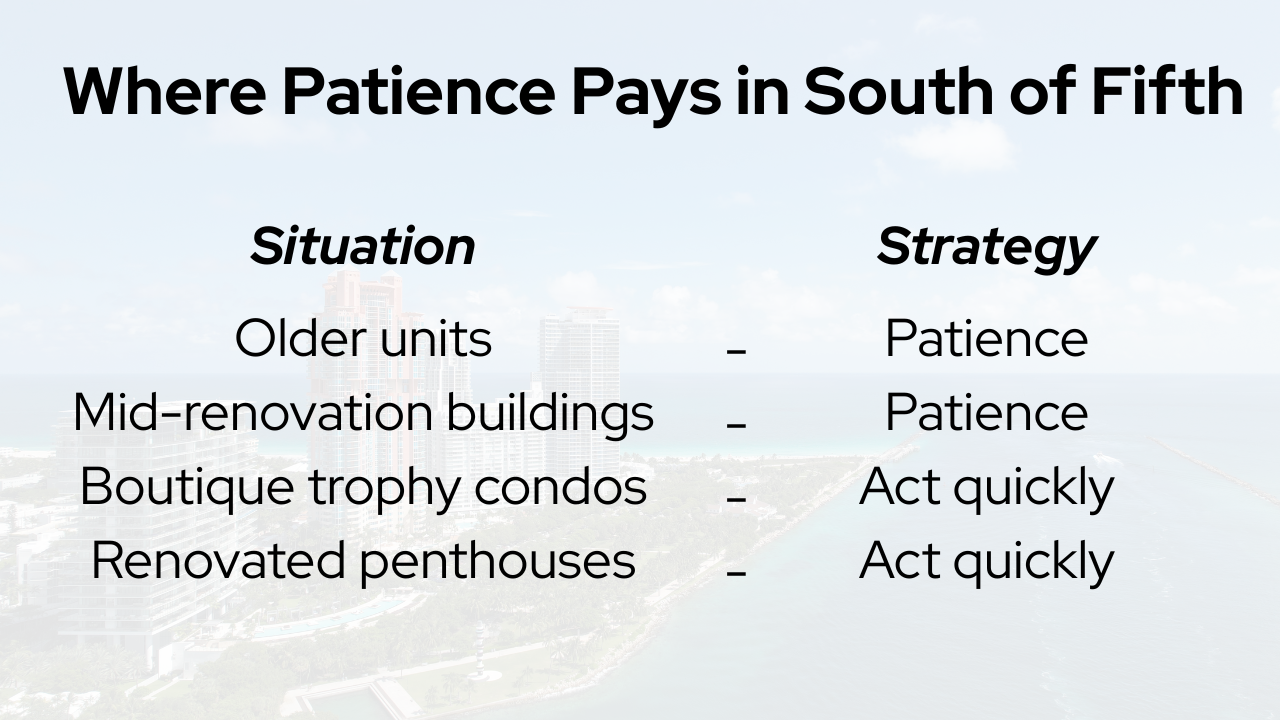
Patience can be an effective strategy in South of Fifth, but only when applied selectively. It tends to reward buyers targeting older inventory, mid-renovation buildings, or communities with varied seller motivations. In these situations, careful timing and negotiation can produce attractive entry points. However, patience can be counterproductive when applied to boutique developments or fully renovated trophy residences. In those segments, inventory is extremely limited and competition can emerge quickly when a desirable property becomes available. Understanding where patience pays—and where decisiveness is required, is essential to navigating the market successfully.
9. Market Alignment: Knowing Where You Fit
As South of Fifth enters 2026, the market appears increasingly defined by clarity. It favors lifestyle-driven buyers, cash-dominant purchasers, and long-term owners under the $20 million range who prioritize walkability, waterfront access, and neighborhood integration. Buyers who understand building-level nuances—such as renovation timelines, reserve strength, and recertification schedules—can identify opportunities with greater precision. Conversely, the market is less favorable to highly leveraged buyers, short-term speculators, or those pursuing record-setting price-per-square-foot purchases without regard to long-term value. Alignment with the realities of the market, rather than urgency, has become the most effective strategy.
Conclusion
Entering 2026, South of Fifth continues to demonstrate the characteristics of a mature luxury market: resilience, selectivity, and strategic liquidity. The ultra-luxury segment continues to expand quietly, while the mid-tier market remains disciplined and highly analytical. Supply remains constrained, and cash continues to dominate transactions.
What is increasingly clear is that the market is being shaped by two distinct cycles. On one hand, a more traditional boom-and-bust pattern is influencing rental and investor-driven segments. On the other, the ultra-luxury tier is following a more resilient trajectory, moving through phases of growth, pause, and repricing. Rather than signaling a correction, today’s environment reflects a period of stability, where pricing adjustments at the top end are laying the groundwork for the next upward move—particularly in lifestyle-driven neighborhoods like South of Fifth.
This is not a volatile market, it is a deliberate one, where each transaction reflects careful analysis of building dynamics, pricing alignment, and long-term lifestyle value. For buyers and sellers alike, the greatest opportunities arise where insight meets alignment. South of Fifth remains defined not simply by price, but by lifestyle density, scarcity, and enduring neighborhood appeal. For those who understand these nuances, it continues to offer both capital preservation and an exceptional quality of life.
What Relocation Buyers Need to Know — and How David Siddons Adds Value
Relocating into Miami’s condominium markets—whether in Aventura, Sunny Isles Beach, Brickell, or South of Fifth—is not simply about choosing a building or a view. It requires understanding how each submarket operates, how buildings compete with one another, and how factors such as age, amenities, reserves, and rental policies directly impact both lifestyle and long-term value.
Many relocation buyers assume that newer buildings or higher prices equate to better investments. In reality, these markets are highly segmented. Pricing can vary significantly between buildings with similar locations, and the difference between a strong purchase and an average one often comes down to building-specific dynamics, line selection, and timing within the market cycle.
David Siddons advises relocation buyers by applying a building-by-building analytical framework—evaluating pricing trends, supply levels, and buyer demand within each condominium. His approach helps clients identify which buildings are outperforming, where value exists, and where risks may be hidden beneath the surface. From Brickell’s high-density urban core to the lifestyle-driven markets of Sunny Isles Beach and South of Fifth, each decision is guided by real-time data and active market experience.
With extensive experience advising relocation clients into Miami’s most competitive condominium markets, David provides a structured process that simplifies decision-making—helping buyers move quickly when needed, while avoiding overpaying or selecting the wrong asset.
Work with the David Siddons Group, The South of Fifth Market Specialist
FAQ
These are the most commonly Miami Real Estate Related questions
1. Why is South of Fifth real estate so expensive in 2026?
South of Fifth remains one of the most expensive neighborhoods in Miami due to its limited inventory, oceanfront location, and highly walkable lifestyle. Unlike other areas, there is virtually no room for new large-scale development, which keeps supply constrained. At the same time, demand from high-net-worth buyers continues to increase, particularly for premium, well-located units. This combination of scarcity and sustained demand continues to support high pricing.
2. Is the South of Fifth condo market still strong in 2026?
Yes, the South of Fifth market remains strong, but it has become more disciplined. Pricing is no longer rising uniformly across all properties, and buyers are more selective than in previous years. Well-priced, high-quality units are still selling within reasonable timeframes, while overpriced listings are taking longer to transact. This reflects a stable luxury market rather than a declining one.
3. What types of condos are selling fastest in South of Fifth?
Turnkey, fully renovated condos in prime buildings are selling the fastest in South of Fifth. Buyers are prioritizing quality, views, and move-in-ready condition, especially in buildings with strong financials and completed renovations. In contrast, units that require updates or are priced above market expectations tend to remain on the market longer.
4. What are the biggest risks when buying a condo in South of Fifth?
The main risks include ongoing building renovations, special assessments, and the financial health of the condominium association. Buildings undergoing recertification or major upgrades can experience temporary disruptions that impact pricing and livability. Buyers should also evaluate reserve funds, maintenance costs, and long-term capital improvement plans before making a purchase.
5. Should buyers wait for prices to drop in South of Fifth or buy now?
Waiting for prices to drop in South of Fifth can be a risky strategy due to the neighborhood’s limited supply and consistent demand. While short-term pricing fluctuations can occur, long-term value is supported by scarcity and location. Buyers who wait for the “perfect moment” often miss opportunities, particularly for high-quality units that rarely become available.
WHY WORK WITH DAVID? THINGS YOU SHOULD KNOW...
For all our analytics we are agents driving some very unique and advanced tech. We Provide a granular and custom experience that empower our clients with the insight and tools to understand the most complex behaviors of any local markets.
-
Analytical
Over 100 reports produced to date
-
Knowledgeable
Over 1800 published articles and counting


Related Articles
Greenview at Presidential Aventura
The Best Real Estate Agent in Ponce Davis
Pinecrest New Construction Is Appreciating 2x Faster Than Older Homes

Inside 1428 Brickell: Why Ytech Skipped the Hotel Brand to Build Brickell’s Best Finishes
Inside Ocean House Surfside
Brickell’s Office Boom: What It Means for Luxury Housing in Coral Gables and Coconut Grove
Palmetto Bay Land Values Are Rising. Is Your Home Worth More as Land?
Killian Drive: Kendall’s Luxury New Construction Corridor Hits $1,000/SF
Pinecrest’s 4 Best Streets in 2026
The 5 Best Luxury Streets in Miami’s Gated Communities

The Real Estate Team Behind the Agent: Why Systems Matter More Than Star Power
Selling a Home in Pinecrest: Why Some Homes Sell for $1,500/SF and Others Sit

We Built the Largest YouTube Audience of Any Miami Real Estate Team.
Empty Nesters in Miami: What Comes After the Big Family Home?
Please fill in your details and David Siddons will contact you

Search related videos

Are St. Regis Sunny Isles Residences Worth the Brand Premium?
Coral Gables Market Report 2025: What the Headlines Aren’t Telling You!
How David Siddons’ Power Team Drives Miami’s Luxury Market
Mid‑Year 2025 Coconut Grove Report: The Truth About What’s Selling Now
Brickell Mid‑Year Market Report 2025 | Is Brickell’s Luxury Market in Trouble?
Pinecrest Mid-Year Market Report 2025 | What’s Selling, What’s Sitting & Why
Miami Beach Condo Market Mid-Year Report 2025 | What Buyers & Sellers Need to Know
How to Lose $1M in The Miami Condo market | Top Mistakes That Cost Miami Condo Buyers Millions
The Well Project EXPOSED Coconut Grove’s Hottest Units
Miami Real Estate in 2025 Is NOT What You Think 😱 | Midyear Must Knows for Buyers & Sellers!
7 Things You Should Never Say to a Real Estate Agent in Miami!
Landmark Victoria Park Residence in Fort Lauderdale: Inside 420 NE 11th Ave 🌴✨
Luxury Living on 2355 S. Miami Ave | Fully Furnished 4-Bed Home w/ Resort-Style Pool 🏊
Is Mandarin Oriental Residences Miami a Smart Condo Investment? Prices, Floorplans, Views & Finishes


- Get our Newsletter
- Subscribe
- No Thanks
Get the latest news from Miami Real Estate News
Close
Edit Search
Close
2 of 14
Share this property
Recomend this to a friend, just enter their email below.
Close
Your email was sent successfully
Close
 COMPARE WITH CONDOGEEKS