






















- Best of All
- Best Miami Luxury Condos
- Most popular
- Relocating to Miami
- Private Schools
- Investments
- Gated communities
- Waterfront information
- Luxury homes
- Luxury Condos
- New Construction Condos in South Florida
- Independent Pre-Construction condo reviews for Miami
- Independent Pre-Construction condo reviews for Fort Lauderdale
A Look Back at the Key Biscayne Condo Market in 2020 and What To Expect in 2021?
2021 Key Biscayne Condo Market Perspectives and 2020 Market Report
What a year!! By now you’re probably aware the Miami Real Estate Market was on fire during 2020. Tom Brady, Paypal/Facebook Peter Thiel and Citadel’s Ken Griffin are just some of the headline-grabbing buyers of Single Family Homes in Miami-Dade in 2020. Key Biscayne Single Family Homes experienced more than twice the amount of sales of 2019. Homes were sold in record time and at record prices with our $13M 460 Mashta Dr sale breaking several records in September and our 159 Buttonwood in December.
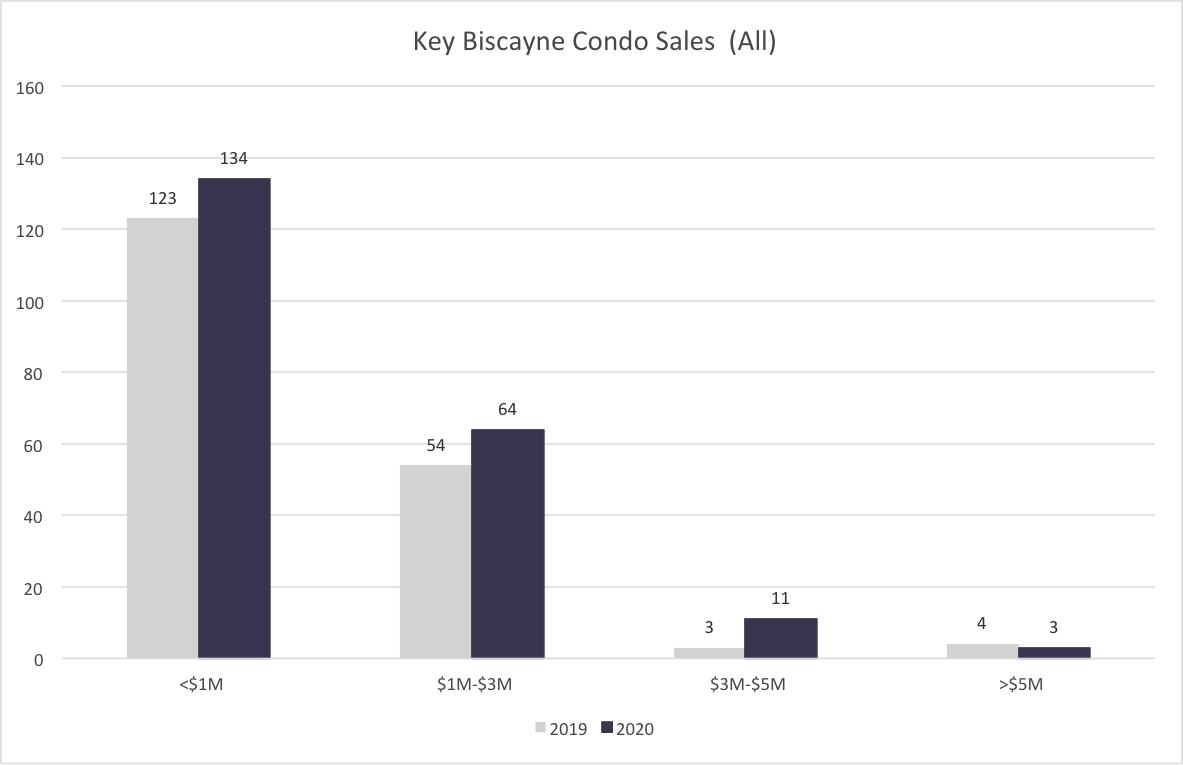
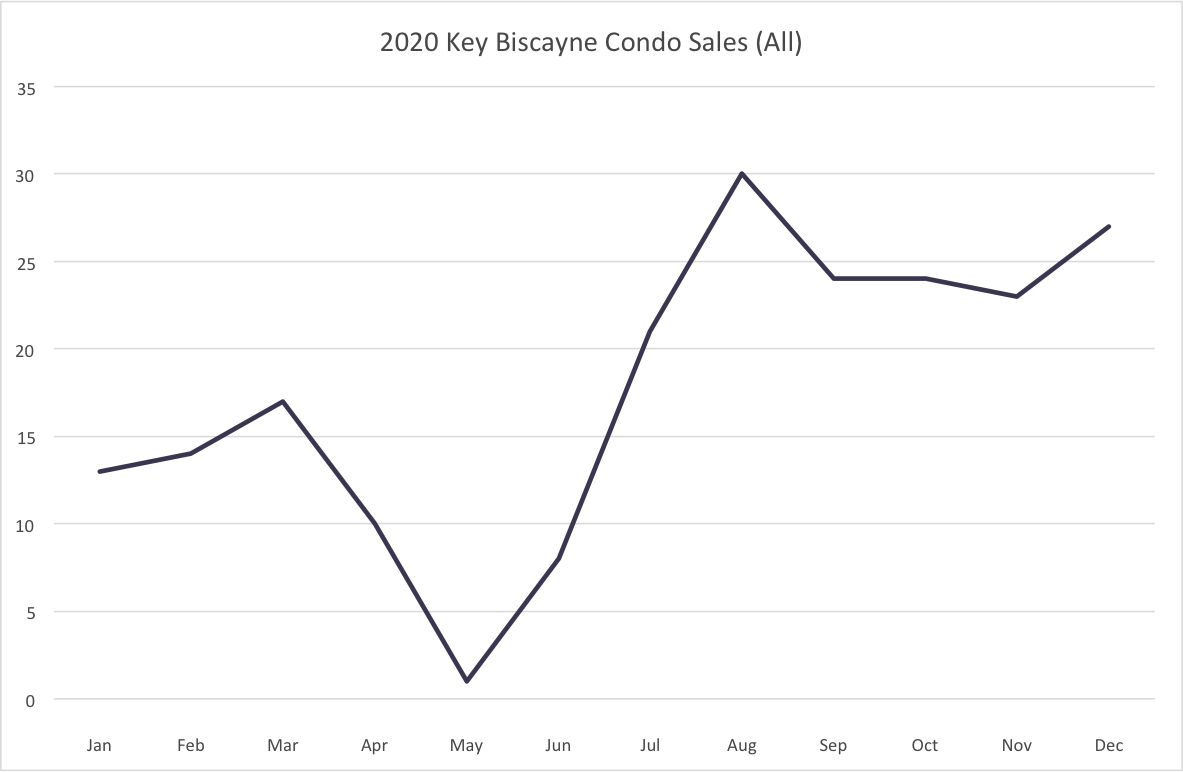
Condos had a positive year, but not quite as hot as Single Family Homes. After a slow Covid-driven Q2 and a hesitant Q3 recovery, 2020 ended as a positive year for the Key Biscayne condo market. Key Biscayne condo sales kept pace during Q1 and once Covid hit, Q2 cratered with a 68% unit sale decrease vis-à-vis Q2 2019. Thankfully, things picked-up quickly in July, leading to 212 condo unit sales in 2020, the largest number of units sold since 2015 and a 15% increase from 2019. As a result, inventory was down 16% to close 2020 at the lowest level since 2015. The Key Biscayne average price per SF was $704 in Q4 of 2020, a 17% increase over Q4 2019. Given the monthly variations experienced throughout 2020 and the small size of the Key Biscayne market, we’d consider full 2020 numbers, which ended with an average price of $665 per SF, a 7% increase over 2019. The Key Biscayne market, not unlike other markets in Miami-Dade, behaved differently across price segments.

In 2020 212 condo units sold in Key Biscayne, the largest number of units sold since 2015 and a 15% increase from 2019.

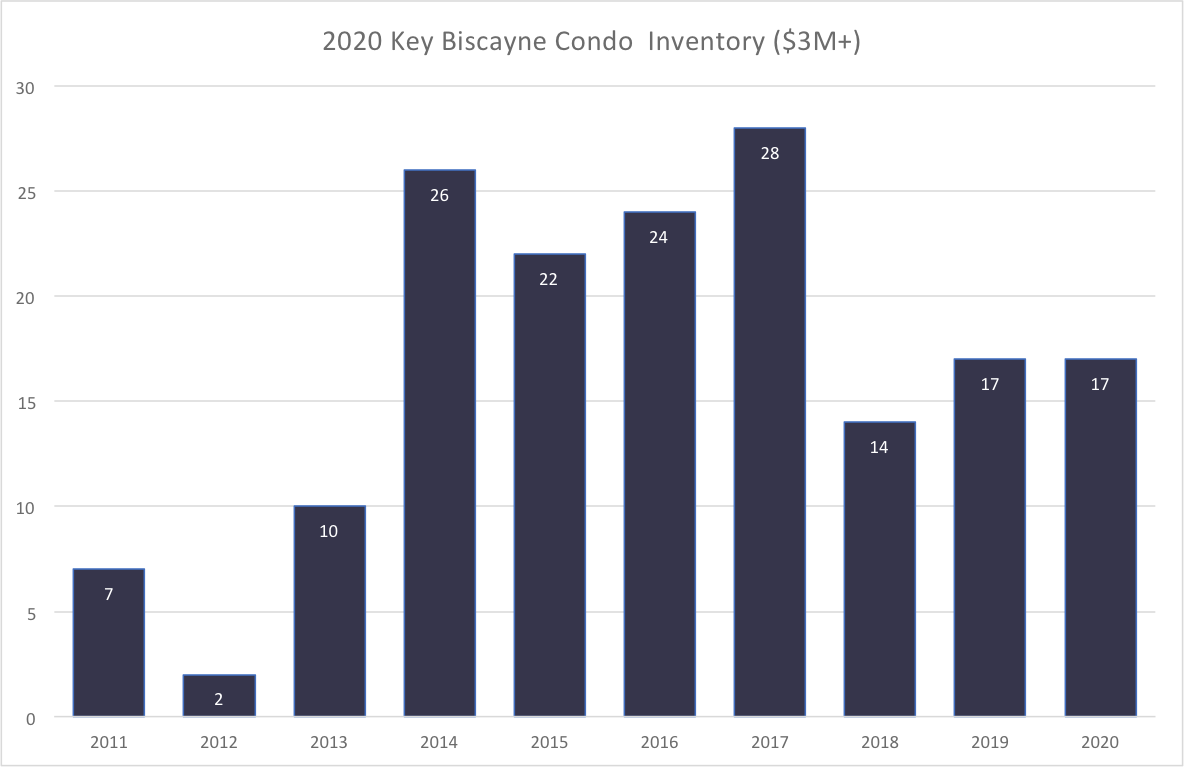
Key Biscayne 2020 Condo Market Report above $3M
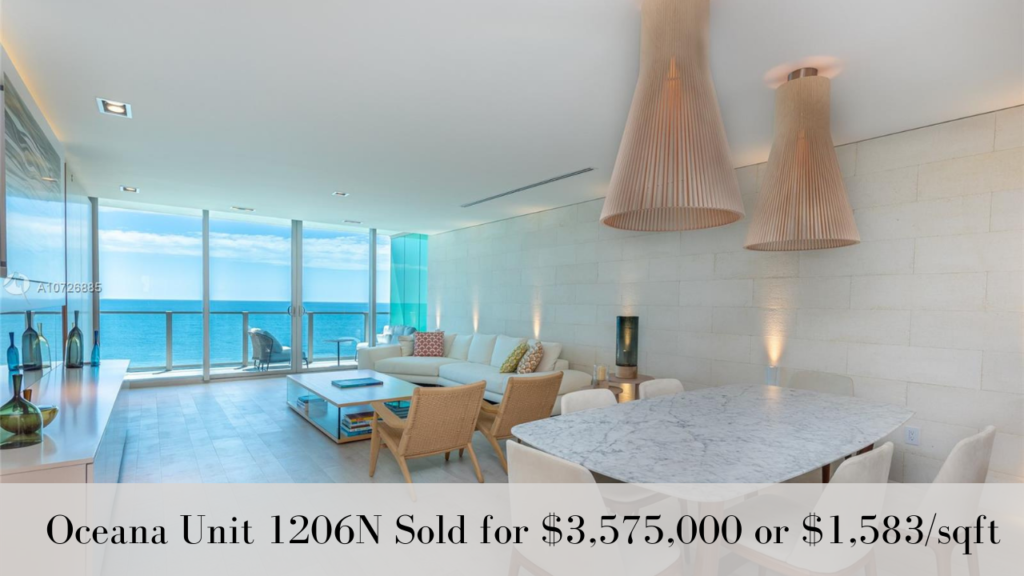
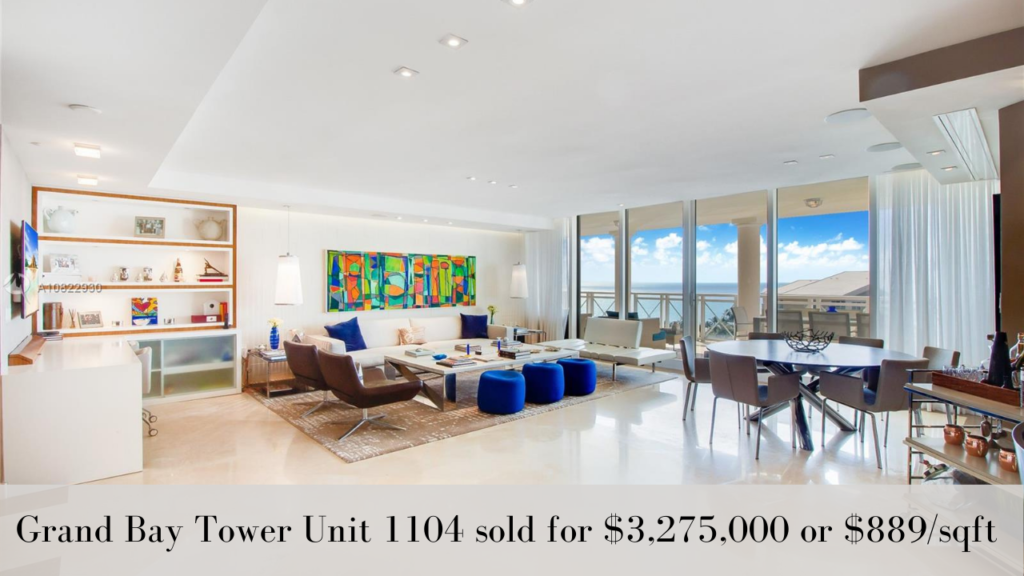
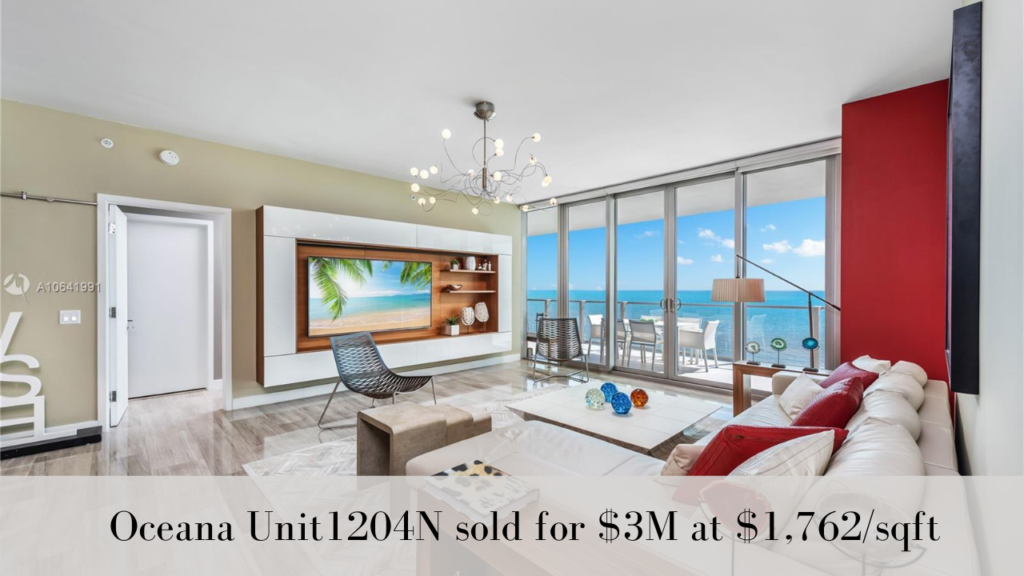
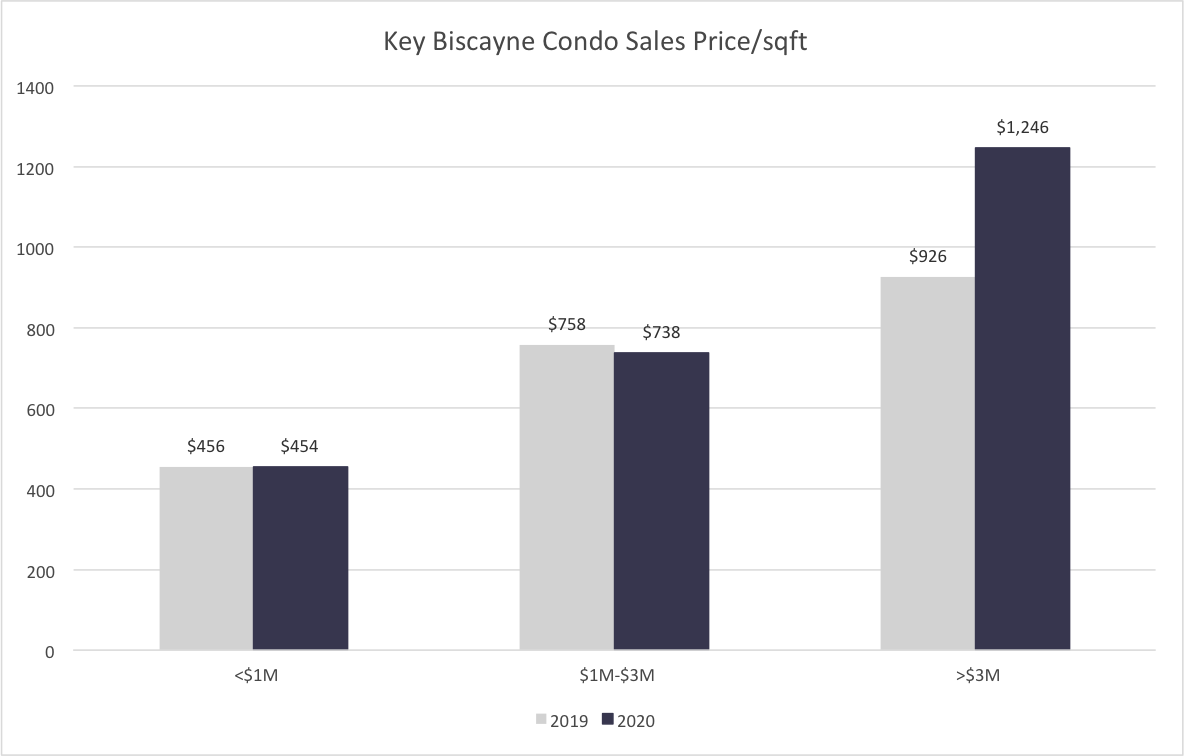
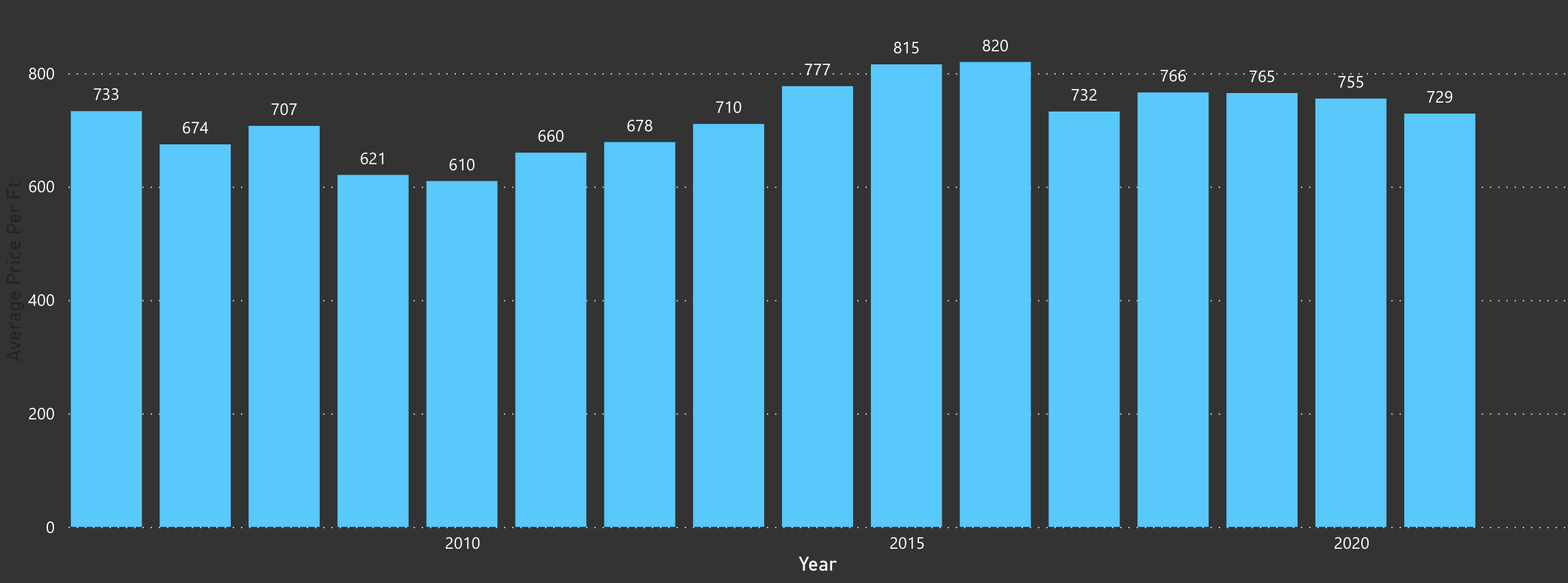
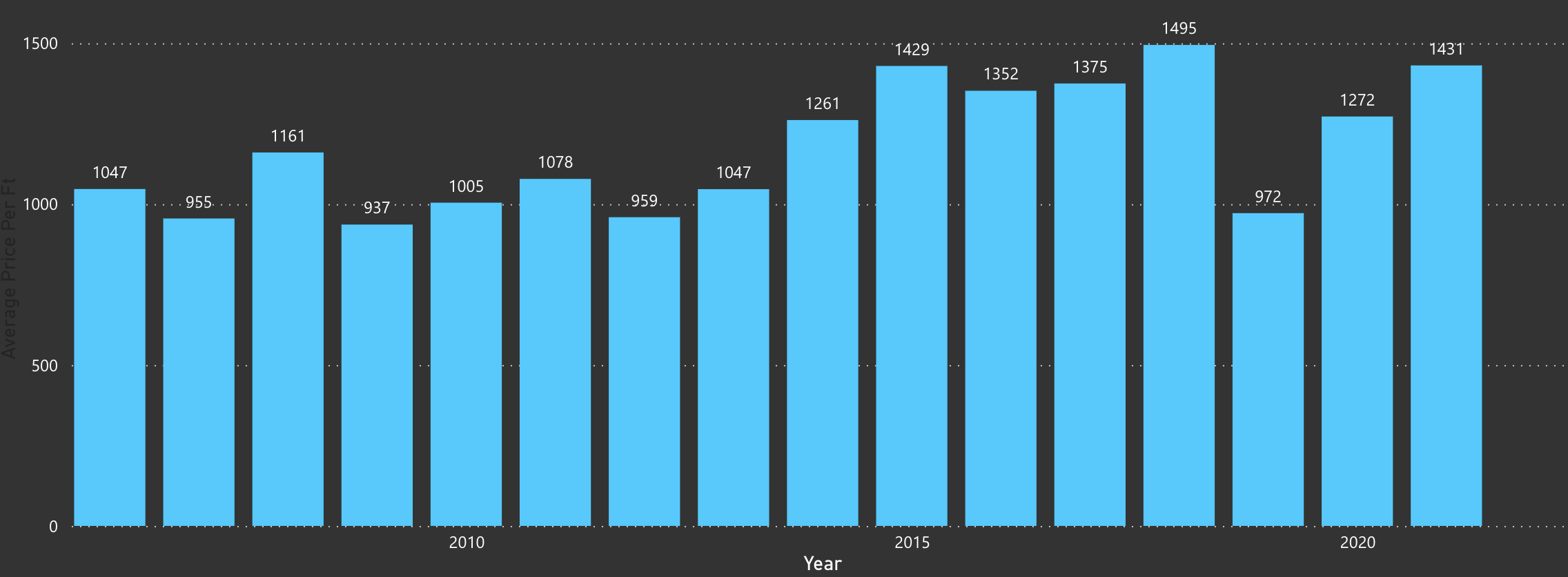
This segment of the market was the hottest performer in Key Biscayne. Granted, a very small slice of the Key Biscayne condo market, its condo unit volume doubled in 2020 with 14 registered sales, compared to 7 in 2019. Pricing was also outstanding as prices per square feet jumped 35% from $925 in 2019 to $1,246 in 2020. This was heavily influenced by 5 Oceana sales with prices ranging from $1,270/sqft to almost $2,000/sqft, benchmarks for the key. Grand Bay units traded at $900/sqft and Ocean Club residences in the $1,000-$1,300/sqft range.
The market registered 14 units sold in 2018 and even higher unit sales a couple years back, so unit sales are not quite in record territory. Average sales price was $4.2M, lower than 9 of 10 preceding years where average sale prices hit over $6M. This reflects the fact that only 3 of the 14 sales in 2020 were above $4.1M with the highest sale closing at $7.9M.
At a time when demand for premium ocean-front properties across Miami-Dade is through the roof, Oceana sales confirms it’s all about the product. As the building and condo upgrade process continues throughout the key, this is a good sign for times to come. After all, demand for premium ocean-front properties across Miami-Dade is soaring and new condos now exceed $4,000/sqft in new buildings like Arte Surfside.

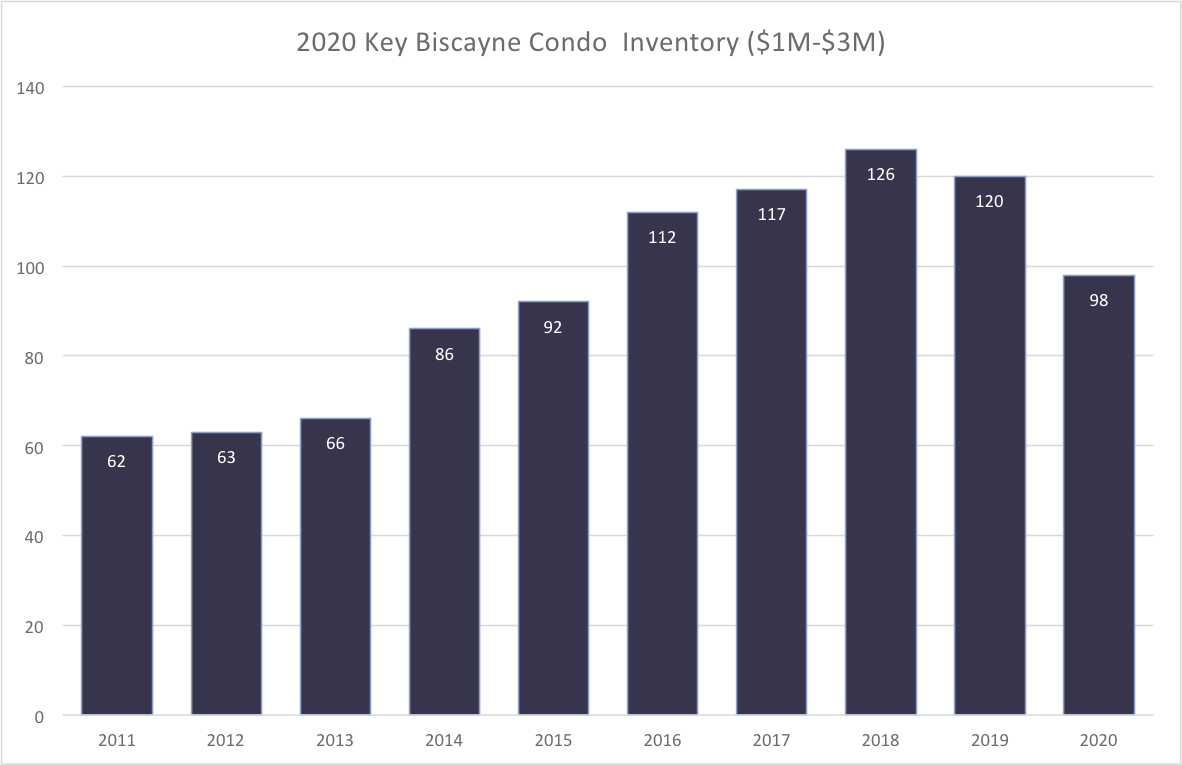
Key Biscayne 2020 Condo Market Report between $1M and $3M
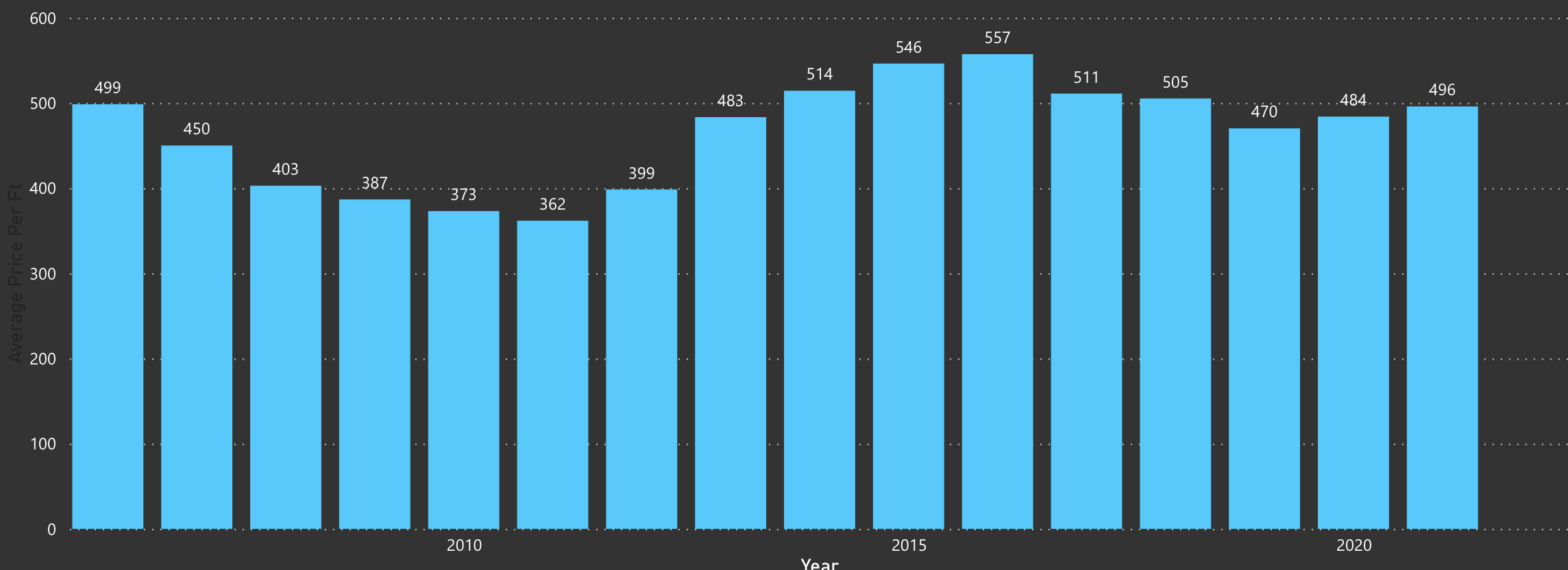
Condos between $1M and $3M made up 30% of total Key Biscayne Condo unit sales in 2020. There were 64 sales in this segment during 2020, compared to 54 in 2019, showing a strong 18% increase in unit sales, likely boosted by a 2020 price per square feet of $738, 3% less than $758/sqft in 2019.
Given buyers budget and expectations in this price segment, this is where the bulk of condo transformation across the key is taking place and thus pricing is mixed. This segment includes units with the best views and roomy floorplans. However, given the newest Key Biscayne building -except for Oceana- is now 25 years old, most condos face the need for some type of upgrade. As owners and buyers -particularly domestic ones- realize it may require similar effort to redo a 25-year-old unit than a 50 year old unit, we are seeing buyers consider older buildings closer to the ocean where an owner can spend upwards of $500k just in renovations. Of course, if you need more than 2,500 square feet, options will likely point you to The Ocean Club and Grand Bay exclusively.
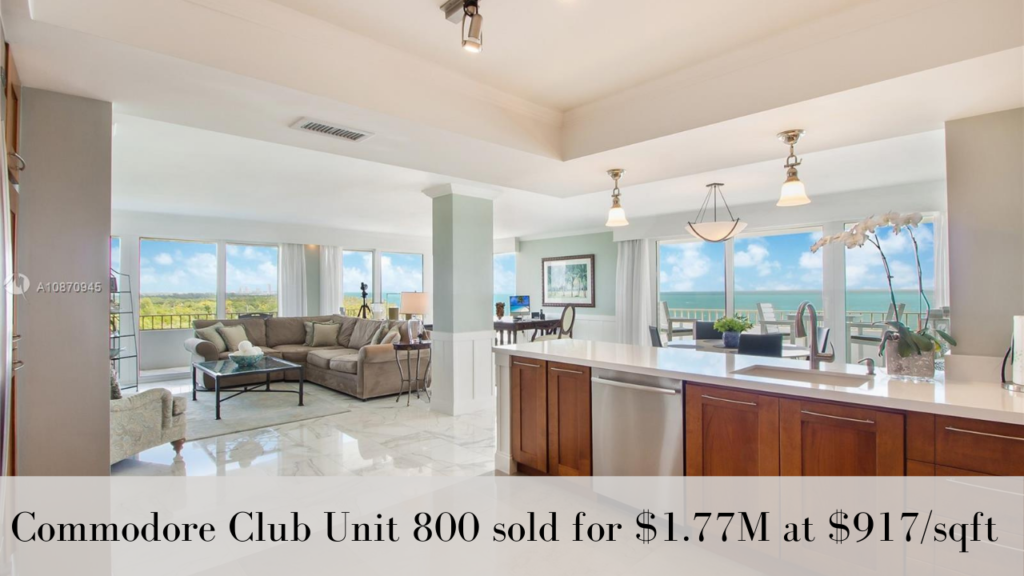
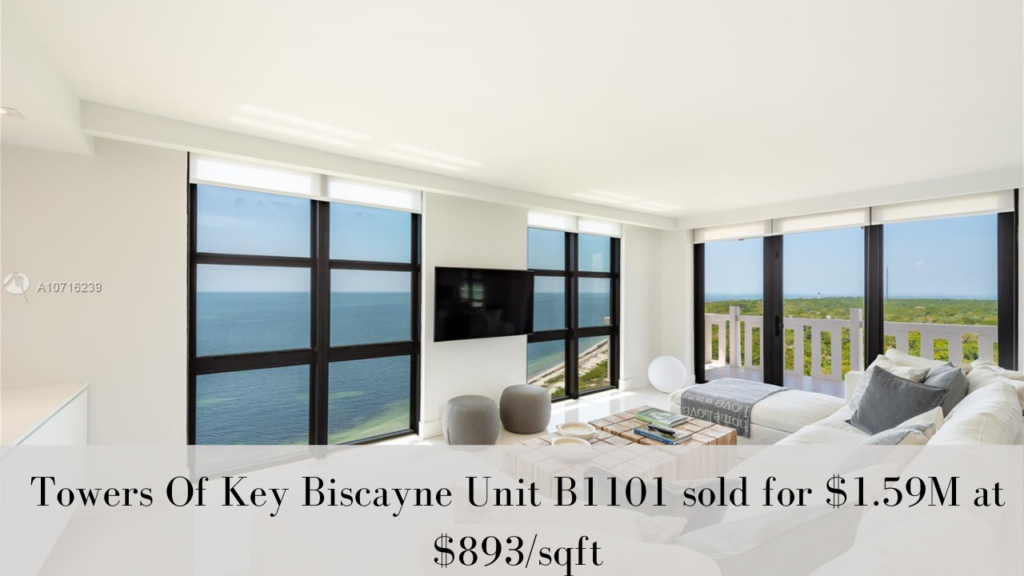
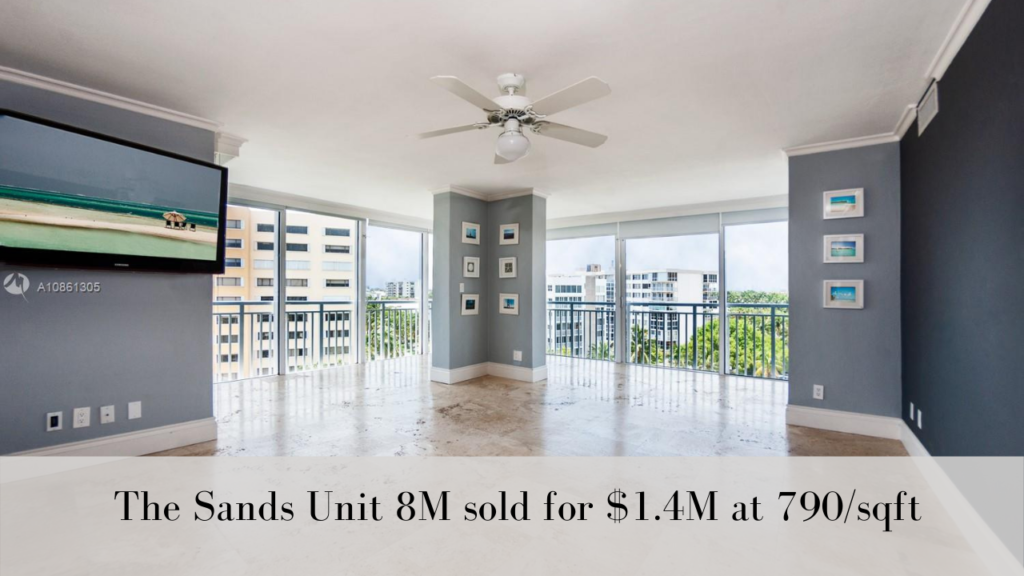
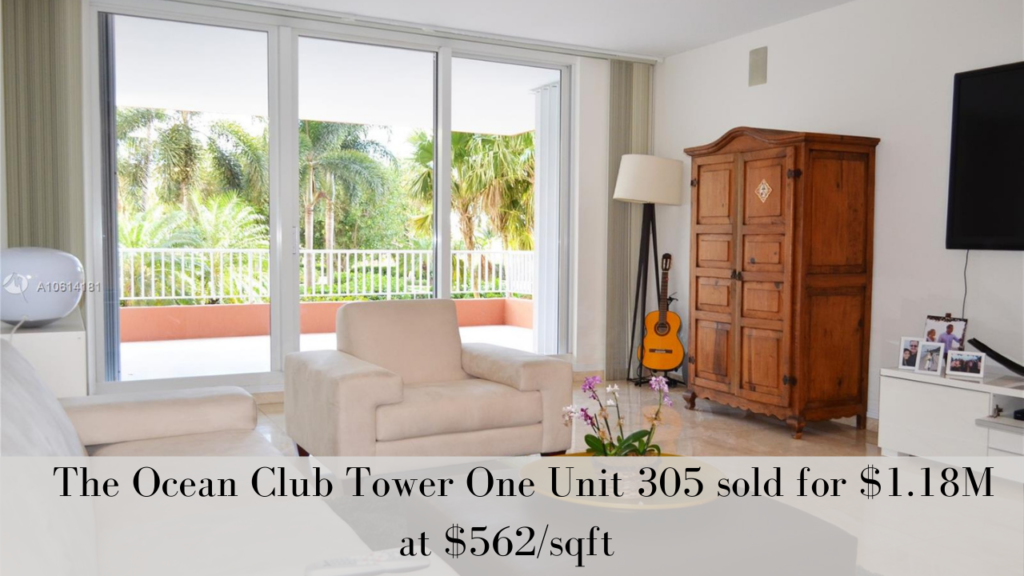
These sample 2020 transactions, ordered by price/sqft, illustrate the dispersion and diversity across this price segment:
These examples show it’s no longer as simple as paying close to average price/sqft for units in the same condominium and adjusting for view. In addition to individual condo renovation, building renovation is also taking place; examples include exterior and common areas at The Sands and Key Colony, the $12M Ocean Club gym and facilities renovation as well as upcoming Towers OF Key Biscayne corridors and exterior renovation
All these factors may be resetting expectations and I expect this trend only to strengthen in the upcoming months and years. My advice is to be thoughtful about decisions in this price segment and challenge your own through process to consider factors outside the traditional valuation methods and decision-making process for Key Biscayne real estate.

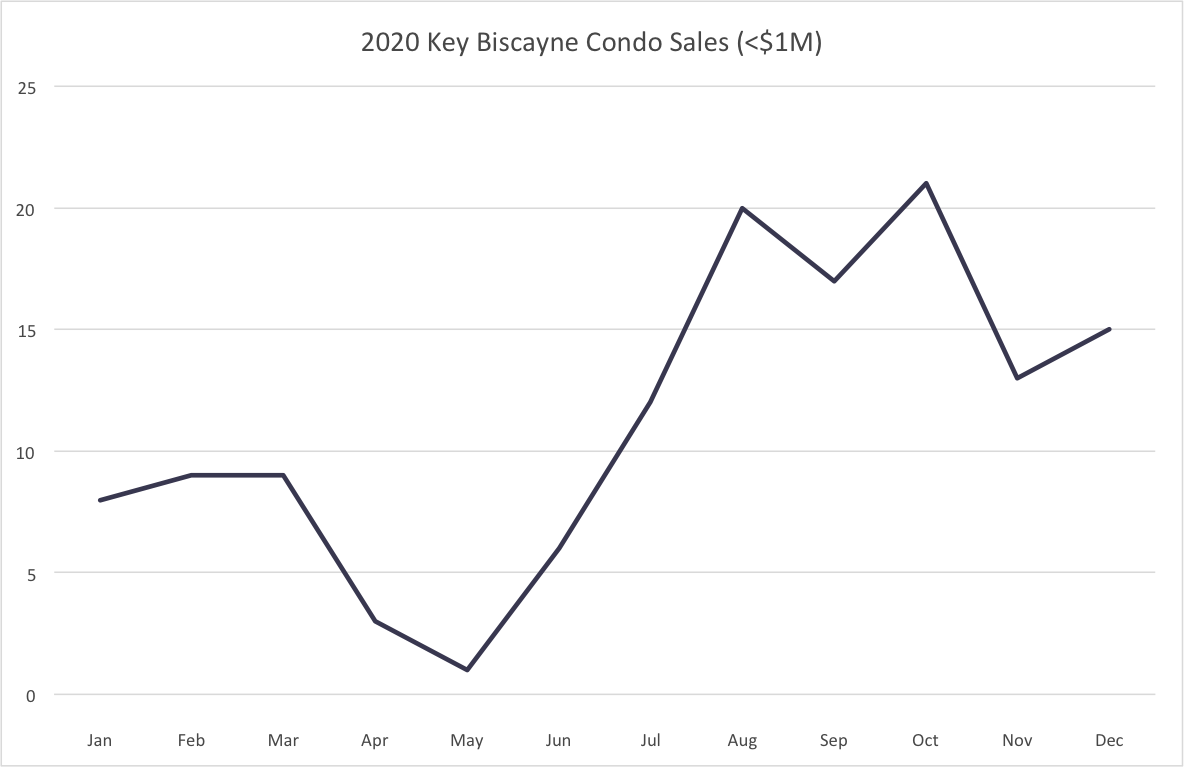
Key Biscayne 2020 Condo Market Report <$1M
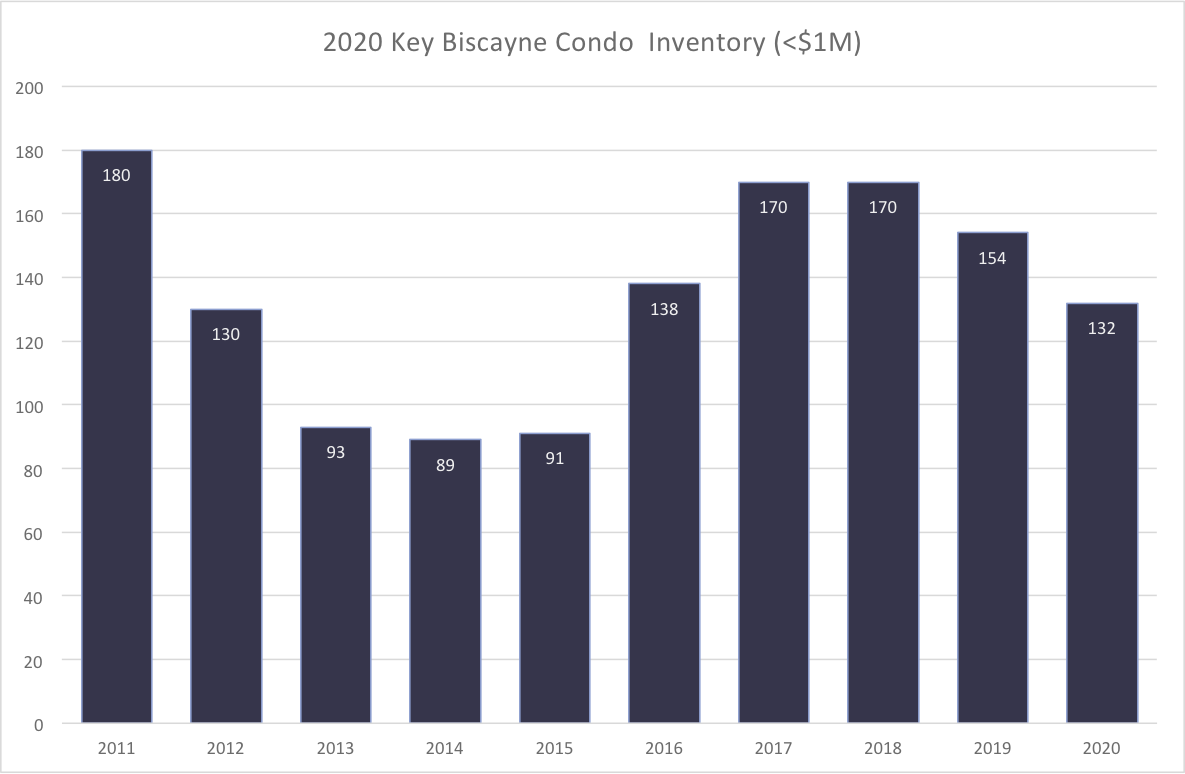
2020 brought good news. Key Biscayne condos for sale under $1M made up 66% of total Key Biscayne condo sales in 2020, selling at a faster pace than the rest of the Key Biscayne condo market. There were 132 units available by December 31, 2020, decreasing further to 128 by the end of January 2021. Given we had 154 condos available by the end of 2019, this segment of the market is starting to show a shift from a strong buyers market into a more neutral territory, if we can sustain the 15 average sales per month registered during the second half of 2020. In fact, the average price per square foot for Key Biscayne condos <$1M was $454, flat compared to $455 in 2019, stopping a downward trend since 2016.
To put this in context, this has been a soft market segment for several years. This segment averaged almost 200 sales per year at the beginning of the decade with annual volumes coming down to 100-130 annual unit sales since 2014. As more inventory came into the market in 2016-2018 it became a strong buyers market.
This price segment includes smaller units with good views and/or quality upgrades, as well as most of the one and two bedroom original or slightly renovated units common across the key. The market paid low dollars for non-differentiated units, which is to be expected in a high inventory environment, regardless of location. As inventory decreases, prices of these units will likely go up. Prettying-up a unit always pays off but with the influx of high-end tear-down renovations across the key, it is unlikely low dollar sprucing-up may yield substantial price increases as many buyers now favor redoing wiring, plumbing and even condo layouts. But, if any price segment is susceptible to impact selling price through “sprucing-up”, it is this segment.
This segment of the market is where you will find the bulk of buying opportunities as the key modernizes its buildings and individual condos and, along with increased village marketing, attracts the prices that other premium waterfront Miami-Dade communities are commanding. You don’t have to go very far to confirm this, as a quick comparison of pricing per square foot across same building listings will show differences of up to 300% – which cannot be explained just by views and opens the door for good investment returns. Lower prices, declining inventory and buildings and condos undergoing renovation point to the perfect scenario for good buys.
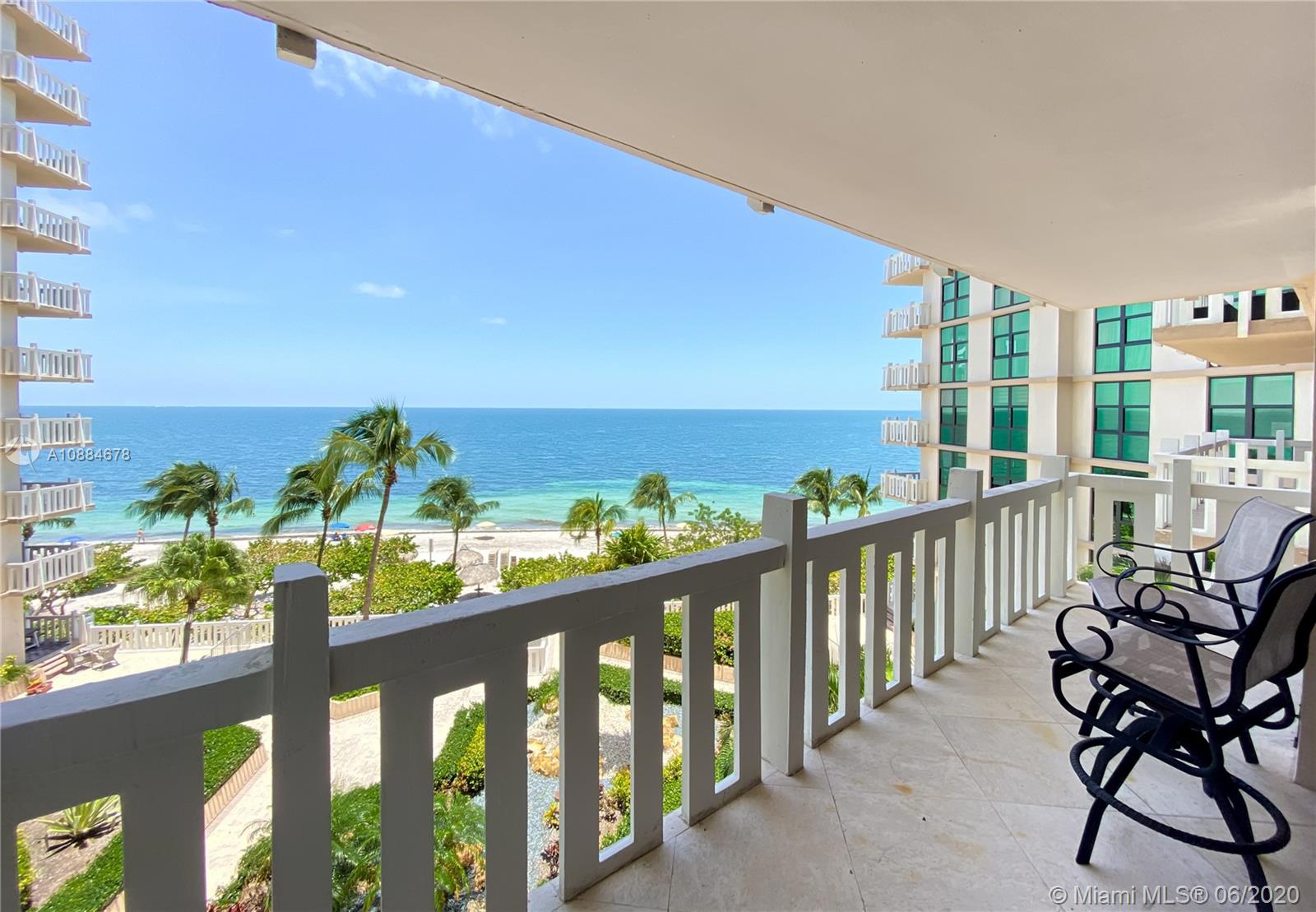
The David Siddons Group sold unit B405 at the Towers of Key Biscayne within 22 days. This property sold for $820,000, just $15K below its asking price.
Is this a good moment to buy a Condo in Key Biscayne?
Miami has experienced a high condo inventory in the last several years and prices have come down considerably. If you ask me we are about 6 months away from a shift in the condo market. We are currently nearing the bottom of the market and this is another reason why we have seen increased interest in the luxury condo market. Prices have adjusted and buyers feel confident again that they are paying fair prices. Although we have always been sceptics of the Miami condo market, there is a right price for everything. We believe the 2012 price levels represent the bottom of the next economic cycle. If you buy at the price levels of 2012/2013 it is safe to say you are paying prices that are close to the bottom of the market and there is room for your asset to appreciate. At this very moment the market is close enough to the numbers of the 2012 market. I believe this is the bottom of the market right now and from here onwards we can only go up. Prices have corrected and the demand is high. Furthermore this cycle is not dominated by investors, the buyers are primary residents who will not put these units up for rent, flip them or sell them at the first signs of economic struggle. Below we have shown a graph from ‘Smart Geeks’, our Condo Analytics tool.
The Key Biscayne Condo Market < $1M
The Key Biscayne Condo Market of $1M – $3M
The Key Biscayne Condo Market of $3M+
Key Biscayne 2021 Market Advice
I remain bullish on the Key Biscayne condo market. Looking at the mass influx of relocation buyers and recent trends including decreased inventory and moderate price hikes we see there is potential for this market to appreciate. As Key Biscayne awareness increases among relocation buyers, the future will be even brighter. Key Biscayne offers condo units with amazing ocean views, but they are often dated. As the condo market has seen price corrections over the last few years, prices are more attractive at this moment and there are great opportunities to buy an older unit with great ocean views to make it your own. Properties on the key are a good buy across the board, but caution buyers to be savvy in terms of picking properties at the right price points. I am happy to have a call to discuss how to navigate our shifting reality.
For sellers, I would say updated and ready-to-move in units with direct ocean-views will sell quickly regardless of the building. For those with less differentiated or non-upgraded units, the good news is inventory, pricing and sales trends point in the right direction and I am happy to discuss the type of strategy that will get the best financial return for your unit.
FAQ
These are the most commonly Miami Real Estate Related questions
What should relocation buyers know before buying real estate in Miami?
HOME BUYERS
Relocation buyers looking at homes in Miami should understand that choosing the right house is less about the property itself and more about location, schools, and long-term value. Many buyers make the mistake of focusing on price or finishes, while the real driver of value is the neighborhood and micro-location. Older homes often represent better value, but may also be part of a future redevelopment cycle. Newer homes command premiums, but don’t always sell faster if pricing is ahead of the market. Commute time, school access, and community dynamics are critical and often underestimated. The key is to evaluate homes not just as lifestyle purchases, but as long-term assets within a very localized market.
Sources:
https://luxlifemiamiblog.com/relocating-to-miami/
https://luxlifemiamiblog.com/relocating-to-miami-with-a-family/
CONDO BUYERS:
Relocation buyers should understand that Miami is a highly segmented, building-driven market, not a uniform one. Pricing can vary significantly between similar properties depending on building quality, layout, and financial health. Many buyers assume newer construction equals better investment, but that is often not the case. Factors like HOA fees, reserves, and rental policies can materially impact long-term value and liquidity. Negotiation opportunities often exist, especially in slower segments, but require precise market knowledge. The key is to evaluate micro-markets and individual buildings, not just neighborhoods or price per square foot.
Sources:
https://luxlifemiamiblog.com/miami-real-estate-market-report/
https://luxlifemiamiblog.com/new-construction-miami-guide/
What are the best areas for relocating families with children
For families relocating to Miami with young children, the most recommended neighborhoods are Coral Gables, Coconut Grove, and Pinecrest. Coral Gables offers the best balance of top schools, safety, and long-term value. Coconut Grove is ideal for younger families seeking walkability, greenery, and a lifestyle-driven environment. Pinecrest provides larger homes, excellent schools, and better value for space, making it ideal for growing families. The key driver across all three is access to strong schools and primary residential stability. Relocation decisions are less about new construction and more about long-term livability and resale strength.
Sources:
https://luxlifemiamiblog.com/best-neighborhoods-miami/
https://luxlifemiamiblog.com/what-are-the-best-family-neighborhoods-in-miami-in-2023/
Are new construction condos in Miami a good investment?
New construction condos in Miami can be a good investment—but only if you understand that not all buildings perform the same. According to the David Siddons Group, many buyers assume “new = better,” but in reality, performance depends on pricing, layout, building quality, and long-term demand. Some new developments set future price benchmarks and can drive long-term appreciation, especially in top-tier projects. However, many are priced aggressively at launch, and buyers relying on marketing instead of data often overpay.
The market is highly segmented, meaning two new buildings next to each other can perform very differently.
The best opportunities typically come from selecting the right building early or negotiating correctly in later phases.
In short: new construction is not automatically a good investment—it becomes one only with building-level analysis and disciplined entry pricing.
Sources:
https://luxlifemiamiblog.com/how-to-buy-a-luxury-condo-in-miami/
https://luxlifemiamiblog.com/category/independent-new-construction-condo-reviews/
https://luxlifemiamiblog.com/beyond-clickbait-real-insights-into-miamis-luxury-condo-market/
Why is buying a Miami condo riskier than buyers think?
Buying a Miami condo is often riskier than buyers expect because the true risks are at the building level—not visible in the listing price. Many buyers focus on finishes and views, while overlooking HOA reserves, insurance exposure, and potential special assessments. In reality, two identical units in different buildings can perform completely differently over time. Rising HOA fees and stricter regulations are also increasing the true cost of ownership, especially in older buildings. Liquidity can be affected by factors like financial health, rental policies, and ongoing repairs. The key risk is not the condo itself—but buying into the wrong building without proper due diligence.
Sources:
https://luxlifemiamiblog.com/how-to-buy-a-luxury-condo-in-miami/
https://luxlifemiamiblog.com/miami-condo-market-risks/
What are Miami's Safest Areas?
Which Miami Areas Still offer Great Value (Budget Friendly alternatives to Coral Gables and Pinecrest)
If you’re looking for better value than Coral Gables or Pinecrest, the answer (in true Siddons style) is not “go cheaper”—it’s go one layer outside the obvious markets.
The strongest value plays are:
- Schenley Park → closest substitute to Coral Gables at ~20% discount while maintaining similar character and location
- Biltmore Heights → almost identical feel to the Gables but ~25–30% cheaper on a $/SF basis
- Glenvar Heights → central location with larger lots and ~25% pricing advantage vs South Miami/Gables
- Baptist / Galloway (Kendall) → Pinecrest-style living (space, schools, land) at up to ~30% lower pricing
The pattern is consistent:
👉 Buyers are shifting west and slightly off-market to gain land, scale, and pricing efficiency. You don’t find value by going to a “cheaper neighborhood”—you find it by identifying adjacent micro-markets that offer the same lifestyle fundamentals without the brand premium.
Sources:
https://luxlifemiamiblog.com/best-value-neighborhoods-miami/
https://luxlifemiamiblog.com/category/miami-neighborhoods/
Is NOW a good time to buy in Miami?
Are Miami real estate prices going down in 2026?
No—but that’s the wrong way to look at it. Miami is not one market anymore, so prices are not moving in one direction. In 2026, the market is split into two: ultra-luxury, scarcity-driven areas (like waterfront and top-tier neighborhoods) are still holding or even rising, while mid-tier condos and oversupplied segments are flat or correcting. What we’re seeing is price divergence, not a crash—some properties are gaining value while others are quietly adjusting downward. Rising inventory and more selective buyers are putting pressure on pricing in certain segments, especially older condos or buildings with weaker fundamentals.
At the same time, global wealth and cash buyers continue to support pricing at the top end of the market. So the real answer: prices aren’t broadly dropping—they’re being repriced based on quality, location, and supply.
Should I buy a house or a condo when relocating to Miami?
The decision comes down to lifestyle first, investment second—and most relocation buyers get that backwards. If you want space, privacy, schools, and long-term family living, a single-family home in areas like Coral Gables or Coconut Grove is typically the stronger choice. If you prioritize walkability, low maintenance, and proximity to business districts, a condo in Brickell or waterfront markets makes more sense.
From an investment perspective, homes tend to be more stable, while condos are more building-dependent and cyclical. Most relocation clients underestimate how much building quality, HOA structure, and future costs impact condo performance. The right answer isn’t “house vs condo”—it’s which asset fits your lifestyle AND holds value within its micro-market.
How do I choose the right Miami neighborhood for my lifestyle?
Why are Miami condo prices so different between buildings?
Miami condo pricing varies widely because value is determined at the building level, not just by location. Two buildings next to each other can have major differences in financial health, reserves, HOA fees, and management quality. Buyers also pay premiums for better layouts, views, amenities, and newer construction—but not all “new” buildings perform equally. Factors like rental policies, upcoming assessments, and building reputation can significantly impact resale value. This is why price per square foot alone is misleading in Miami’s condo market. The real driver of value is how that specific building competes within its micro-market over time.
Sources:
https://luxlifemiamiblog.com/how-to-buy-a-luxury-condo-in-miami/
https://luxlifemiamiblog.com/category/independent-new-construction-condo-reviews/
WHY WORK WITH DAVID? THINGS YOU SHOULD KNOW...
For all our analytics we are agents driving some very unique and advanced tech. We Provide a granular and custom experience that empower our clients with the insight and tools to understand the most complex behaviors of any local markets.
-
Analytical
Over 100 reports produced to date
-
Knowledgeable
Over 1800 published articles and counting


Related Articles

The 90-Day Key Biscayne Real Estate Market Update | Q3 2022

The Quarterly Key Biscayne Condo Market Update

Fort Lauderdale Real Estate Market Forecast 2022/2023 (Part 4)

Fort Lauderdale Real Estate Market Report 2022/2023 (Part 2)

Miami Beach Real Estate Market Report | Q2 2022

Fort Lauderdale Real Estate Market Report 2022/2023 (Part 1)

Miami Real Estate Market Report 2022/2023 (Part 4)

Miami Real Estate Market Report 2022/2023 (Part 3)

Miami Real Estate Market Report 2022/2023 (Part 2)

Miami Real Estate Market Predictions 2022 / 2023 (Part 1)

The 5 Best Key Biscayne Condos for Sale

Living in Key Biscayne | The Key Biscayne Lifestyle

The Best Key Biscayne Condo for Sale
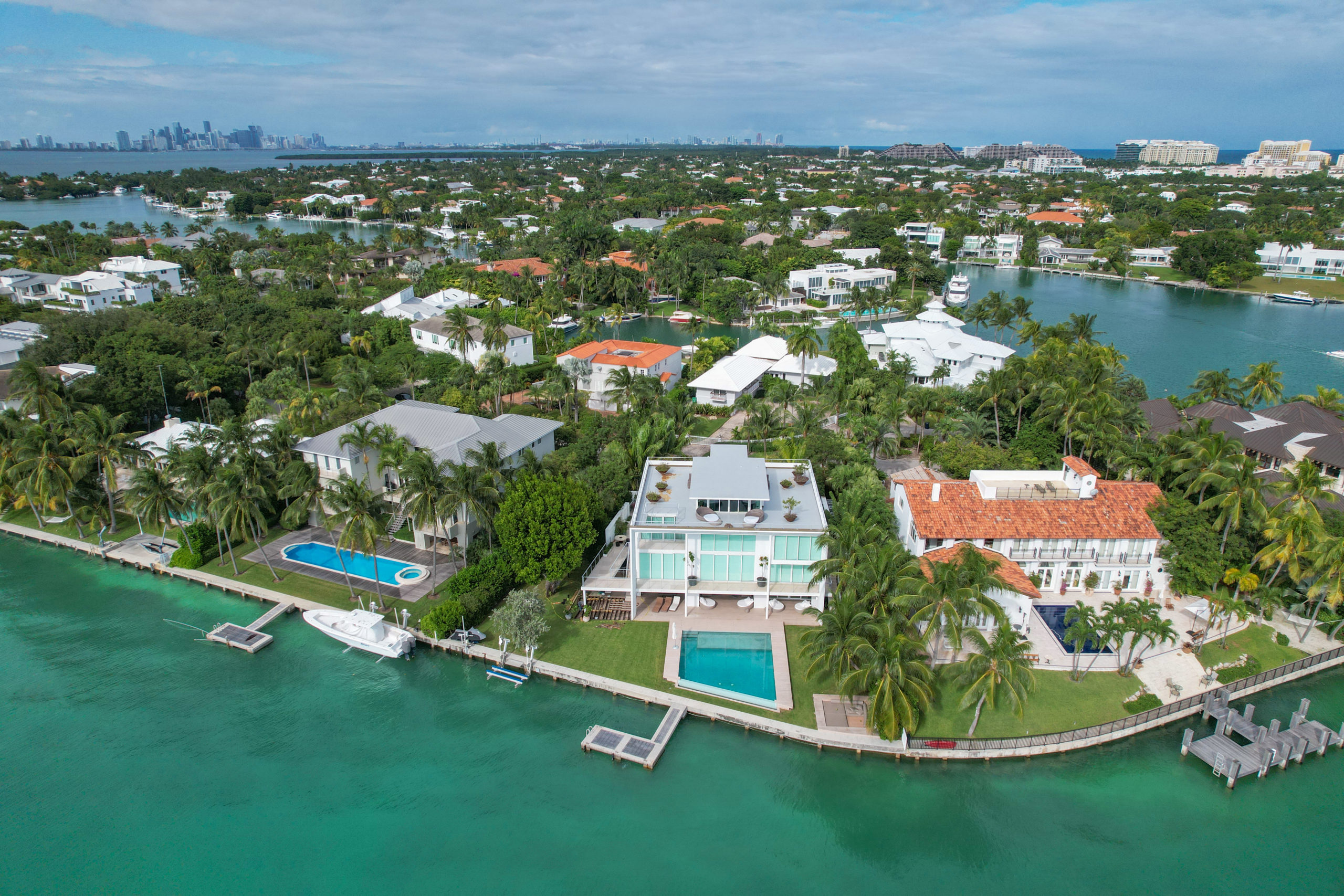
Key Biscayne is one of the Best Miami Neighborhoods for Families
Please fill in your details and David Siddons will contact you

Search related videos

INSIDE THIS CUSTOM BUILT, WATERFRONT MANSION ON KEY BISCAYNE | 470 W MATHESON DR KeyBiscayne
Life on Key Biscayne (Miami) | Exploring the Island and its perfect lifestyle KeyBiscayne
Inside 766 Harbor Drive | A Beautiful Waterfront Mansion on the Island of Key Biscayne KeyBiscayne
3 Bedroom Condo for Sale in New, Boutique Key Biscayne Condo Building KeyBiscayne
Step Inside this Superb Miami Mansion on a Waterfront Point Lot in Key Biscayne KeyBiscayne
Enjoy Direct Oceanviews from this fully remodeled 2 Bedroom + Den in Key Biscayne KeyBiscayne
Superb Key Biscayne Waterfront Home for Sale KeyBiscayne


- Get our Newsletter
- Subscribe
- No Thanks
Get the latest news from Miami Real Estate News
Close
Edit Search
Close
2 of 14
Share this property
Recomend this to a friend, just enter their email below.
Close
Your email was sent successfully
Close
 COMPARE WITH CONDOGEEKS