



















- Best of All
- Best Miami Luxury Condos
- Most popular
- Relocating to Miami
- Private Schools
- Investments
- Gated communities
- Waterfront information
- Luxury homes
- Luxury Condos
- New Construction Condos in South Florida
- Independent Pre-Construction condo reviews for Miami
- Independent Pre-Construction condo reviews for Fort Lauderdale
The Ft Lauderdale Real Estate Market Vs the Miami Real Estate Market | The Best Markets for Single Family Homes
Single – Family Home Markets in Miami vs Ft Lauderdale
South Florida has always been a desired destination for a second or third home. With the newest tax laws, our state has become even more attractive, specially for buyers from high tax states. We receive many calls from buyers who are looking into South Florida, but they are not quite sure on whether they would like to be in Ft Lauderdale or in Miami. We will start comparing these two areas in a variety of blogs so you can become familiar with both and be able to make an easier decision.
This first blog focusses on what the main neighborhoods in Ft Lauderdale and Miami have to offer and what price ranges you can expect
You can also pick up the phone and call Elaine Tatum 305.793.0540 or David Siddons 305.508.0899
Map of our Miami neighborhoods. You can see the price ranges of each area by clicking on it
Map of our Fort Lauderdale neighborhoods. You can see the price ranges of each area by clicking on it
Victoria Park (Ft Lauderdale)
Victoria Park is one of Ft Lauderdale’s oldest neighborhoods. Alfred G. Kuhn, a Washington D.C. real estate developer platted Victoria Park in 1925. He named the area after his daughter, Victoria. Nestled alongside the Downtown Business corridor and the Las Olas Blvd arts and dining district, Victoria Park heralds back to a simpler time. Today there is a mixture of lovingly restored Florida Style homes and new contemporary design. While looking for a property in Victoria Park you will notice that the area offers a great amount of brand new townhomes. The area enjoys the beauty of a mature tree canopy and meandering park waterway. Ideal for families with A rated public schools and top-rated private schools. The neighborhood is also close to Holiday Park which offers a multitude of team sport programming and a world-class tennis facility. Close to schools, work and play Victoria Park offers a great lifestyle in the heart of Ft Lauderdale.
Price range of Homes Sold in 2018:
- Waterfront: $920,000 – $3,338,000
- Average Waterfront: $1,900,000
- Non-waterfront: $415,000 -$1,475,000
- Average non-waterfront $737,000
Price range of Townhomes Sold in 2018:
- Waterfront: $1,100,000 – $1,410,000
- Average Waterfront: $1,261,000
- Non-waterfront: $322,000 – $1,090,000
- Average non-waterfront $575,000
Las Olas Isles (Ft Lauderdale)
Lauderdale’s iconic Las Olas Isles were dredged from the swampy wetlands in the early 1920’s. The Isles including Seven Isles, Idlewyld and Riviera Isles extend out from Las Olas Blvd like finger islands providing some of the most sought after waterfront real estate in S. Florida. Boating enthusiasts enjoy quick access to the ocean inlet and Intracoastal waterway. The Las Olas Isles offer a distinctive waterfront lifestyle and are close to all of the restaurants and businesses along famed Las Olas Blvd. Homes along the isles quickly escalate in price the closer you get to the point with point lots as the prize. Let us give you a tour of the area to find the Isle that is perfect for the type of boating that interests you. No two Isles are alike.
Price range of Homes Sold in 2018:
- Waterfront: $885,000 – $6,700,000
- Average Waterfront: $2,300,000
- Non-waterfront: $1,000,000 – $1,100,000
- Average Non-waterfront $1,050,000
Price range of Townhomes Sold in 2018:
- Waterfront: $700,000 – $1,560,000
- Average Waterfront: 1,211,000
- Non Waterfront: N/A
Harbor Beach (Ft Lauderdale)
Harbor Beach in Ft Lauderdale is one of the few luxury gated waterfront neighborhoods in the city. Harbor Beach is located off the Ft Lauderdale Beach barrier island and enjoys an exceptional location closest to the ocean inlet. If you are a boating enthusiast you know a short navigation to your favorite fishing spots is key. The neighborhood boasts it’s own private beachclub offering the best of yachting and beach life. The neighborhood consists of sprawling estates and a mix of architectural styles including Mediterranean, traditional and contemporary design. The focus of life here is more about the yacht in the backyard. This is a haven for true yachtsmen that want to enjoy the saltlife to the fullest.
Price range of Homes Sold in 2018:
- Waterfront: $2,115,000 – $6,390,038
- Average Waterfront: $4,100,000
- Non-waterfront: $975,000 – $3,150,000
- Average non-waterfront $1,1700,000
Rio Vista (Ft Lauderdale)
Rio Vista is one of Ft Lauderdale’s original neighborhoods. The neighborhood borders the new river & downtown to the north and Intracoastal Waterway to the east. The first plat was recorded by Mary Brickell of Miami in the 1920’s then later sold to C.J. Hector who began his “River View” development. The neighborhood is dotted with a few of the remaining original homes. This lends both charm and character set amongst the picturesque winding waterways and mature foliage. Local transport is usually by golf cart in this close knit community with many residents belonging to the Lauderdale Yacht Club. The club is a local landmark in the Ft Lauderdale boating community. Waterfront homes are both open water and canal front.
Price range of Homes Sold in 2018:
- Waterfront: $1,000,000 – $6,900,000
- Average waterfront $2,650,000
- Non-waterfront: $465,000 – $3,750,00
- Average non-waterfront $1,250,000
Coral Ridge Country Club (Ft Lauderdale)
The Coral Ridge Country Club area is an upscale neighborhood that offers residents gracious size lots that border the golf course greenways. The Enclave is a new gated neighborhood within the country club area that is adding even more cache to golf course living. The neighborhood also provides waterfront living with direct access to the Intracoastal Waterway. Residents enjoy pleasure cruising to some of the many local boat friendly restaurants and close proximity to the charming seaside village of Lauderdale by the Sea.
Some of the most esteemed private schools are also an easy commute.
Price range of Homes Sold in 2018:
- Waterfront: $850,000 – $3,350 000
- Average waterfront $1,540,000
- Non-waterfront: $500,000 – $3,100,000
- Average non-waterfront $805,000
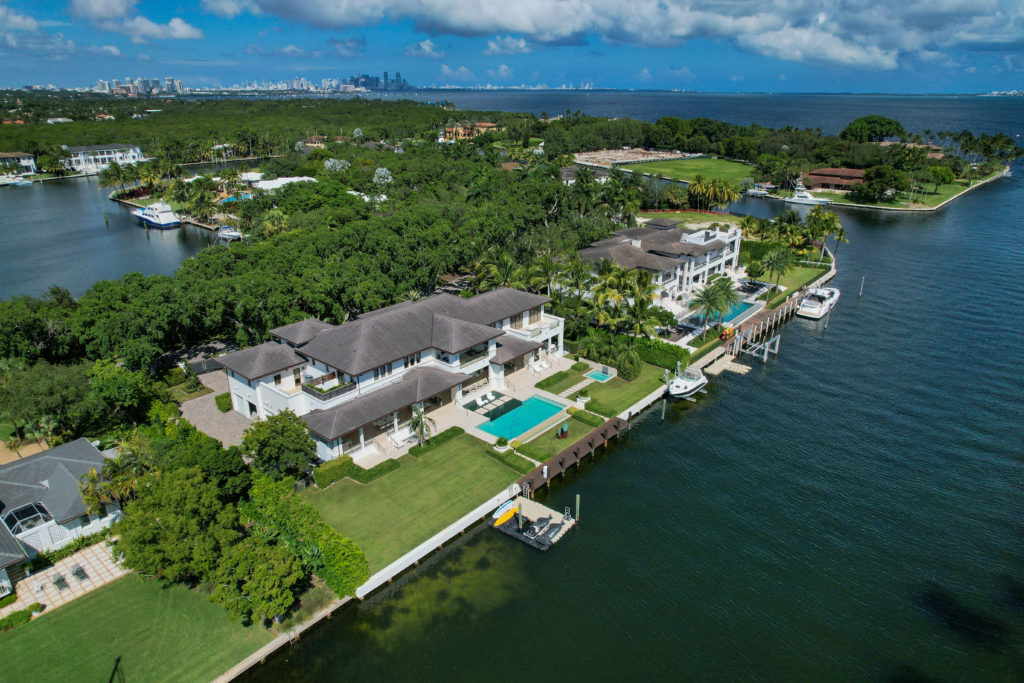
Coconut Grove (Miami)
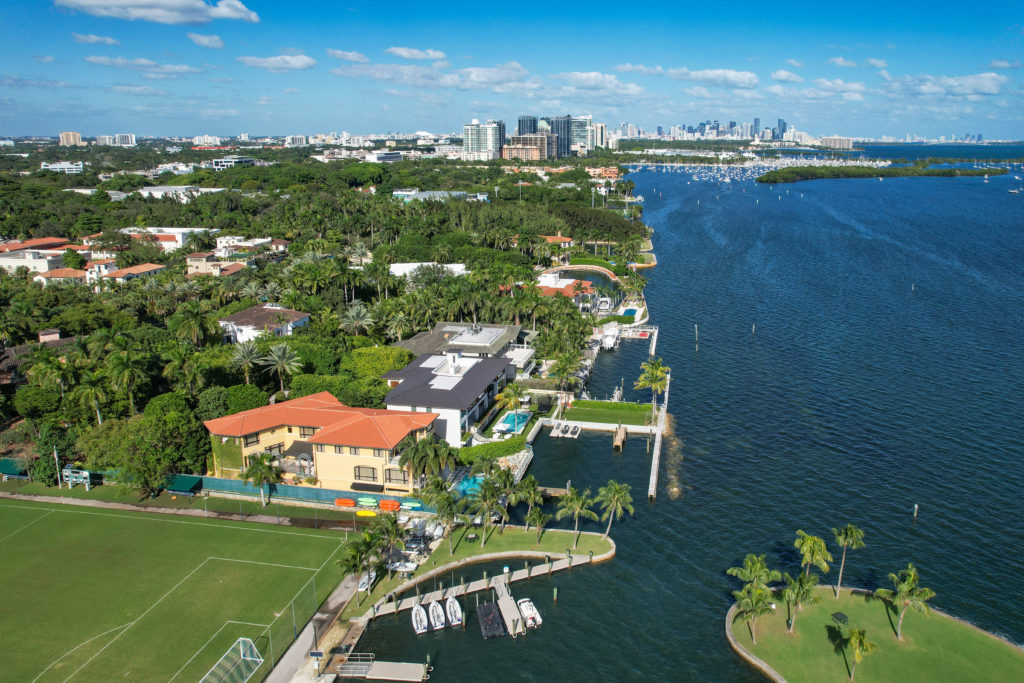
With its tree filled, jungle-esk streets (occasionally the catwalk of a muster of peacocks) and Bahamian, timber frame conch houses, the Grove is like no other part of Miami. This laid back village provides a more Bohemian feel than elsewhere in Miami while also being home to many multi-million dollar mansions. Real Estate in Coconut Grove is very desired for its safety, private schools, excellent location, walkability and its tree-filled streets with lush vegetation. The area is rich in beautiful properties often located in quiet and private streets. As Coconut Grove is located along the Biscayne Bay the waterfront aspect also plays an important role in the demand for Coconut Grove homes. –Many Coconut Grove homes are located in guard-gated communities, which is especially attractive to families with children. The demand for gated communities has always been high as the exclusivity and safety of these communities appeal to many. Many gated communities in Coconut Grove are waterfront and offer amenities like tennis courts and 24/7 surveillance. Some of the most desired Coconut Grove communities are The Moorings, Hughes Cove, Camp Biscayne and Entrada Estates.
Price range of Homes Sold in 2018:
- Waterfront: $1.5M – $19,750,000
- Average waterfront $6.2M
- Non-waterfront: $700,000 – $8.1M
- Average non-waterfront $1,550,000
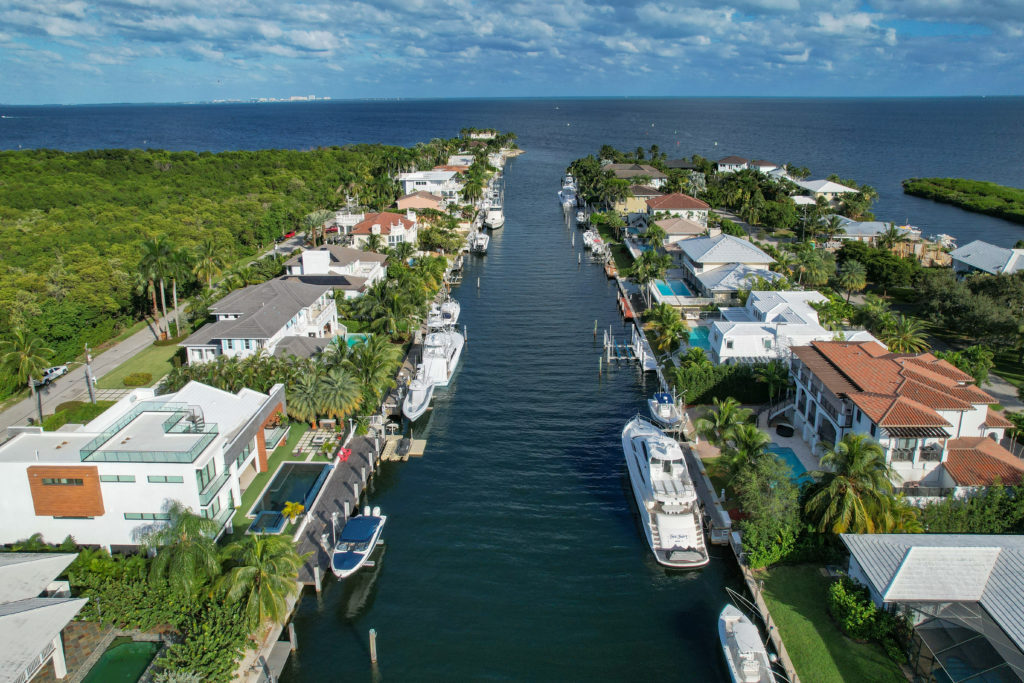
Coral Gables (Miami)
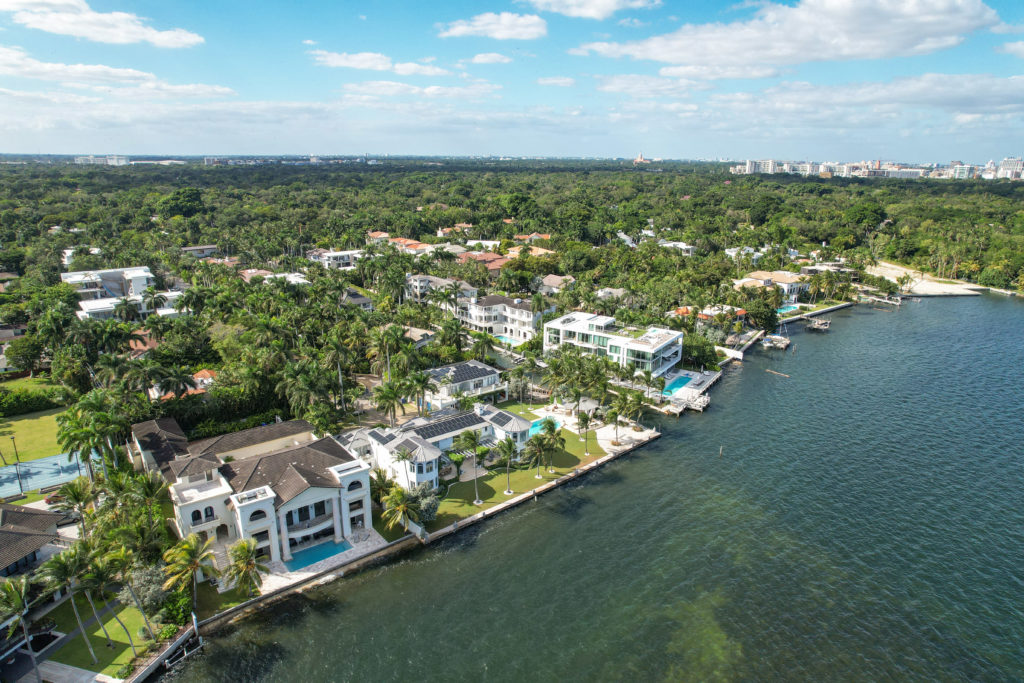
Coral Gables is one of Miami’s most sought after residential areas. The Gables is a very extensive neighborhood and homes vary from smaller Spanish Colonial homes to multimillion-dollar oceanfront mansions in gated communities. For that reason, home prices range considerably depending on the community you are located in. We often divide the area into Coral Gables west of US1 and Coral Gables east of US1. Desired areas west of US1 are the areas around the Biltmore Golf course and around the Coral Gables Waterways. On the east side of the US1 is where we find Coral Gables’ most prominent gated communities such as Gables Estates, Cocoplum and Hammock Oaks. Many of these gated communities are waterfront and very desired with families. Both areas west and east of the US1 offer waterfront homes. The Eastern part is closer to the bay or the open water and therefore very exclusive and sought-after. The waterfront properties west of the US1 are further from the open water and therefore less in demand with boaters than the properties with direct access to the open bay.
The Gables’ attraction to (younger) families is mainly due to the strong school district and the safety in the area. Another great point of attraction are the many golf courses like the Riviera Country Club, The Biltmore Golf Course, Granada Golf Club and the Coral Gables Country Club.
Price range of Homes Sold in 2018: (West of US1)
- Waterfront: $1.73M – $4.1M
- Average waterfront $3.15M
- Non-waterfront: $400,000 – $3,700,000
- Average non-waterfront $1M
Price range of Homes Sold in 2018: (East of US1)
- Waterfront: $900,000 – $19M
- Average waterfront $4.3M
- Non-waterfront: $500,000 – $7,340,000
- Average non-waterfront $1.5M
Pinecrest (Miami)
Pinecrest is located just south of Coral Gables, West of South Red Road / Old Cutler Road and East of the Pinecrest Parkway. The Pinecrest real estate market is dominated by single – family homes mostly located on larger lots. In Pinecrest most lots vary between 20,000 Sq.Ft and an acre, sometimes even larger.
Pinecrest is known to be one of Miami’s most desired neighborhoods. Pinecrest is very much in demand with buyers as it is home to many of Miami’s best (highly rated) public schools. As many young families like to provide their kids with the best education possible, Pinecrest is a desired location for real estate because in order to quality for Pinecrest’s excellent school district, you need to live in the area. Furthermore, the village is very much in demand with families as the area is safe and offers many parks. Home in Pinecrest are more affordable than in Coral Gables and Coconut Grove and generally speaking are larger homes on larger lots.
Price range of Homes Sold in 2018:
- Waterfront*: $650,000 – $1,260,000
- Average waterfront $934,036
- Non-waterfront: $485,000 – $7.2M
- Average non-waterfront $1.5M
*Pinecrest is not known for waterfront homes and many waterfront homes are lakefront or far from the open bay. For this very reason you will notice waterfront homes won’t sell for much more than dry lot homes
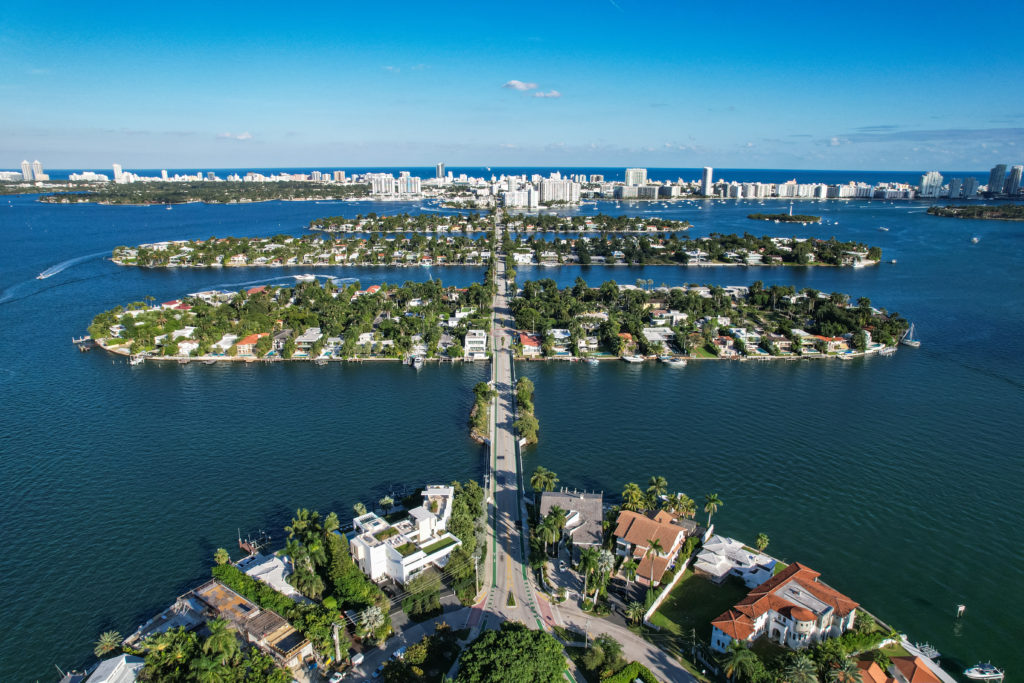
The Venetian Islands (Miami)
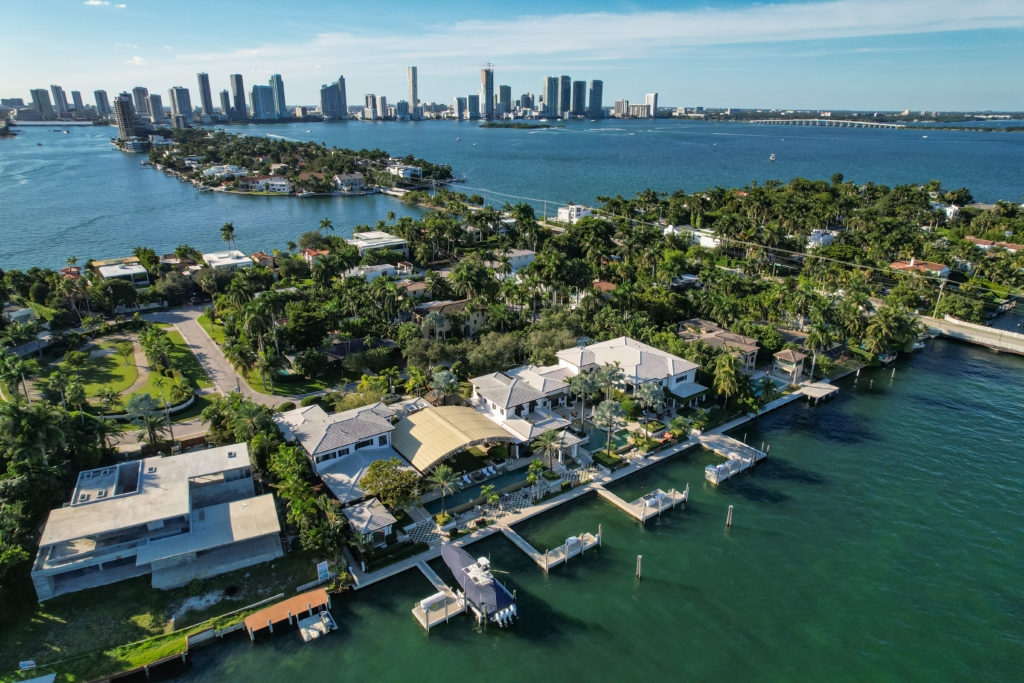
The Venetian Islands consist of 6 man-made islands in the Biscayne Bay between Midtown/Edgewater and Miami Beach, which offers a perfect location to many. These six islands are Biscayne, San Marco, Di Lido, San Marino, Belle Isle and Rivo Alto. The islands are connected by the Venetian Causeway, which is a private toll way between Miami’s mainland and the Beach. The area has become one of the most desirable neighborhoods in Miami Beach because of its many superb real estate options and waterfront location
The homes for sale on the Venetian Islands are located both on waterfront lots as well as on dry lots. Many of the Venetian Island homes are newly build or have been renovated in the last few years which provides the islands with a mix of modern and more traditional, Mediterranean homes. Many of the Venetian Islands waterfront homes offer a boat dock.
Price range of Homes Sold in 2018:
- Waterfront: $4.2M – $17.3M
- Average waterfront $7.95M
- Non-waterfront: $925,000 – $4,250,000
- Average non-waterfront $1.7M
FAQ
These are the most commonly Miami Real Estate Related questions
What should relocation buyers know before buying real estate in Miami?
HOME BUYERS
Relocation buyers looking at homes in Miami should understand that choosing the right house is less about the property itself and more about location, schools, and long-term value. Many buyers make the mistake of focusing on price or finishes, while the real driver of value is the neighborhood and micro-location. Older homes often represent better value, but may also be part of a future redevelopment cycle. Newer homes command premiums, but don’t always sell faster if pricing is ahead of the market. Commute time, school access, and community dynamics are critical and often underestimated. The key is to evaluate homes not just as lifestyle purchases, but as long-term assets within a very localized market.
Sources:
https://luxlifemiamiblog.com/relocating-to-miami/
https://luxlifemiamiblog.com/relocating-to-miami-with-a-family/
CONDO BUYERS:
Relocation buyers should understand that Miami is a highly segmented, building-driven market, not a uniform one. Pricing can vary significantly between similar properties depending on building quality, layout, and financial health. Many buyers assume newer construction equals better investment, but that is often not the case. Factors like HOA fees, reserves, and rental policies can materially impact long-term value and liquidity. Negotiation opportunities often exist, especially in slower segments, but require precise market knowledge. The key is to evaluate micro-markets and individual buildings, not just neighborhoods or price per square foot.
Sources:
https://luxlifemiamiblog.com/miami-real-estate-market-report/
https://luxlifemiamiblog.com/new-construction-miami-guide/
What are the best areas for relocating families with children
For families relocating to Miami with young children, the most recommended neighborhoods are Coral Gables, Coconut Grove, and Pinecrest. Coral Gables offers the best balance of top schools, safety, and long-term value. Coconut Grove is ideal for younger families seeking walkability, greenery, and a lifestyle-driven environment. Pinecrest provides larger homes, excellent schools, and better value for space, making it ideal for growing families. The key driver across all three is access to strong schools and primary residential stability. Relocation decisions are less about new construction and more about long-term livability and resale strength.
Sources:
https://luxlifemiamiblog.com/best-neighborhoods-miami/
https://luxlifemiamiblog.com/what-are-the-best-family-neighborhoods-in-miami-in-2023/
Are new construction condos in Miami a good investment?
New construction condos in Miami can be a good investment—but only if you understand that not all buildings perform the same. According to the David Siddons Group, many buyers assume “new = better,” but in reality, performance depends on pricing, layout, building quality, and long-term demand. Some new developments set future price benchmarks and can drive long-term appreciation, especially in top-tier projects. However, many are priced aggressively at launch, and buyers relying on marketing instead of data often overpay.
The market is highly segmented, meaning two new buildings next to each other can perform very differently.
The best opportunities typically come from selecting the right building early or negotiating correctly in later phases.
In short: new construction is not automatically a good investment—it becomes one only with building-level analysis and disciplined entry pricing.
Sources:
https://luxlifemiamiblog.com/how-to-buy-a-luxury-condo-in-miami/
https://luxlifemiamiblog.com/category/independent-new-construction-condo-reviews/
https://luxlifemiamiblog.com/beyond-clickbait-real-insights-into-miamis-luxury-condo-market/
Why is buying a Miami condo riskier than buyers think?
Buying a Miami condo is often riskier than buyers expect because the true risks are at the building level—not visible in the listing price. Many buyers focus on finishes and views, while overlooking HOA reserves, insurance exposure, and potential special assessments. In reality, two identical units in different buildings can perform completely differently over time. Rising HOA fees and stricter regulations are also increasing the true cost of ownership, especially in older buildings. Liquidity can be affected by factors like financial health, rental policies, and ongoing repairs. The key risk is not the condo itself—but buying into the wrong building without proper due diligence.
Sources:
https://luxlifemiamiblog.com/how-to-buy-a-luxury-condo-in-miami/
https://luxlifemiamiblog.com/miami-condo-market-risks/
What are Miami's Safest Areas?
Which Miami Areas Still offer Great Value (Budget Friendly alternatives to Coral Gables and Pinecrest)
If you’re looking for better value than Coral Gables or Pinecrest, the answer (in true Siddons style) is not “go cheaper”—it’s go one layer outside the obvious markets.
The strongest value plays are:
- Schenley Park → closest substitute to Coral Gables at ~20% discount while maintaining similar character and location
- Biltmore Heights → almost identical feel to the Gables but ~25–30% cheaper on a $/SF basis
- Glenvar Heights → central location with larger lots and ~25% pricing advantage vs South Miami/Gables
- Baptist / Galloway (Kendall) → Pinecrest-style living (space, schools, land) at up to ~30% lower pricing
The pattern is consistent:
👉 Buyers are shifting west and slightly off-market to gain land, scale, and pricing efficiency. You don’t find value by going to a “cheaper neighborhood”—you find it by identifying adjacent micro-markets that offer the same lifestyle fundamentals without the brand premium.
Sources:
https://luxlifemiamiblog.com/best-value-neighborhoods-miami/
https://luxlifemiamiblog.com/category/miami-neighborhoods/
Is NOW a good time to buy in Miami?
Are Miami real estate prices going down in 2026?
No—but that’s the wrong way to look at it. Miami is not one market anymore, so prices are not moving in one direction. In 2026, the market is split into two: ultra-luxury, scarcity-driven areas (like waterfront and top-tier neighborhoods) are still holding or even rising, while mid-tier condos and oversupplied segments are flat or correcting. What we’re seeing is price divergence, not a crash—some properties are gaining value while others are quietly adjusting downward. Rising inventory and more selective buyers are putting pressure on pricing in certain segments, especially older condos or buildings with weaker fundamentals.
At the same time, global wealth and cash buyers continue to support pricing at the top end of the market. So the real answer: prices aren’t broadly dropping—they’re being repriced based on quality, location, and supply.
Should I buy a house or a condo when relocating to Miami?
The decision comes down to lifestyle first, investment second—and most relocation buyers get that backwards. If you want space, privacy, schools, and long-term family living, a single-family home in areas like Coral Gables or Coconut Grove is typically the stronger choice. If you prioritize walkability, low maintenance, and proximity to business districts, a condo in Brickell or waterfront markets makes more sense.
From an investment perspective, homes tend to be more stable, while condos are more building-dependent and cyclical. Most relocation clients underestimate how much building quality, HOA structure, and future costs impact condo performance. The right answer isn’t “house vs condo”—it’s which asset fits your lifestyle AND holds value within its micro-market.
How do I choose the right Miami neighborhood for my lifestyle?
Why are Miami condo prices so different between buildings?
Miami condo pricing varies widely because value is determined at the building level, not just by location. Two buildings next to each other can have major differences in financial health, reserves, HOA fees, and management quality. Buyers also pay premiums for better layouts, views, amenities, and newer construction—but not all “new” buildings perform equally. Factors like rental policies, upcoming assessments, and building reputation can significantly impact resale value. This is why price per square foot alone is misleading in Miami’s condo market. The real driver of value is how that specific building competes within its micro-market over time.
Sources:
https://luxlifemiamiblog.com/how-to-buy-a-luxury-condo-in-miami/
https://luxlifemiamiblog.com/category/independent-new-construction-condo-reviews/
WHY WORK WITH DAVID? THINGS YOU SHOULD KNOW...
For all our analytics we are agents driving some very unique and advanced tech. We Provide a granular and custom experience that empower our clients with the insight and tools to understand the most complex behaviors of any local markets.
-
Analytical
Over 100 reports produced to date
-
Knowledgeable
Over 1800 published articles and counting


Related Articles

Greenview at Presidential Aventura
The Best Real Estate Agent in Ponce Davis
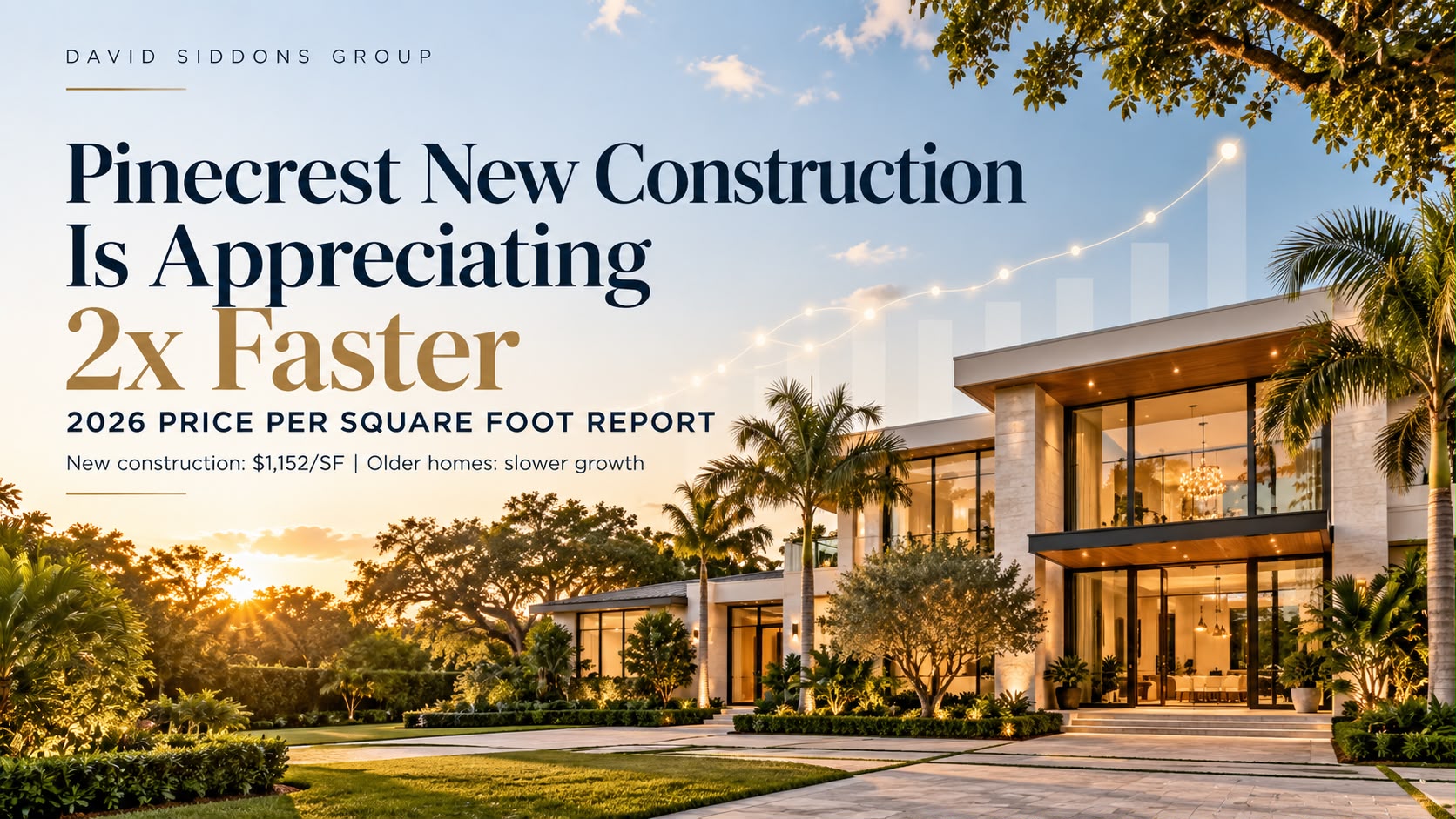
Pinecrest New Construction Is Appreciating 2x Faster Than Older Homes

Inside 1428 Brickell: Why Ytech Skipped the Hotel Brand to Build Brickell’s Best Finishes
Brickell’s Office Boom: What It Means for Luxury Housing in Coral Gables and Coconut Grove
Palmetto Bay Land Values Are Rising. Is Your Home Worth More as Land?

Killian Drive: Kendall’s Luxury New Construction Corridor Hits $1,000/SF

Pinecrest’s 4 Best Streets in 2026
The 5 Best Luxury Streets in Miami’s Gated Communities

The Real Estate Team Behind the Agent: Why Systems Matter More Than Star Power
Selling a Home in Pinecrest: Why Some Homes Sell for $1,500/SF and Others Sit

We Built the Largest YouTube Audience of Any Miami Real Estate Team.

Empty Nesters in Miami: What Comes After the Big Family Home?
Palmetto Bay Has Almost No Inventory. So Why Are Homes Still Sitting?
Please fill in your details and David Siddons will contact you

Search related videos

Must-See Fort Lauderdale Pre-Construction Condos! Don’t Miss Out! FortLauderdale
Fort Lauderdale Real Estate Forecast | Market Predictions for 2024 Education
Solemar Pompano Beach: Luxurious 3 Bedroom New Construction Condo Overlooking the Beach fort lauderdale
Exclusive First Look! NEW Fort Lauderdale Pre Construction Condos FortLauderdale
Luxury Waterfront Homes Showdown: Miami vs. Fort Lauderdale fort lauderdale
The Best Fort Lauderdale New Construction Condos FortLauderdale
Fort Lauderdale Real Estate Expert | Client Appreciation Sunset Cruise FortLauderdale
Fort Lauderdale: The Hottest South Florida Market – All in 5 Minutes! FortLauderdale
Inside Salato Pompano Beach with Elaine Tatum | 40 Brand New Condo Residences FortLauderdale
The Best Gated Communities in Fort Lauderdale FortLauderdale
Inside the Brand New Sixth and Rio Residences in Fort Lauderdale FortLauderdale
#BetterDecisions The Evolution and Livability of Downtown Fort Lauderdale fort lauderdale


- Get our Newsletter
- Subscribe
- No Thanks
Get the latest news from Miami Real Estate News
Close
Edit Search
Close
2 of 14
Share this property
Recomend this to a friend, just enter their email below.
Close
Your email was sent successfully
Close
 COMPARE WITH CONDOGEEKS