


















- Best of All
- Best Miami Luxury Condos
- Most popular
- Relocating to Miami
- Private Schools
- Investments
- Gated communities
- Waterfront information
- Luxury homes
- Luxury Condos
- New Construction Condos in South Florida
- Independent Pre-Construction condo reviews for Miami
- Independent Pre-Construction condo reviews for Fort Lauderdale
Miami Real Estate in 2025: 10 Defining Lessons Buyers, Sellers, and Investors Can’t Ignore
Lesson #1: Miami Didn’t Cool — It Fractured
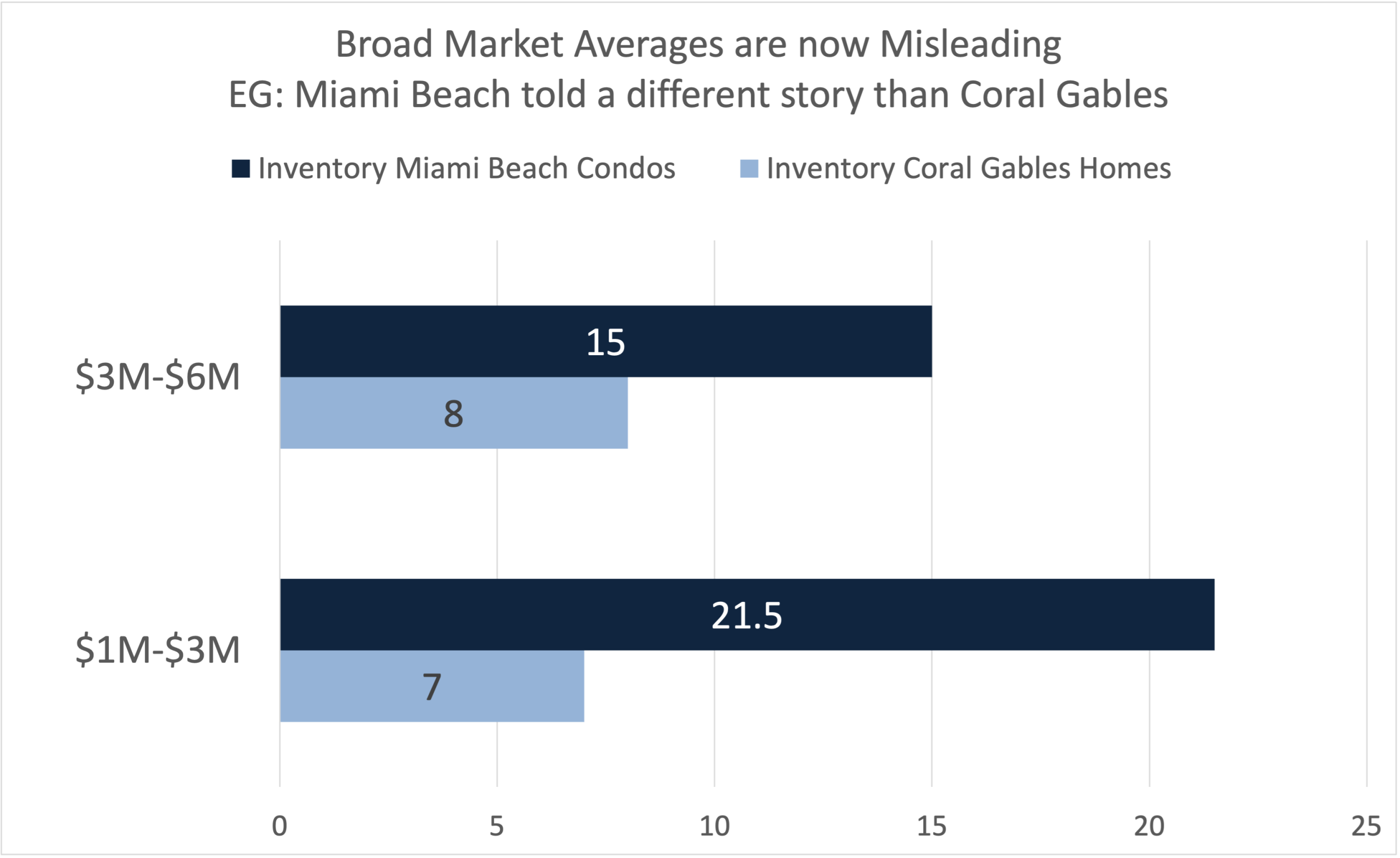
What many headlines labeled a “slowdown” in 2025 was not a market cooling at all, but a market breaking into distinct, often opposing realities. Miami is no longer one market, it is several running in parallel. Luxury resale condos in oversupplied areas quietly shifted into buyer’s markets, while ultra-prime single-family homes and trophy new construction continued to trade at or near record pricing. Coconut Grove behaved nothing like Brickell. Miami Beach told a different story than Coral Gables. Some sellers pulled listings rather than cut prices; others negotiated aggressively as inventory piled up. On paper, this looked like hesitation. In reality, it was fragmentation. Demand didn’t disappear, it became highly selective. Buyers rewarded scarcity, quality, and location, while punishing mediocrity and mispricing. The lesson from 2025 is simple but critical: broad market averages are now misleading. Success depends on understanding which Miami market you are in, because they are moving in different directions at the same time.
Lesson #2: The most dangerous listings in Miami weren’t overpriced — they were mispositioned
In 2025, the most vulnerable listings in Miami weren’t necessarily the ones asking too much, they were the ones telling the wrong story. Price alone didn’t kill deals; poor positioning did. Buyers became sharper, more informed, and far less forgiving of vague marketing, generic language, or features presented without context. A home could be “priced right” and still sit if the narrative failed to explain why it mattered in a crowded, fractured market. Meanwhile, well-positioned properties, even ambitious ones, continued to trade because they framed scarcity, lifestyle, and long-term value correctly. Sellers who relied on comps without understanding buyer psychology lost leverage quickly. Those who understood that real estate is not just a product but a message maintained control. The lesson from 2025 is clear: pricing opens the door, but positioning closes the deal. In Miami’s evolved market, narrative is not decoration, it is strategy.
Lesson #3: Liquidity Became the Ultimate Luxury Amenity
In 2025, Miami buyers began valuing something far less visible than ocean views or five-star amenities: liquidity. Buildings that could actually trade, with consistent closings, realistic sellers, and proven demand, became magnets for serious buyers. Those that couldn’t stalled, regardless of how new, beautiful, or well-located they appeared on paper. The market exposed a critical truth: luxury without liquidity is risk. Buyers grew wary of buildings with bloated inventory, few recent sales, or a history of delistings, recognizing that exit strategy matters as much as entry point. Meanwhile, residences in liquid buildings held pricing power because buyers trusted the market beneath them. The lesson from 2025 is unmistakable: in a fractured market, the ability to transact is itself a feature. Liquidity became the quiet separator between buildings that functioned as assets, and those that merely looked luxurious.
Lesson #4: Brand Names Didn’t Equal Performance
In 2025, Miami learned that a famous logo on the front of a building was no longer a guarantee of value preservation. Several brand-name condo towers underperformed quietly, not because demand vanished, but because recognition couldn’t compensate for fundamentals that buyers now scrutinize closely. High carrying costs, excessive inventory, weak resale liquidity, and inconsistent pricing behavior eroded confidence, even in buildings with global name recognition. Buyers stopped paying premiums for branding alone and instead focused on what actually protects value: scarcity, livability, financial health, and a track record of real transactions. Meanwhile, less flashy buildings with strong fundamentals outperformed expectations. The lesson was subtle but powerful: branding may open the conversation, but it does not close the deal. In a more mature Miami market, fundamentals, not fame, ultimately determined which properties held their ground and which quietly slipped.
Lesson #5: Days on market stopped meaning what people think it means.
In 2025, days on market (DOM) became one of the most misunderstood metrics in Miami real estate. Listings didn’t always linger because buyers disappeared, many lingered because sellers refused to adjust, quietly withdrew, or reset expectations off-market. As a result, DOM stopped signaling demand and started reflecting seller psychology instead. The real signals moved elsewhere: delistings versus closings, price discovery speed once a property was correctly positioned, and whether deals were happening publicly or behind the scenes. Some homes showed long market times yet traded quickly once narrative and terms aligned. Others appeared “fresh” after relaunches but carried hidden fatigue. The lesson is clear: surface-level metrics no longer tell the full story in a fractured market. Serious buyers and sellers must look beyond DOM and focus on absorption, liquidity, and behavioral trends, because in 2025, the truth of the market lived beneath the listing, not on it.
Lesson #6: Smart buyers in Miami weren’t chasing deals, they were avoiding mistakes.
In 2025, the strongest buyers in Miami weren’t hunting for bargains, they were hunting for certainty. Discounts existed across the market, but price reductions alone didn’t create value. Sophisticated buyers understood that overpaying for the wrong asset was far more damaging than missing a short-term deal. Their focus shifted to downside protection: liquidity, building health, future resale demand, and long-term positioning within a fractured market. Many passed on aggressively discounted listings because the risks were structural, not temporary. Meanwhile, well-chosen properties with fewer headline discounts but stronger fundamentals traded decisively. The lesson from 2025 is subtle but critical: the smartest buyers didn’t win by chasing price cuts, they won by avoiding irreversible mistakes. In Miami’s evolved luxury market, the best entry isn’t the cheapest one; it’s the one that still works when the market changes.
Lesson #7: Intent Replaced Wealth as the Real Driver
By 2025, Miami’s luxury market made one thing clear: capital alone no longer moves the market, motivation does. Wealth was everywhere, but intent was selective. The buyers who transacted weren’t the ones with the deepest pockets; they were the ones with a reason to act. Primary residents relocating, families securing long-term footholds, and buyers solving specific lifestyle or tax objectives drove real absorption. Meanwhile, discretionary and speculative buyers stayed patient, even opportunistic, but largely inactive. This shift reshaped negotiations, pricing power, and timelines. Sellers who understood buyer intent adjusted strategy and succeeded; those who marketed broadly to “any wealthy buyer” stalled. The lesson from 2025 is decisive: knowing why a buyer needs to purchase now matters far more than knowing how much they can afford. In Miami’s maturing luxury market, intent, not wealth, became the engine of movement.
Lesson #8: Popularity Increased Risk in Certain Neighborhoods — Not All Demand Is Equal
In 2025, rising attention didn’t uniformly translate into stronger markets, and our neighborhood-level reporting makes this clear. Across Miami’s core submarkets, inventory and absorption diverged dramatically by price tier and property type, creating environments where popularity outpaced exit certainty. In places like Miami Beach, mid-range segments surged while ultra-luxury faced oversupply, revealing that headline demand didn’t guarantee liquidity across the board. Our detailed neighborhood reports underscore that some areas with heavy buyer interest accumulated inventory faster than they absorbed it, widening the gap between listings and closings, especially when fundamentals like resale velocity and buyer profiles didn’t align with speculative expectations. The lesson from 2025 is nuanced: being popular draws eyes, but sustainable market performance depends on depth and tradability. Demand without dependable exit dynamics increases risk, especially in a market now defined by segmentation and selectivity.

Lesson #9: Rental Math Quietly Broke, and Caught Investors Off Guard
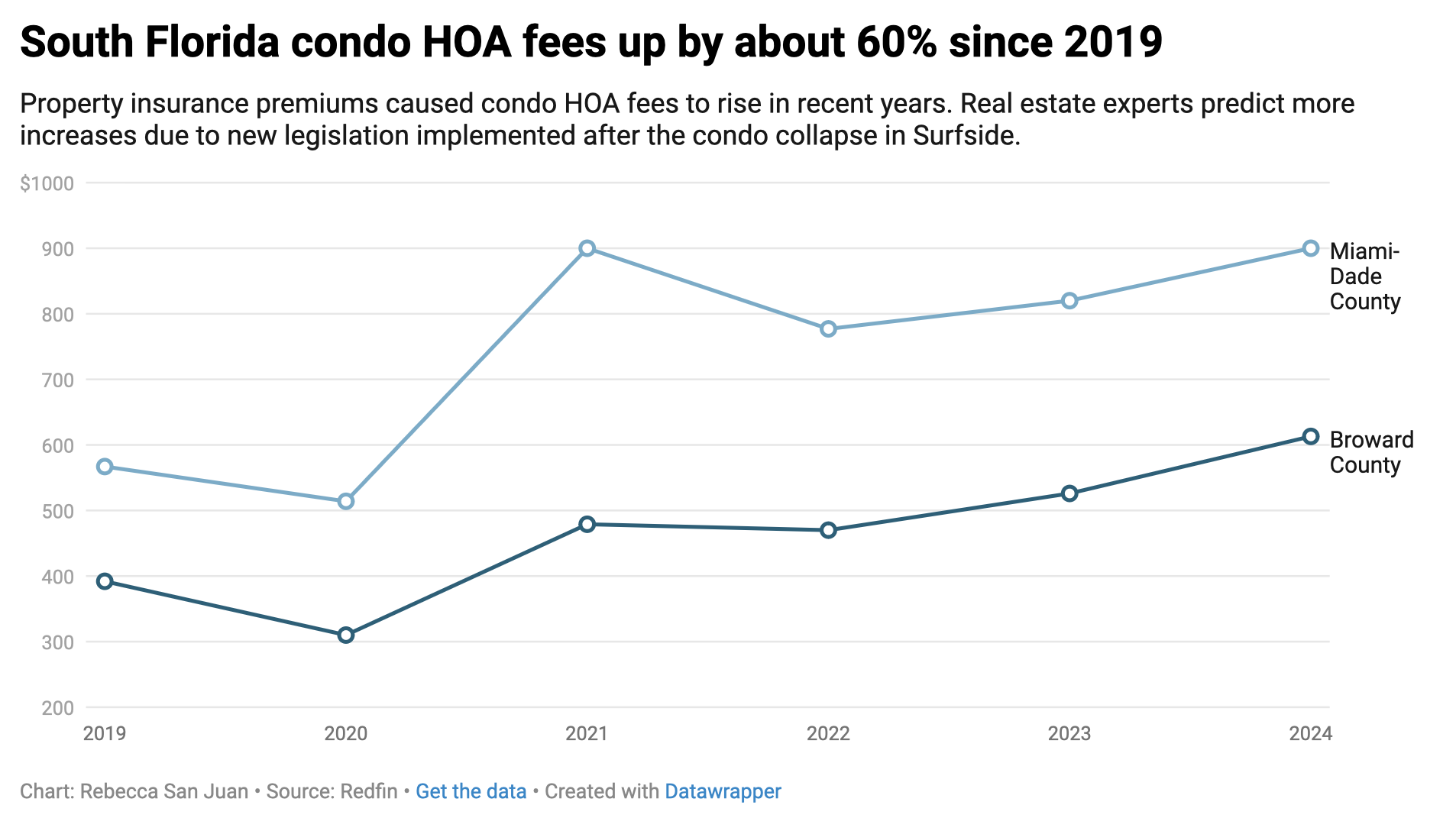
In 2025, one of the least discussed but most consequential shifts in Miami real estate was the breakdown of rental math across several submarkets, a trend repeatedly flagged in our commentary. Rising acquisition prices, sharply higher HOA fees, insurance costs, and property taxes collided with flattening rents, especially in condo-heavy, investor-dense areas. On paper, many deals still looked plausible; in reality, cash flow margins vanished. Our analysis has consistently warned that rent growth cannot outpace affordability forever, and 2025 proved that point. Investors who relied on outdated assumptions or peak-cycle rent projections found themselves subsidizing assets they expected to perform. Meanwhile, markets with strong end-user demand and limited investor saturation held up far better. The lesson from 2025 is subtle but costly: when fundamentals shift slowly, complacency is dangerous. By the time rental math “breaks,” the damage is already done, and exits become far more complicated.
Lesson #10: The biggest winners this year weren’t aggressive, they were precise.
In 2025, Miami’s biggest wins didn’t come from bold bets or aggressive timing, they came from discipline. The David Siddons Group consistently emphasized segmentation over speculation, and the results were clear. Buyers and sellers who understood exactly where they were in the market cycle, which submarket they were operating in, and who the real buyer was outperformed those who relied on optimism or momentum. Precision meant waiting when others rushed, acting decisively when alignment appeared, and walking away when fundamentals didn’t support the story. It meant choosing the right building, the right unit, and the right moment, not just getting a deal done. Aggressive strategies assumed the market would cooperate; precise strategies assumed it wouldn’t. The lesson from 2025 is defining: success favored those who respected timing, embraced selectivity, and exercised restraint. In a fractured market, accuracy, not enthusiasm, became the ultimate competitive advantage.
Connect with the David Siddons Group
FAQ
These are the most commonly Miami Real Estate Related questions
What should relocation buyers know before buying real estate in Miami?
HOME BUYERS
Relocation buyers looking at homes in Miami should understand that choosing the right house is less about the property itself and more about location, schools, and long-term value. Many buyers make the mistake of focusing on price or finishes, while the real driver of value is the neighborhood and micro-location. Older homes often represent better value, but may also be part of a future redevelopment cycle. Newer homes command premiums, but don’t always sell faster if pricing is ahead of the market. Commute time, school access, and community dynamics are critical and often underestimated. The key is to evaluate homes not just as lifestyle purchases, but as long-term assets within a very localized market.
Sources:
https://luxlifemiamiblog.com/relocating-to-miami/
https://luxlifemiamiblog.com/relocating-to-miami-with-a-family/
CONDO BUYERS:
Relocation buyers should understand that Miami is a highly segmented, building-driven market, not a uniform one. Pricing can vary significantly between similar properties depending on building quality, layout, and financial health. Many buyers assume newer construction equals better investment, but that is often not the case. Factors like HOA fees, reserves, and rental policies can materially impact long-term value and liquidity. Negotiation opportunities often exist, especially in slower segments, but require precise market knowledge. The key is to evaluate micro-markets and individual buildings, not just neighborhoods or price per square foot.
Sources:
https://luxlifemiamiblog.com/miami-real-estate-market-report/
https://luxlifemiamiblog.com/new-construction-miami-guide/
What are the best areas for relocating families with children
For families relocating to Miami with young children, the most recommended neighborhoods are Coral Gables, Coconut Grove, and Pinecrest. Coral Gables offers the best balance of top schools, safety, and long-term value. Coconut Grove is ideal for younger families seeking walkability, greenery, and a lifestyle-driven environment. Pinecrest provides larger homes, excellent schools, and better value for space, making it ideal for growing families. The key driver across all three is access to strong schools and primary residential stability. Relocation decisions are less about new construction and more about long-term livability and resale strength.
Sources:
https://luxlifemiamiblog.com/best-neighborhoods-miami/
https://luxlifemiamiblog.com/what-are-the-best-family-neighborhoods-in-miami-in-2023/
Are new construction condos in Miami a good investment?
New construction condos in Miami can be a good investment—but only if you understand that not all buildings perform the same. According to the David Siddons Group, many buyers assume “new = better,” but in reality, performance depends on pricing, layout, building quality, and long-term demand. Some new developments set future price benchmarks and can drive long-term appreciation, especially in top-tier projects. However, many are priced aggressively at launch, and buyers relying on marketing instead of data often overpay.
The market is highly segmented, meaning two new buildings next to each other can perform very differently.
The best opportunities typically come from selecting the right building early or negotiating correctly in later phases.
In short: new construction is not automatically a good investment—it becomes one only with building-level analysis and disciplined entry pricing.
Sources:
https://luxlifemiamiblog.com/how-to-buy-a-luxury-condo-in-miami/
https://luxlifemiamiblog.com/category/independent-new-construction-condo-reviews/
https://luxlifemiamiblog.com/beyond-clickbait-real-insights-into-miamis-luxury-condo-market/
Why is buying a Miami condo riskier than buyers think?
Buying a Miami condo is often riskier than buyers expect because the true risks are at the building level—not visible in the listing price. Many buyers focus on finishes and views, while overlooking HOA reserves, insurance exposure, and potential special assessments. In reality, two identical units in different buildings can perform completely differently over time. Rising HOA fees and stricter regulations are also increasing the true cost of ownership, especially in older buildings. Liquidity can be affected by factors like financial health, rental policies, and ongoing repairs. The key risk is not the condo itself—but buying into the wrong building without proper due diligence.
Sources:
https://luxlifemiamiblog.com/how-to-buy-a-luxury-condo-in-miami/
https://luxlifemiamiblog.com/miami-condo-market-risks/
What are Miami's Safest Areas?
Which Miami Areas Still offer Great Value (Budget Friendly alternatives to Coral Gables and Pinecrest)
If you’re looking for better value than Coral Gables or Pinecrest, the answer (in true Siddons style) is not “go cheaper”—it’s go one layer outside the obvious markets.
The strongest value plays are:
- Schenley Park → closest substitute to Coral Gables at ~20% discount while maintaining similar character and location
- Biltmore Heights → almost identical feel to the Gables but ~25–30% cheaper on a $/SF basis
- Glenvar Heights → central location with larger lots and ~25% pricing advantage vs South Miami/Gables
- Baptist / Galloway (Kendall) → Pinecrest-style living (space, schools, land) at up to ~30% lower pricing
The pattern is consistent:
👉 Buyers are shifting west and slightly off-market to gain land, scale, and pricing efficiency. You don’t find value by going to a “cheaper neighborhood”—you find it by identifying adjacent micro-markets that offer the same lifestyle fundamentals without the brand premium.
Sources:
https://luxlifemiamiblog.com/best-value-neighborhoods-miami/
https://luxlifemiamiblog.com/category/miami-neighborhoods/
Is NOW a good time to buy in Miami?
Are Miami real estate prices going down in 2026?
No—but that’s the wrong way to look at it. Miami is not one market anymore, so prices are not moving in one direction. In 2026, the market is split into two: ultra-luxury, scarcity-driven areas (like waterfront and top-tier neighborhoods) are still holding or even rising, while mid-tier condos and oversupplied segments are flat or correcting. What we’re seeing is price divergence, not a crash—some properties are gaining value while others are quietly adjusting downward. Rising inventory and more selective buyers are putting pressure on pricing in certain segments, especially older condos or buildings with weaker fundamentals.
At the same time, global wealth and cash buyers continue to support pricing at the top end of the market. So the real answer: prices aren’t broadly dropping—they’re being repriced based on quality, location, and supply.
Should I buy a house or a condo when relocating to Miami?
The decision comes down to lifestyle first, investment second—and most relocation buyers get that backwards. If you want space, privacy, schools, and long-term family living, a single-family home in areas like Coral Gables or Coconut Grove is typically the stronger choice. If you prioritize walkability, low maintenance, and proximity to business districts, a condo in Brickell or waterfront markets makes more sense.
From an investment perspective, homes tend to be more stable, while condos are more building-dependent and cyclical. Most relocation clients underestimate how much building quality, HOA structure, and future costs impact condo performance. The right answer isn’t “house vs condo”—it’s which asset fits your lifestyle AND holds value within its micro-market.
How do I choose the right Miami neighborhood for my lifestyle?
Why are Miami condo prices so different between buildings?
Miami condo pricing varies widely because value is determined at the building level, not just by location. Two buildings next to each other can have major differences in financial health, reserves, HOA fees, and management quality. Buyers also pay premiums for better layouts, views, amenities, and newer construction—but not all “new” buildings perform equally. Factors like rental policies, upcoming assessments, and building reputation can significantly impact resale value. This is why price per square foot alone is misleading in Miami’s condo market. The real driver of value is how that specific building competes within its micro-market over time.
Sources:
https://luxlifemiamiblog.com/how-to-buy-a-luxury-condo-in-miami/
https://luxlifemiamiblog.com/category/independent-new-construction-condo-reviews/
WHY WORK WITH DAVID? THINGS YOU SHOULD KNOW...
For all our analytics we are agents driving some very unique and advanced tech. We Provide a granular and custom experience that empower our clients with the insight and tools to understand the most complex behaviors of any local markets.
-
Analytical
Over 100 reports produced to date
-
Knowledgeable
Over 1800 published articles and counting


Related Articles
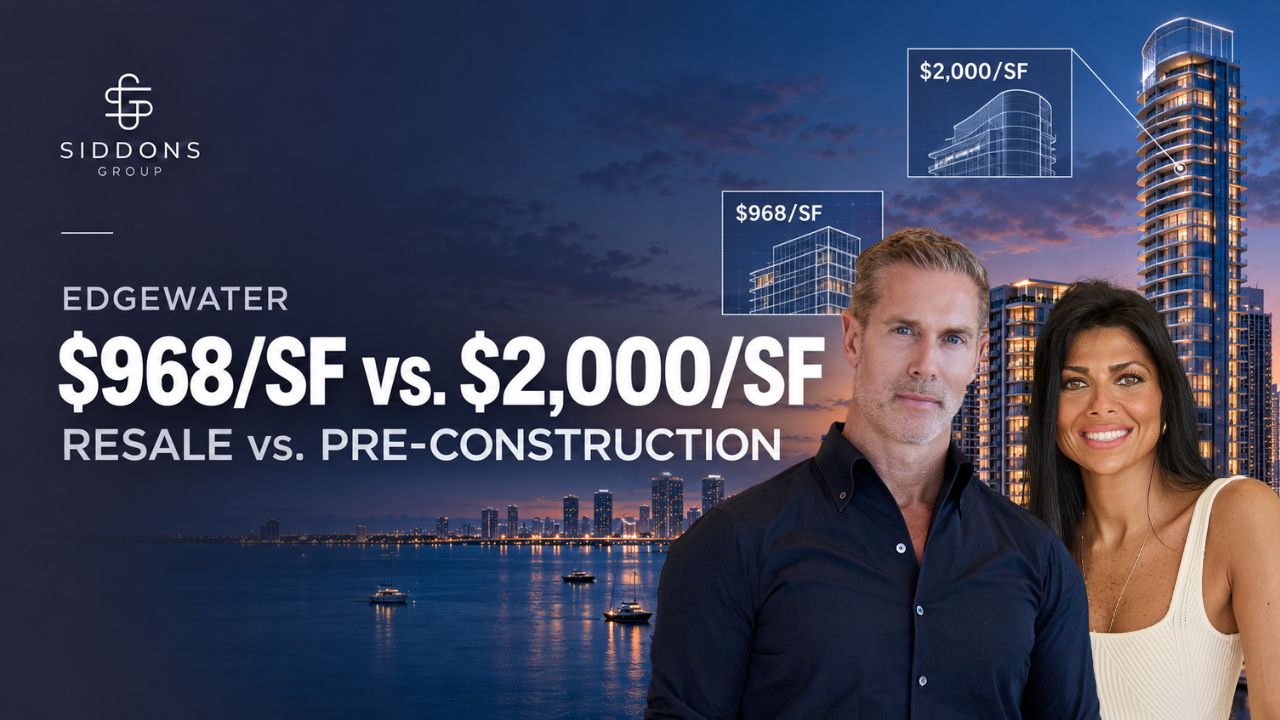
Edgewater Miami Condo Market 2026: $1M+ Resale at $968 a Foot vs. $2,000 for Pre-Construction

Buying or Selling a Condo in Litigation in South Florida: Red Flag or Opportunity?
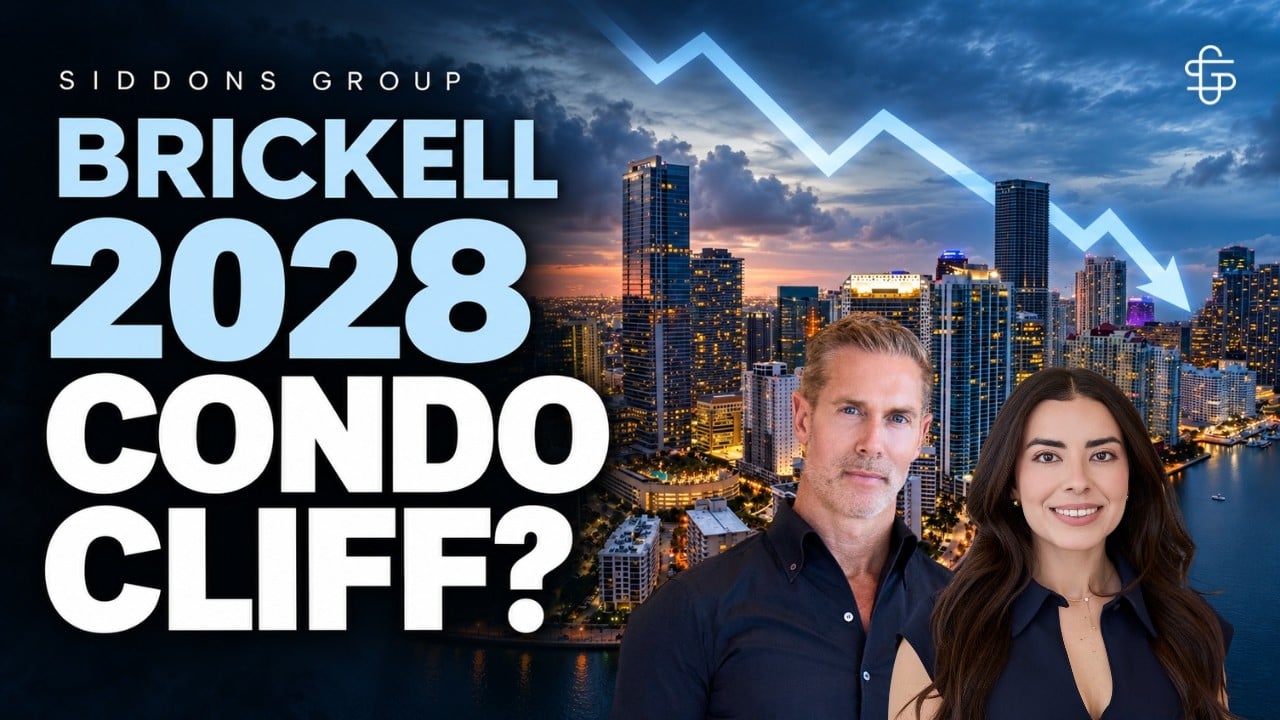
The 2028 Brickell Condo Cliff: Which Buildings Are at Risk and Where Smart Money Is Moving

Should You Stage Your Home Before Selling? What 1,266 Agents and Two Studies Found
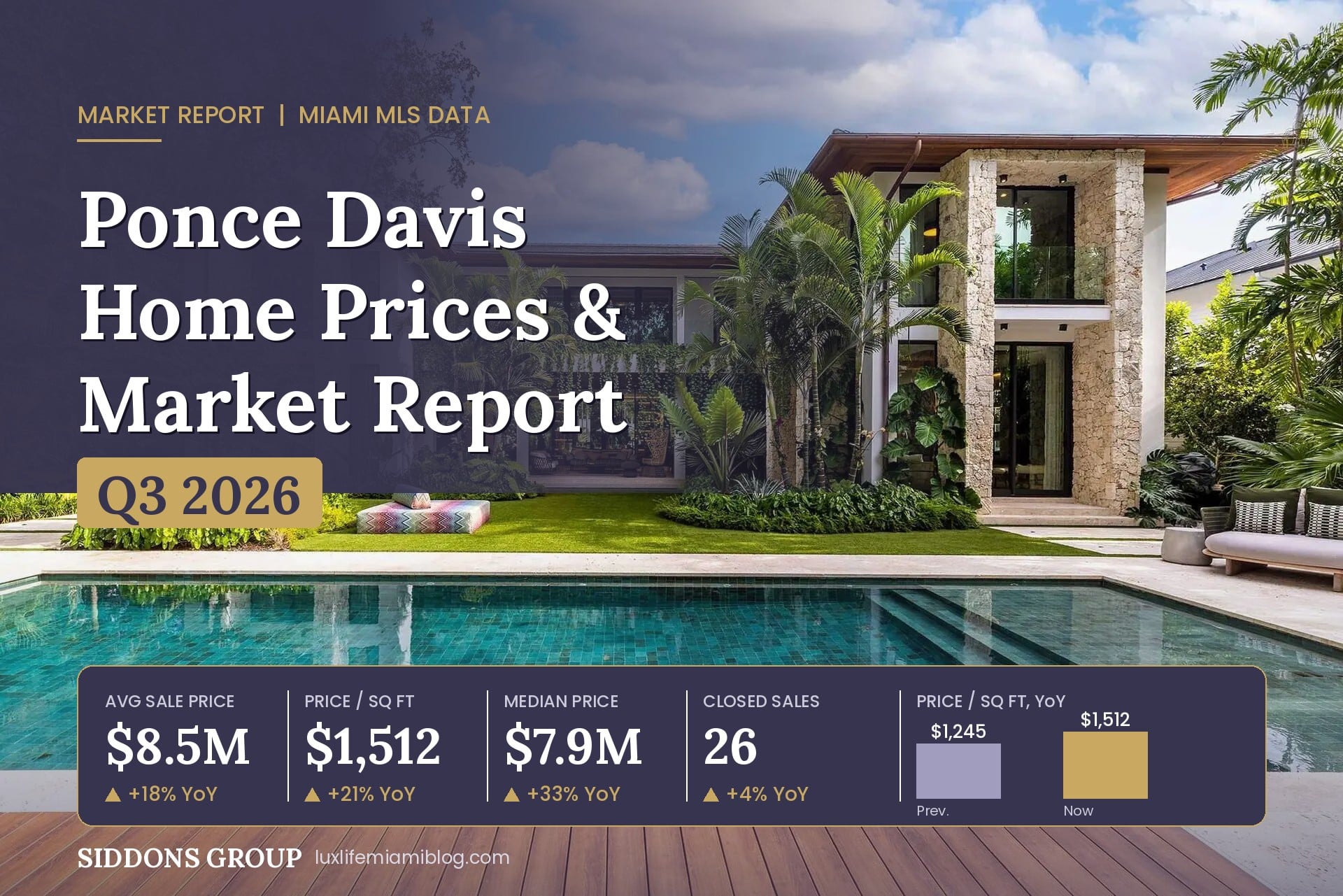
Ponce Davis Home Prices & Market Report: Q3 2026
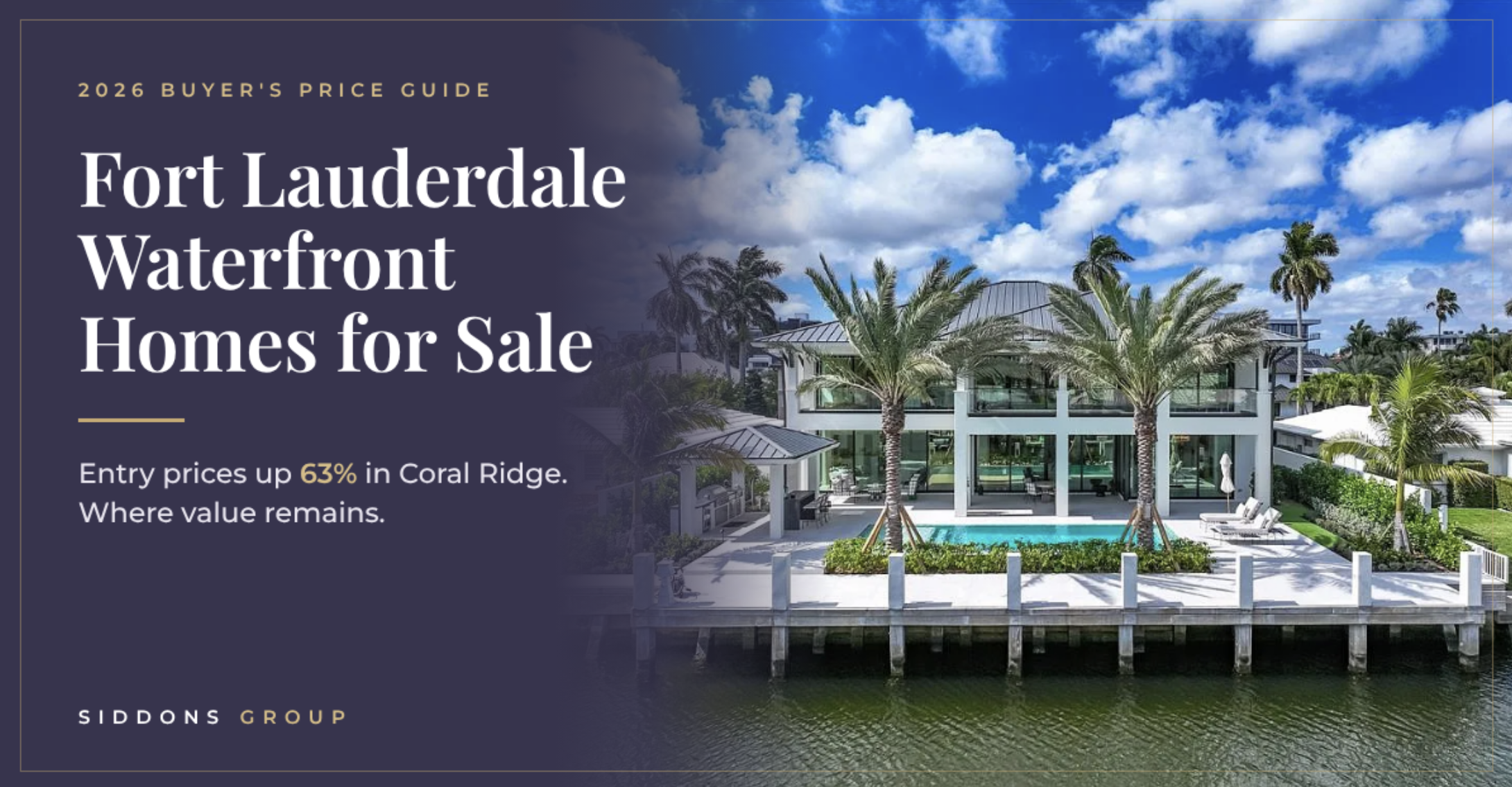
Fort Lauderdale Waterfront Homes in 2026

Greenview at Presidential Aventura

The Best Real Estate Agent in Ponce Davis

Pinecrest New Construction Is Appreciating 2x Faster Than Older Homes

Inside 1428 Brickell: Why Ytech Skipped the Hotel Brand to Build Brickell’s Best Finishes
Brickell’s Office Boom: What It Means for Luxury Housing in Coral Gables and Coconut Grove
Palmetto Bay Land Values Are Rising. Is Your Home Worth More as Land?

Killian Drive: Kendall’s Luxury New Construction Corridor Hits $1,000/SF

Pinecrest’s 4 Best Streets in 2026
Please fill in your details and David Siddons will contact you

Search related videos

Are St. Regis Sunny Isles Residences Worth the Brand Premium?
Coral Gables Market Report 2025: What the Headlines Aren’t Telling You!
How David Siddons’ Power Team Drives Miami’s Luxury Market
Mid‑Year 2025 Coconut Grove Report: The Truth About What’s Selling Now
Brickell Mid‑Year Market Report 2025 | Is Brickell’s Luxury Market in Trouble?
Pinecrest Mid-Year Market Report 2025 | What’s Selling, What’s Sitting & Why
Miami Beach Condo Market Mid-Year Report 2025 | What Buyers & Sellers Need to Know
How to Lose $1M in The Miami Condo market | Top Mistakes That Cost Miami Condo Buyers Millions
The Well Project EXPOSED Coconut Grove’s Hottest Units
Miami Real Estate in 2025 Is NOT What You Think 😱 | Midyear Must Knows for Buyers & Sellers!
7 Things You Should Never Say to a Real Estate Agent in Miami!
Landmark Victoria Park Residence in Fort Lauderdale: Inside 420 NE 11th Ave 🌴✨
Luxury Living on 2355 S. Miami Ave | Fully Furnished 4-Bed Home w/ Resort-Style Pool 🏊
Is Mandarin Oriental Residences Miami a Smart Condo Investment? Prices, Floorplans, Views & Finishes


- Get our Newsletter
- Subscribe
- No Thanks
Get the latest news from Miami Real Estate News
Close
Edit Search
Close
2 of 14
Share this property
Recomend this to a friend, just enter their email below.
Close
Your email was sent successfully
Close
 COMPARE WITH CONDOGEEKS