















Latest Miami Real Estate Trends – May 2025 Miami Housing Market Update

The 2025 Miami Housing Market is showing a widening divide between the ultra-high-end and upper-mid tiers. The top of the market is vibrant and competitive, while the rest is marked by oversupply, longer timelines, and buyer caution. This is not a one-size-fits-all market—performance depends heavily on price point, quality, and location. Here’s what you need to know as a seller or buyer per price range.

Key Data for the 2025 Miami Housing Market

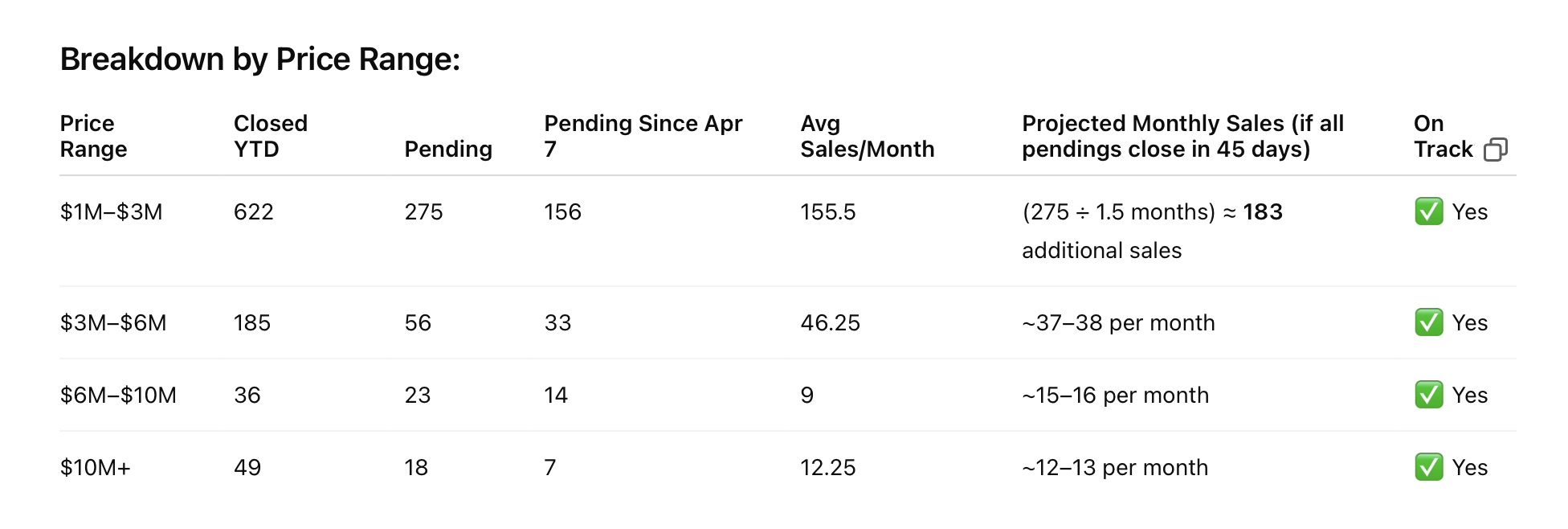
Data $1M-$3M $3M-$6M $6M-$10M $10M+
Average Price per SF +0.6% 26.2% -2.1% 24.1%
$653 -> $657 $808->$1,020 $1,504 ->$1,473 $2,303 ->$2,858
Sales Volume -4.2% -11.1% -14.3% 69%
644->617 144->128 42->36 29->49
Inventory Change 23% 25% 86% -44%
8.5 → 10.5 months 12 → 15 months 15 → 28 months 36 → 20 months
Sales Price to List Price Ratio -0.4% -1.1% -1.6% 4.9%
94.7% → 94.3% 94.3% → 93.3% 93.2% → 91.7% 87.8% → 92.1%
Days on Market 23% 24% 39% -42%
55 → 68 days 98 → 122 days 110 → 153 days 219 → 127 days

The strongest Market: $10M+

Conclusion: The ultra-luxury segment is seeing a clear resurgence with robust demand, faster sales, and less seller compromise. It’s the most improved and competitive market with high demand.

Where did most sales occur?
Out of 49 total sales, the majority took place in Miami Beach—specifically on the Venetian Islands, La Gorce, and North Bay Road—and in Coral Gables, particularly around Cocoplum and Ponce-Davis. There was also some activity in areas like Bay Point and Key Biscayne, though to a lesser extent.

What types of homes are selling?
Nearly half (47%) of the homes sold are less than five years old. The older homes that did sell are all situated on large lots with expansive water views in Miami Beach. These properties are either fully renovated or priced primarily for their land value.

What types of listings have expired in recent months?
Most expired listings are either older homes in need of full renovation or newer construction that doesn’t meet today’s elevated standards. Some may have a modern appearance but feel outdated or lack the custom details and high-end finishes that top-tier buyers now expect.

Notable Stat
$20M+ sales more than doubled YoY; 4 homes sold above $50M. In 2024, only 7 homes sold for over $20M, with just 2 of those surpassing $25M. By 2025, that number surged to 17 sales above $20M — including 11 over $25M and 4 that closed for more than $50M.  

Why is this Booming?
The ultra-luxury ($10M+) segment is booming as affluent buyers, largely immune to interest rates, pursue homes that serve as both status symbols and stable stores of wealth. In a market driven by performance and scarcity, they favor custom, waterfront, or architecturally distinct properties that check every box — from location to design — echoing the mindset behind investing in top-tier assets. As Miami continues to attract UHNWIs and gains media attention, interest in high-value assets is on the rise.
Real Estate Investing in 2026: Why the Old Strategies No Longer Work

Weakest Market: Upper-Mid ($6M–$10M)

This is the softest segment—oversupplied, with falling prices and buyer hesitation. Sellers face pressure to cut prices and wait longer. A clear buyer’s market. High inventory and steep discounts reflect reduced demand and longer decision timelines. The influence of stock market corrections and high interest rates start into effect.

Where are listings sitting?
There are currently 206 homes on the market, with the highest concentration in Miami Beach — especially compared to actual sales in the area.

What’s not selling?
35% of listings have been on the market for over 5 months. The hardest homes to sell fall into three categories:

  • Older homes needing major renovations
  • Tear-downs
  • Newer homes in secondary locations like Keystone Islands or west of US-1 in South Miami, where buyers feel the location doesn’t justify the price

Even in prime locations, new builds that feel generic and are priced like custom homes tend to linger — but this is less of an issue.

What’s expiring?
Most expired listings follow the same pattern: gut jobs, dated homes, or newer builds in lower-value areas like Stillwater and Belle Meade.

“Should I buy now or wait?
You can wait a bit longer, but sellers need to understand how challenging the current market is. We’re seeing plenty of showings but fewer serious buyers taking action. That said, highly customized homes are still selling — but they’re increasingly rare. Many homeowners are locked into 4% mortgages and simply aren’t motivated to sell.

Why is this Market the Weakest?
The upper-mid ($6M–$10M) market is struggling due to a mismatch between buyer expectations and available inventory. Buyers are caught between wanting trophy homes that feel unique and secure but often finding properties that need work or are overpriced. With high supply and uneven quality, hesitation and “wait and see” attitudes dominate this segment.

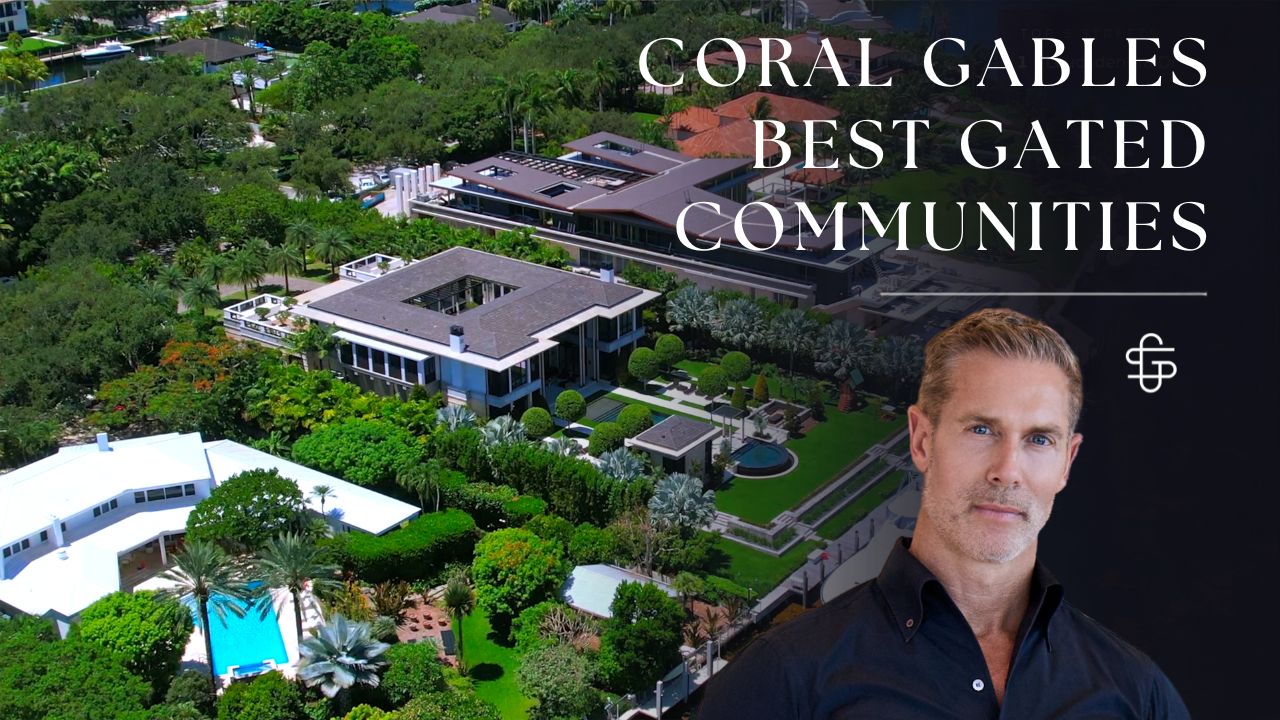
Coral Gables Housing Market 2025

$3M-$6M Market

Conditions favor buyers more in this range; inventory is growing, homes are taking longer to sell and sellers are increasingly negotiating on price. We’re getting calls from buyers actively looking — but they’re after high-end, truly custom homes, and that inventory is scarce. What we do see a lot of are poorly renovated older homes or basic spec builds that don’t meet their expectations. The few homes that are very well updated sell within a week. Examples: Jeronimo Dr and 76th Terrace.

Where are homes selling?
Most of the recent sales happened in Coral Gables, Pinecrest, and Coconut Grove, with Miami Beach close behind. However, when you look at the active listings, the volume appears similar across these areas — suggesting that Miami Beach may currently hold the largest share of unsold inventory.

What’s draining the market?
Homes needing renovations, tear-downs, or land deals with plans — often still priced aggressively — continue to sit. Also lingering are newer homes in less desirable areas, like far west of US-1, where you’re often the most expensive home on the street.

What’s actually selling?
There’s no clear formula. Sales vary widely, and what moves seems to come down to the right mix of price, location, and condition. Even the homes draining the market will sell — if priced correctly.

Buyer Psychology
The mid-luxury ($3M–$6M) market is driven by a balance of desire for luxury and practical value. Buyers are focused on well-located, high-quality homes but are hesitant to pay a premium for properties that don’t meet their expectations, often leading to longer decision-making and intense negotiations. Homes that feel overpriced or in need of too much work struggle to sell.

2025 Coral Gables Housing Market: What Zillow Won’t Tell You

Core Market ($1M–$3M):

This segment is softening slightly with longer selling times and mildly higher inventory, but pricing remains relatively stable. Sales activity is steady across all areas of town. The core luxury ($1M–$3M) market remains steady but slow, as buyers are highly sensitive to interest rates and are often leveraging debt. Motivated by life-stage needs, such as family planning and stability, they are cautious and waiting for favorable conditions, leading to slower decision-making and minimal price growth. While emotionally invested, they seek fair value over inflated prices. We’re also likely to see a significant bump once interest rates come down.

Rental Market Insights

Overall Takeaways:

  • The core luxury rental market ($5K–$15K) is stable and reliable.
  • The $15K–$30K range is more sluggish, with either flat or declining prices.
  • The ultra-luxury ($30K+) segment is booming in both price and activity.

Many $6M+ buyers are opting to rent instead. With low mortgage rates locked in, some sellers are choosing to lease until the market improves.

Has the Top Dollar per SF Softened at the High End?

Not at the very top — but definitely below it.

  • In 2025, the ultra-luxury market ($10M+) took off, with a record price of $7,600 per SF, up from $5,350 in 2024. Just one home sold above $5,000/SF in 2024 — this year, there were three. Even more striking: 16 homes sold for $3,000+/SF in 2025 compared to just 4 the year before. Demand at the very top appears stronger than ever.
  • By contrast, the $6M–$10M tier cooled, despite a slight increase in peak pricing. The top sale rose to $3,500/SF (from $3,200 in 2024), but the number of homes selling above $2,000/SF dropped from seven to four. Only one home crossed the $3,000/SF mark both years, suggesting buyers in this range are growing more cautious.
  • The $3M–$6M segment stayed flat, with top sales remaining in the $1,600–$1,700 per SF range. Around seven homes exceeded $1,500/SF each year, showing no clear shift in pricing momentum.
  • In the $1M–$3M range, price sensitivity became more evident. In 2024, several smaller, well-designed homes pushed close to $2,000 per SF. In 2025, the top end mostly hovered around $1,200–$1,300 per SF, indicating that buyers in this bracket are less willing to pay premiums for aesthetics or finishes.

The Effects of the Uncertain Economy on Sales

Recent events haven’t slowed sales, which are tracking in line with the rest of the year.

Connect with David.

If you want to know more about the Miami Real Estate Market and the trends that affect your personal situation please contact me today at 305.508.0899 or schedule a meeting via the application below.

FAQ

These are the most commonly Miami Real Estate Related questions

What should relocation buyers know before buying real estate in Miami?

HOME BUYERS

Relocation buyers looking at homes in Miami should understand that choosing the right house is less about the property itself and more about location, schools, and long-term value. Many buyers make the mistake of focusing on price or finishes, while the real driver of value is the neighborhood and micro-location. Older homes often represent better value, but may also be part of a future redevelopment cycle. Newer homes command premiums, but don’t always sell faster if pricing is ahead of the market. Commute time, school access, and community dynamics are critical and often underestimated. The key is to evaluate homes not just as lifestyle purchases, but as long-term assets within a very localized market.

Sources:
https://luxlifemiamiblog.com/relocating-to-miami/
https://luxlifemiamiblog.com/relocating-to-miami-with-a-family/

CONDO BUYERS:
Relocation buyers should understand that Miami is a highly segmented, building-driven market, not a uniform one. Pricing can vary significantly between similar properties depending on building quality, layout, and financial health. Many buyers assume newer construction equals better investment, but that is often not the case. Factors like HOA fees, reserves, and rental policies can materially impact long-term value and liquidity. Negotiation opportunities often exist, especially in slower segments, but require precise market knowledge. The key is to evaluate micro-markets and individual buildings, not just neighborhoods or price per square foot.

Sources:
https://luxlifemiamiblog.com/miami-real-estate-market-report/
https://luxlifemiamiblog.com/new-construction-miami-guide/

What are the best areas for relocating families with children

For families relocating to Miami with young children, the most recommended neighborhoods are Coral Gables, Coconut Grove, and Pinecrest. Coral Gables offers the best balance of top schools, safety, and long-term value. Coconut Grove is ideal for younger families seeking walkability, greenery, and a lifestyle-driven environment. Pinecrest provides larger homes, excellent schools, and better value for space, making it ideal for growing families. The key driver across all three is access to strong schools and primary residential stability. Relocation decisions are less about new construction and more about long-term livability and resale strength.

Sources:
https://luxlifemiamiblog.com/best-neighborhoods-miami/
https://luxlifemiamiblog.com/what-are-the-best-family-neighborhoods-in-miami-in-2023/

Are new construction condos in Miami a good investment?

New construction condos in Miami can be a good investment—but only if you understand that not all buildings perform the same. According to the David Siddons Group, many buyers assume “new = better,” but in reality, performance depends on pricing, layout, building quality, and long-term demand.  Some new developments set future price benchmarks and can drive long-term appreciation, especially in top-tier projects.  However, many are priced aggressively at launch, and buyers relying on marketing instead of data often overpay.
The market is highly segmented, meaning two new buildings next to each other can perform very differently.
The best opportunities typically come from selecting the right building early or negotiating correctly in later phases.
In short: new construction is not automatically a good investment—it becomes one only with building-level analysis and disciplined entry pricing.

Sources:
https://luxlifemiamiblog.com/how-to-buy-a-luxury-condo-in-miami/
https://luxlifemiamiblog.com/category/independent-new-construction-condo-reviews/
https://luxlifemiamiblog.com/beyond-clickbait-real-insights-into-miamis-luxury-condo-market/

Why is buying a Miami condo riskier than buyers think?

Buying a Miami condo is often riskier than buyers expect because the true risks are at the building level—not visible in the listing price. Many buyers focus on finishes and views, while overlooking HOA reserves, insurance exposure, and potential special assessments. In reality, two identical units in different buildings can perform completely differently over time. Rising HOA fees and stricter regulations are also increasing the true cost of ownership, especially in older buildings. Liquidity can be affected by factors like financial health, rental policies, and ongoing repairs. The key risk is not the condo itself—but buying into the wrong building without proper due diligence.

Sources:
https://luxlifemiamiblog.com/how-to-buy-a-luxury-condo-in-miami/
https://luxlifemiamiblog.com/miami-condo-market-risks/

What are Miami's Safest Areas?

The safest areas in Miami are typically Coral Gables, Coconut Grove, Pinecrest, Key Biscayne, and Ponce-Davis. These neighborhoods stand out due to low density, strong community presence, and high concentration of full-time residents, which directly impacts safety. In Miami, safety is highly localized, meaning micro-location and specific streets matter more than zip codes. Areas with top schools and family-driven demand tend to maintain stronger safety profiles over time. Gated communities and low-traffic residential streets further enhance security. Ultimately, the safest areas are defined less by price and more by stability, schools, and residential character.

Which Miami Areas Still offer Great Value (Budget Friendly alternatives to Coral Gables and Pinecrest)

If you’re looking for better value than Coral Gables or Pinecrest, the answer (in true Siddons style) is not “go cheaper”—it’s go one layer outside the obvious markets.

The strongest value plays are:

  • Schenley Park → closest substitute to Coral Gables at ~20% discount while maintaining similar character and location
  • Biltmore Heights → almost identical feel to the Gables but ~25–30% cheaper on a $/SF basis
  • Glenvar Heights → central location with larger lots and ~25% pricing advantage vs South Miami/Gables
  • Baptist / Galloway (Kendall) → Pinecrest-style living (space, schools, land) at up to ~30% lower pricing

The pattern is consistent:
👉 Buyers are shifting west and slightly off-market to gain land, scale, and pricing efficiency. You don’t find value by going to a “cheaper neighborhood”—you find it by identifying adjacent micro-markets that offer the same lifestyle fundamentals without the brand premium.

Sources:
https://luxlifemiamiblog.com/best-value-neighborhoods-miami/
https://luxlifemiamiblog.com/category/miami-neighborhoods/

Is NOW a good time to buy in Miami?

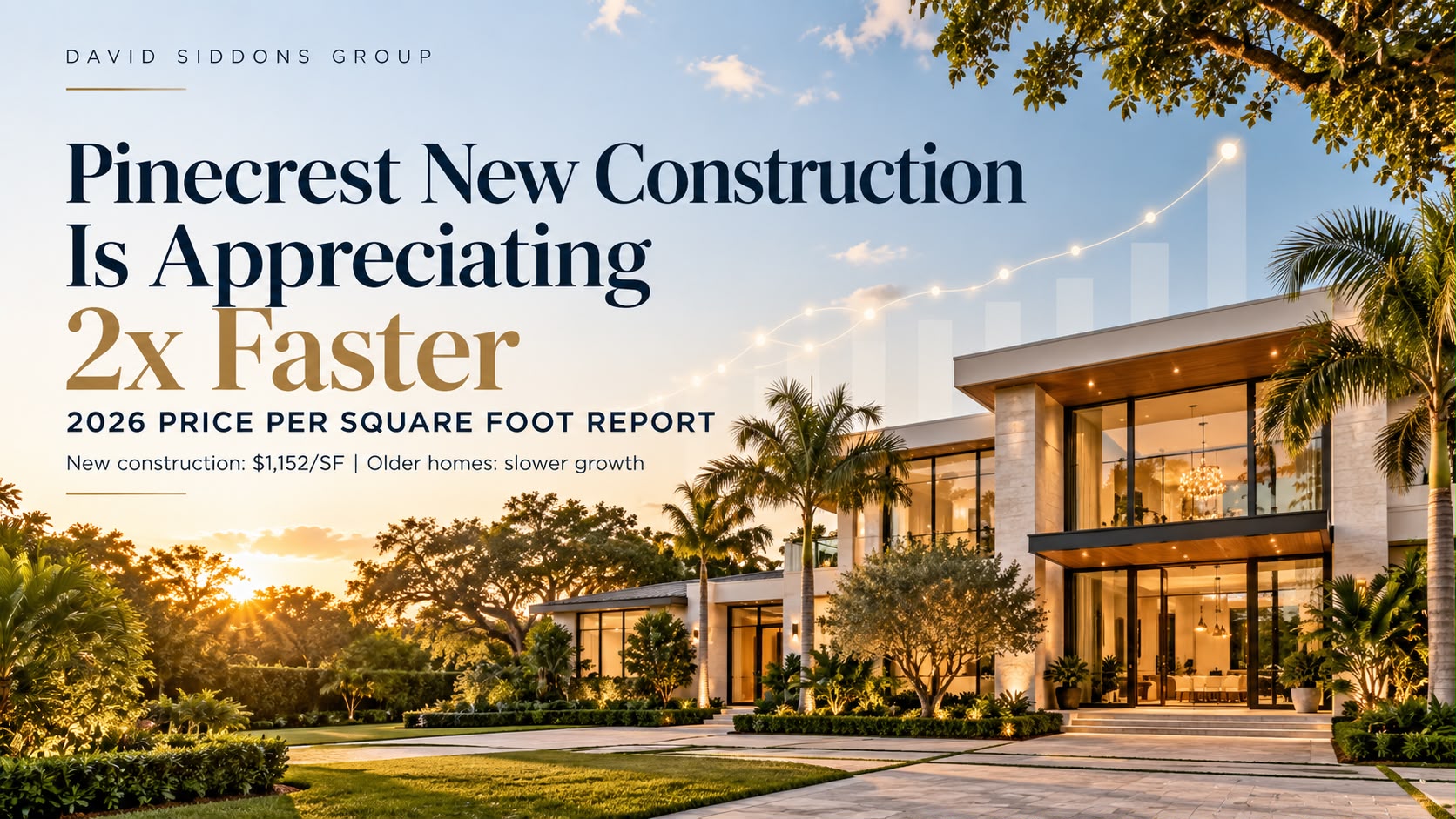
In 2026, the answer is yes—but only if you understand what part of the market you’re buying into. Miami is no longer one market; it has split into multiple segments behaving very differently. From a David Siddons perspective, this is a selective buyer’s window, not a broad “good time” headline. Some segments—especially condos with rising inventory—are offering negotiation opportunities and better entry points. 

At the same time, prime single-family homes and top-tier new construction continue to hold value or even trade near record levels.

Buyers who rely on timing the market often miss the point—success in Miami today comes from selecting the right micro-market and asset, not waiting for a crash.  If you are disciplined on pricing, building quality, and location, this market offers opportunity. If you are not, it is easy to overpay. 2026 is a good time to buy in Miami for informed buyers—because the market is fragmented, negotiation exists, and strategy matters more than ever.

Sources:
https://luxlifemiamiblog.com/miami-real-estate-market-report-q1-2026/
https://luxlifemiamiblog.com/market-reports/

Are Miami real estate prices going down in 2026?

No—but that’s the wrong way to look at it. Miami is not one market anymore, so prices are not moving in one direction. In 2026, the market is split into two: ultra-luxury, scarcity-driven areas (like waterfront and top-tier neighborhoods) are still holding or even rising, while mid-tier condos and oversupplied segments are flat or correcting. What we’re seeing is price divergence, not a crash—some properties are gaining value while others are quietly adjusting downward. Rising inventory and more selective buyers are putting pressure on pricing in certain segments, especially older condos or buildings with weaker fundamentals.
At the same time, global wealth and cash buyers continue to support pricing at the top end of the market. So the real answer: prices aren’t broadly dropping—they’re being repriced based on quality, location, and supply.

Miami Real Estate Market Report Q1 2026

Should I buy a house or a condo when relocating to Miami?

The decision comes down to lifestyle first, investment second—and most relocation buyers get that backwards. If you want space, privacy, schools, and long-term family living, a single-family home in areas like Coral Gables or Coconut Grove is typically the stronger choice. If you prioritize walkability, low maintenance, and proximity to business districts, a condo in Brickell or waterfront markets makes more sense.
From an investment perspective, homes tend to be more stable, while condos are more building-dependent and cyclical. Most relocation clients underestimate how much building quality, HOA structure, and future costs impact condo performance. The right answer isn’t “house vs condo”—it’s which asset fits your lifestyle AND holds value within its micro-market.


 How do I choose the right Miami neighborhood for my lifestyle?

Choosing the right neighborhood in Miami comes down to how you live day-to-day, not just where prices are. Relocation buyers should first define priorities: walkability, schools, commute, or waterfront lifestyle.
For example, Coconut Grove fits walkable, family-oriented living, while Brickell suits urban, high-rise lifestyles. Buyers often make the mistake of focusing on price per square foot instead of lifestyle fit and long-term livability. Each neighborhood operates like its own micro-market, so the “best” area depends on your daily routine and long-term goals. The key is to align lifestyle, location, and market fundamentals, not just aesthetics or newness.


https://luxlifemiamiblog.com/best-neighborhoods-miami/

Why are Miami condo prices so different between buildings?

Miami condo pricing varies widely because value is determined at the building level, not just by location. Two buildings next to each other can have major differences in financial health, reserves, HOA fees, and management quality. Buyers also pay premiums for better layouts, views, amenities, and newer construction—but not all “new” buildings perform equally. Factors like rental policies, upcoming assessments, and building reputation can significantly impact resale value. This is why price per square foot alone is misleading in Miami’s condo market. The real driver of value is how that specific building competes within its micro-market over time.

Sources:
https://luxlifemiamiblog.com/how-to-buy-a-luxury-condo-in-miami/
https://luxlifemiamiblog.com/category/independent-new-construction-condo-reviews/

WHY WORK WITH DAVID? THINGS YOU SHOULD KNOW...

For all our analytics we are agents driving some very unique and advanced tech. We Provide a granular and custom experience that empower our clients with the insight and tools to understand the most complex behaviors of any local markets.

  • Analytical

    Over 100 reports produced to date

  • Knowledgeable

    Over 1800 published articles and counting

  • Experienced

    Over $2 billion in real estate sales

    Reviews
David Siddons
blog

Related Articles