



















- Best of All
- Best Miami Luxury Condos
- Most popular
- Relocating to Miami
- Private Schools
- Investments
- Gated communities
- Waterfront information
- Luxury homes
- Luxury Condos
- New Construction Condos in South Florida
- Independent Pre-Construction condo reviews for Miami
- Independent Pre-Construction condo reviews for Fort Lauderdale
The Miami Condo Market: The Devil is in the Detail
The Miami Condo Market – Looking for Hidden Elements in the Details
I’ve been selling Miami real estate for nearly a decade and have been through two cycles of Miami condo construction. I feel like I have seen it all, and in the course of 10 years have been surprised both pleasantly and not so pleasantly with the outcomes. I have made it my business to ‘tell it like it is’, but have been careful to not name names on paper for fear of being slapped with a defamation law suit. I am definitely entitled to my opinion (just as everyone is), but I feel a stronger sense of duty to inform and educate. One phone call with me will allow me to voice my concerns and opinions and I encourage anyone who wants to get a sincere inside opinion on the market to call me. Politically correct I am not, but facts, analysis and inside workings knowledge of the market is what I will give you. THATS EXACTLY WHAT BUYERS AND SELLERS NEED TO HEAR. It’s too easy to go to a developer showroom and be ‘romanced’ with renderings, models and any array of marketing paraphernalia.
So let’s peel back the curtain of the new condo market and reveal what you really need to look at….
How do you make sure your brand new Miami condo is exactly what you expected?
If you think it’s expensive hiring a professional try hiring an amateur!
Even before getting out of the starting gate you should engage with a well-experienced realtor. This is especially true when it comes to investing in a new Miami condo. In order to avoid the proverbial devil, one must work with an experienced, ethical and well-connected realtor. A good agent knows the Miami condo market and the team behind ALL the projects. It does not cost the buyer anything and is paid entirely by the seller, so why wouldn’t you profit from the expertise of a true professional? The other benefit about using an experienced and knowledgeable professional outside of the project is that of objective impartial advice; comparable data of the market, opposing projects and opposing opinions. If you come to me and ask for my advice it does not matter to me if you buy one project over another, but believe me many developer agents will want you to buy their project regardless because their driving focus is the commission. If you don’t buy there, then they don’t get paid.
The art of misdirection
When you see a project for the first time it is easy to overlook minor details on a contract or even a project’s attributes. I feel almost immune to the razzle dazzle of the sales pitch in a developer’s showroom and can help you get right to the core of the project.
Step outside the project and notice the neighborhood for heavens sake!
I have seen so many sales centers many blocks away from the construction site. There are always many promises of what is to come in the surrounding area, but in truth developers have no control over this and so it is important to be careful when speculating the changing demographics of an area, especially if the project is being built towards an end of an economic cycle. When you are looking at a new condo in an emerging neighborhood be more cautious than when you are dealing with a condo in an already evolved and mature location. Neighborhoods can and do improve over time, but be aware of the likely speed of change. Putting a new condo in an economically struggling neighborhood does not automatically mean this neighborhood will go from run down to ultra-luxury overnight. Do not assume that the renderings are a good representation of the environment. We often see condo renderings that showcase an environment awash with luxury and glamour around the project, affluent pedestrians and high-end cars are everywhere. The reality may be boarded up shelters and low-income housing, which may improve over a period of time, but it takes many years and is not going to change overnight so be aware.
So much technology is not always a good thing!
The more complicated something is the more chance something can go wrong, just ask owners of an iPhone7! Joking aside the reality is that sometimes pioneered technology means being a guinea pig to a developers fanciful idea. Personally, I don’t like being anyone’s guinea pig, and well thought out, well designed buildings are timeless and don’t need to stand on the shoulders of gimmicks to be No1.
How much risk is the developer taking and how involved are they?
If the developer is not heavily vested in the project how ‘hands on’ are they going to be?
Being vested does not just mean financially, but being on site and around the project. Absentee developers are often ‘out of site and out of mind’. I can attest that the projects that I have seen do well have had the developer on site almost every day watching everything happen.
Avoid heavily ‘investor occupied’ condos like the plague!
I really don’t need to explain this, but some investors are really speculators (very short-term investors who have no interest in holding real estate long-term). A strong balance sheet of these kinds of buyers should be of concern as it tends to result in high turnover and in my experience high turnover inhibits long-term property value. As the saying goes, “when others are bold, be fearful and when others are fearful, be bold”, I would say for real estate, “when many are investing in a building don’t invest and when many don’t, do”. I have found that when you are in a highly desirable property or location with few renters around you, if you do decide to rent out then the returns can be truly ground breaking.
Know the (development) team of your Miami Condo for sale
Always ask yourself: “Who is the architect?” “What has he/she created before?” and “What are his levels of details/Quality of work?”.
Also have a look at the interior designer of the project. Is this a flamboyant designer who likes many colors or is he or she a more subtle designer who maybe looks more at details?
You will also want to check up on the developer. How many buildings has the developer built in the city?, Do they deliver on time? Do they deliver what they promise?
Although some of this research is less obvious and sometimes hard to obtain, an experienced Miami realtor will know the good from the bad and will have seen and been into a number of delivered projects of the architect / designer or developer and have seen them not just when they were new but years after. Your agent will be able to tell you who has the projects that are still prized and respected and whose projects are long forgotten.
Don’t just look at the contractors but the subcontractors too
If you’ve ever built your own house you know this to be true. Often the primary contractor is a good guy, but the subcontractors can really mess the project up. In the last construction cycle we have heard reported faulty car lifts, cracked swimming pools caused by faulty plumbing and a number of other things. All down to poorly chosen subcontractors.
Have a look at the finishes provided
Can the developer provide you with a list of detailed finishes? Are the finishes worth the sales price or are they too cheap for the type of Miami condo you are investing in. Also very important to know is whether everything is put down black on white or “to be determined” or “subject to change”. Look at previous projects from the developer, check out the model units or ask for samples. When you are an out of town buyer, ask your realtor (again please use a buyer’s agent) to visit the project for you and update you on the levels of detail.
Have a look at the floor pans provided
Are the floor plans of the project confirmed already or might they change after you buy? Have a critical look at the plans, be careful that your views won’t be blocked in the near future because of a brand new construction being build next to or in front of your condo tower. Again, an experienced agent can tell you about the reputation of the developer but also please do not shy away from asking critical questions

Make sure you work with an experienced Miami Real Estate agent who can tell you more about the team behind your preferred Miami condo project
Have a look at the amenities
Miami Luxury Condos are known for their amenities. When looking to resell your unit or rent it out, you must know that many buyers value top notch amenities. Have a look at the amenities promised and whether they are confirmed or under negotiation. Have a look at other projects from the same team to see how they deliver different amenities at different price levels. Also have a look at the design team and if possible the landscape designer. This will give you a feel at how “high-end” the amenities and the common spaces will be.
FAQ
These are the most commonly Miami Real Estate Related questions
What should relocation buyers know before buying real estate in Miami?
HOME BUYERS
Relocation buyers looking at homes in Miami should understand that choosing the right house is less about the property itself and more about location, schools, and long-term value. Many buyers make the mistake of focusing on price or finishes, while the real driver of value is the neighborhood and micro-location. Older homes often represent better value, but may also be part of a future redevelopment cycle. Newer homes command premiums, but don’t always sell faster if pricing is ahead of the market. Commute time, school access, and community dynamics are critical and often underestimated. The key is to evaluate homes not just as lifestyle purchases, but as long-term assets within a very localized market.
Sources:
https://luxlifemiamiblog.com/relocating-to-miami/
https://luxlifemiamiblog.com/relocating-to-miami-with-a-family/
CONDO BUYERS:
Relocation buyers should understand that Miami is a highly segmented, building-driven market, not a uniform one. Pricing can vary significantly between similar properties depending on building quality, layout, and financial health. Many buyers assume newer construction equals better investment, but that is often not the case. Factors like HOA fees, reserves, and rental policies can materially impact long-term value and liquidity. Negotiation opportunities often exist, especially in slower segments, but require precise market knowledge. The key is to evaluate micro-markets and individual buildings, not just neighborhoods or price per square foot.
Sources:
https://luxlifemiamiblog.com/miami-real-estate-market-report/
https://luxlifemiamiblog.com/new-construction-miami-guide/
What are the best areas for relocating families with children
For families relocating to Miami with young children, the most recommended neighborhoods are Coral Gables, Coconut Grove, and Pinecrest. Coral Gables offers the best balance of top schools, safety, and long-term value. Coconut Grove is ideal for younger families seeking walkability, greenery, and a lifestyle-driven environment. Pinecrest provides larger homes, excellent schools, and better value for space, making it ideal for growing families. The key driver across all three is access to strong schools and primary residential stability. Relocation decisions are less about new construction and more about long-term livability and resale strength.
Sources:
https://luxlifemiamiblog.com/best-neighborhoods-miami/
https://luxlifemiamiblog.com/what-are-the-best-family-neighborhoods-in-miami-in-2023/
Are new construction condos in Miami a good investment?
New construction condos in Miami can be a good investment—but only if you understand that not all buildings perform the same. According to the David Siddons Group, many buyers assume “new = better,” but in reality, performance depends on pricing, layout, building quality, and long-term demand. Some new developments set future price benchmarks and can drive long-term appreciation, especially in top-tier projects. However, many are priced aggressively at launch, and buyers relying on marketing instead of data often overpay.
The market is highly segmented, meaning two new buildings next to each other can perform very differently.
The best opportunities typically come from selecting the right building early or negotiating correctly in later phases.
In short: new construction is not automatically a good investment—it becomes one only with building-level analysis and disciplined entry pricing.
Sources:
https://luxlifemiamiblog.com/how-to-buy-a-luxury-condo-in-miami/
https://luxlifemiamiblog.com/category/independent-new-construction-condo-reviews/
https://luxlifemiamiblog.com/beyond-clickbait-real-insights-into-miamis-luxury-condo-market/
Why is buying a Miami condo riskier than buyers think?
Buying a Miami condo is often riskier than buyers expect because the true risks are at the building level—not visible in the listing price. Many buyers focus on finishes and views, while overlooking HOA reserves, insurance exposure, and potential special assessments. In reality, two identical units in different buildings can perform completely differently over time. Rising HOA fees and stricter regulations are also increasing the true cost of ownership, especially in older buildings. Liquidity can be affected by factors like financial health, rental policies, and ongoing repairs. The key risk is not the condo itself—but buying into the wrong building without proper due diligence.
Sources:
https://luxlifemiamiblog.com/how-to-buy-a-luxury-condo-in-miami/
https://luxlifemiamiblog.com/miami-condo-market-risks/
What are Miami's Safest Areas?
Which Miami Areas Still offer Great Value (Budget Friendly alternatives to Coral Gables and Pinecrest)
If you’re looking for better value than Coral Gables or Pinecrest, the answer (in true Siddons style) is not “go cheaper”—it’s go one layer outside the obvious markets.
The strongest value plays are:
- Schenley Park → closest substitute to Coral Gables at ~20% discount while maintaining similar character and location
- Biltmore Heights → almost identical feel to the Gables but ~25–30% cheaper on a $/SF basis
- Glenvar Heights → central location with larger lots and ~25% pricing advantage vs South Miami/Gables
- Baptist / Galloway (Kendall) → Pinecrest-style living (space, schools, land) at up to ~30% lower pricing
The pattern is consistent:
👉 Buyers are shifting west and slightly off-market to gain land, scale, and pricing efficiency. You don’t find value by going to a “cheaper neighborhood”—you find it by identifying adjacent micro-markets that offer the same lifestyle fundamentals without the brand premium.
Sources:
https://luxlifemiamiblog.com/best-value-neighborhoods-miami/
https://luxlifemiamiblog.com/category/miami-neighborhoods/
Is NOW a good time to buy in Miami?
Are Miami real estate prices going down in 2026?
No—but that’s the wrong way to look at it. Miami is not one market anymore, so prices are not moving in one direction. In 2026, the market is split into two: ultra-luxury, scarcity-driven areas (like waterfront and top-tier neighborhoods) are still holding or even rising, while mid-tier condos and oversupplied segments are flat or correcting. What we’re seeing is price divergence, not a crash—some properties are gaining value while others are quietly adjusting downward. Rising inventory and more selective buyers are putting pressure on pricing in certain segments, especially older condos or buildings with weaker fundamentals.
At the same time, global wealth and cash buyers continue to support pricing at the top end of the market. So the real answer: prices aren’t broadly dropping—they’re being repriced based on quality, location, and supply.
Should I buy a house or a condo when relocating to Miami?
The decision comes down to lifestyle first, investment second—and most relocation buyers get that backwards. If you want space, privacy, schools, and long-term family living, a single-family home in areas like Coral Gables or Coconut Grove is typically the stronger choice. If you prioritize walkability, low maintenance, and proximity to business districts, a condo in Brickell or waterfront markets makes more sense.
From an investment perspective, homes tend to be more stable, while condos are more building-dependent and cyclical. Most relocation clients underestimate how much building quality, HOA structure, and future costs impact condo performance. The right answer isn’t “house vs condo”—it’s which asset fits your lifestyle AND holds value within its micro-market.
How do I choose the right Miami neighborhood for my lifestyle?
Why are Miami condo prices so different between buildings?
Miami condo pricing varies widely because value is determined at the building level, not just by location. Two buildings next to each other can have major differences in financial health, reserves, HOA fees, and management quality. Buyers also pay premiums for better layouts, views, amenities, and newer construction—but not all “new” buildings perform equally. Factors like rental policies, upcoming assessments, and building reputation can significantly impact resale value. This is why price per square foot alone is misleading in Miami’s condo market. The real driver of value is how that specific building competes within its micro-market over time.
Sources:
https://luxlifemiamiblog.com/how-to-buy-a-luxury-condo-in-miami/
https://luxlifemiamiblog.com/category/independent-new-construction-condo-reviews/
WHY WORK WITH DAVID? THINGS YOU SHOULD KNOW...
For all our analytics we are agents driving some very unique and advanced tech. We Provide a granular and custom experience that empower our clients with the insight and tools to understand the most complex behaviors of any local markets.
-
Analytical
Over 100 reports produced to date
-
Knowledgeable
Over 1800 published articles and counting


Related Articles
Galloway Glen Real Estate 2026: What Homes Sell for in This Kendall Neighborhood

St. Regis Bahia Mar Penthouse Review: A $22M Fort Lauderdale Sky Home at Half the Price of Miami
Edgewater Miami Condo Market 2026: $1M+ Resale at $968 a Foot vs. $2,000 for Pre-Construction

Buying or Selling a Condo in Litigation in South Florida: Red Flag or Opportunity?
The 2028 Brickell Condo Cliff: Which Buildings Are at Risk and Where Smart Money Is Moving

Should You Stage Your Home Before Selling? What 1,266 Agents and Two Studies Found

Fort Lauderdale Waterfront Homes in 2026

Greenview at Presidential Aventura

The Best Real Estate Agent in Ponce Davis

Pinecrest New Construction Is Appreciating 2x Faster Than Older Homes

Inside 1428 Brickell: Why Ytech Skipped the Hotel Brand to Build Brickell’s Best Finishes
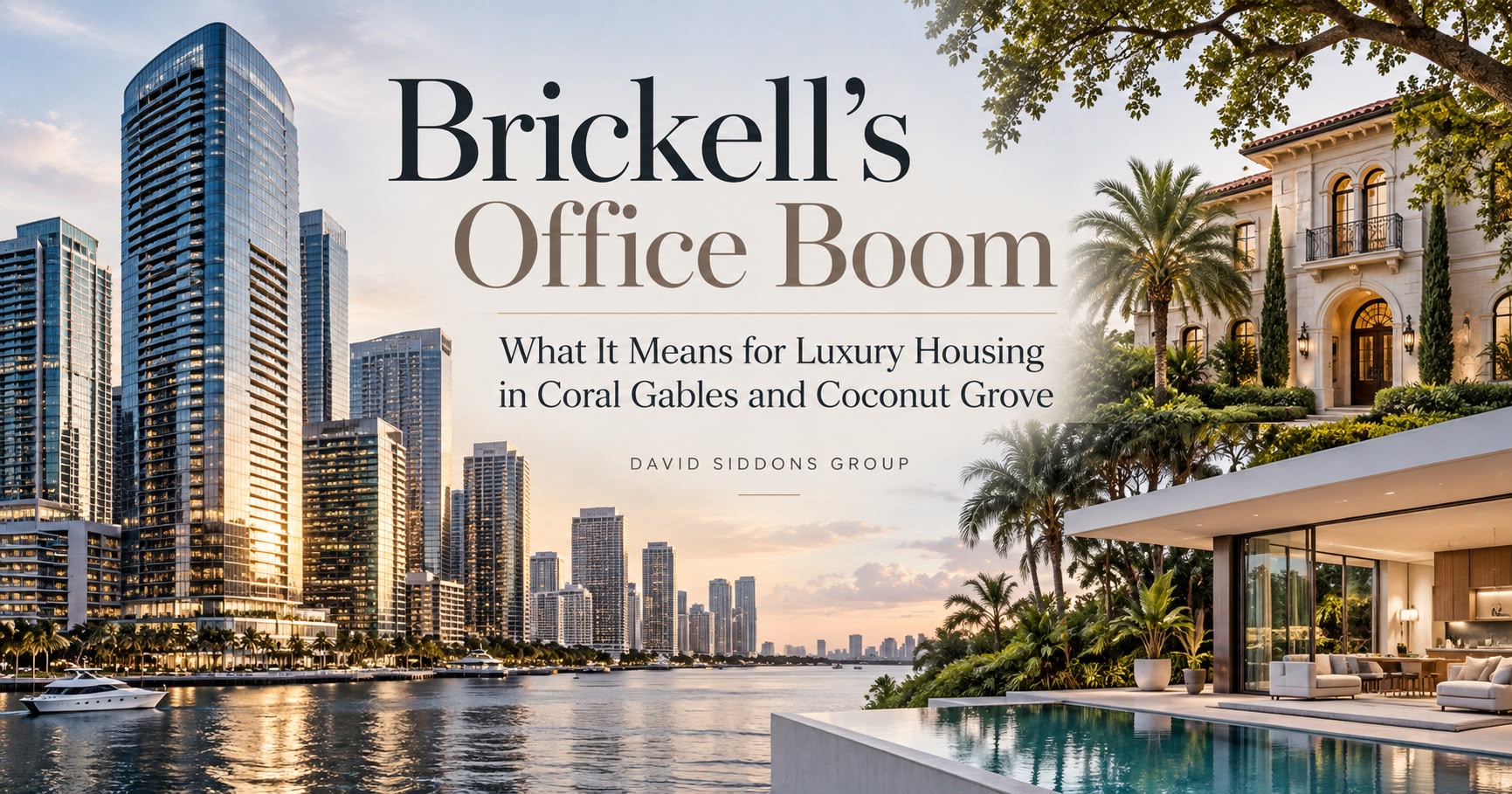
Brickell’s Office Boom: What It Means for Luxury Housing in Coral Gables and Coconut Grove
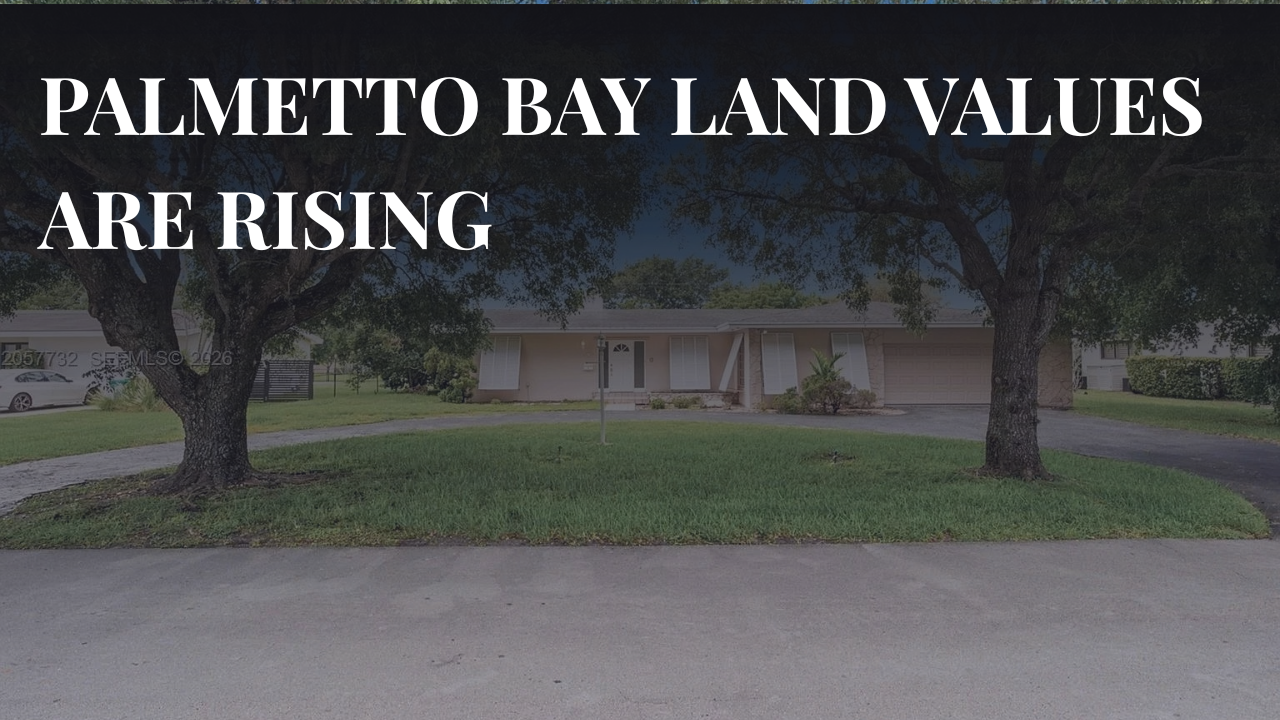
Palmetto Bay Land Values Are Rising. Is Your Home Worth More as Land?

Killian Drive: Kendall’s Luxury New Construction Corridor Hits $1,000/SF
Please fill in your details and David Siddons will contact you

Search related videos

Are St. Regis Sunny Isles Residences Worth the Brand Premium?
Coral Gables Market Report 2025: What the Headlines Aren’t Telling You!
How David Siddons’ Power Team Drives Miami’s Luxury Market
Mid‑Year 2025 Coconut Grove Report: The Truth About What’s Selling Now
Brickell Mid‑Year Market Report 2025 | Is Brickell’s Luxury Market in Trouble?
Pinecrest Mid-Year Market Report 2025 | What’s Selling, What’s Sitting & Why
Miami Beach Condo Market Mid-Year Report 2025 | What Buyers & Sellers Need to Know
How to Lose $1M in The Miami Condo market | Top Mistakes That Cost Miami Condo Buyers Millions
The Well Project EXPOSED Coconut Grove’s Hottest Units
Miami Real Estate in 2025 Is NOT What You Think 😱 | Midyear Must Knows for Buyers & Sellers!
7 Things You Should Never Say to a Real Estate Agent in Miami!
Landmark Victoria Park Residence in Fort Lauderdale: Inside 420 NE 11th Ave 🌴✨
Luxury Living on 2355 S. Miami Ave | Fully Furnished 4-Bed Home w/ Resort-Style Pool 🏊
Is Mandarin Oriental Residences Miami a Smart Condo Investment? Prices, Floorplans, Views & Finishes


- Get our Newsletter
- Subscribe
- No Thanks
Get the latest news from Miami Real Estate News
Close
Edit Search
Close
2 of 14
Share this property
Recomend this to a friend, just enter their email below.
Close
Your email was sent successfully
Close
 COMPARE WITH CONDOGEEKS