














- Best of All
- Best Miami Luxury Condos
- Most popular
- Relocating to Miami
- Private Schools
- Investments
- Gated communities
- Waterfront information
- Luxury homes
- Luxury Condos
- New Construction Condos in South Florida
- Independent Pre-Construction condo reviews for Miami
- Independent Pre-Construction condo reviews for Fort Lauderdale
Miami’s New Construction Condo Boom Comes With Risks Most Buyers Never Ask About
Katherine Kallergis, South Florida Bureau Chief at The Real Deal, broke nine major stories on Miami’s new construction condo market in the past six months alone. Lawsuits. Foreclosures. Construction defects. Developer disputes with lenders. We sat down with her for an in-depth conversation, and what came out of it is the most honest breakdown of Miami’s new condo landscape we have ever put on record. If you are thinking about buying, or if you already own, this article could save you hundreds of thousands of dollars.
Why Miami’s New Condo Market Works Differently Than Anywhere Else in America
To understand why litigation is rising, you first need to understand how Miami’s developer model actually works. In New York, developers cannot touch buyer deposits. They must fund roughly 30% of a project from their own capital before breaking ground. That means more financial skin in the game and less leverage. In Florida, the rules are different. Developers can operate with as little as 10 to 15% of their own capital. Once they break ground, they can draw on a percentage of buyer deposit escrow funds to finance construction. This structure lets projects move faster and at larger scale. It also means the people carrying the most risk are often the buyers.
What does this mean for you as a buyer? The moment you sign a contract and hand over a deposit, you lose a significant degree of control. You do not choose who lends money to the developer. You do not control whether the lender decides to sell that loan to someone else. You cannot force the project to be completed. And if the developer runs into financial trouble, you are not first in line to recover your money. The bank is.
The Two Stories That Every Miami Condo Buyer Should Study Right Now
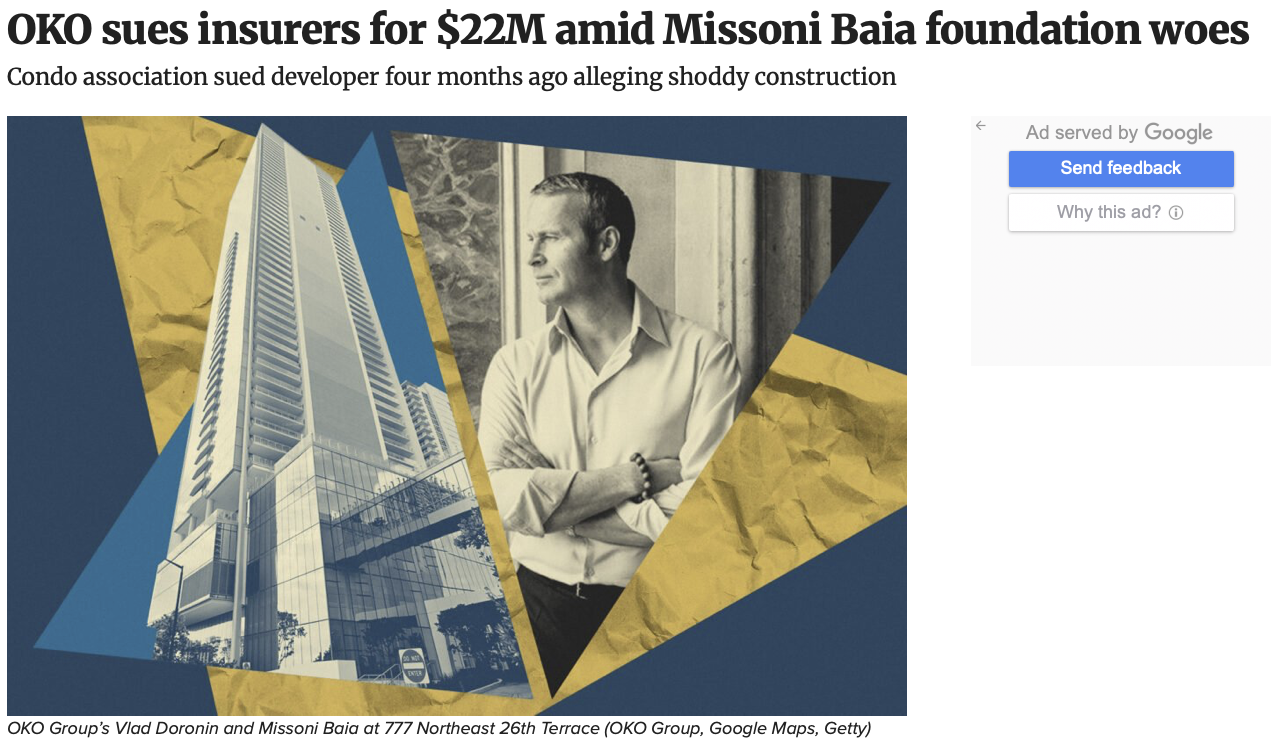
Story 1: OKO and the $22 Million Insurance Lawsuit. After the OKO Group finished the Missoni building in Miami was completed and handed over to its association, residents conducted an inspection and identified 76 alleged construction defects. The association sued the developer. The developer, in turn, sued multiple insurance companies for $22 million, seeking to have those insurers cover the claims.
What does this tell buyers? Two things.
First, construction defect litigation is not an aberration in Miami. It is built into the cost model. Developers carry insurance precisely because they expect to get sued. As Katherine put it, “if you want to be a developer in Miami, get ready to be sued.” The cost of that litigation is baked into your purchase price before you ever sign a contract.
Second, when insurance companies get hit with large claims, they raise premiums. Higher premiums mean higher costs for the next project, which means higher prices for the next buyer. The expense keeps rising without the product becoming more valuable.
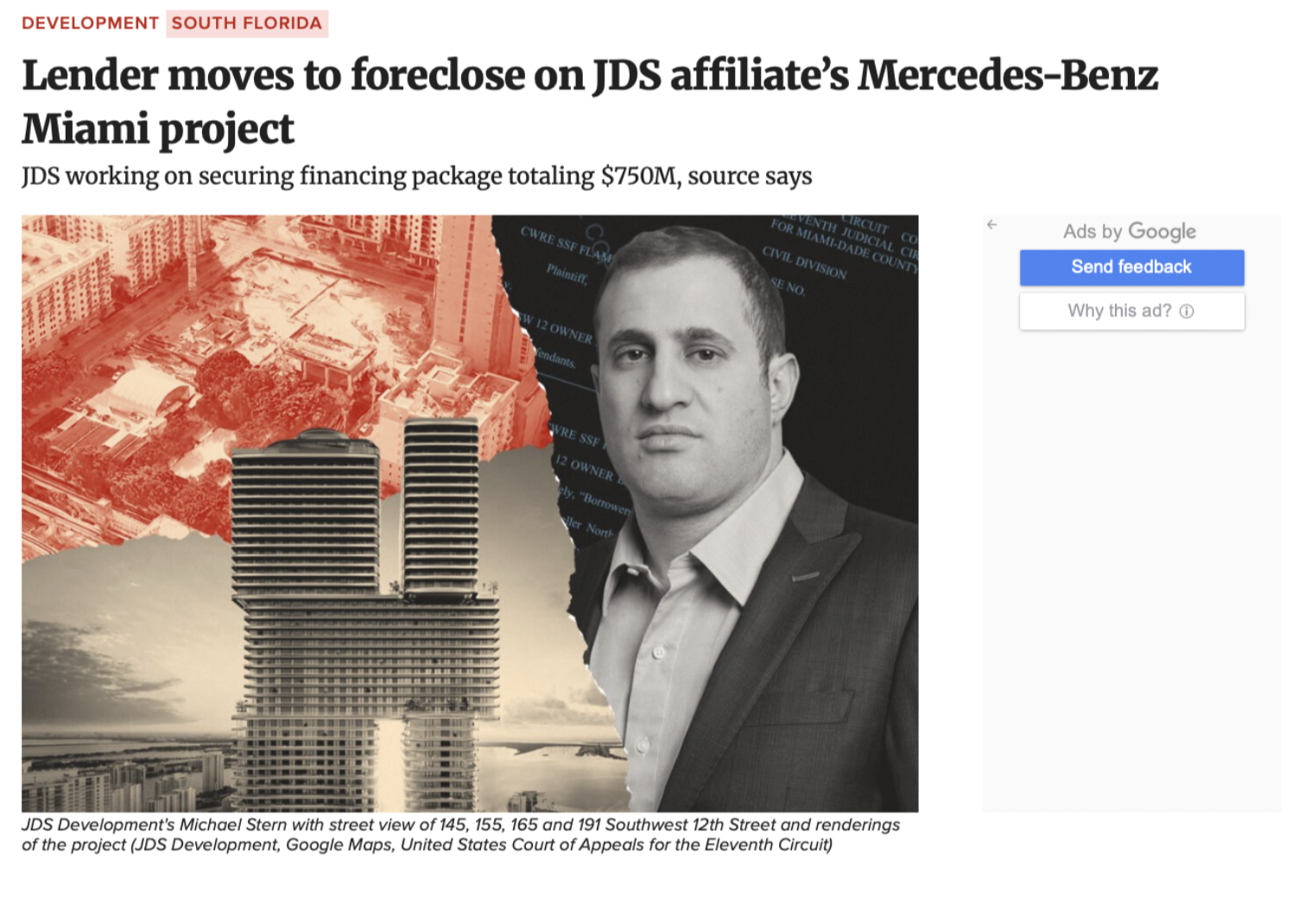
Story 2: The Mercedes-Benz Residences and the $100 Million Foreclosure. JDS Development’s Mercedes-Benz Residences project in Brickell became the subject of a $100 million foreclosure action filed by a lender called Cottonwood Management. According to JDS, Cottonwood had been in talks to refinance the original acquisition loan, then instead acquired that loan from the original lender and immediately began foreclosure proceedings. JDS sued, accusing Cottonwood of using inside information from those negotiations against them. The project was still in its pre-construction phase. No building was delivered. Buyers had already handed over deposits.
This is the scenario most buyers never imagine when they walk into a sleek sales center and fall in love with the renderings. An acquisition loan matures. The developer cannot close a construction loan in time. A lender smells an opportunity. Suddenly, the project is in foreclosure, and your deposit is in a system where you are far from first in line.
Value Engineering — How Loan Deadlines Become Your Problem
There is a phrase you will hear in Miami construction circles that sounds harmless: value engineering. It is not. It is the industry term for cutting corners when time and money run out. Here is how it happens. A developer takes on a construction loan with a fixed maturity date. If the building is not complete by that date, the loan terms change, rates increase, and refinancing costs money the developer does not want to spend. So when timelines slip, as they almost always do on large projects, the pressure shifts to the general contractor: move faster. And when you move faster on a 700-unit tower, things get missed. Materials get swapped. Inspections get rushed. Details that would have been caught on a normal timeline get papered over.
The uncomfortable truth Katherine surfaced is this: for some developers, it can be financially smarter to rush, deliver a defective product, and let the insurance company absorb the association lawsuit, than to slow down, miss the loan deadline, and refinance at a higher rate. The math works out in the developer’s favour. It does not work out in yours.
This is the direct link between the financial stories and the defect stories. They are not separate problems. They are the same problem at different points on the same timeline. When you are evaluating a project, ask how much runway the developer has between now and their loan maturity date, and whether the construction schedule is realistic for a project of that size. If the answer is vague, that vagueness has a cost, and you are the one who pays it.
What Buyers Are Not Asking, But Absolutely Should Be
One point that often gets overlooked is that most buyers walk into sales offices and ask nothing about the developer’s financial structure. They focus on the brand, the design, the views, and the finishes. Rarely do they ask about the acquisition loan, the maturity date of that loan, how leveraged the developer is, or what milestones must be achieved before the construction loan closes.
Here are the questions that actually matter:
- Is there an acquisition loan on this land, and when does it mature?
- Has the developer secured a construction loan, or is it still in negotiation?
- What percentage of units need to be sold before the construction loan closes?
- Did the developer purchase the land outright or is it fully financed?
- How much of their own capital does the developer actually have in this project?
- What is the deposit schedule, and how flexible is it?
- What is the developer’s track record? Have their previous buildings been delivered on time? Have they been subject to association lawsuits?
- Who is the general contractor, and what is their existing relationship with this developer?
- How realistic is the construction timeline given the size of the project?
- If the building is brand-affiliated, what is the licensing agreement and how long does it run?
- What are your contractual rights if the project is significantly delayed?
- What escrow protections are in place for your deposit?
- Read more about contracts, risks and what buys must know before signing the contract.
Most of this information is available through public records. The Miami-Dade Clerk of Courts mortgage filings, Sunbiz.org corporate records, the Florida Public Offering Statement (also called the prospectus), Miami-Dade Civil Court records, and escrow agreements are all accessible. You just have to know to look.
Free Resource for Miami Condo Buyers
Know exactly what to check before you sign anything.
Send us an email with the subject line CHECKLIST and we will send you a free one-page guide of the exact documents to pull before putting a deposit down on any new construction condo in Miami. No sales call. No strings. Just protection.
Or if you would rather talk through your specific situation, schedule a call directly with David.
What Good Developers Actually Look Like
Miami has developers with deep balance sheets, decades of completed work, and buildings that residents genuinely love living in, and it is worth being clear about what separates them from the rest. The most telling observation from our conversation was simple: the best developers almost never make headlines, because there is nothing to report. They deliver on time or close to it. The renderings match what actually gets built. When problems arise during construction or handover, they fix them rather than disappear behind lawyers. That willingness to stay accountable is not just good character. It is good business, because reputation in Miami travels fast and capital has a long memory.
Lenders notice. Developers who have delivered clean projects on reasonable timelines get financing quickly and at favorable terms. Those who have burned lenders, missed milestones, or left agents waiting on commissions find those relationships much harder to rebuild. Brokers talk, lenders talk, and the market quietly routes around developers who have shown they cannot be trusted with other people’s money and timelines. Conservative leverage, flexible deposit structures as a project matures, and a long-standing relationship with a reputable general contractor are all signals that a developer is building for the long term rather than extracting value and moving on.
The results show up clearly in the resale market. Boutique developments backed by proven sponsors consistently outperform. Buildings like Continuum, 87 Park, Apogee, and Park Grove keep setting new records not because of marketing, but because the original product was built with care by developers who understood their reputation was tied to every square foot they delivered. That is the standard worth measuring every new project against before you sign anything.
Brand Name Is Not Protection
Miami’s new development marketing has become extraordinarily sophisticated, and one of its most effective tools is the brand name on the building. Aston Martin. Mercedes-Benz. Dolce and Gabbana. These names carry weight, and they are designed to make you feel that the brand’s global reputation is standing behind your investment.
It is worth asking whether that is actually true. There is a clear distinction between hospitality brands and fashion or automotive brands however. A hotel company like Four Seasons or Mandarin Oriental has genuine skin in the game. If the residential product they brand is poorly built or badly managed, it damages the very product they sell every night in every city on the planet. Their incentive to maintain standards is real and ongoing.
A car brand or a fashion house operates differently. If the Aston Martin-branded building in Miami has construction defects, it has no measurable effect on how many cars Aston Martin sells. The brand licensed its name. It did not license its operational standards, its quality control processes, or its accountability. The building’s success or failure is largely insulated from the mother brand’s core business.
This does not mean every fashion or automotive-branded project is a risk. It means the brand itself is not the due diligence. Before buying into any branded development, ask your broker: what is the actual licensing agreement, how long does it run, and what happens to the brand relationship if the association takes control and wants to terminate it? The answers will tell you far more than the logo on the front of the building.
The 2028 Supply Cliff: What Is Coming for Brickell Condo Owners
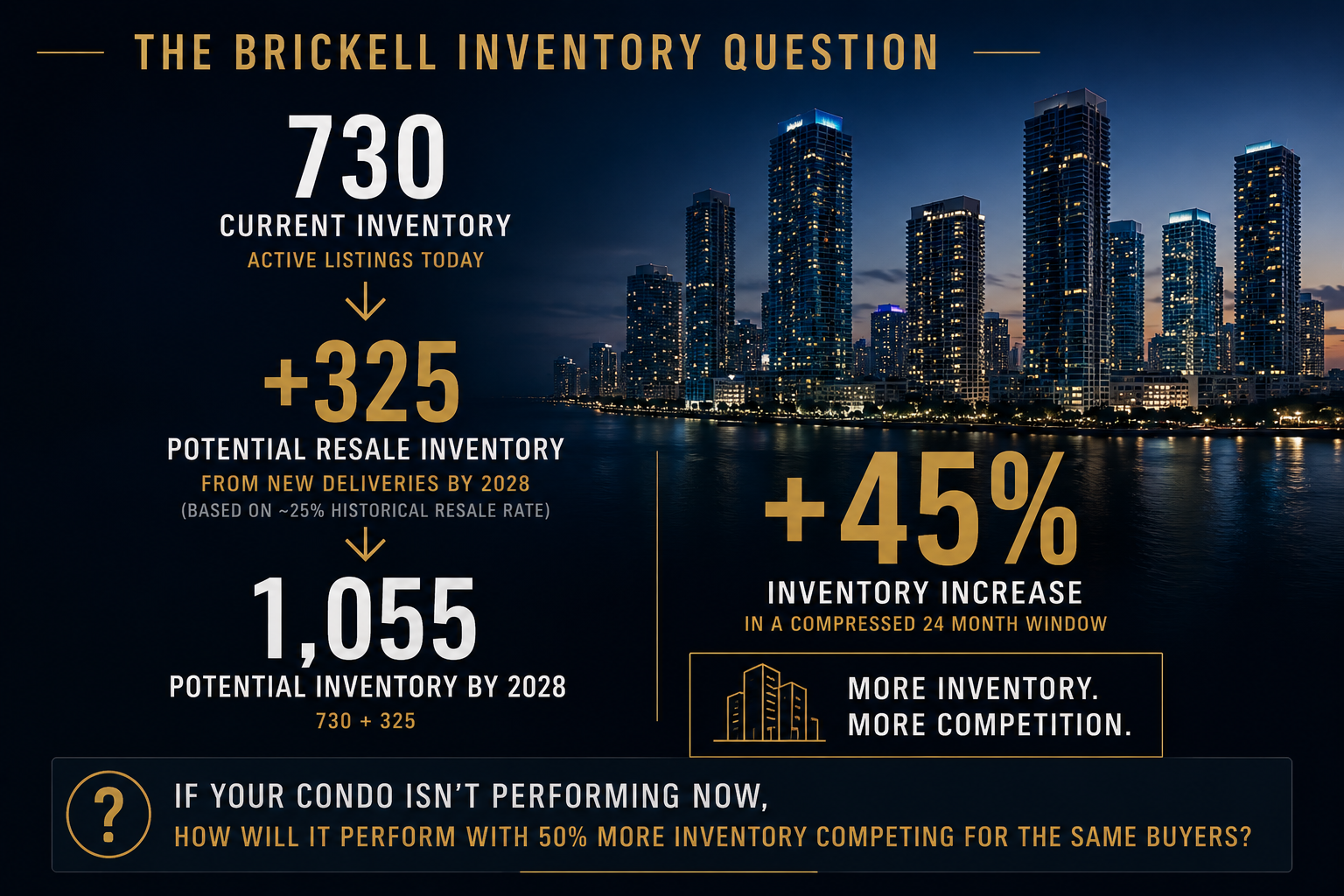
Here is the conversation that is not happening loudly enough yet. Right now, there are approximately 40 projects in Miami’s pipeline. In the Brickell market alone, over 4,000 units are scheduled for delivery over the next cycle, with around 1,300 arriving by 2028. Projects include the Waldorf Astoria, 1428 Brickell, Dolce and Gabbana Residences, and a growing number of others. Current Brickell condo inventory sits at around 730 units. Total sales volume over the past 12 months was approximately 1,100 units.
Now consider this: when buildings are delivered, a predictable percentage of units come back onto the market immediately. At the Aston Martin Residences, roughly 25% of units came back to market after delivery. Apply that resale rate to the 1,300 units coming by 2028, and you are looking at an additional 325 units flooding the Brickell market on top of existing supply. That is a potential 50% increase in available inventory in a compressed window. For owners of more generic or investor-grade product in Brickell, this is a serious concern. Buildings that are already sitting still in today’s market are going to face stiff competition from brand-new product in 24 months. If your unit is not performing now, ask yourself honestly how it performs when there is 50% more inventory competing against it.
If you own a unit in Brickell and want to know specifically how this supply wave affects your building’s position, DM the word POSITION and your building’s name to Davidson’s Group. We will send you a free, data-driven analysis within 48 hours. Whether you list with us, list with someone else, or hold for a decade, you deserve to make that call based on real numbers.
Five Things to Take Away From This Conversation
After an hour with one of the most informed reporters covering this market, a few things stand out as non-negotiable for any buyer or current owner navigating Miami’s new construction landscape right now.
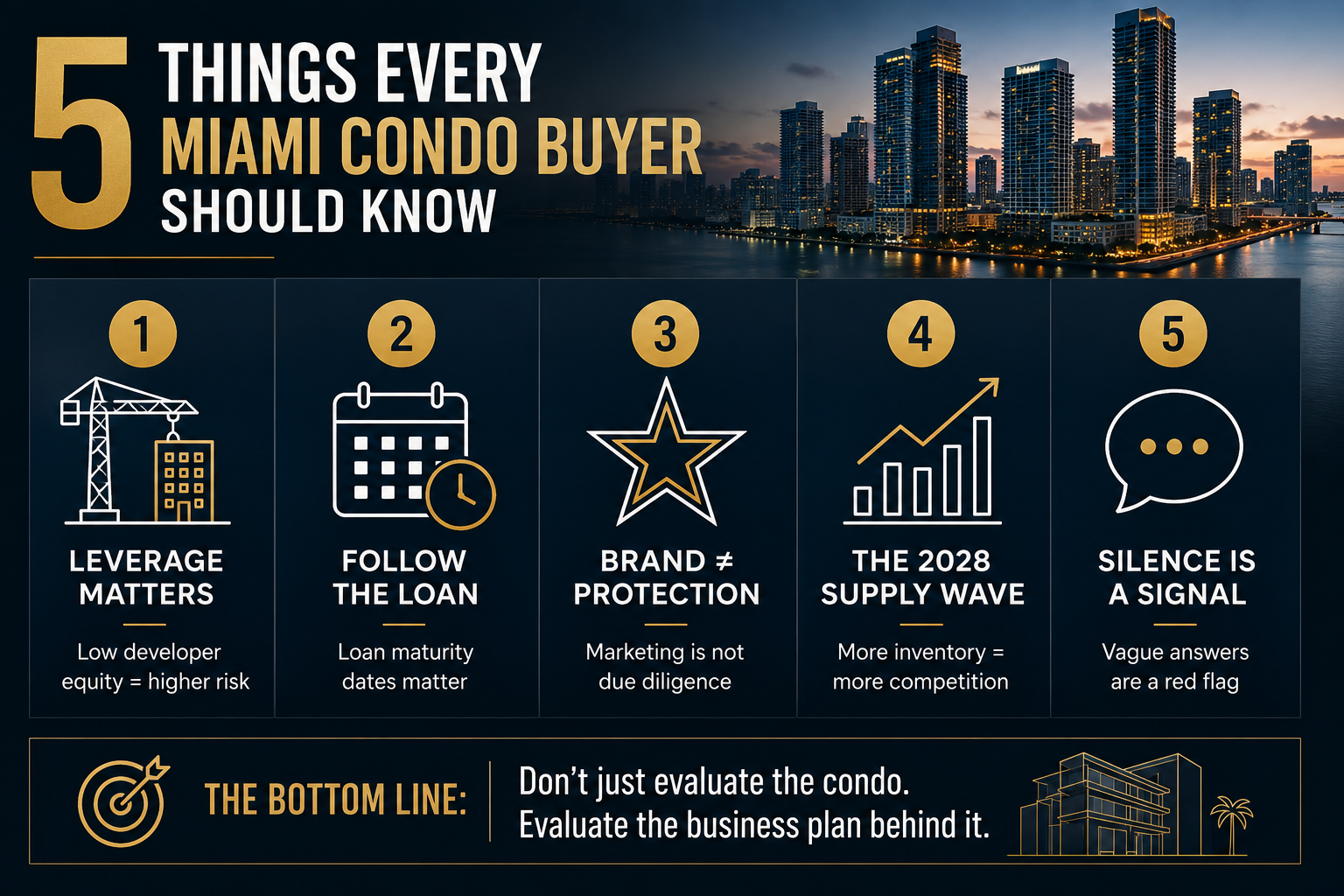
First, understand the leverage. Miami’s deposit structure gives developers an unusually low cost of entry. Low entry cost attracts more developers, including some who are undercapitalised and overextended. That is not a reason to avoid the market. It is a reason to know who you are buying from.
Second, the loan timeline is your timeline too. Find out when the developer’s acquisition or construction loan matures. A project under deadline pressure is a project where corners are more likely to be cut, quality is more likely to suffer, and your delivery date is more likely to move.
Third, the brand on the building is a marketing decision, not a guarantee. Hospitality brands carry more accountability than fashion or automotive brands. Ask about the licensing agreement before you assume the name means protection.
Fourth, 2028 is coming faster than people think. If you own a unit in Brickell that is not in the top tier of its submarket, the supply injection arriving in the next 24 months deserves a serious, data-driven look before you decide to hold.
Fifth, silence from a developer is a signal. Developers who are on top of their projects communicate clearly and quickly. When questions about financing, timelines, or construction milestones are met with vague answers or no answers, that pattern has a history of ending badly.
Free Analysis for Brickell Condo Owners
How will the 2028 supply wave affect your building?
Email us the word POSITION along with your building's name and we will send you a free, data-driven analysis of exactly where your building stands against the incoming supply within 48 hours. Whether you list with us, list with someone else, or hold for a decade, you deserve to make that call based on real numbers.
The Bottom Line Before You Sign Anything
Katherine closed our conversation with something worth repeating. Asked whether she believed there is a project in the market right now that, ten years from now, people will point to as a warning sign, her answer was yes. She did not name it. She did not have to. The point is that the signals are visible to anyone willing to look. The Miami-Dade clerk of court website is public. Court filings are public. Lender relationships are traceable. Developer track records are documented. Most buyers just never look, because nobody told them to. Consider this your invitation to look.
Three Ways The David Siddons Group Can Help You Right Now
If you are thinking about putting a deposit down on a new Miami condo, email us the word CHECKLIST and we will send you a free one-page guide of the exact documents to pull before signing anything. No sales call, no strings, just the information you need to protect yourself.
If you already own a unit in Brickell and want to know what the 2028 supply wave means for your specific building, email us the word POSITION along with your building’s name. We will send you a free, data-driven analysis within 48 hours. Whether you list with us, list with someone else, or hold for another decade, you deserve to make that decision based on real numbers.
And if you want to talk through a specific project or situation directly, pick up the phone or send us a message. We are not here to sell you something. We are here to give you answers.
Call us at 305.508.0899 or email David at [email protected].
FAQ
These are the most commonly Miami Real Estate Related questions
What should relocation buyers know before buying real estate in Miami?
HOME BUYERS
Relocation buyers looking at homes in Miami should understand that choosing the right house is less about the property itself and more about location, schools, and long-term value. Many buyers make the mistake of focusing on price or finishes, while the real driver of value is the neighborhood and micro-location. Older homes often represent better value, but may also be part of a future redevelopment cycle. Newer homes command premiums, but don’t always sell faster if pricing is ahead of the market. Commute time, school access, and community dynamics are critical and often underestimated. The key is to evaluate homes not just as lifestyle purchases, but as long-term assets within a very localized market.
Sources:
https://luxlifemiamiblog.com/relocating-to-miami/
https://luxlifemiamiblog.com/relocating-to-miami-with-a-family/
CONDO BUYERS:
Relocation buyers should understand that Miami is a highly segmented, building-driven market, not a uniform one. Pricing can vary significantly between similar properties depending on building quality, layout, and financial health. Many buyers assume newer construction equals better investment, but that is often not the case. Factors like HOA fees, reserves, and rental policies can materially impact long-term value and liquidity. Negotiation opportunities often exist, especially in slower segments, but require precise market knowledge. The key is to evaluate micro-markets and individual buildings, not just neighborhoods or price per square foot.
Sources:
https://luxlifemiamiblog.com/miami-real-estate-market-report/
https://luxlifemiamiblog.com/new-construction-miami-guide/
What are the best areas for relocating families with children
For families relocating to Miami with young children, the most recommended neighborhoods are Coral Gables, Coconut Grove, and Pinecrest. Coral Gables offers the best balance of top schools, safety, and long-term value. Coconut Grove is ideal for younger families seeking walkability, greenery, and a lifestyle-driven environment. Pinecrest provides larger homes, excellent schools, and better value for space, making it ideal for growing families. The key driver across all three is access to strong schools and primary residential stability. Relocation decisions are less about new construction and more about long-term livability and resale strength.
Sources:
https://luxlifemiamiblog.com/best-neighborhoods-miami/
https://luxlifemiamiblog.com/what-are-the-best-family-neighborhoods-in-miami-in-2023/
Are new construction condos in Miami a good investment?
New construction condos in Miami can be a good investment—but only if you understand that not all buildings perform the same. According to the David Siddons Group, many buyers assume “new = better,” but in reality, performance depends on pricing, layout, building quality, and long-term demand. Some new developments set future price benchmarks and can drive long-term appreciation, especially in top-tier projects. However, many are priced aggressively at launch, and buyers relying on marketing instead of data often overpay.
The market is highly segmented, meaning two new buildings next to each other can perform very differently.
The best opportunities typically come from selecting the right building early or negotiating correctly in later phases.
In short: new construction is not automatically a good investment—it becomes one only with building-level analysis and disciplined entry pricing.
Sources:
https://luxlifemiamiblog.com/how-to-buy-a-luxury-condo-in-miami/
https://luxlifemiamiblog.com/category/independent-new-construction-condo-reviews/
https://luxlifemiamiblog.com/beyond-clickbait-real-insights-into-miamis-luxury-condo-market/
Why is buying a Miami condo riskier than buyers think?
Buying a Miami condo is often riskier than buyers expect because the true risks are at the building level—not visible in the listing price. Many buyers focus on finishes and views, while overlooking HOA reserves, insurance exposure, and potential special assessments. In reality, two identical units in different buildings can perform completely differently over time. Rising HOA fees and stricter regulations are also increasing the true cost of ownership, especially in older buildings. Liquidity can be affected by factors like financial health, rental policies, and ongoing repairs. The key risk is not the condo itself—but buying into the wrong building without proper due diligence.
Sources:
https://luxlifemiamiblog.com/how-to-buy-a-luxury-condo-in-miami/
https://luxlifemiamiblog.com/miami-condo-market-risks/
What are Miami's Safest Areas?
Which Miami Areas Still offer Great Value (Budget Friendly alternatives to Coral Gables and Pinecrest)
If you’re looking for better value than Coral Gables or Pinecrest, the answer (in true Siddons style) is not “go cheaper”—it’s go one layer outside the obvious markets.
The strongest value plays are:
- Schenley Park → closest substitute to Coral Gables at ~20% discount while maintaining similar character and location
- Biltmore Heights → almost identical feel to the Gables but ~25–30% cheaper on a $/SF basis
- Glenvar Heights → central location with larger lots and ~25% pricing advantage vs South Miami/Gables
- Baptist / Galloway (Kendall) → Pinecrest-style living (space, schools, land) at up to ~30% lower pricing
The pattern is consistent:
👉 Buyers are shifting west and slightly off-market to gain land, scale, and pricing efficiency. You don’t find value by going to a “cheaper neighborhood”—you find it by identifying adjacent micro-markets that offer the same lifestyle fundamentals without the brand premium.
Sources:
https://luxlifemiamiblog.com/best-value-neighborhoods-miami/
https://luxlifemiamiblog.com/category/miami-neighborhoods/
Is NOW a good time to buy in Miami?
Are Miami real estate prices going down in 2026?
No—but that’s the wrong way to look at it. Miami is not one market anymore, so prices are not moving in one direction. In 2026, the market is split into two: ultra-luxury, scarcity-driven areas (like waterfront and top-tier neighborhoods) are still holding or even rising, while mid-tier condos and oversupplied segments are flat or correcting. What we’re seeing is price divergence, not a crash—some properties are gaining value while others are quietly adjusting downward. Rising inventory and more selective buyers are putting pressure on pricing in certain segments, especially older condos or buildings with weaker fundamentals.
At the same time, global wealth and cash buyers continue to support pricing at the top end of the market. So the real answer: prices aren’t broadly dropping—they’re being repriced based on quality, location, and supply.
Should I buy a house or a condo when relocating to Miami?
The decision comes down to lifestyle first, investment second—and most relocation buyers get that backwards. If you want space, privacy, schools, and long-term family living, a single-family home in areas like Coral Gables or Coconut Grove is typically the stronger choice. If you prioritize walkability, low maintenance, and proximity to business districts, a condo in Brickell or waterfront markets makes more sense.
From an investment perspective, homes tend to be more stable, while condos are more building-dependent and cyclical. Most relocation clients underestimate how much building quality, HOA structure, and future costs impact condo performance. The right answer isn’t “house vs condo”—it’s which asset fits your lifestyle AND holds value within its micro-market.
How do I choose the right Miami neighborhood for my lifestyle?
Why are Miami condo prices so different between buildings?
Miami condo pricing varies widely because value is determined at the building level, not just by location. Two buildings next to each other can have major differences in financial health, reserves, HOA fees, and management quality. Buyers also pay premiums for better layouts, views, amenities, and newer construction—but not all “new” buildings perform equally. Factors like rental policies, upcoming assessments, and building reputation can significantly impact resale value. This is why price per square foot alone is misleading in Miami’s condo market. The real driver of value is how that specific building competes within its micro-market over time.
Sources:
https://luxlifemiamiblog.com/how-to-buy-a-luxury-condo-in-miami/
https://luxlifemiamiblog.com/category/independent-new-construction-condo-reviews/
WHY WORK WITH DAVID? THINGS YOU SHOULD KNOW...
For all our analytics we are agents driving some very unique and advanced tech. We Provide a granular and custom experience that empower our clients with the insight and tools to understand the most complex behaviors of any local markets.
-
Analytical
Over 100 reports produced to date
-
Knowledgeable
Over 1800 published articles and counting


Related Articles

Killian Drive: Kendall’s Luxury New Construction Corridor Hits $1,000/SF
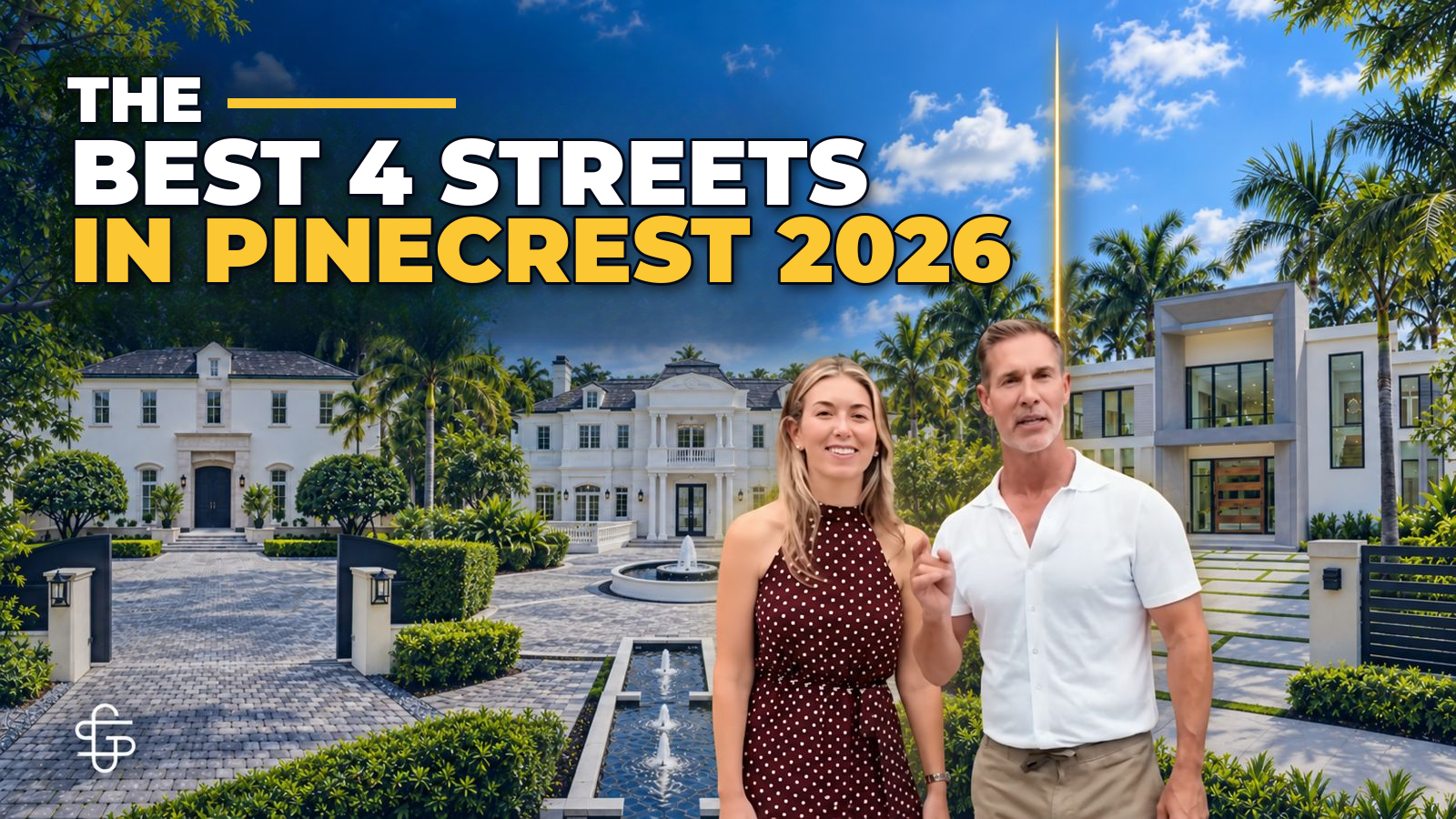
Pinecrest’s 4 Best Streets in 2026
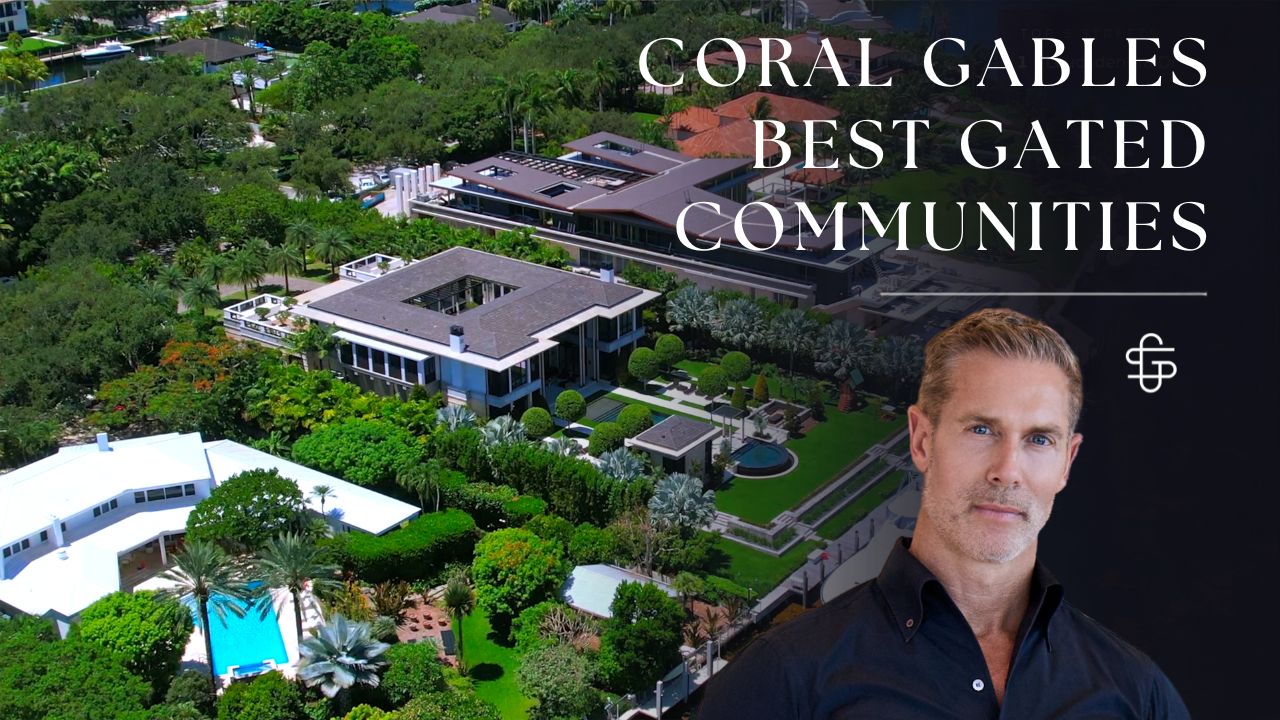
The 5 Best Luxury Streets in Miami’s Gated Communities
The Real Estate Team Behind the Agent: Why Systems Matter More Than Star Power
Selling a Home in Pinecrest: Why Some Homes Sell for $1,500/SF and Others Sit

We Built the Largest YouTube Audience of Any Miami Real Estate Team.
Empty Nesters in Miami: What Comes After the Big Family Home?

Palmetto Bay Has Almost No Inventory. So Why Are Homes Still Sitting?
The Decisions That Set Your Miami Condo’s Price, Years Before You Ever See It
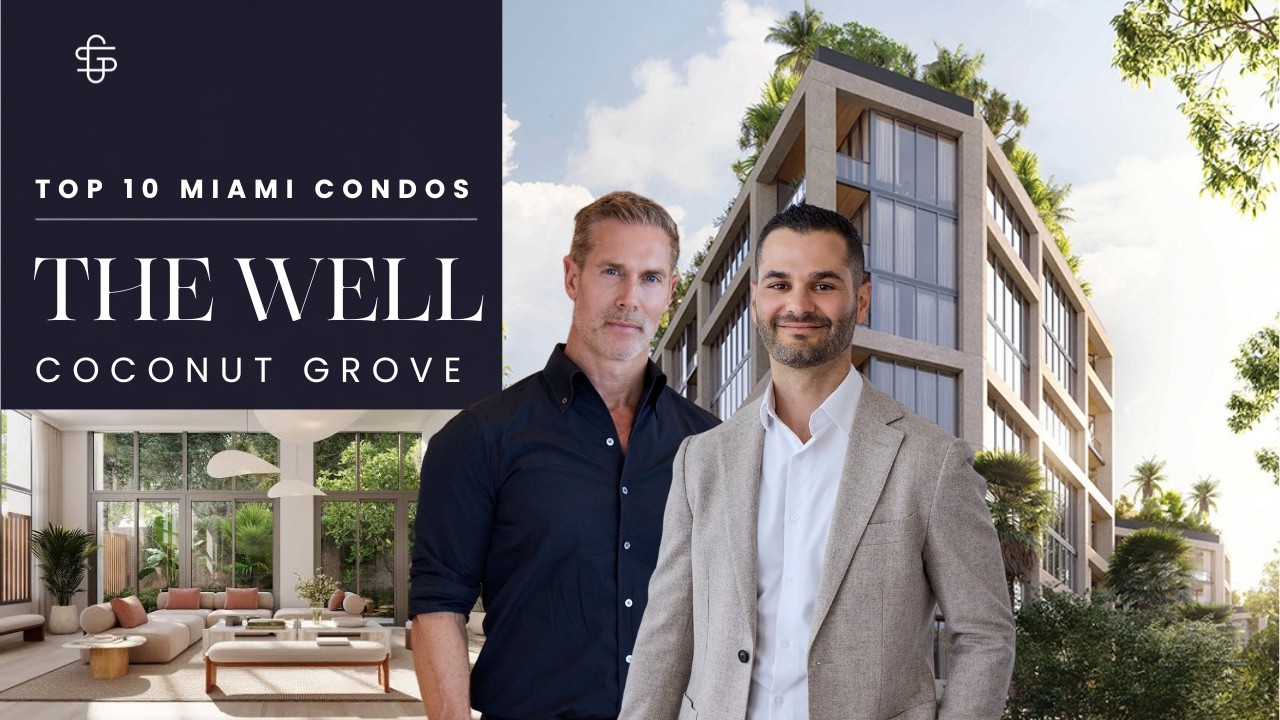
Coconut Grove’s Best New Penthouse for Sale in 2026: The Well Penthouses Explained
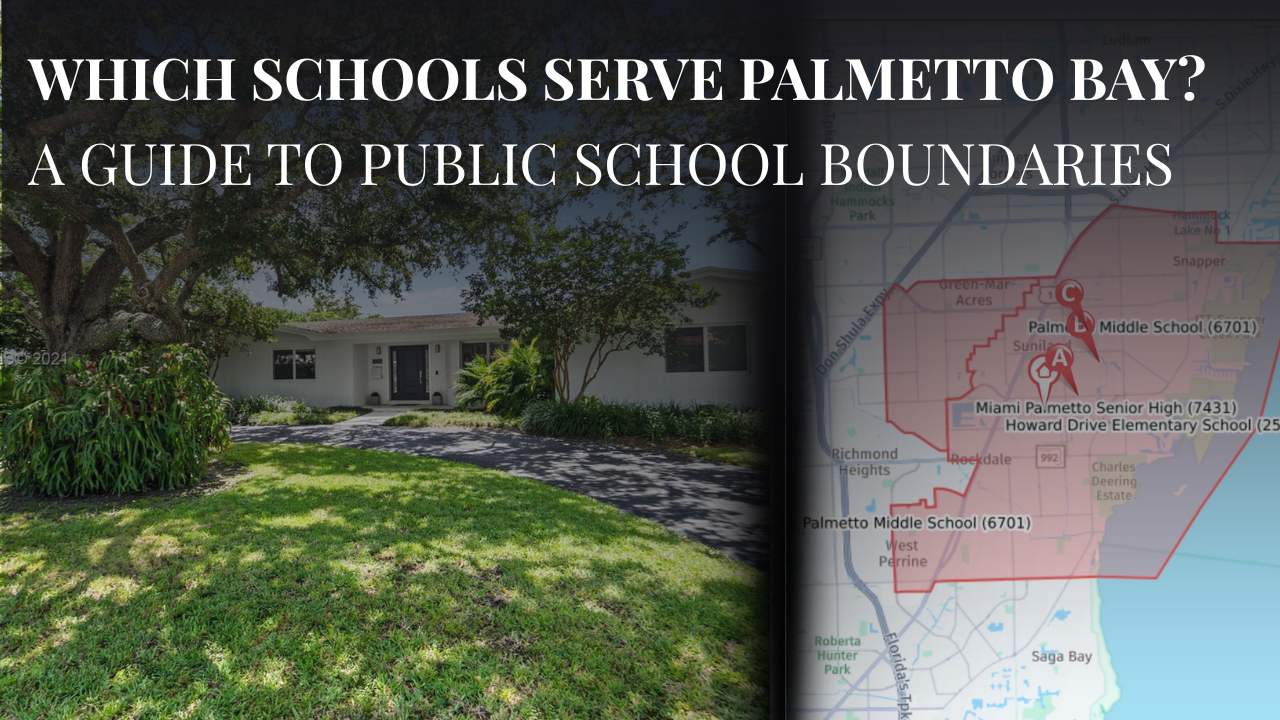
Which Schools Serve Palmetto Bay? A Guide to Public School Boundaries

Beyond the Developer Finish
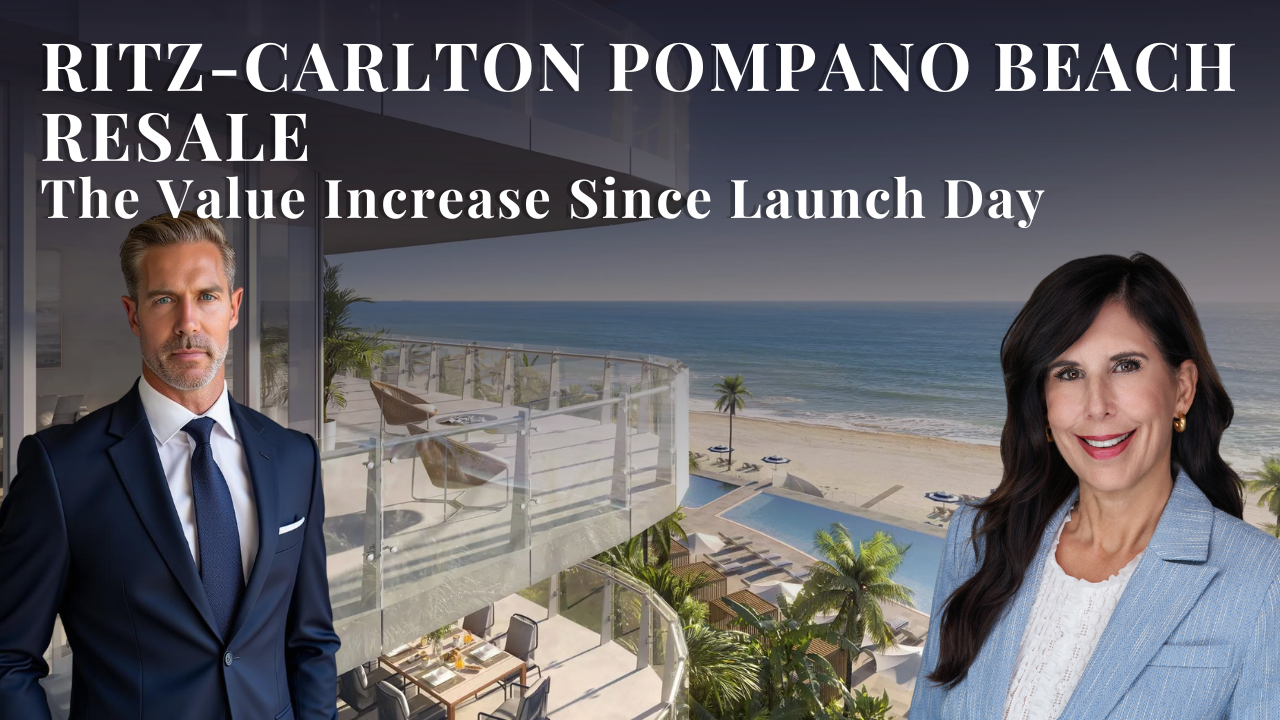
Ritz-Carlton Residences Pompano Beach Resale: The Opportunity After Closing
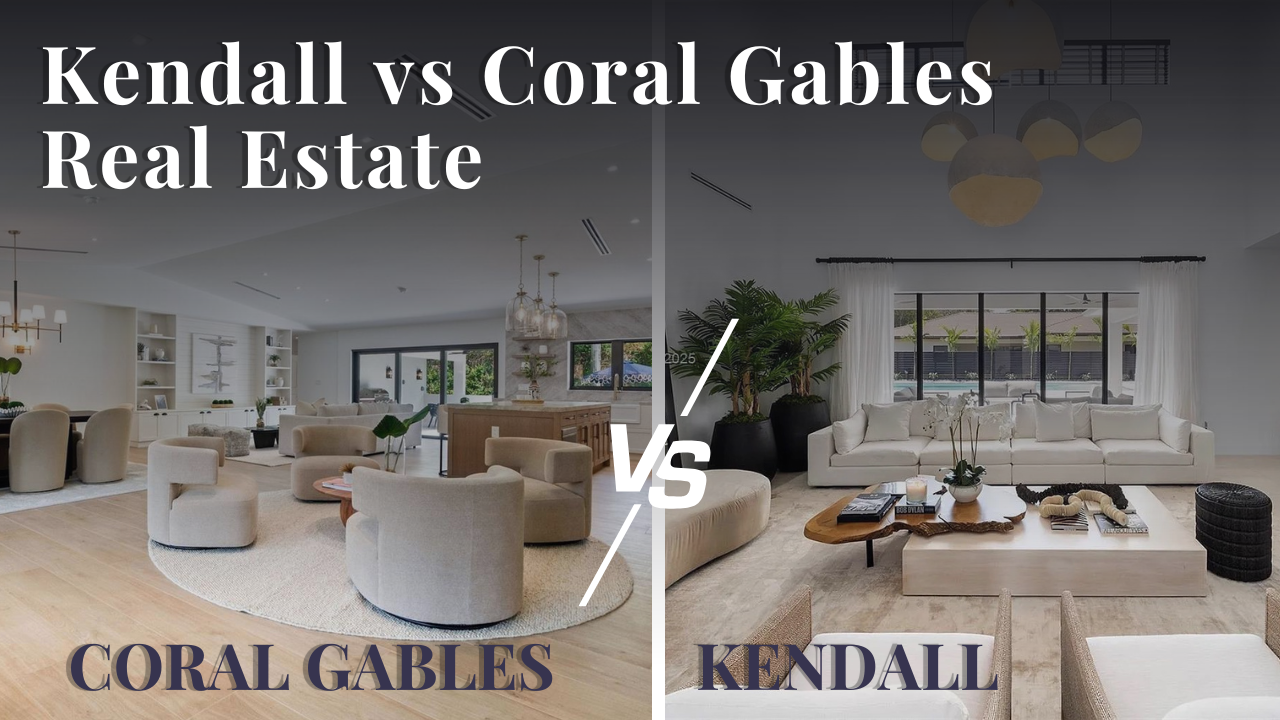
Kendall Real Estate vs. Coral Gables Real Estate: More Land, More House, Same Budget
Please fill in your details and David Siddons will contact you

Search related videos

Are St. Regis Sunny Isles Residences Worth the Brand Premium?
Coral Gables Market Report 2025: What the Headlines Aren’t Telling You!
How David Siddons’ Power Team Drives Miami’s Luxury Market
Mid‑Year 2025 Coconut Grove Report: The Truth About What’s Selling Now
Brickell Mid‑Year Market Report 2025 | Is Brickell’s Luxury Market in Trouble?
Pinecrest Mid-Year Market Report 2025 | What’s Selling, What’s Sitting & Why
Miami Beach Condo Market Mid-Year Report 2025 | What Buyers & Sellers Need to Know
How to Lose $1M in The Miami Condo market | Top Mistakes That Cost Miami Condo Buyers Millions
The Well Project EXPOSED Coconut Grove’s Hottest Units
Miami Real Estate in 2025 Is NOT What You Think 😱 | Midyear Must Knows for Buyers & Sellers!
7 Things You Should Never Say to a Real Estate Agent in Miami!
Landmark Victoria Park Residence in Fort Lauderdale: Inside 420 NE 11th Ave 🌴✨
Luxury Living on 2355 S. Miami Ave | Fully Furnished 4-Bed Home w/ Resort-Style Pool 🏊
Is Mandarin Oriental Residences Miami a Smart Condo Investment? Prices, Floorplans, Views & Finishes


- Get our Newsletter
- Subscribe
- No Thanks
Get the latest news from Miami Real Estate News
Close
Edit Search
Close
2 of 14
Share this property
Recomend this to a friend, just enter their email below.
Close
Your email was sent successfully
Close
 COMPARE WITH CONDOGEEKS