













- Best of All
- Best Miami Luxury Condos
- Most popular
- Relocating to Miami
- Private Schools
- Investments
- Gated communities
- Waterfront information
- Luxury homes
- Luxury Condos
- New Construction Condos in South Florida
- Independent Pre-Construction condo reviews for Miami
- Independent Pre-Construction condo reviews for Fort Lauderdale
The Miami Buyer Migration
Why Buyers Move From Brickell to Coconut Grove to Palmetto Bay
If you have spent any time house hunting in Miami, you have probably noticed a pattern. Buyers land in Brickell first, then a few years later they are touring Coconut Grove or Palmetto Bay, and eventually some of them end up back in a Brickell condo. It is not a coincidence. It is a predictable migration that plays out across almost every relocating family and every growing local household in South Florida.
The David Siddons Group works this exact path every week. Our agents cover Brickell, Coconut Grove, and Palmetto Bay individually, which means we see the same buyer at three different stages of their Miami life, sometimes with the same agent, sometimes handed off between teammates who know each neighborhood block by block. Below is what that migration actually looks like, with real pricing, real inventory numbers, and what each stage means for your next move.
What Is the Miami Buyer Migration?
The Miami buyer migration is the typical path a homebuyer follows as their life changes: starting in a Brickell high-rise condo for its location and value, moving to Coconut Grove or Palmetto Bay for space and schools once they start a family, and in some cases returning to a Brickell or Coconut Grove condo once the kids are grown and the house becomes more maintenance than they want. Understanding where you are in that path, and where you are headed, is the difference between buying the right property once and buying three times in five years.
Stage One: Brickell Is the Landing Pad
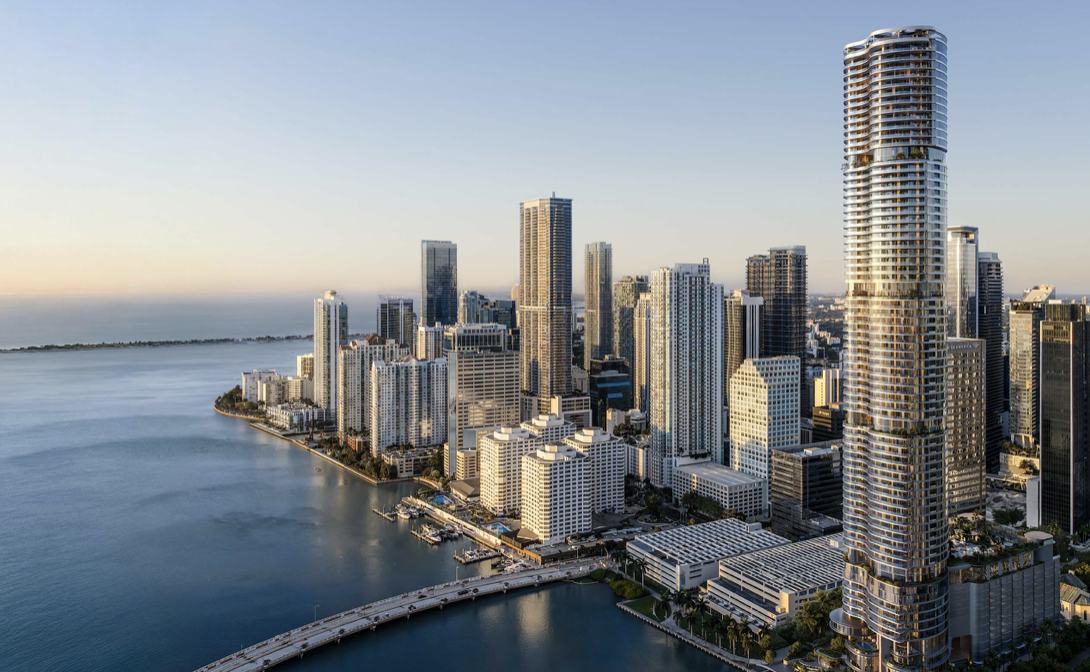
Brickell is usually the first stop for two types of buyers: people relocating to Miami for work or lifestyle, and young locals establishing their independence before starting a family. It makes sense. Brickell sits geographically in the middle of everything, between the mainland neighborhoods and Miami Beach, and it is closest to the offices that brought many buyers to Miami in the first place.
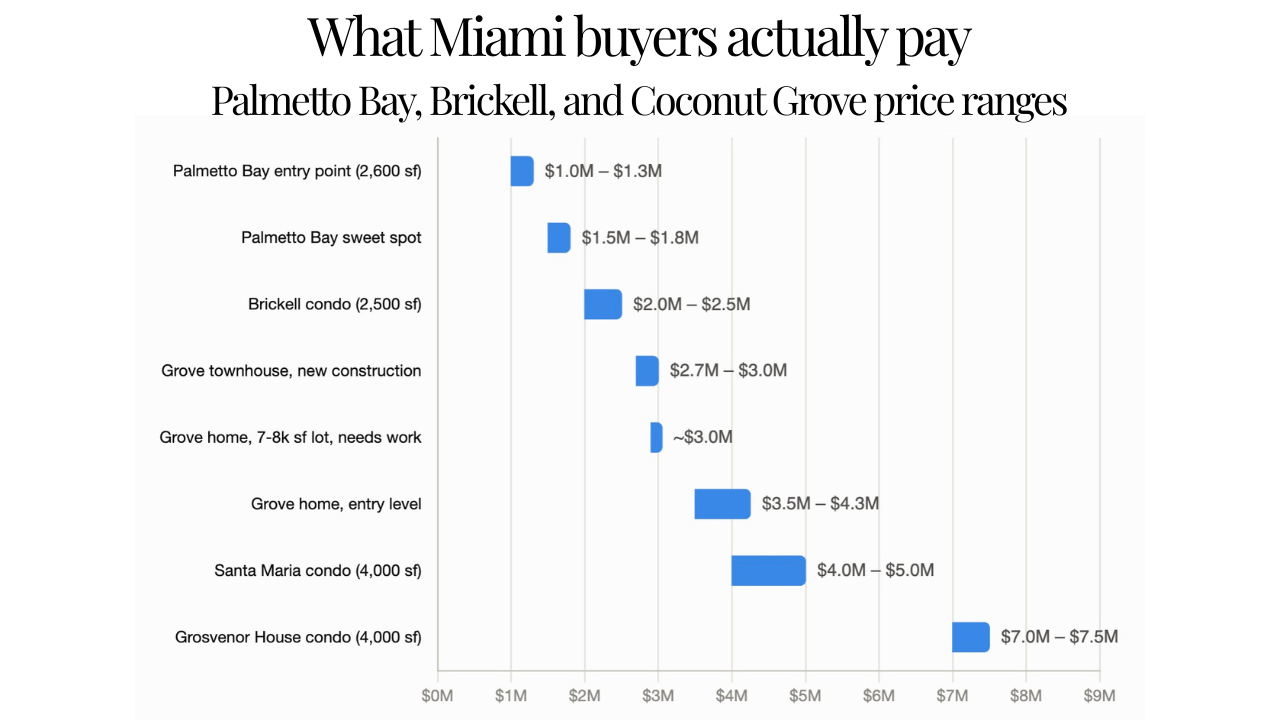
Pricing also plays a role. A 2,500 square foot unit in a strong Brickell building runs in the low to mid $2 millions, roughly $1,000 per square foot. Compare that to Miami Beach new construction, where the same size unit can run $2,000 to $4,000 or more per square foot, and Brickell looks like one of the better value plays left in Miami’s urban core.
Not every Brickell building suits a family, and that distinction matters. Buildings like Brickell Key and Santa Maria stand out because they were built with larger floor plans and a residential feel rather than a short-term rental crowd. Santa Maria, for example, sits on more than six acres of waterfront, has some of the best-maintained grounds in Brickell, and still trades around $1,000 a square foot even though it was built in 1997. Buyers used to get Santa Maria and similar buildings as second or third homes. Now full-time young families are buying in. Families typically stay in Brickell for a year or two while they get established, then start looking south toward Coconut Grove and Coral Gables, or north toward Miami Shores and Buena Vista, once they need more space.
Stage Two: Coconut Grove, the First Real Space Upgrade
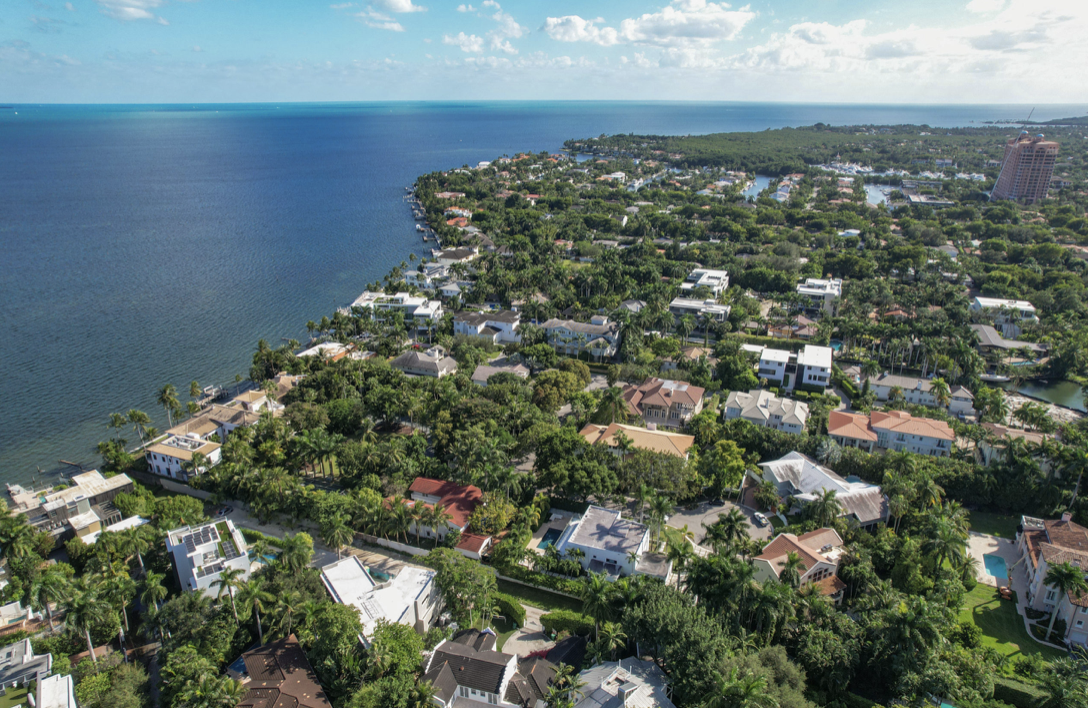
Coconut Grove is the most natural next step out of Brickell because daily life barely changes. Same gym, same grocery store, just a few minutes further south. It is also one of the most expensive neighborhoods in Miami, so buyers who assume the Grove is an easy upgrade from Brickell are often surprised by the numbers.
Here is what 2,500 square feet actually costs in the Grove right now:
- New construction townhouse (2,500 to 2,600 square feet, four bedrooms, plunge pool): roughly $2.7 million to $3 million
- Single family home on a 7,000 to 8,000 square foot lot, older and in need of work: around $3 million
- Single family home on a 10,000 square foot lot or larger: $4 million and up. A 13,000 square foot lot with a 1980s original home just closed at $4.25 million, essentially a land value sale
- Realistic entry point for a decent single family home: $3.5 million and up
Inventory explains why. Coconut Grove typically runs 5 to 6 months of absorption, but homes priced below $4.5 million, which is functionally the entry point to the neighborhood, are moving in just 2.8 months. That is an extremely tight market. It is common to make a full price, all cash offer and still lose to another buyer, or not even land the backup position. Lot sizes in the Grove run around 6,000 square feet in many pockets, so scarcity is built into the geography, not just the price.
Buyers competing for Grove inventory are not only coming from Brickell. A significant share are relocating from out of state, which adds pressure on top of local demand. If Coconut Grove pricing does not pencil out, Coral Gables tends to run similarly, and Palmetto Bay becomes the next logical stop.
Coconut Grove Homes For Sale / Coconut Grove Condos For Sale
Stage Three: Palmetto Bay, More Land for Less Money
Palmetto Bay is where space-driven buyers land once Grove and Gables pricing stretches past their budget. It is known locally as the Village of Parks, with a genuinely suburban, tight-knit feel, excellent public and private school options, and a noticeably slower pace than the urban core.
The numbers make the appeal obvious:
- Average price per square foot: just under $600
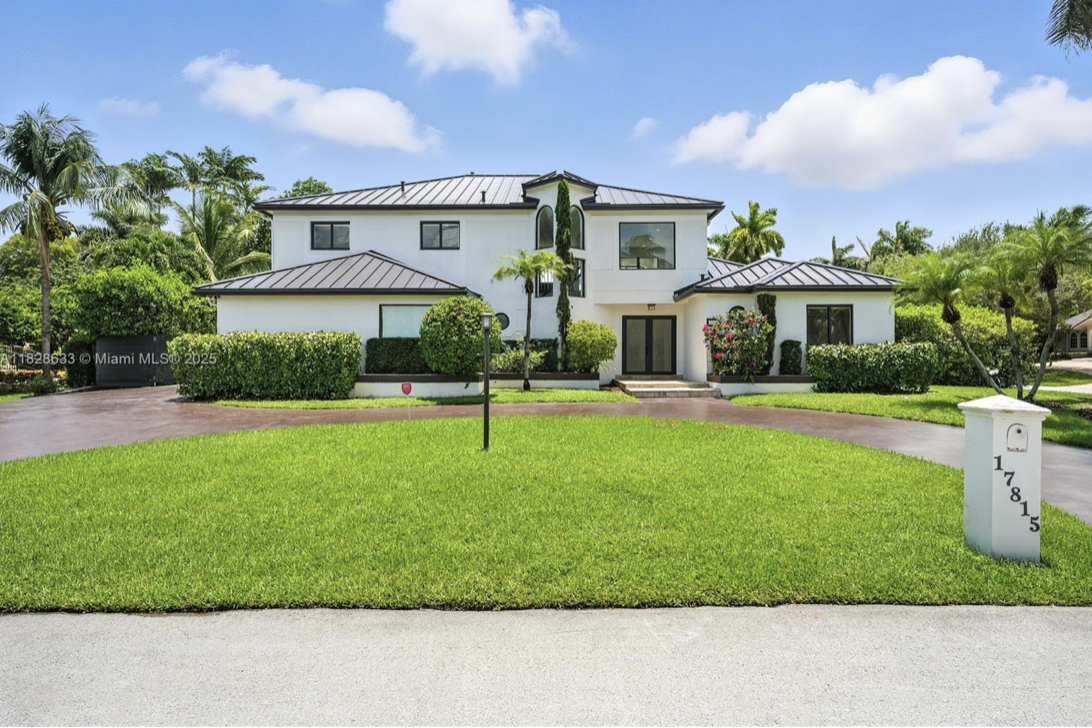
- Typical entry point: a four bedroom, 2,600 square foot home on a 15,000 square foot lot
- Sweet spot for buyers: $1.5 million to $1.8 million, which typically includes a two car garage, a pool, and sometimes an outdoor kitchen
- The same 15,000 square foot lot and home in Coconut Grove, High Pines, South Miami, or Coral Gables would cost roughly $6 million for land alone
Inventory tells the rest of the story. The village has about 8,500 single family homes, and only 93 are active for sale, which is roughly 1% of the entire housing stock. This is a locked-in market of end users who bought and stayed. Commute time to Coconut Grove or the Gables runs 20 to 25 minutes depending on traffic, and many residents also lean on nearby Pinecrest amenities. For a family that wants safety, land, and strong schools without a Grove-sized price tag, Palmetto Bay is often the answer.
Thinking about your next move in Miami?
Whether you are ready to leave Brickell for more space, weighing Coconut Grove against Palmetto Bay, or planning to downsize back into a condo, our team can walk you through exactly what your budget gets you in each neighborhood.
Call 305.508.0899 | Email [email protected]
The Return Migration: Downsizing Back Into a Brickell or Grove Condo
The migration does not end with the biggest house. Once kids move out or a couple decides they are done maintaining an acre of landscaping and a pool, a large share of buyers move straight back into a condo, and many go right back to Brickell. This group tends to skip the smaller, younger-crowd Brickell towers entirely and go straight for the same handful of established buildings recommended earlier in this article: Santa Maria, and increasingly the South Brickell corridor, which has a landscaped, walkable feel close enough to Coconut Grove that agents often call it “the Grove of Brickell.” Buyers coming out of large lots in Palmetto Bay or Pinecrest are especially drawn to these buildings because the larger, older floor plans feel less like a density downgrade.
Coconut Grove condo options for this buyer exist too, mainly Park Grove, Grove at Grand Bay, and Grovenor House, but the math often favors Brickell. A 4,000 square foot unit with direct water views at Grovenor House can ask around $7.5 million, while a comparable footprint at Santa Maria runs closer to $4 million to $5 million. For buyers who want three-plus bedrooms and enough room for visiting kids and grandkids, that price gap is significant.
One number worth knowing before you make this move: carrying costs in a condo typically run about 6% to 10% higher than an equivalent single family home once HOA fees are factored in, and that estimate does not even include a property manager. It is not automatically cheaper to downsize into a condo. It is more convenient, and for many buyers at this stage, convenience is worth paying for.
Why Hyper-Local Expertise Matters at Every Stage
Every stage of this migration, Brickell condo, Grove or Gables home, Palmetto Bay house, and the eventual move back into a condo, is a genuinely different market with its own pricing logic, inventory pace, and best buildings or streets. An agent who knows Brickell buildings cold may not know which South Grove streets sit on the best lots, and an agent deep in Palmetto Bay may not know which Coconut Grove condo tower has the community feel a downsizing buyer wants.
The David Siddons Group is structured around exactly this problem. Our agents live and work hyper-locally in Brickell (Shakira Sanchez), Coconut Grove (David Vazquez), Palmetto Bay (Sarah Alayon), Coral Gables, Miami Beach, Sunny Isles, and beyond, from Fort Lauderdale and Boca up to Palm Beach, and we work as one team across all of it. When a client’s needs shift from a condo to a house, or from a house back to a condo, we hand off inside the same team instead of sending you out to start over with a stranger. That is how we helped a buyer land an off-market South Grove home after two full-price offers were beaten out elsewhere, and how we have moved clients from Miami Shores into the Grove and from Pinecrest into Brickell without them losing momentum or local insight along the way.
Ready to Plan Your Next Move?
Whether you are landing in Brickell for the first time, outgrowing a condo and eyeing Coconut Grove or Palmetto Bay, or ready to downsize back into a low-maintenance condo, the right move depends on knowing these markets from the inside, not just the listing photos. The David Siddons Group works every one of these neighborhoods every day.
Reach out to our team for a private consultation, and we will map out exactly where your budget, your lifestyle, and your timeline fit into Miami’s buyer migration. Call 305.508.0899, email [email protected], or book a free 30-minute call to get started.
FAQ
Frequently Asked Questions
Why do Miami buyers start in Brickell?
Brickell offers a central location between Miami’s mainland neighborhoods and Miami Beach, strong value at roughly $1,000 per square foot, and proximity to major employers, making it a common first stop for relocating professionals and young families.
How much does a home cost in Coconut Grove compared to Palmetto Bay?
A single family home on a comparable lot can cost roughly $4 million to $6 million more in Coconut Grove than in Palmetto Bay. Palmetto Bay averages just under $600 per square foot, while Grove land values alone can reach $6 million for a 15,000 square foot lot.
Is it cheaper to own a condo or a house in Miami?
Not necessarily. When HOA fees are factored in, condo carrying costs typically run about 6% to 10% higher than an equivalent single family home, before adding a property manager.
Which Brickell buildings are best for families?
Brickell Key and Santa Maria are frequently recommended for families because of their larger floor plans, resident-focused amenities, and lower short-term rental turnover compared to other Brickell towers.
How tight is inventory in Coconut Grove and Palmetto Bay?
Extremely tight in both. Coconut Grove homes priced under $4.5 million are moving in about 2.8 months. Palmetto Bay has only about 93 active listings out of roughly 8,500 single family homes in the village, close to 1% of total inventory.
WHY WORK WITH DAVID? THINGS YOU SHOULD KNOW...
For all our analytics we are agents driving some very unique and advanced tech. We Provide a granular and custom experience that empower our clients with the insight and tools to understand the most complex behaviors of any local markets.
-
Analytical
Over 100 reports produced to date
-
Knowledgeable
Over 1800 published articles and counting


Related Articles
Fort Lauderdale Waterfront Homes in 2026

Greenview at Presidential Aventura
The Best Real Estate Agent in Ponce Davis
Pinecrest New Construction Is Appreciating 2x Faster Than Older Homes

Inside 1428 Brickell: Why Ytech Skipped the Hotel Brand to Build Brickell’s Best Finishes
Brickell’s Office Boom: What It Means for Luxury Housing in Coral Gables and Coconut Grove
Palmetto Bay Land Values Are Rising. Is Your Home Worth More as Land?

Killian Drive: Kendall’s Luxury New Construction Corridor Hits $1,000/SF

Pinecrest’s 4 Best Streets in 2026
The 5 Best Luxury Streets in Miami’s Gated Communities

The Real Estate Team Behind the Agent: Why Systems Matter More Than Star Power
Selling a Home in Pinecrest: Why Some Homes Sell for $1,500/SF and Others Sit

We Built the Largest YouTube Audience of Any Miami Real Estate Team.
Empty Nesters in Miami: What Comes After the Big Family Home?
Please fill in your details and David Siddons will contact you

Search related videos

Are St. Regis Sunny Isles Residences Worth the Brand Premium?
Coral Gables Market Report 2025: What the Headlines Aren’t Telling You!
How David Siddons’ Power Team Drives Miami’s Luxury Market
Mid‑Year 2025 Coconut Grove Report: The Truth About What’s Selling Now
Brickell Mid‑Year Market Report 2025 | Is Brickell’s Luxury Market in Trouble?
Pinecrest Mid-Year Market Report 2025 | What’s Selling, What’s Sitting & Why
Miami Beach Condo Market Mid-Year Report 2025 | What Buyers & Sellers Need to Know
How to Lose $1M in The Miami Condo market | Top Mistakes That Cost Miami Condo Buyers Millions
The Well Project EXPOSED Coconut Grove’s Hottest Units
Miami Real Estate in 2025 Is NOT What You Think 😱 | Midyear Must Knows for Buyers & Sellers!
7 Things You Should Never Say to a Real Estate Agent in Miami!
Landmark Victoria Park Residence in Fort Lauderdale: Inside 420 NE 11th Ave 🌴✨
Luxury Living on 2355 S. Miami Ave | Fully Furnished 4-Bed Home w/ Resort-Style Pool 🏊
Is Mandarin Oriental Residences Miami a Smart Condo Investment? Prices, Floorplans, Views & Finishes


- Get our Newsletter
- Subscribe
- No Thanks
Get the latest news from Miami Real Estate News
Close
Edit Search
Close
2 of 14
Share this property
Recomend this to a friend, just enter their email below.
Close
Your email was sent successfully
Close
 COMPARE WITH CONDOGEEKS