










- Best of All
- Best Miami Luxury Condos
- Most popular
- Relocating to Miami
- Private Schools
- Investments
- Gated communities
- Waterfront information
- Luxury homes
- Luxury Condos
- New Construction Condos in South Florida
- Independent Pre-Construction condo reviews for Miami
- Independent Pre-Construction condo reviews for Fort Lauderdale
Pinecrest vs Palmetto Bay luxury real estate: Why Luxury Buyers Are Moving South
The short answer: Palmetto Bay is no longer just an alternative to Pinecrest. It is becoming a luxury market in its own right — with stronger land value per dollar, rising new construction, and a pricing gap that informed buyers are already acting on.
Palmetto Bay vs. Pinecrest: What Luxury Buyers Are Discovering South of the Line
For years, Pinecrest has been the natural starting point for luxury buyers in Miami-Dade. Estate-sized lots, top-rated schools, quiet residential streets, and long-standing prestige have made it one of the most established luxury submarkets in South Florida. That reputation is well deserved — and it is not going away.
But after more than a decade working across both Pinecrest and Palmetto Bay, I have watched a clear divergence form between perception and reality. More luxury buyers are moving south. More builders are acquiring land. More older homes are being replaced with modern construction. And the pricing gap between the two areas continues to create opportunities that many buyers still underestimate.
This article breaks down what the data shows, what is actually happening on the ground, and why Palmetto Bay deserves a closer look from any serious buyer or investor working in this corridor right now.
The Pricing Gap That Is Driving Attention South
The first reason buyers look at Pinecrest is reputation. The second reason they stay there is familiarity. But when they start comparing actual value — land size, build quality, renovation risk, price per square foot — Palmetto Bay enters the conversation quickly. Both markets share most of the same lifestyle fundamentals. Large residential lots, mature tree canopies, strong school zoning, and proximity to parks and waterfront recreation all exist in both neighborhoods. Palmetto Bay’s school zoningconsistently ranks among the strongest in Miami-Dade, a factor that drives sustained family demand independent of market cycles. The difference shows up in pricing and product.
In Pinecrest, entry into the luxury tier typically starts in the low millions and rises quickly into estate territory — with upper-tier properties regularly reaching $5M, $7M, and above depending on lot size, condition, and location. Much of that value is tied to land scarcity and the redevelopment premiums that come with it.
In Palmetto Bay, the luxury conversation begins differently. Median pricing across the broader market sits well below $1.1M, but that number does not represent where luxury buyers are actually competing. The meaningful segment begins at $1M and above — and within that range, median pricing lands in the mid-$1M tier, with averages climbing higher for renovated and newly built product. At equivalent lifestyle criteria, buyers in Palmetto Bay are consistently accessing more usable land for the dollar than they would in Pinecrest. That pricing gap is not incidental. It is structural — and markets rarely sustain that kind of inefficiency for long.
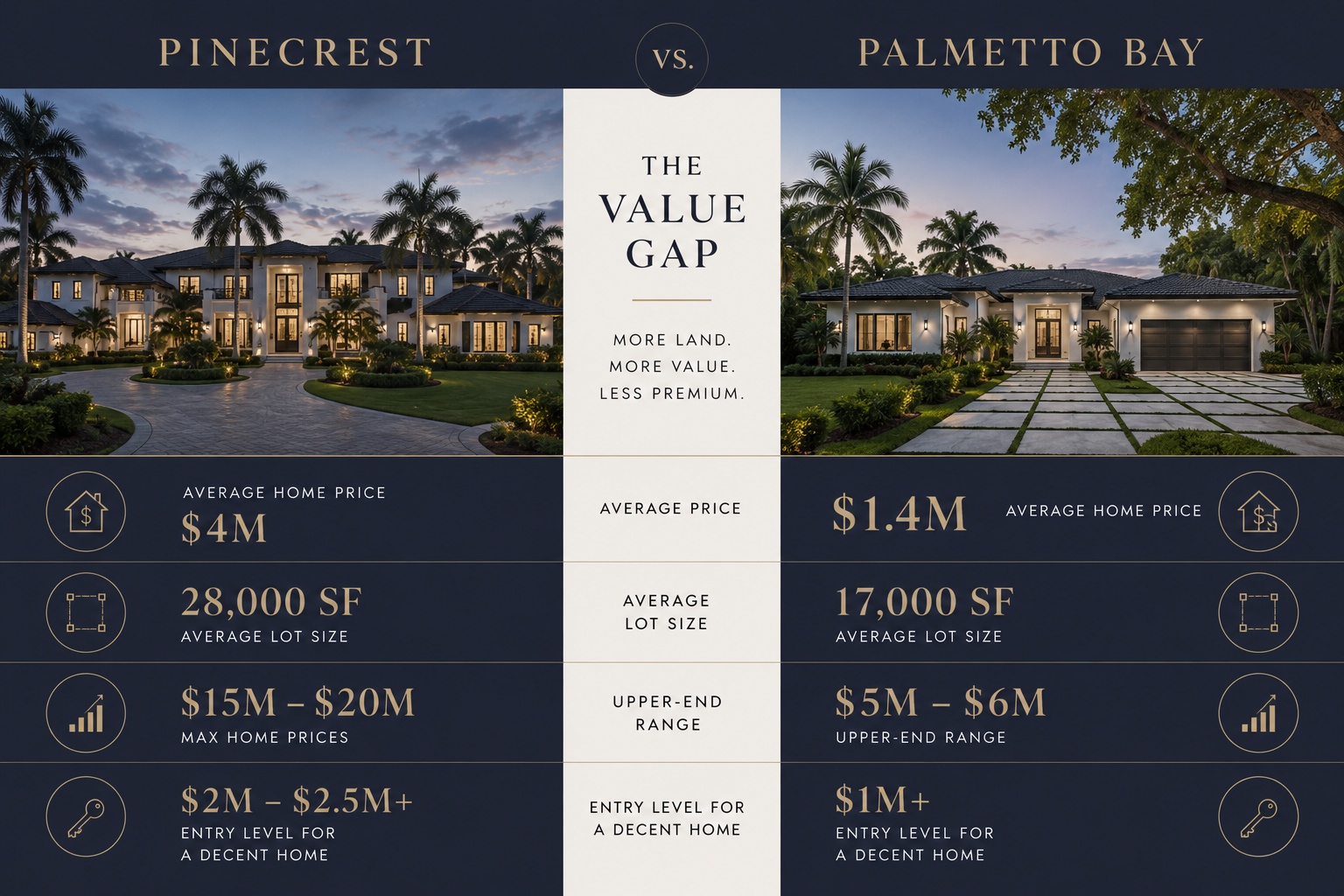
What the Data Shows: The $1M+ and $3M+ Segments
Within the $1M-plus segment, Palmetto Bay shows a markedly different profile than its overall median suggests. Homes in this range typically offer larger lot sizes relative to price, lower renovation exposure in newer builds, and price per square foot that competes favorably against comparable Pinecrest product. The $3M-and-above segment is where the market becomes particularly interesting — and where I spend a significant portion of my time with clients right now.
This is not a large or liquid segment. It is selective, thin, and still developing. Most activity in this tier falls into one of three categories:
- Large lot properties positioned near key corridors including Old Cutler Road and the waterfront
- Fully renovated or newly built modern homes delivering resort-level finishes at below-Pinecrest entry prices
- Teardown acquisitions where land value is driving the pricing rather than the structure itself
Recent transactions in this range have landed in the low-to-mid $3M tier, with price per square foot on new construction typically reaching the mid-$600s to mid-$700s. Each of those sales signals something specific: either a Pinecrest-caliber buyer choosing Palmetto Bay for rebuild value, a design-conscious buyer selecting new construction over legacy estate renovation, or a land-driven acquisition that mirrors the early redevelopment behavior Pinecrest saw in previous cycles.
This is an emerging segment, not a mature one. That distinction is important — because emerging luxury segments are exactly where perception lag creates the clearest opportunity.
Thinking about building or buying in Palmetto Bay?
I work with a limited number of clients at a time and can provide a current land and new construction analysis specific to your criteria.
The Land Is the Real Story
In Pinecrest, land has always been the primary value driver. Buyers have understood for decades that what they are acquiring is not just a home — it is a lot in a supply-constrained market where redevelopment potential compounds over time. That is why Pinecrest estate pricing holds the way it does even when structures are dated. The land carries the value.
Palmetto Bay is beginning to follow the same logic — and it is still early enough that buyers can act before that shift is fully priced in. Lot sizes in Palmetto Bay are competitive with Pinecrest, and in some corridors larger. Yet the land is still trading at a meaningful discount to its northern counterpart. Builders have noticed. In the last several years, acquisition activity in Palmetto Bay has been driven less by the existing structures and more by what can be built on the land once they are removed. That is the same pattern Pinecrest followed in an earlier cycle — and it is the clearest signal of where this market is headed.
For buyers who understand land value, Palmetto Bay right now represents what Pinecrest represented a generation ago: a neighborhood where the fundamentals are strong, the trajectory is clear, and the pricing has not yet caught up.
Luxury Construction Is Reshaping the Market From the Ground Up
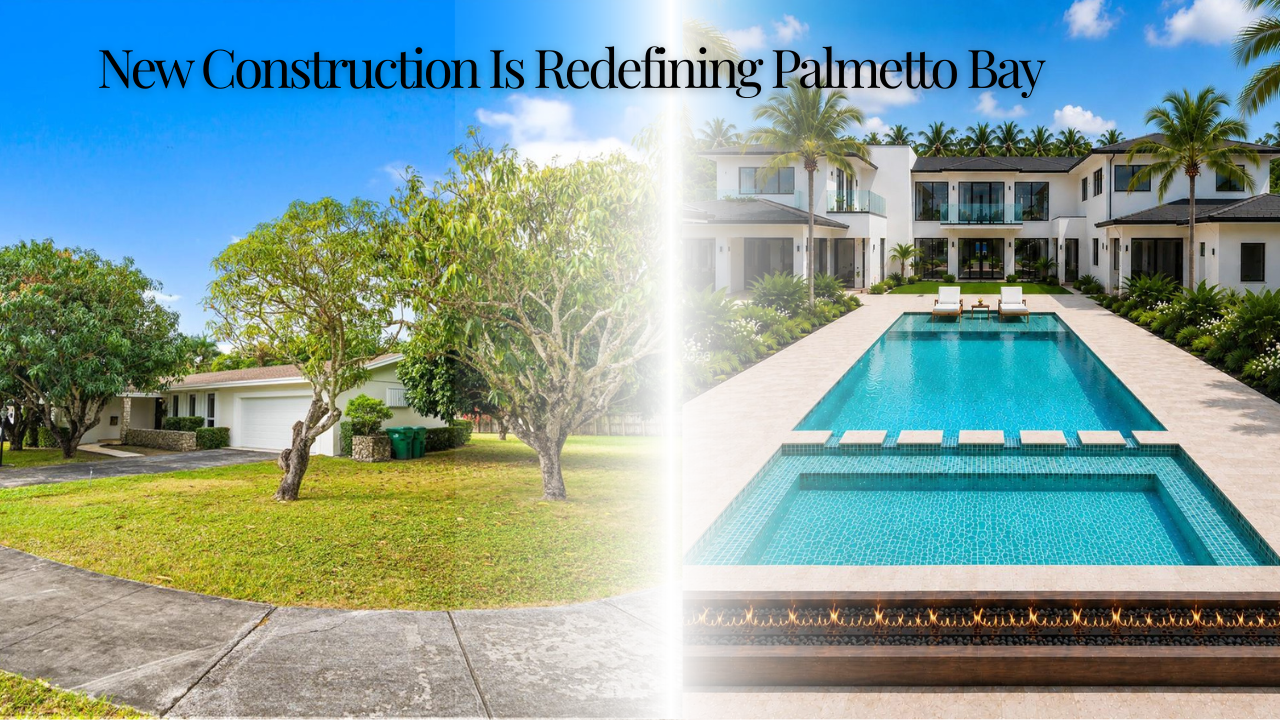
The most significant transformation happening in Palmetto Bay right now is not resale activity. It is replacement housing. Older homes are steadily being torn down and replaced with modern construction that looks fundamentally different from what defined the area twenty years ago. New builds now include open floor plans, high ceilings, expansive glass, seamless indoor-outdoor living, resort-style pools, outdoor kitchens, and dedicated spaces for work and wellness — the full program that today’s high-income buyer expects. These are not basic rebuilds. They are full repositioning projects designed to compete with anything the Pinecrest new construction market offers, at a meaningfully different price point.
This shift matters because it raises the baseline of the entire neighborhood. As more new construction enters circulation, older inventory becomes less competitive unless it is significantly discounted or renovated. Over time, that process lifts the overall quality floor of the market. Palmetto Bay is in the early-to-middle stages of that transition. Pinecrest went through a nearly identical evolution in a prior cycle. Palmetto Bay is simply further behind on that curve — which, depending on your timeline, is either a risk or an advantage.
Why Buyers Are Moving South: The Relocation Dynamic
Luxury buyers today are significantly more analytical than in previous cycles. They are not just comparing neighborhood names — they are comparing total cost of ownership, renovation exposure, usable square footage, and long-term land value trajectory.
As Pinecrest pricing continues to climb — particularly in the estate segment — more buyers are evaluating nearby alternatives that offer the same lifestyle fundamentals at a different cost basis. Palmetto Bay consistently enters that consideration set because it delivers on three specific criteria: more land per dollar, more modern housing stock, and less renovation risk in newer properties.
At the same time, Miami’s continued attraction of high-income migration, cash buyers, and primary-residence relocation demand keeps sustained pressure across all South Florida luxury markets. When that demand meets a visible pricing discrepancy between adjacent neighborhoods, buyers eventually adjust their behavior. That adjustment is already underway. I am seeing it in the buyer consultations I run and in the transactions that are closing.
What Families Are Choosing and Why
Beyond the investment thesis, Palmetto Bay continues to attract families for reasons that have nothing to do with market positioning. The community offers larger residential lots, mature tree-lined streets, strong public school zoning, walkable access to parks and green space, and direct proximity to Biscayne Bay waterfront recreation. It also maintains a lower density feel than many luxury-adjacent markets in Miami-Dade — a factor that carries significant weight for buyers relocating from high-density urban environments.
For families making long-term residential decisions, those qualities tend to outweigh prestige branding. Space, privacy, and livability matter in ways that price-per-square-foot analysis does not fully capture. Palmetto Bay performs consistently well in that category — and that underlying demand base provides durability that pure investment markets often lack.
Where the Palmetto Bay Market Is Headed
Palmetto Bay is not trying to become Pinecrest. That is not the direction of the market, and it is not the opportunity. What is actually unfolding is a gradual redefinition of what luxury means in this corridor. More teardown activity. More modern construction. More buyers treating land scarcity as the primary value driver rather than existing structure. And increasing recognition among serious buyers that the pricing gap between these two markets is not a reflection of quality — it is a reflection of perception that has not yet caught up to reality. Over the next several years, that combination is likely to continue reshaping how the market is positioned and priced. Pinecrest will remain a legacy luxury market. That is not in question. But Palmetto Bay is entering a different phase of its lifecycle — one where product quality, buyer demand, and neighborhood identity are converging in a way that creates real and measurable opportunity for buyers who are paying attention now rather than later.
FAQ
Frequently Asked Questions About the Palmetto Bay Real Estate Market
Is Palmetto Bay considered a luxury market?
Yes — particularly in the $1M-plus segment, where modern construction and large-lot properties increasingly compete with Pinecrest product on quality while offering a meaningfully lower cost basis.
How does Palmetto Bay compare to Pinecrest for families?
Both offer strong school zoning, large residential lots, and access to parks and outdoor recreation. The primary difference is price: Palmetto Bay typically delivers equivalent lifestyle criteria at a lower per-square-foot cost, with newer housing stock in many segments.
What is the price per square foot for new construction in Palmetto Bay?
In the luxury new construction segment, price per square foot currently ranges from the mid-$600s to mid-$700s depending on design level, location, and lot size.
Is now a good time to buy land in Palmetto Bay?
The teardown and land acquisition market is active, and the $3M-plus segment is still in its early development phase. Buyers who move before that segment matures will likely capture the strongest value positioning.
How is Palmetto Bay different from Pinecrest in terms of investment potential?
Pinecrest is an established luxury market with high entry costs and stable long-term value. Palmetto Bay is an emerging luxury market where perception has not yet caught up to product quality — which creates the kind of pricing inefficiency that typically precedes significant appreciation.
What neighborhoods are comparable to Palmetto Bay in Miami?
Buyers comparing Palmetto Bay often also evaluate Pinecrest, Coral Gables, and South Miami — each with different price structures and lifestyle profiles.
WHY WORK WITH DAVID? THINGS YOU SHOULD KNOW...
For all our analytics we are agents driving some very unique and advanced tech. We Provide a granular and custom experience that empower our clients with the insight and tools to understand the most complex behaviors of any local markets.
-
Analytical
Over 100 reports produced to date
-
Knowledgeable
Over 1800 published articles and counting


Related Articles
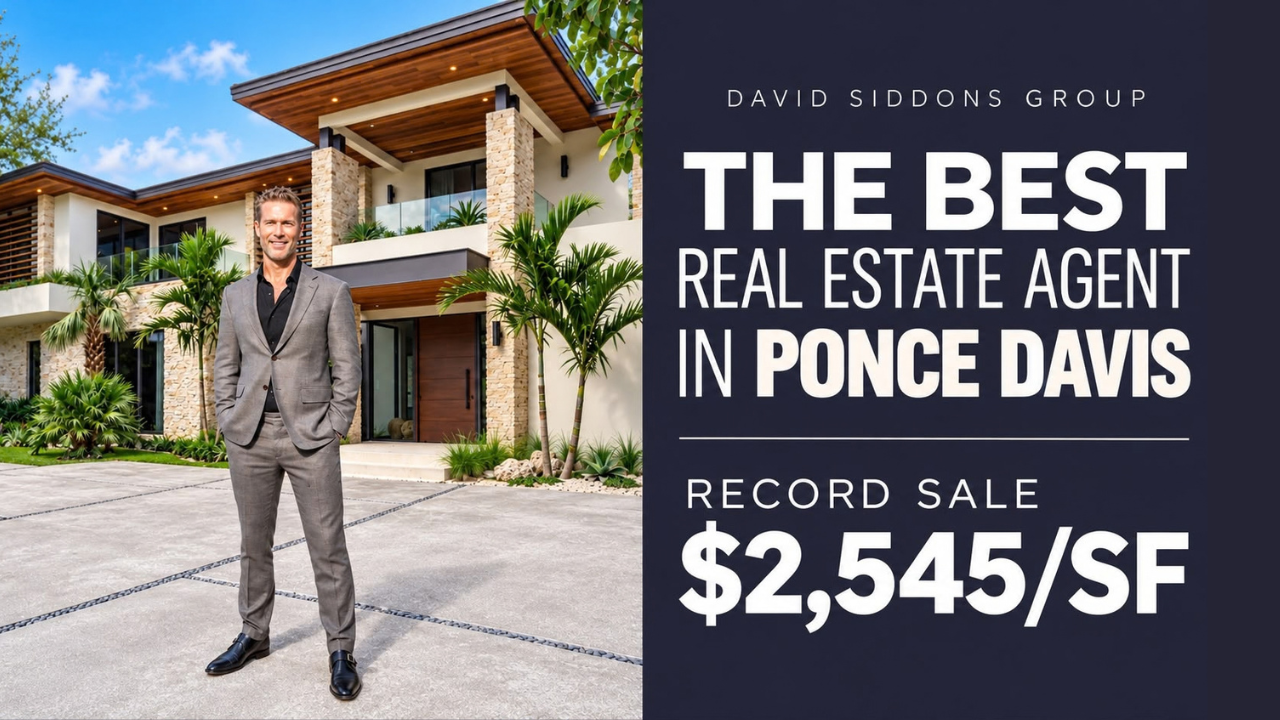
The Best Real Estate Agent in Ponce Davis
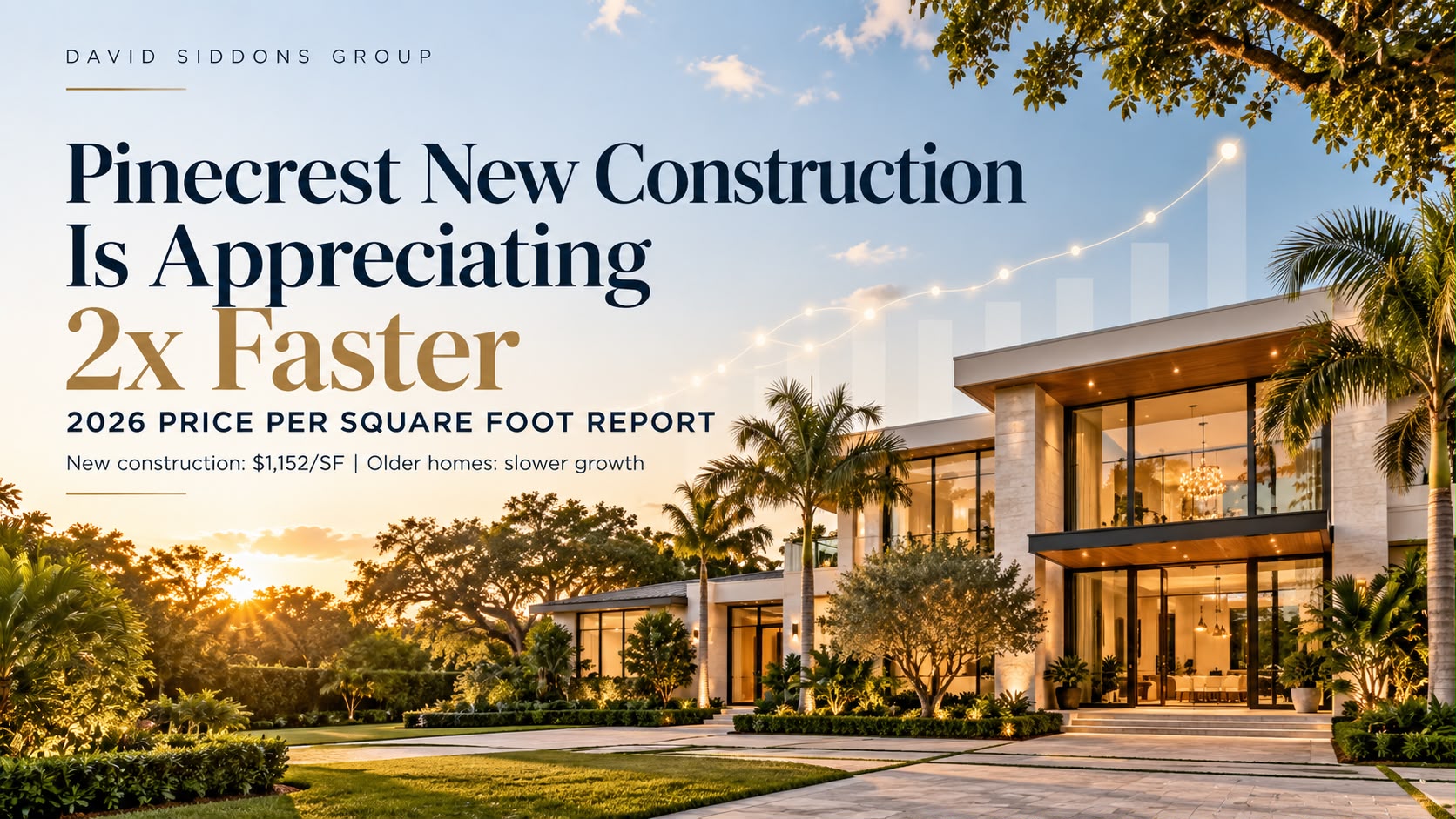
Pinecrest New Construction Is Appreciating 2x Faster Than Older Homes
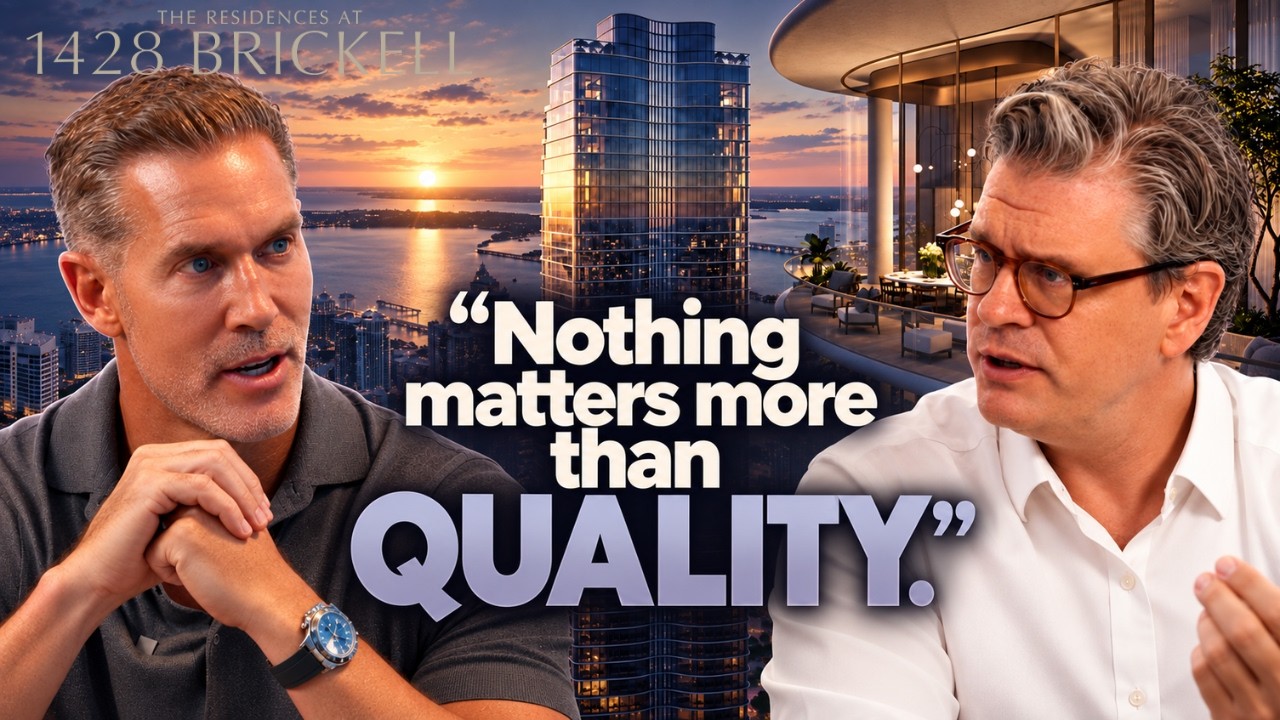
Inside 1428 Brickell: Why Ytech Skipped the Hotel Brand to Build Brickell’s Best Finishes
Brickell’s Office Boom: What It Means for Luxury Housing in Coral Gables and Coconut Grove
Palmetto Bay Land Values Are Rising. Is Your Home Worth More as Land?
Killian Drive: Kendall’s Luxury New Construction Corridor Hits $1,000/SF
Pinecrest’s 4 Best Streets in 2026
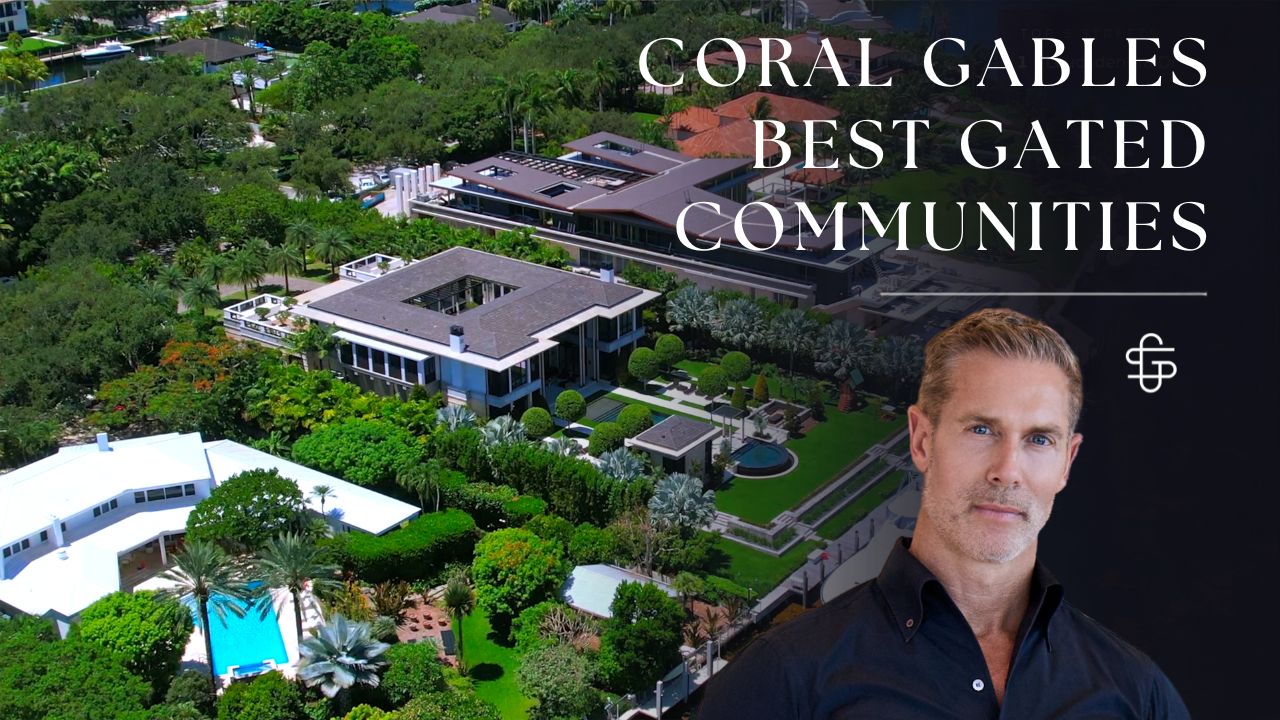
The 5 Best Luxury Streets in Miami’s Gated Communities

The Real Estate Team Behind the Agent: Why Systems Matter More Than Star Power
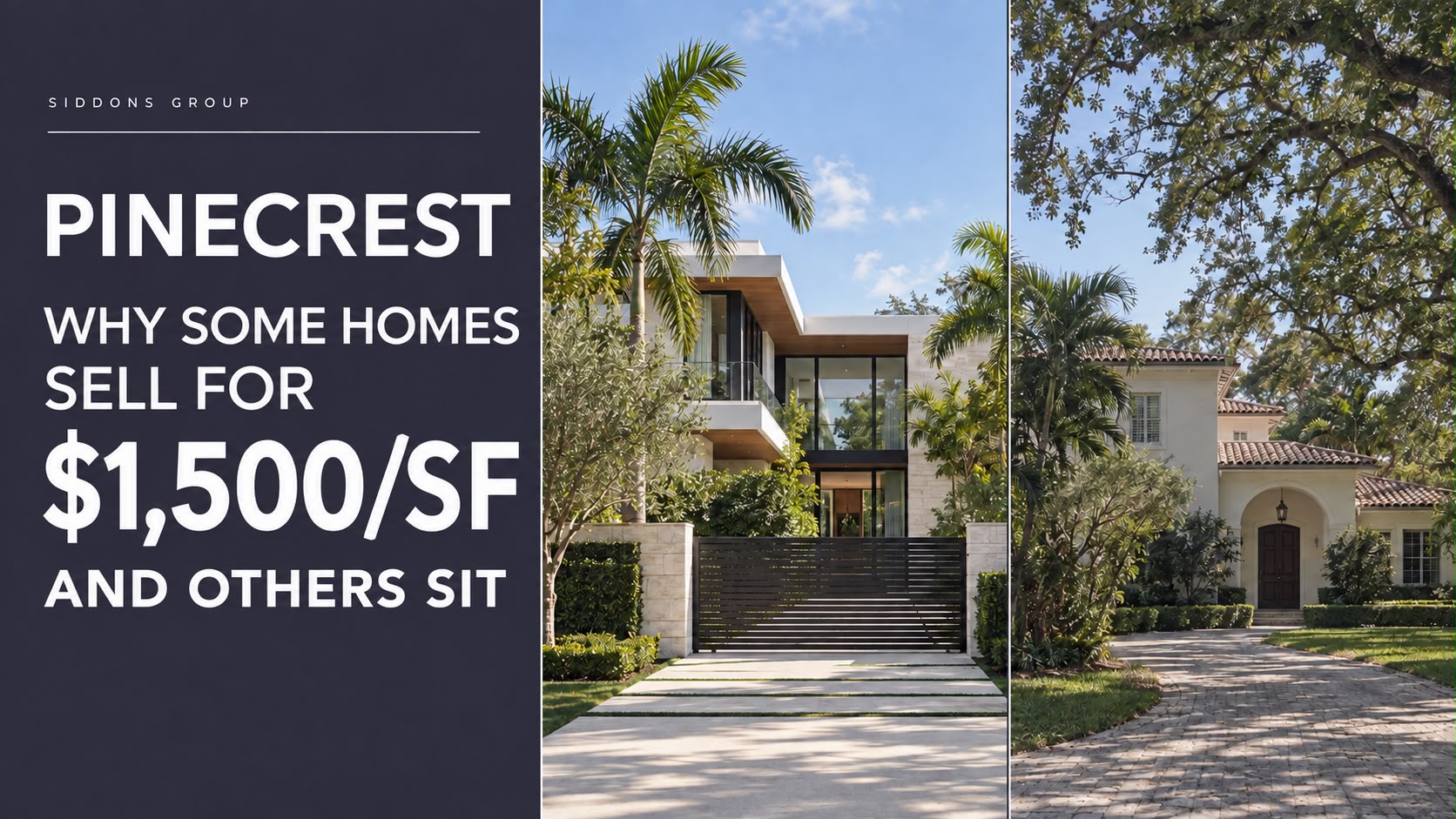
Selling a Home in Pinecrest: Why Some Homes Sell for $1,500/SF and Others Sit

We Built the Largest YouTube Audience of Any Miami Real Estate Team.
Empty Nesters in Miami: What Comes After the Big Family Home?
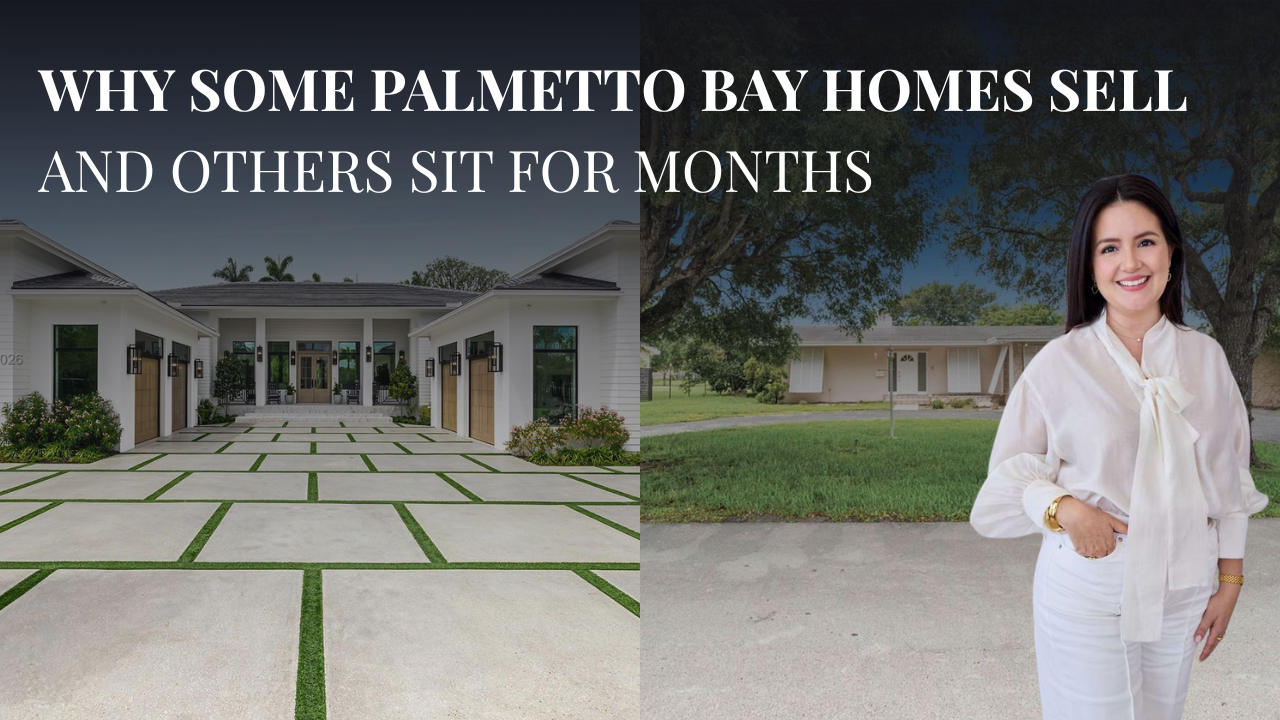
Palmetto Bay Has Almost No Inventory. So Why Are Homes Still Sitting?
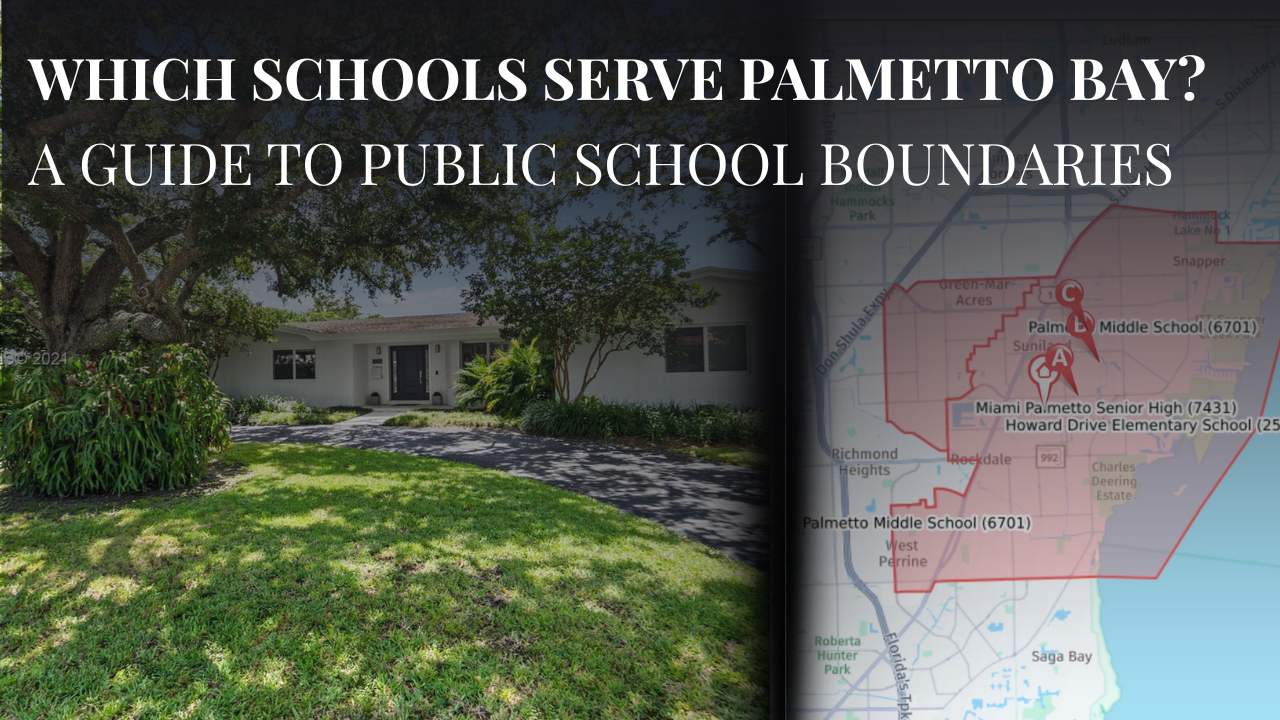
Which Schools Serve Palmetto Bay? A Guide to Public School Boundaries
Please fill in your details and David Siddons will contact you

Search related videos

Are St. Regis Sunny Isles Residences Worth the Brand Premium?
Coral Gables Market Report 2025: What the Headlines Aren’t Telling You!
How David Siddons’ Power Team Drives Miami’s Luxury Market
Mid‑Year 2025 Coconut Grove Report: The Truth About What’s Selling Now
Brickell Mid‑Year Market Report 2025 | Is Brickell’s Luxury Market in Trouble?
Pinecrest Mid-Year Market Report 2025 | What’s Selling, What’s Sitting & Why
Miami Beach Condo Market Mid-Year Report 2025 | What Buyers & Sellers Need to Know
How to Lose $1M in The Miami Condo market | Top Mistakes That Cost Miami Condo Buyers Millions
The Well Project EXPOSED Coconut Grove’s Hottest Units
Miami Real Estate in 2025 Is NOT What You Think 😱 | Midyear Must Knows for Buyers & Sellers!
7 Things You Should Never Say to a Real Estate Agent in Miami!
Landmark Victoria Park Residence in Fort Lauderdale: Inside 420 NE 11th Ave 🌴✨
Luxury Living on 2355 S. Miami Ave | Fully Furnished 4-Bed Home w/ Resort-Style Pool 🏊
Is Mandarin Oriental Residences Miami a Smart Condo Investment? Prices, Floorplans, Views & Finishes


- Get our Newsletter
- Subscribe
- No Thanks
Get the latest news from Miami Real Estate News
Close
Edit Search
Close
2 of 14
Share this property
Recomend this to a friend, just enter their email below.
Close
Your email was sent successfully
Close
 COMPARE WITH CONDOGEEKS