













Fort Lauderdale Luxury Real Estate Update Q1 2026 | A Quiet Market Shift is Underway

Expect Loud Future Impacts to the Fort Lauderdale Luxury Real Estate Market

This Q1 2026 report centers on three essential questions: What is happening, who is driving it, and where is it happening? Fort Lauderdale’s luxury market is no longer fueled by momentum alone. Rising inventory, disciplined buyers, and greater financial scrutiny are reshaping pricing, negotiation leverage, and time on market. In this report, we quantify those shifts—from absorption rates and pricing trends to resale velocity and new construction pipelines—so buyers and sellers can make informed, strategic decisions. We also examine who is driving demand. The dominant buyers continue to relocate from New York City, California, Washington State, and other high-tax, high-density markets. These buyers are analytical, balancing lifestyle with financial prudence while comparing Fort Lauderdale’s waterfront value to Miami, Palm Beach, and other national coastal markets.

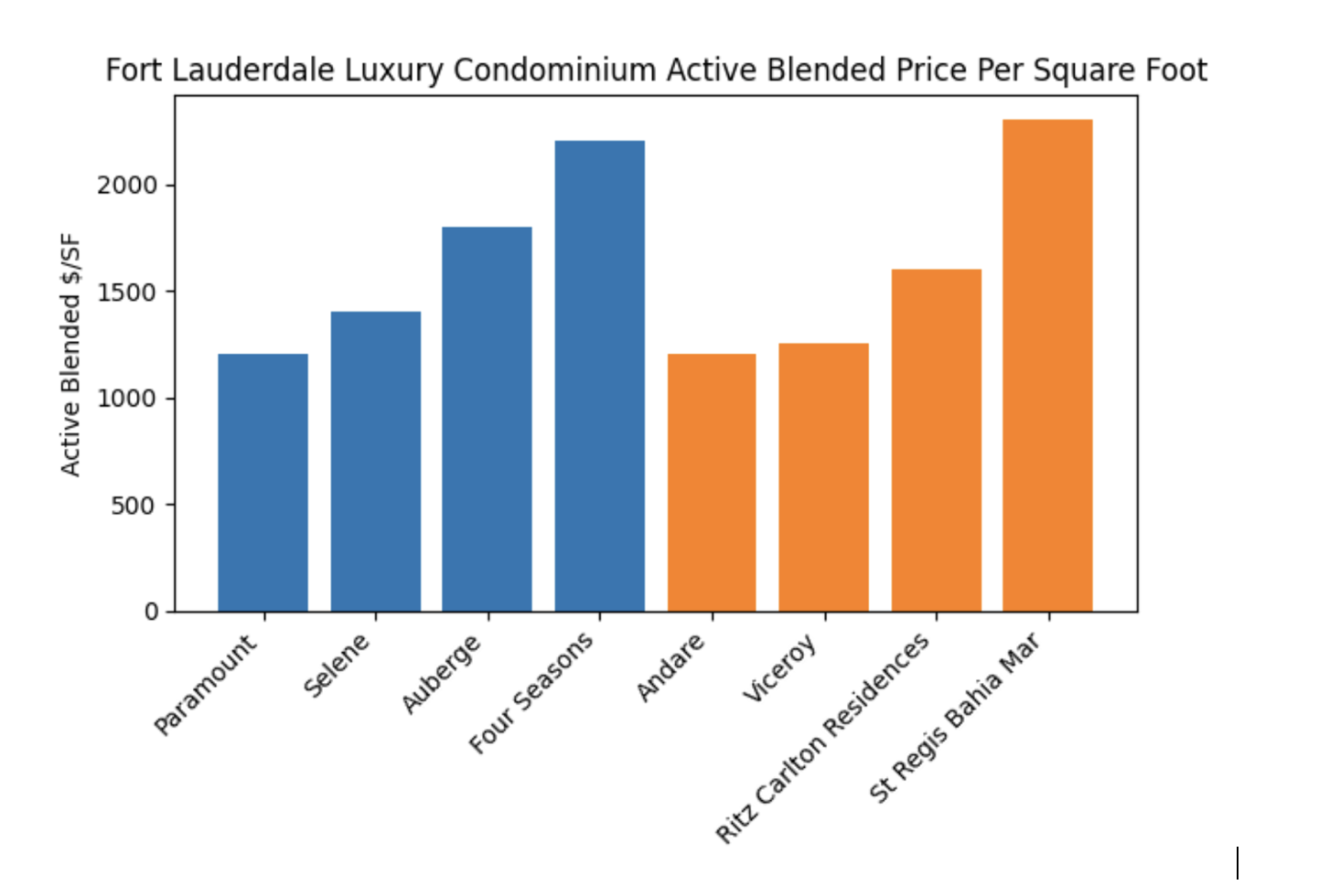
Finally, we identify where the market is performing, and where risks are emerging. The analysis focuses on Fort Lauderdale’s premier enclaves including Las Olas Isles, Harbor Beach, Coral Ridge, and Rio Vista, and the evolving A1A beachfront corridor. We also examine pricing and momentum in leading luxury condominiums such as Four Seasons, Selene, Auberge, Paramount, and new developments including St. Regis and Ritz-Carlton.

Below are 7 key points that you need to aware of in the Fort Lauderdale Market.

  1. Fort Lauderdale’s $5M+ Market Is Slowing
  2. Pricing Reality Is Driving Fort Lauderdale Luxury Market Dynamics
  3. Fort Lauderdale Luxury Market: Where Homes Move, and Where They Stall
  4. Luxury Supply Expansion Is Shaping Buyer Expectations in Fort Lauderdale
  5. Out-of-State Buyers Are Driving Fort Lauderdale Luxury , Listing Reach Matters
  6. Precision Pricing Drives Fort Lauderdale Luxury Market Performance
  7. Fort Lauderdale Market 2026: What Smart Buyers and Sellers Must Do Now
Find the Best Fort Lauderdale Properties

1 Fort Lauderdale’s $5M+ Market Is Slowing: What the Ultra-Luxury Data Is Really Showing in 2026

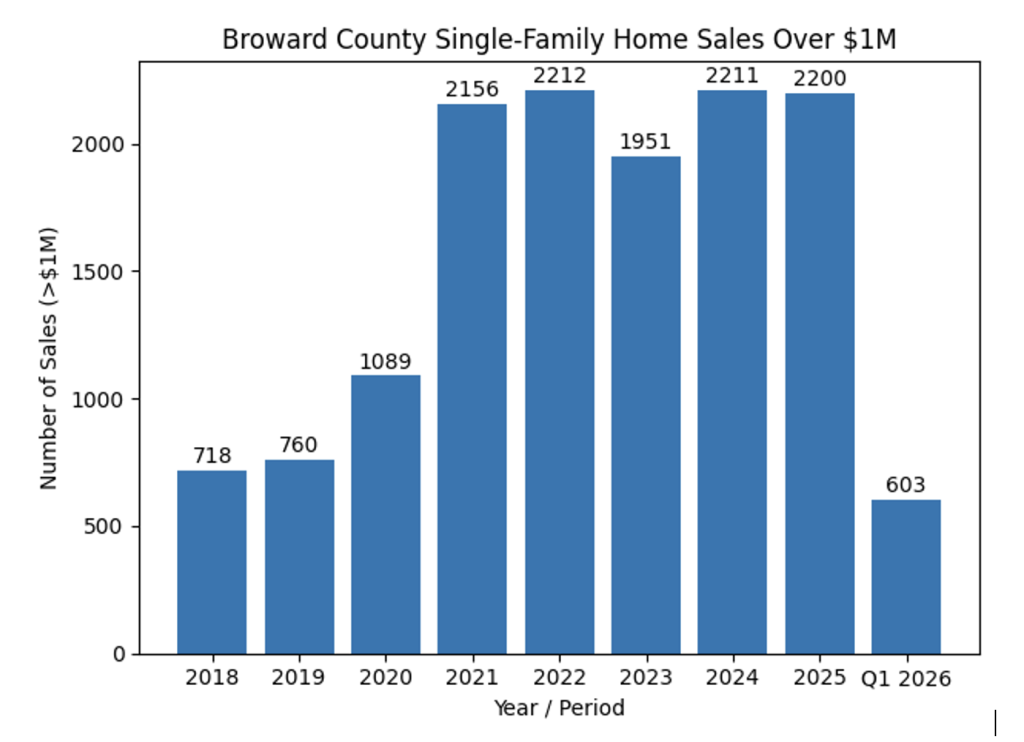
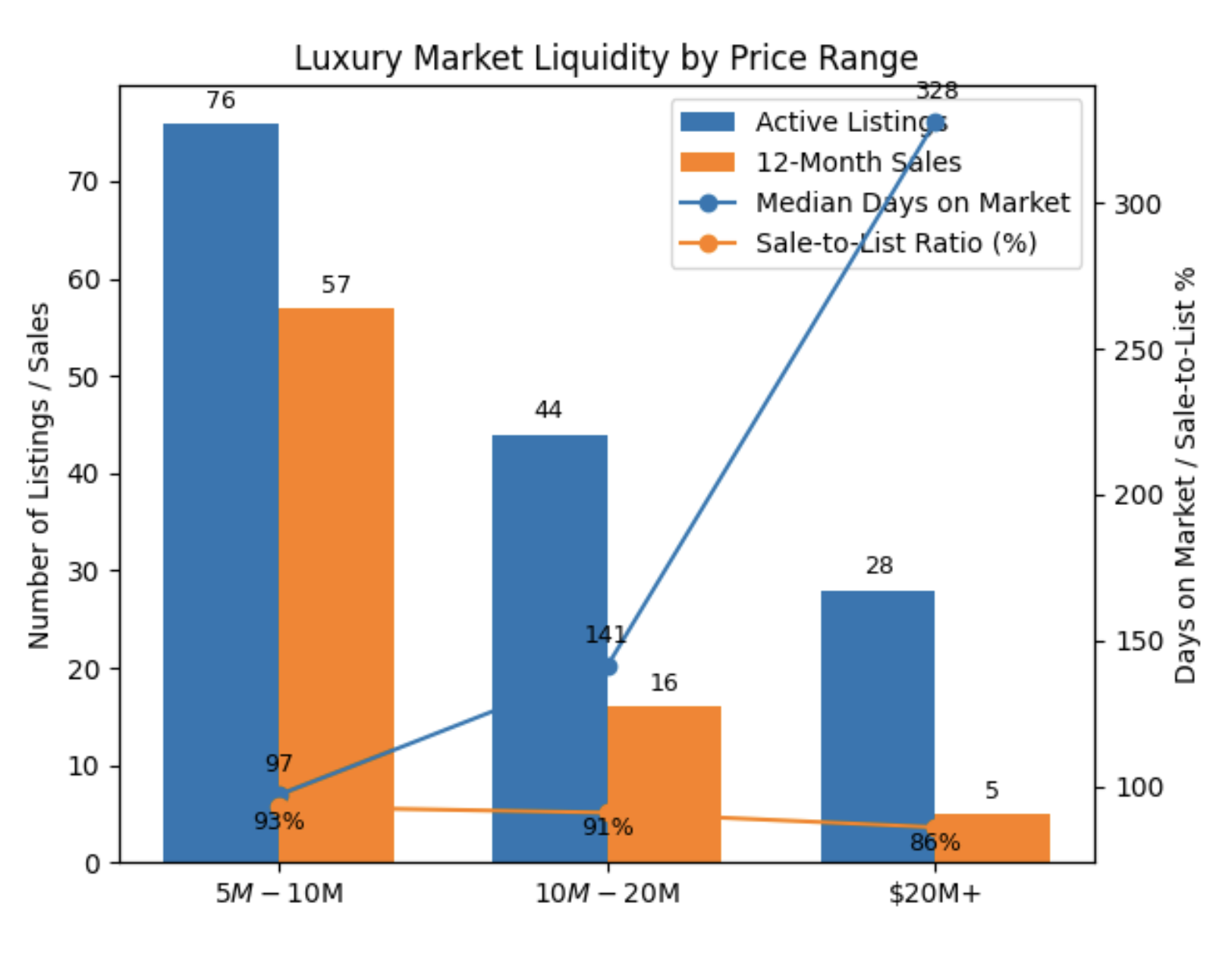
Fort Lauderdale’s luxury market above $5M is clearly entering a more measured phase, with slowing momentum, rising inventory, and a shift in pricing power toward disciplined buyers—especially at the top end. Ultra-luxury single-family homes are taking longer to sell, reflecting extended absorption cycles and increased days on market. Activity in the $5M–$10M range remains, but it is highly selective, while the $10M+ segment shows materially thinner liquidity.

This represents a shift from prior cycles, where trophy waterfront properties often traded quickly based on scarcity alone. Today’s buyers are far more analytical, underwriting each opportunity with a focus on land utility, elevation, dockage, and replacement cost. The urgency seen in markets like Miami and Palm Beach has not translated evenly to Fort Lauderdale’s highest tier.

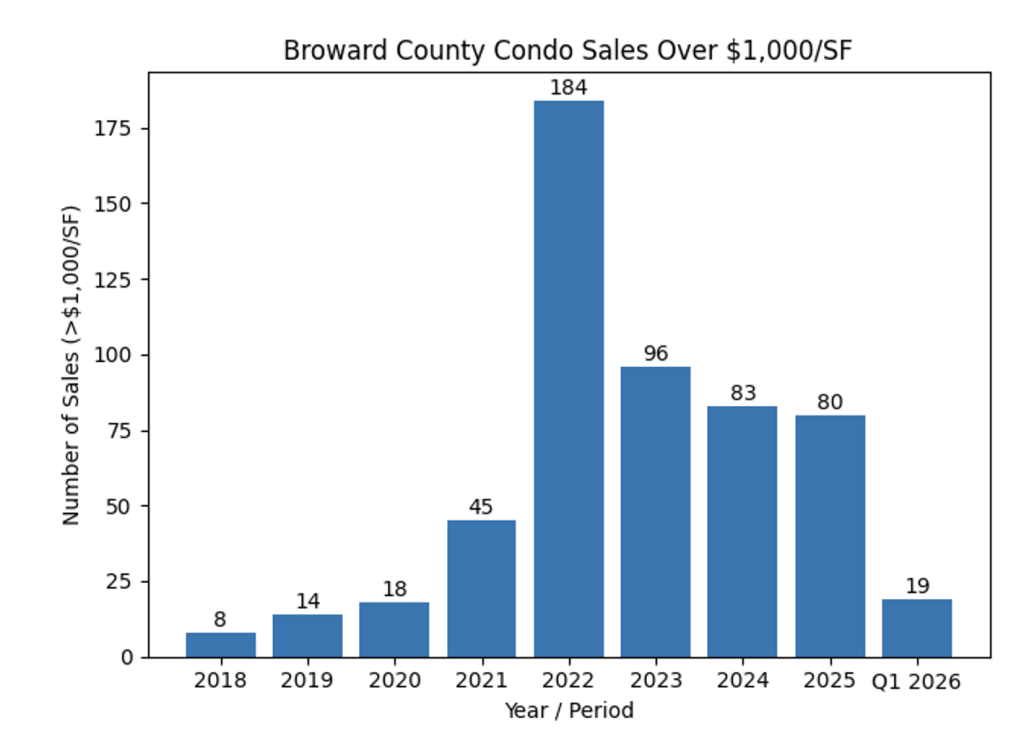
At a glance, the market appears strong, with price per square foot continuing to rise across most segments and exceeding $2,200 at the ultra-luxury level. However, this headline strength masks a more nuanced reality: transaction volume has flattened while inventory continues to build. The result is a disconnect that can mislead sellers into equating rising prices with strong demand. In practice, pricing must align with actual absorption and competitive positioning. For buyers, this environment presents a window of opportunity in which rising values coexist with greater negotiating leverage.

Fort Lauderdale Luxury Real Estate

2. Pricing Reality Is Driving Fort Lauderdale Luxury Market Dynamics

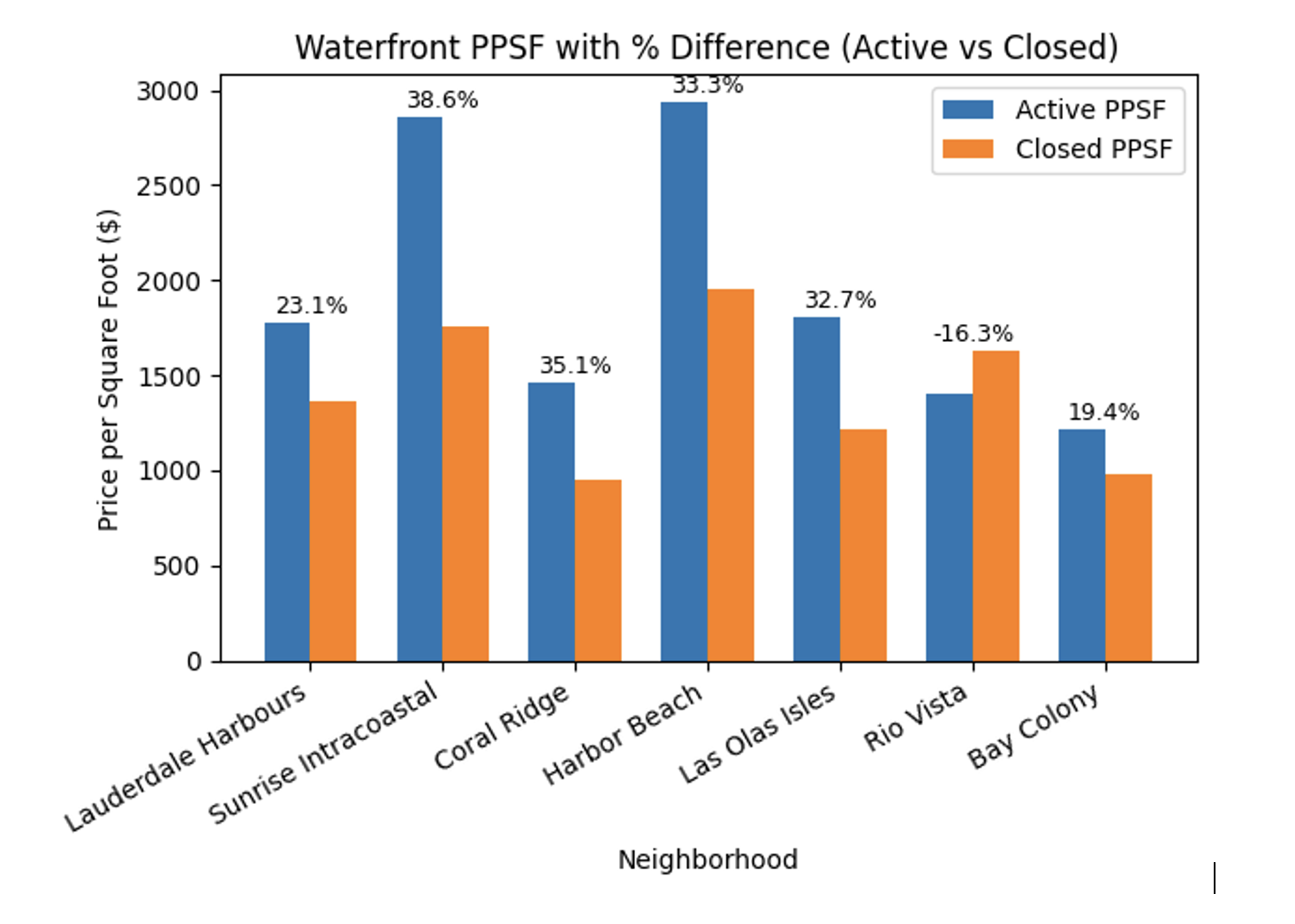
Fort Lauderdale’s luxury market is revealing a widening gap between list prices and actual sales, and the numbers are telling. In Q1 2026, condominiums averaged a 17% list-to-sale differential, while single-family homes saw a striking 29% gap. Nearly 35% of condos and 32% of single-family homes have already reduced their price, signaling that initial expectations are frequently misaligned with market absorption.  This spread is not uniform. Well-positioned properties — renovated, waterfront, or newer construction — still often trade near asking, while older or over-leveraged inventory shows the largest discounts. Longer days on market and incremental reductions reveal where sellers are adjusting to reality. The strongest opportunities emerge where inventory is abundant, and pricing has not yet fully caught up to market dynamics. 

The implications are quantifiable: properties misaligned with recent closed sales experience slower absorption, longer due diligence periods, and conditional offers. Conversely, listings proactively aligned with verified transaction data — factoring in carrying costs, insurance exposure, building reserves, and projected resale liquidity — achieve faster closings and stronger net results.

In today’s Fort Lauderdale luxury cycle, precision pricing is a competitive advantage. Success is determined not by optimism or previous peak pricing, but by aligning listing expectations with evidence, creating early momentum, and understanding the segment-specific dynamics that drive negotiations and sales velocity.

3. Fort Lauderdale Luxury Market: Where Homes Move — and Where They Stall

Market velocity in Fort Lauderdale is highly selective. Single-family homes east of US-1, waterfront properties under ~$3M, and redevelopment opportunities in Coral Ridge and Las Olas Isles continue to transact steadily. 70% of closed single-family sales involved homes built before 2015, underscoring strong demand for land value and renovation potential. The Urban Land Institute ranked Fort Lauderdale #2 in the U.S. for home building; the same study ranked Miami #22. This underscores the quiet future momentum of Fort Lauderdale. The current momentum slows in luxury single-family homes without architectural distinction, premier waterfront placement, or a compelling value proposition. Products with these characteristics are seeing extended days on market. In 2025, Fort Lauderdale lacked the depth of ultra-luxury demand seen in Miami or Palm Beach, resulting in thinner buyer pools at the top end. This is quietly shifting in Q1 of 2026. Fort Lauderdale has already matched the 2025 sales of properties sold above $20M.

In the condominium sector, activity is concentrated in newer or financially stable buildings, with 64% of closed sales in post-2015 construction, reflecting buyer preference for structural integrity, strong reserves, and low assessment risk. Absorption slows sharply above $5M in the resale market as those buyers shift towards the exceptional pre-construction offerings. Developers are actively courting buyers with design pivots specifically designed to meet buyer demands. Examples include combination floor plans, improved views, upgraded amenities, and buyer exclusivity & privacy. Developers are also becoming more transparent, clearly communicating delivery progress and development milestones.

The data highlights a clear pattern: velocity is driven by risk clarity, location quality, and pricing precision. Properties that are overpriced or carry uncertainty stall, while those aligned with market expectations, high-quality location, and structural or financial reliability transact more efficiently.

4. Luxury Supply Expansion Is Shaping Buyer Expectations in Fort Lauderdale

Incoming luxury supply is reshaping both competition and market standards across Fort Lauderdale. Major branded developments — including St. Regis Bahia Mar (239 residences), Ritz-Carlton Residences Fort Lauderdale Beach (83 residences), and Viceroy Residences (251 residences) — are setting new benchmarks for design, amenities, structural resilience, and financial transparency. Resale condominiums are directly affected: older units lacking renovations, strong reserves, or clear capital planning face increasing pressure as buyers compare pricing against new-construction quality and long-term predictability. At the same time, broader-scale projects such as the Galleria redevelopment, expected to add ~2,300 units, signal longer absorption timelines in mid-tier segments and intensify density-driven competition.

In the single-family sector, teardown-and-rebuild activity in Victoria Park, Coral Ridge, Las Olas Isles, and Harbor Beach continues to elevate price benchmarks, further segmenting the market. While general inventory is rising, prime waterfront land is doing the opposite — it’s being absorbed and disappearing. Large peninsula lots and point lots are commanding record-breaking prices, with land trades reaching unprecedented levels. This is the foundation of the next market cycle. As these lots are built out with larger, more expensive homes, they will reset pricing benchmarks across the city. Buyers who understand this should act quickly — this window will not stay open long. Sellers with prime land are in one of the strongest positions in the entire market.

5. Out-of-State Buyers Are Driving Fort Lauderdale Luxury — Listing Reach Matters

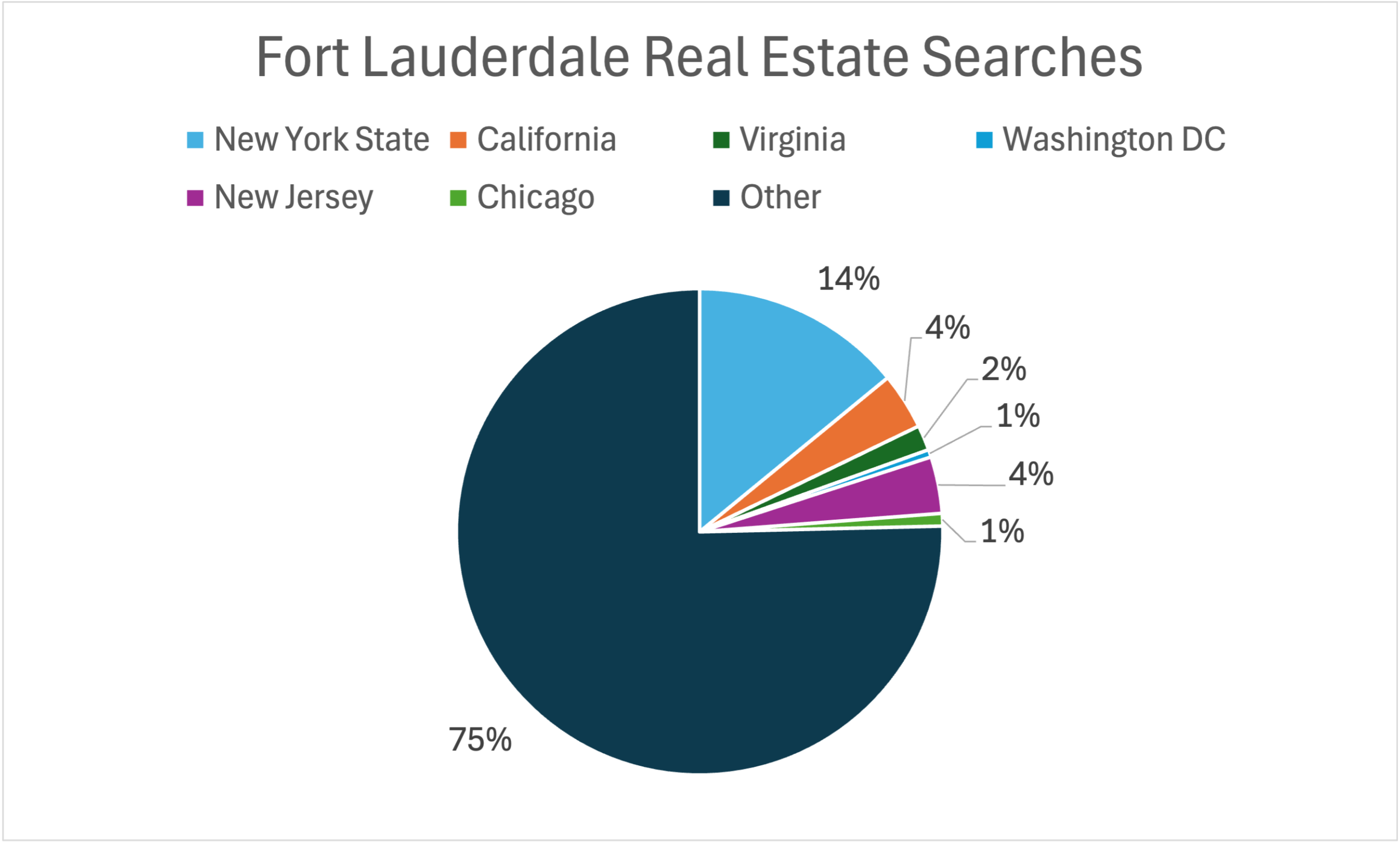
Fort Lauderdale’s $5M+ luxury market is increasingly defined by long-term, lifestyle-driven buyers relocating from outside Florida, primarily New York, New Jersey, California, Washington D.C., Virginia, and Chicago. Google search trends for “luxury homes for sale in Fort Lauderdale” and “luxury condos for sale” show sustained, high-intent activity from these markets, confirming that most buyers are actively evaluating from afar.

These buyers are equity-rich, discerning, and selective. Cash transactions remain a large percentage of high-end closings, absorption is slower at the top end, and appreciation is moderating. Success depends less on momentum and more on product quality, building reserves, long-term durability, and lifestyle alignment.

For sellers, this means that how a listing tells its story is critical. Out-of-town buyers lack local context, so highlighting neighborhood amenities — restaurants, gyms, social hubs, and cultural experiences — is as important as marketing the property itself. Listings that communicate both the home and the lifestyle generate measurable engagement and attract serious buyers.

This is why sellers cannot rely on local reach alone. The David Siddons Group combines a national digital footprint — 73,000+ YouTube subscribers, 70,000 Instagram followers, and a database of nearly 1 million contacts — with luxury market expertise, ensuring listings reach the right buyers. In today’s Fort Lauderdale luxury market, visibility, reach, and targeted storytelling are what convert interest into closed transactions.

6. Precision Pricing Drives Fort Lauderdale Luxury Market Performance

Pricing in Fort Lauderdale’s luxury market now dictates velocity, leverage, and net results. Condominiums aligned with recently sold $/sqft averages sell 53% faster, with an average negotiated discount of 8.75%, showing buyers reward realism while expecting negotiation. Despite an 8% year-over-year increase in condo $/sqft, 64% of closed sales occurred in post-2015 buildings, reflecting scrutiny of building age, reserves, insurance, and future capital needs. Transparency on assessments and structural conditions is now part of the pricing equation.

Single-family homes built before 2015 account for 70% of closed sales, highlighting strong demand for land value, location, and redevelopment potential. Yet the 29% list-to-sale gap underscores the cost of overpricing. Anchoring to outdated peak values leads to longer market exposure, multiple reductions, and weakened leverage.

The market signal is clear: disciplined, data-driven pricing creates early momentum, preserves negotiating power, and maximizes net outcomes. Precision is not defensive — it differentiates listings that stall from those that close efficiently.

Luxury waterfront homes Fort Lauderdale

7. Fort Lauderdale Market 2026: What Smart Buyers and Sellers Must Do Now
The data from the past six months into the first quarter of 2026 makes one thing clear: Fort Lauderdale’s market is not declining — it is recalibrating. Inventory expansion in the condominium sector has shifted leverage toward buyers, while the single-family market remains comparatively stable, with year-over-year sales, though highly segmented by price tier. Ultra-luxury properties above $5 million are experiencing slower absorption, expanding inventory, and overpricing across all segments is resulting in extended market time and reactive price reductions. At the same time, strong cash participation — particularly in transactions above $2 million — continues to provide stability and reduce systemic risk. What separates success from stagnation in this environment is strategy. Buyers must evaluate reserves, insurance exposure, flood considerations, and resale liquidity with discipline. Sellers must price proactively, align with verified comparable sales, and anticipate financial and structural scrutiny. New construction competition, redevelopment activity, and inbound migration from high-tax states continue to shape demand — but outcomes now depend on precision rather than momentum.

Whether you are considering buying, selling, or repositioning an asset, this market rewards informed decisions. Timing, pricing, and product differentiation matter more than ever. If you would like a personalized market assessment tailored to your property, neighborhood, or acquisition goals, I invite you to connect directly. Together with the David Siddons Group, I provide data-driven analysis, strategic pricing guidance, and hyperlocal intelligence designed to protect your position and maximize opportunity. To schedule a private strategy conversation, please book directly through the Calendly link below and select a time that works best for you. Let’s align your next move with today’s evolving market conditions

Conclusions on the 2026 Fort Lauderdale Luxury Real Estate Market

Fort Lauderdale’s luxury real estate market is quietly entering a more disciplined phase. The rapid appreciation of previous years has given way to data-driven decision-making, selective demand, and realistic pricing. Buyers remain active, particularly those relocating from high-tax states—but they are analytical and patient. Sellers who recognize this quiet shift and position their properties strategically will continue to transact successfully. The future sales momentum in Fort Lauderdale is positive. The next three years are expected to bring dynamic change to luxury real estate and lifestyle in Fort Lauderdale.

Key Takeaways

  • The $5M+ market has slowed, with thinner buyer pools and longer absorption cycles.
  • Pricing discipline is critical: large list-to-sale gaps indicate that unrealistic pricing stalls listings.
  • Market velocity is highly selective—waterfront locations, redevelopment lots, and newer condos perform best.
  • New luxury developments are raising buyer expectations, placing pressure on older inventory.
  • Out-of-state buyers dominate demand, making national exposure and digital reach essential.
  • Precision pricing and transparencyaround reserves, insurance, and building condition drive successful transactions.

The market is not declining—it is rebalancing. In this environment, strategy, data, and positioning determine results. Buyers who act with discipline and sellers who align with market realities will capture the strongest opportunities in Fort Lauderdale’s evolving luxury landscape.

Contact the David Siddons Group

FAQ

These are the most commonly Miami Real Estate Related questions

What should relocation buyers know before buying real estate in Miami?

HOME BUYERS

Relocation buyers looking at homes in Miami should understand that choosing the right house is less about the property itself and more about location, schools, and long-term value. Many buyers make the mistake of focusing on price or finishes, while the real driver of value is the neighborhood and micro-location. Older homes often represent better value, but may also be part of a future redevelopment cycle. Newer homes command premiums, but don’t always sell faster if pricing is ahead of the market. Commute time, school access, and community dynamics are critical and often underestimated. The key is to evaluate homes not just as lifestyle purchases, but as long-term assets within a very localized market.

Sources:
https://luxlifemiamiblog.com/relocating-to-miami/
https://luxlifemiamiblog.com/relocating-to-miami-with-a-family/

CONDO BUYERS:
Relocation buyers should understand that Miami is a highly segmented, building-driven market, not a uniform one. Pricing can vary significantly between similar properties depending on building quality, layout, and financial health. Many buyers assume newer construction equals better investment, but that is often not the case. Factors like HOA fees, reserves, and rental policies can materially impact long-term value and liquidity. Negotiation opportunities often exist, especially in slower segments, but require precise market knowledge. The key is to evaluate micro-markets and individual buildings, not just neighborhoods or price per square foot.

Sources:
https://luxlifemiamiblog.com/miami-real-estate-market-report/
https://luxlifemiamiblog.com/new-construction-miami-guide/

What are the best areas for relocating families with children

For families relocating to Miami with young children, the most recommended neighborhoods are Coral Gables, Coconut Grove, and Pinecrest. Coral Gables offers the best balance of top schools, safety, and long-term value. Coconut Grove is ideal for younger families seeking walkability, greenery, and a lifestyle-driven environment. Pinecrest provides larger homes, excellent schools, and better value for space, making it ideal for growing families. The key driver across all three is access to strong schools and primary residential stability. Relocation decisions are less about new construction and more about long-term livability and resale strength.

Sources:
https://luxlifemiamiblog.com/best-neighborhoods-miami/
https://luxlifemiamiblog.com/what-are-the-best-family-neighborhoods-in-miami-in-2023/

Are new construction condos in Miami a good investment?

New construction condos in Miami can be a good investment—but only if you understand that not all buildings perform the same. According to the David Siddons Group, many buyers assume “new = better,” but in reality, performance depends on pricing, layout, building quality, and long-term demand.  Some new developments set future price benchmarks and can drive long-term appreciation, especially in top-tier projects.  However, many are priced aggressively at launch, and buyers relying on marketing instead of data often overpay.
The market is highly segmented, meaning two new buildings next to each other can perform very differently.
The best opportunities typically come from selecting the right building early or negotiating correctly in later phases.
In short: new construction is not automatically a good investment—it becomes one only with building-level analysis and disciplined entry pricing.

Sources:
https://luxlifemiamiblog.com/how-to-buy-a-luxury-condo-in-miami/
https://luxlifemiamiblog.com/category/independent-new-construction-condo-reviews/
https://luxlifemiamiblog.com/beyond-clickbait-real-insights-into-miamis-luxury-condo-market/

Why is buying a Miami condo riskier than buyers think?

Buying a Miami condo is often riskier than buyers expect because the true risks are at the building level—not visible in the listing price. Many buyers focus on finishes and views, while overlooking HOA reserves, insurance exposure, and potential special assessments. In reality, two identical units in different buildings can perform completely differently over time. Rising HOA fees and stricter regulations are also increasing the true cost of ownership, especially in older buildings. Liquidity can be affected by factors like financial health, rental policies, and ongoing repairs. The key risk is not the condo itself—but buying into the wrong building without proper due diligence.

Sources:
https://luxlifemiamiblog.com/how-to-buy-a-luxury-condo-in-miami/
https://luxlifemiamiblog.com/miami-condo-market-risks/

What are Miami's Safest Areas?

The safest areas in Miami are typically Coral Gables, Coconut Grove, Pinecrest, Key Biscayne, and Ponce-Davis. These neighborhoods stand out due to low density, strong community presence, and high concentration of full-time residents, which directly impacts safety. In Miami, safety is highly localized, meaning micro-location and specific streets matter more than zip codes. Areas with top schools and family-driven demand tend to maintain stronger safety profiles over time. Gated communities and low-traffic residential streets further enhance security. Ultimately, the safest areas are defined less by price and more by stability, schools, and residential character.

Which Miami Areas Still offer Great Value (Budget Friendly alternatives to Coral Gables and Pinecrest)

If you’re looking for better value than Coral Gables or Pinecrest, the answer (in true Siddons style) is not “go cheaper”—it’s go one layer outside the obvious markets.

The strongest value plays are:

  • Schenley Park → closest substitute to Coral Gables at ~20% discount while maintaining similar character and location
  • Biltmore Heights → almost identical feel to the Gables but ~25–30% cheaper on a $/SF basis
  • Glenvar Heights → central location with larger lots and ~25% pricing advantage vs South Miami/Gables
  • Baptist / Galloway (Kendall) → Pinecrest-style living (space, schools, land) at up to ~30% lower pricing

The pattern is consistent:
👉 Buyers are shifting west and slightly off-market to gain land, scale, and pricing efficiency. You don’t find value by going to a “cheaper neighborhood”—you find it by identifying adjacent micro-markets that offer the same lifestyle fundamentals without the brand premium.

Sources:
https://luxlifemiamiblog.com/best-value-neighborhoods-miami/
https://luxlifemiamiblog.com/category/miami-neighborhoods/

Is NOW a good time to buy in Miami?

In 2026, the answer is yes—but only if you understand what part of the market you’re buying into. Miami is no longer one market; it has split into multiple segments behaving very differently. From a David Siddons perspective, this is a selective buyer’s window, not a broad “good time” headline. Some segments—especially condos with rising inventory—are offering negotiation opportunities and better entry points. 

At the same time, prime single-family homes and top-tier new construction continue to hold value or even trade near record levels.

Buyers who rely on timing the market often miss the point—success in Miami today comes from selecting the right micro-market and asset, not waiting for a crash.  If you are disciplined on pricing, building quality, and location, this market offers opportunity. If you are not, it is easy to overpay. 2026 is a good time to buy in Miami for informed buyers—because the market is fragmented, negotiation exists, and strategy matters more than ever.

Sources:
https://luxlifemiamiblog.com/miami-real-estate-market-report-q1-2026/
https://luxlifemiamiblog.com/market-reports/

Are Miami real estate prices going down in 2026?

No—but that’s the wrong way to look at it. Miami is not one market anymore, so prices are not moving in one direction. In 2026, the market is split into two: ultra-luxury, scarcity-driven areas (like waterfront and top-tier neighborhoods) are still holding or even rising, while mid-tier condos and oversupplied segments are flat or correcting. What we’re seeing is price divergence, not a crash—some properties are gaining value while others are quietly adjusting downward. Rising inventory and more selective buyers are putting pressure on pricing in certain segments, especially older condos or buildings with weaker fundamentals.
At the same time, global wealth and cash buyers continue to support pricing at the top end of the market. So the real answer: prices aren’t broadly dropping—they’re being repriced based on quality, location, and supply.

Miami Real Estate Market Report Q1 2026

Should I buy a house or a condo when relocating to Miami?

The decision comes down to lifestyle first, investment second—and most relocation buyers get that backwards. If you want space, privacy, schools, and long-term family living, a single-family home in areas like Coral Gables or Coconut Grove is typically the stronger choice. If you prioritize walkability, low maintenance, and proximity to business districts, a condo in Brickell or waterfront markets makes more sense.
From an investment perspective, homes tend to be more stable, while condos are more building-dependent and cyclical. Most relocation clients underestimate how much building quality, HOA structure, and future costs impact condo performance. The right answer isn’t “house vs condo”—it’s which asset fits your lifestyle AND holds value within its micro-market.


 How do I choose the right Miami neighborhood for my lifestyle?

Choosing the right neighborhood in Miami comes down to how you live day-to-day, not just where prices are. Relocation buyers should first define priorities: walkability, schools, commute, or waterfront lifestyle.
For example, Coconut Grove fits walkable, family-oriented living, while Brickell suits urban, high-rise lifestyles. Buyers often make the mistake of focusing on price per square foot instead of lifestyle fit and long-term livability. Each neighborhood operates like its own micro-market, so the “best” area depends on your daily routine and long-term goals. The key is to align lifestyle, location, and market fundamentals, not just aesthetics or newness.


https://luxlifemiamiblog.com/best-neighborhoods-miami/

Why are Miami condo prices so different between buildings?

Miami condo pricing varies widely because value is determined at the building level, not just by location. Two buildings next to each other can have major differences in financial health, reserves, HOA fees, and management quality. Buyers also pay premiums for better layouts, views, amenities, and newer construction—but not all “new” buildings perform equally. Factors like rental policies, upcoming assessments, and building reputation can significantly impact resale value. This is why price per square foot alone is misleading in Miami’s condo market. The real driver of value is how that specific building competes within its micro-market over time.

Sources:
https://luxlifemiamiblog.com/how-to-buy-a-luxury-condo-in-miami/
https://luxlifemiamiblog.com/category/independent-new-construction-condo-reviews/

WHY WORK WITH DAVID? THINGS YOU SHOULD KNOW...

For all our analytics we are agents driving some very unique and advanced tech. We Provide a granular and custom experience that empower our clients with the insight and tools to understand the most complex behaviors of any local markets.

  • Analytical

    Over 100 reports produced to date

  • Knowledgeable

    Over 1800 published articles and counting

  • Experienced

    Over $2 billion in real estate sales

    Reviews
David Siddons
blog

Related Articles