














The Best New Construction Condos in South Florida

Miami Vs West Palm Beach Vs Fort Lauderdale

If you’ve ever wondered what the best condo in South Florida actually is, this conversation brings clarity. In this blog, the David Siddons Group sits down with our expert territory managers to break down the top condo in each county, Miami-Dade, Broward, and Palm Beach—based on real market knowledge, not marketing hype.

The Track Record Behind Hospitality-Branded Condos

Where Smart Money Is Buying: South Florida’s Best New Construction Luxury Condos

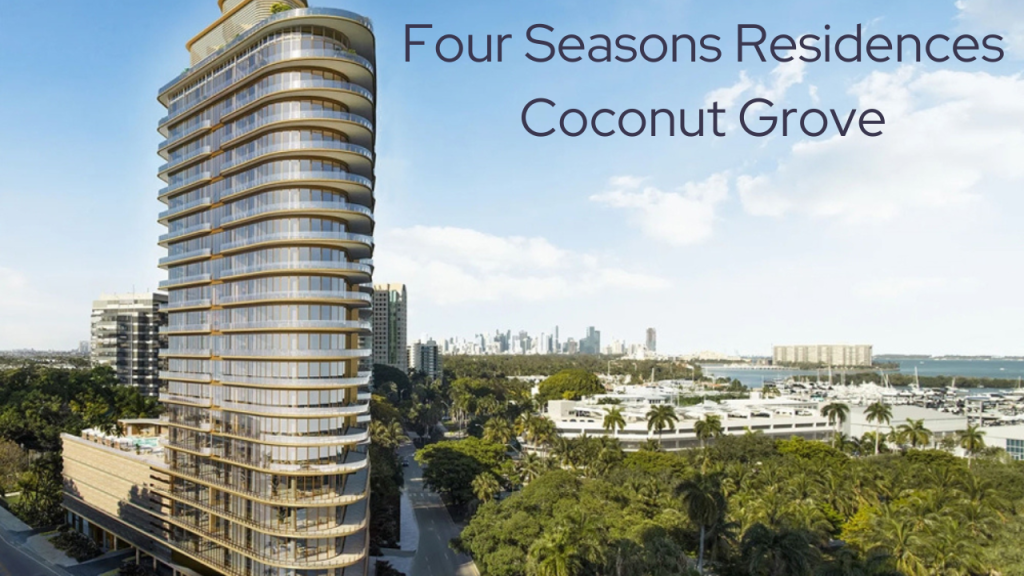
1. Miami-Dade: Four Seasons Residences, Coconut Grove

The Four Seasons Residences in Coconut Grove sits at the rare intersection of scarcity, lifestyle, and long-term value. Coconut Grove has been the strongest-appreciating condo market in Miami over the past five years, driven by structural supply constraints—less than 10% of the neighborhood is zoned for multifamily, and there are no remaining vacant waterfront parcels. This makes the Four Seasons the only new waterfront development in the Grove, paired with one of the most globally respected luxury hospitality brands.

What truly sets this project apart is its livability. Coconut Grove offers a walkable, village-style environment with mature tree canopies, parks, marinas, and cafés, all within minutes of top private schools and Miami’s urban core. The lifestyle feels established and organic rather than manufactured, making it particularly compelling for buyers relocating from New York or California who want neighborhood, culture, and proximity—without sacrificing privacy or value preservation. This is a true primary-residence market, reinforced by limited density and strict Four Seasons brand standards. The Four Seasons sells between $3,000 and $3,500 per SF and has no Hotel Element, although it bbenefits from a hospitality infrastructure

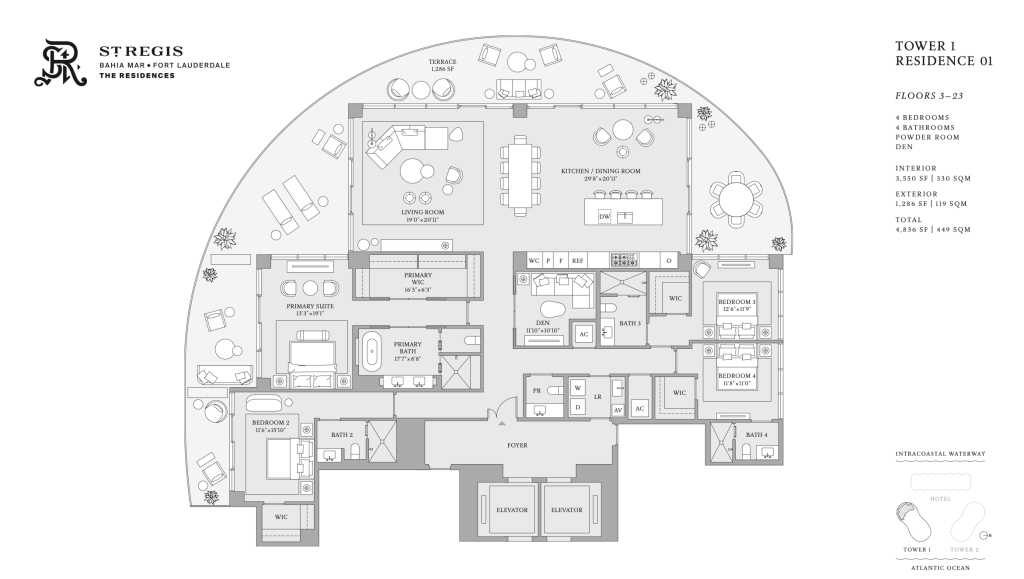
2. Broward: St. Regis Bahia Mar Residences, Fort Lauderdale

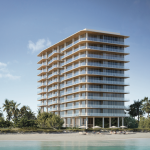
The St. Regis Residences at Bahia Mar represents a defining moment for Fort Lauderdale’s luxury market. Positioned on a 40-acre waterfront peninsula surrounded by the Atlantic Ocean, Intracoastal Waterway, and city skyline, this is one of the most exceptional sites in South Florida, land that took decades to assemble and cannot be replicated. This condo does offer a hotel component.

Integrated into the globally recognized Bahia Mar marina, the project speaks directly to an international yachting audience while elevating Fort Lauderdale into a new tier of branded residential luxury. The St. Regis brings resort-level service, dining, wellness, and leisure into a fully walkable, water-centric environment where owners can move seamlessly between privacy and activity. Located minutes from Las Olas and within easy reach of Miami and Palm Beach, this is not simply a condominium—it is a catalyst redefining the city’s ceiling and establishing a legacy location with global relevance.

3 Palm Beach County: Ritz-Carlton Residences, West Palm Beach

The Ritz-Carlton Residences, West Palm Beach captures the early stages of a market transformation, offering buyers a rare opportunity to secure long-term positioning before the area fully matures. This boutique, 138-residence building delivers an intimate, service-driven experience with every residence enjoying unobstructed water views toward Palm Beach Island, one of the most prestigious addresses in the world.

Located just outside the downtown core, the property balances privacy with accessibility. Residents benefit from seamless transportation, discreet service, and proximity to Palm Beach, financial centers, and cultural institutions, without the congestion of denser urban nodes. The lifestyle is defined by ease, discretion, and consistency, refined luxury designed for buyers who value time, livability, and long-term upside over spectacle. For those focused on value preservation and future growth, this is a rare chance to buy into West Palm Beach at a pivotal moment, without compromising on quality or brand execution. The Ritz sells between $2,000 and $2,200 per SF and has no hotel element, although it does have the signature hotel services and standards.

The Pattern Behind South Florida’s Best Condo Buildings

At a certain level, the best buildings in South Florida follow a clear formula, and it isn’t accidental. They combine true residential living at scale with a globally proven luxury hospitality brand. The common thread across the Four Seasons, St. Regis, and Ritz-Carlton is not just name recognition, but operational excellence, lifestyle execution, and irreplaceable waterfront positioning. These buildings offer more than ocean views, they deliver layered water experiences, marinas, walkability, parks, and a sense of place that supports primary living, not just second homes. When you can step outside your building, walk to restaurants, watch boats return to the marina at night, and live within a fully serviced ecosystem, luxury stops being decorative and becomes functional. That combination, brand, water, walkability, and livability, is what consistently separates the best buildings from the rest.

The Track Record Behind Hospitality-Branded Condos

Understanding the Buyer Migration

Across South Florida, buyer demand is no longer driven by geography, it’s driven by lifestyle fit. While each market attracts a distinct audience, the common thread is clear: experienced buyers seeking waterfront living, brand-backed luxury, and proximity to both calm and culture.  Fort Lauderdale is emerging as a magnet for buyers who value space, boating infrastructure, and a refined pace. They are often those transitioning from colder Midwest and Northeast markets or seeking a smarter value alternative to Miami. Coconut Grove attracts buyers who want a true primary-residence feel, walkability, and an organic, European-style neighborhood that feels lived-in rather than transient. Palm Beach and West Palm Beach are benefiting directly from financial and institutional migration, drawing buyers who see long-term growth and want to establish a foothold early.

What’s changed is scale and sophistication. These are not impulse second-home buyers. They are global, informed, and intentional—many already familiar with luxury hospitality brands and choosing residences that align with how they live today and where they believe South Florida is heading tomorrow.

WHERE ARE THE LUXURY BUYERS COMING FROM?
Four Seasons Coconut Grove St Regis Bahia Mar Fort Lauderdale Luxury Buyers Ritz-Carlton West Palm Beach West Palm Beach Area
New York, California, Europe, Latin America, South Florida end-users Midwest (Chicago), Northeast (New York), California, Brazil, Mexico, International yacht-centric buyers, and South Florida locals New York & Northeast, Washington DC, Midwest, Europe, Wall Street / finance relocations, South Florida move-ups

How Early Entry Has Driven South Florida’s Strongest Price Growth

What sophisticated buyers understand is that real value in South Florida has been created by committing early—before neighborhoods fully mature and before branded supply becomes scarce. Coconut Grove’s rise from roughly $1,000 per square foot just four years ago to nearly $3,800 at the top end is a clear example of what happens when limited land, walkability, and lifestyle converge. Fort Lauderdale is now following a similar trajectory, with newer luxury resales already trading in the mid–$2,000s per square foot and future branded deliveries positioned to reset pricing higher. West Palm Beach may be the most dramatic case, having moved from a historically overlooked market to one commanding $3,500–$4,000 per square foot as institutional capital, financial firms, and global buyers reshape the city. In every case, the pattern is the same: early entry into the right neighborhood, paired with the right product, has consistently delivered outsized appreciation.

New Construction Condos in Miami vs New construction condos in Fort Lauderdale and West Palm Beach

The Anatomy of a Winning Condo Floor Plan

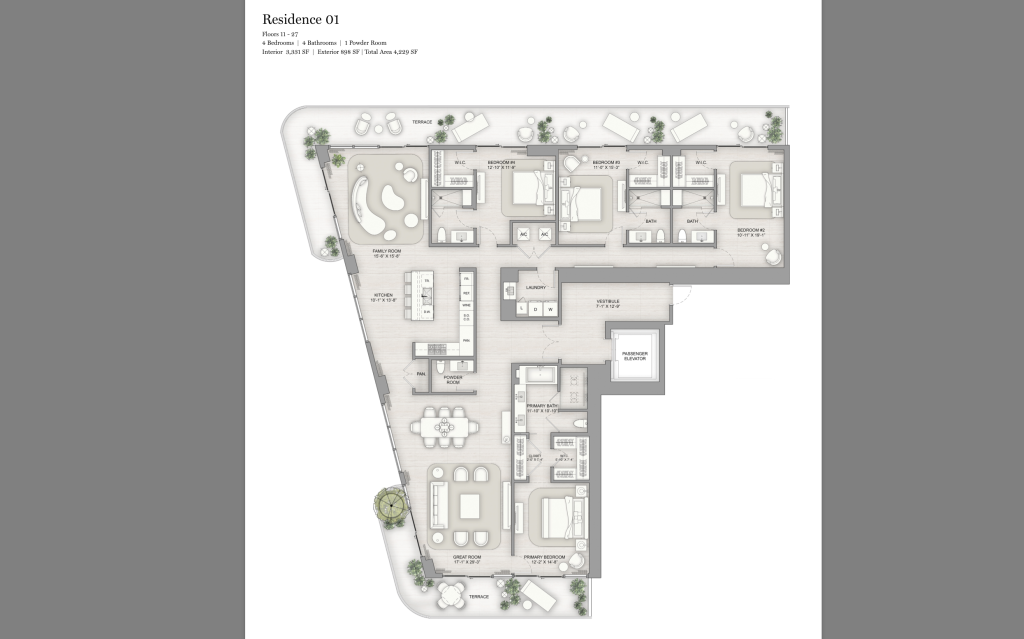
In ultra-luxury condos, not all lines are created equal, and the difference shows up in both daily living and long-term value. The strongest lines consistently combine wide, unobstructed water views, corner or end-unit positioning, and true east-to-southeast exposure that delivers soft morning light, protected afternoons, and better wind conditions year-round. What matters most is breadth, not just direction: wide frontage, expansive sliding-door openings, deep terraces, and a true indoor–outdoor flow. In land-constrained neighborhoods like Coconut Grove, where spacing between buildings is limited, lines with distance from neighboring towers and open peripheral views become exponentially more valuable. Across Four Seasons, St. Regis, and Ritz-Carlton, the pattern repeats: end units, wraparound terraces, and southeast-facing lines command the strongest demand because they maximize light, privacy, airflow, and water visibility. These are the homes buyers live in longer, resell faster, and pay premiums for—because you can’t retrofit view, exposure, or scale once the building is up.

Best Lines at the Top New Construction Projects

  • Four Seasons Coconut Grove: 01 Line, followed by the 04 line
  • St Regis Bahia Mar Fort Lauderdale: 01 Line, followed by the 04 line.
  • Ritz Carlton West Palm Beach: 01  Line, followed by the 04 line

New Construction Condos in South Florida: Where is Demand  Quietly Concentrating Right Now?

Across every market we cover, the pattern is unmistakable: generic, smaller, outdated condos are being left behind, while large, primary-residence–quality homes in best-in-class buildings continue to outperform. Buyers are prioritizing space, storage, construction quality, ceiling height, natural light, and thoughtful layouts over hype and branding alone. Hospitality-backed developments stand out because they protect their standards, select the best sites, and demand the highest execution from developers. At the same time, much of the real activity is happening in what we call “shadow inventory”—pre-construction and newly delivered luxury projects that are quietly selling through, even as parts of the resale market soften. The takeaway is clear: performance today is driven by product quality, not price point or marketing noise.

Final Words on the Best New Construction Condos in South Florida

The condo market isn’t one story—it’s many, and success depends on understanding which buildings deserve confidence and which do not. Our role isn’t to sell—it’s to advise, challenge assumptions, and help buyers avoid costly mistakes. If you’re navigating South Florida real estate and want clarity instead of confusion, this is exactly the conversation you should be having.

Connect with The David Siddons Group

If you want to learn more about the differences between the distinct South Florida market or about the best new construction condos in South Florida, please give me a call at 305.508.0899 or schedule a meeting below.

FAQ

These are the most commonly Miami Real Estate Related questions

What should relocation buyers know before buying real estate in Miami?

HOME BUYERS

Relocation buyers looking at homes in Miami should understand that choosing the right house is less about the property itself and more about location, schools, and long-term value. Many buyers make the mistake of focusing on price or finishes, while the real driver of value is the neighborhood and micro-location. Older homes often represent better value, but may also be part of a future redevelopment cycle. Newer homes command premiums, but don’t always sell faster if pricing is ahead of the market. Commute time, school access, and community dynamics are critical and often underestimated. The key is to evaluate homes not just as lifestyle purchases, but as long-term assets within a very localized market.

Sources:
https://luxlifemiamiblog.com/relocating-to-miami/
https://luxlifemiamiblog.com/relocating-to-miami-with-a-family/

CONDO BUYERS:
Relocation buyers should understand that Miami is a highly segmented, building-driven market, not a uniform one. Pricing can vary significantly between similar properties depending on building quality, layout, and financial health. Many buyers assume newer construction equals better investment, but that is often not the case. Factors like HOA fees, reserves, and rental policies can materially impact long-term value and liquidity. Negotiation opportunities often exist, especially in slower segments, but require precise market knowledge. The key is to evaluate micro-markets and individual buildings, not just neighborhoods or price per square foot.

Sources:
https://luxlifemiamiblog.com/miami-real-estate-market-report/
https://luxlifemiamiblog.com/new-construction-miami-guide/

What are the best areas for relocating families with children

For families relocating to Miami with young children, the most recommended neighborhoods are Coral Gables, Coconut Grove, and Pinecrest. Coral Gables offers the best balance of top schools, safety, and long-term value. Coconut Grove is ideal for younger families seeking walkability, greenery, and a lifestyle-driven environment. Pinecrest provides larger homes, excellent schools, and better value for space, making it ideal for growing families. The key driver across all three is access to strong schools and primary residential stability. Relocation decisions are less about new construction and more about long-term livability and resale strength.

Sources:
https://luxlifemiamiblog.com/best-neighborhoods-miami/
https://luxlifemiamiblog.com/what-are-the-best-family-neighborhoods-in-miami-in-2023/

Are new construction condos in Miami a good investment?

New construction condos in Miami can be a good investment—but only if you understand that not all buildings perform the same. According to the David Siddons Group, many buyers assume “new = better,” but in reality, performance depends on pricing, layout, building quality, and long-term demand.  Some new developments set future price benchmarks and can drive long-term appreciation, especially in top-tier projects.  However, many are priced aggressively at launch, and buyers relying on marketing instead of data often overpay.
The market is highly segmented, meaning two new buildings next to each other can perform very differently.
The best opportunities typically come from selecting the right building early or negotiating correctly in later phases.
In short: new construction is not automatically a good investment—it becomes one only with building-level analysis and disciplined entry pricing.

Sources:
https://luxlifemiamiblog.com/how-to-buy-a-luxury-condo-in-miami/
https://luxlifemiamiblog.com/category/independent-new-construction-condo-reviews/
https://luxlifemiamiblog.com/beyond-clickbait-real-insights-into-miamis-luxury-condo-market/

Why is buying a Miami condo riskier than buyers think?

Buying a Miami condo is often riskier than buyers expect because the true risks are at the building level—not visible in the listing price. Many buyers focus on finishes and views, while overlooking HOA reserves, insurance exposure, and potential special assessments. In reality, two identical units in different buildings can perform completely differently over time. Rising HOA fees and stricter regulations are also increasing the true cost of ownership, especially in older buildings. Liquidity can be affected by factors like financial health, rental policies, and ongoing repairs. The key risk is not the condo itself—but buying into the wrong building without proper due diligence.

Sources:
https://luxlifemiamiblog.com/how-to-buy-a-luxury-condo-in-miami/
https://luxlifemiamiblog.com/miami-condo-market-risks/

What are Miami's Safest Areas?

The safest areas in Miami are typically Coral Gables, Coconut Grove, Pinecrest, Key Biscayne, and Ponce-Davis. These neighborhoods stand out due to low density, strong community presence, and high concentration of full-time residents, which directly impacts safety. In Miami, safety is highly localized, meaning micro-location and specific streets matter more than zip codes. Areas with top schools and family-driven demand tend to maintain stronger safety profiles over time. Gated communities and low-traffic residential streets further enhance security. Ultimately, the safest areas are defined less by price and more by stability, schools, and residential character.

Which Miami Areas Still offer Great Value (Budget Friendly alternatives to Coral Gables and Pinecrest)

If you’re looking for better value than Coral Gables or Pinecrest, the answer (in true Siddons style) is not “go cheaper”—it’s go one layer outside the obvious markets.

The strongest value plays are:

  • Schenley Park → closest substitute to Coral Gables at ~20% discount while maintaining similar character and location
  • Biltmore Heights → almost identical feel to the Gables but ~25–30% cheaper on a $/SF basis
  • Glenvar Heights → central location with larger lots and ~25% pricing advantage vs South Miami/Gables
  • Baptist / Galloway (Kendall) → Pinecrest-style living (space, schools, land) at up to ~30% lower pricing

The pattern is consistent:
👉 Buyers are shifting west and slightly off-market to gain land, scale, and pricing efficiency. You don’t find value by going to a “cheaper neighborhood”—you find it by identifying adjacent micro-markets that offer the same lifestyle fundamentals without the brand premium.

Sources:
https://luxlifemiamiblog.com/best-value-neighborhoods-miami/
https://luxlifemiamiblog.com/category/miami-neighborhoods/

Is NOW a good time to buy in Miami?

In 2026, the answer is yes—but only if you understand what part of the market you’re buying into. Miami is no longer one market; it has split into multiple segments behaving very differently. From a David Siddons perspective, this is a selective buyer’s window, not a broad “good time” headline. Some segments—especially condos with rising inventory—are offering negotiation opportunities and better entry points. 

At the same time, prime single-family homes and top-tier new construction continue to hold value or even trade near record levels.

Buyers who rely on timing the market often miss the point—success in Miami today comes from selecting the right micro-market and asset, not waiting for a crash.  If you are disciplined on pricing, building quality, and location, this market offers opportunity. If you are not, it is easy to overpay. 2026 is a good time to buy in Miami for informed buyers—because the market is fragmented, negotiation exists, and strategy matters more than ever.

Sources:
https://luxlifemiamiblog.com/miami-real-estate-market-report-q1-2026/
https://luxlifemiamiblog.com/market-reports/

Are Miami real estate prices going down in 2026?

No—but that’s the wrong way to look at it. Miami is not one market anymore, so prices are not moving in one direction. In 2026, the market is split into two: ultra-luxury, scarcity-driven areas (like waterfront and top-tier neighborhoods) are still holding or even rising, while mid-tier condos and oversupplied segments are flat or correcting. What we’re seeing is price divergence, not a crash—some properties are gaining value while others are quietly adjusting downward. Rising inventory and more selective buyers are putting pressure on pricing in certain segments, especially older condos or buildings with weaker fundamentals.
At the same time, global wealth and cash buyers continue to support pricing at the top end of the market. So the real answer: prices aren’t broadly dropping—they’re being repriced based on quality, location, and supply.

Miami Real Estate Market Report Q1 2026

Should I buy a house or a condo when relocating to Miami?

The decision comes down to lifestyle first, investment second—and most relocation buyers get that backwards. If you want space, privacy, schools, and long-term family living, a single-family home in areas like Coral Gables or Coconut Grove is typically the stronger choice. If you prioritize walkability, low maintenance, and proximity to business districts, a condo in Brickell or waterfront markets makes more sense.
From an investment perspective, homes tend to be more stable, while condos are more building-dependent and cyclical. Most relocation clients underestimate how much building quality, HOA structure, and future costs impact condo performance. The right answer isn’t “house vs condo”—it’s which asset fits your lifestyle AND holds value within its micro-market.


 How do I choose the right Miami neighborhood for my lifestyle?

Choosing the right neighborhood in Miami comes down to how you live day-to-day, not just where prices are. Relocation buyers should first define priorities: walkability, schools, commute, or waterfront lifestyle.
For example, Coconut Grove fits walkable, family-oriented living, while Brickell suits urban, high-rise lifestyles. Buyers often make the mistake of focusing on price per square foot instead of lifestyle fit and long-term livability. Each neighborhood operates like its own micro-market, so the “best” area depends on your daily routine and long-term goals. The key is to align lifestyle, location, and market fundamentals, not just aesthetics or newness.


https://luxlifemiamiblog.com/best-neighborhoods-miami/

Why are Miami condo prices so different between buildings?

Miami condo pricing varies widely because value is determined at the building level, not just by location. Two buildings next to each other can have major differences in financial health, reserves, HOA fees, and management quality. Buyers also pay premiums for better layouts, views, amenities, and newer construction—but not all “new” buildings perform equally. Factors like rental policies, upcoming assessments, and building reputation can significantly impact resale value. This is why price per square foot alone is misleading in Miami’s condo market. The real driver of value is how that specific building competes within its micro-market over time.

Sources:
https://luxlifemiamiblog.com/how-to-buy-a-luxury-condo-in-miami/
https://luxlifemiamiblog.com/category/independent-new-construction-condo-reviews/

WHY WORK WITH DAVID? THINGS YOU SHOULD KNOW...

For all our analytics we are agents driving some very unique and advanced tech. We Provide a granular and custom experience that empower our clients with the insight and tools to understand the most complex behaviors of any local markets.

  • Analytical

    Over 100 reports produced to date

  • Knowledgeable

    Over 1800 published articles and counting

  • Experienced

    Over $2 billion in real estate sales

    Reviews
David Siddons
blog

Related Articles