
















- Best of All
- Best Miami Luxury Condos
- Most popular
- Relocating to Miami
- Private Schools
- Investments
- Gated communities
- Waterfront information
- Luxury homes
- Luxury Condos
- New Construction Condos in South Florida
- Independent Pre-Construction condo reviews for Miami
- Independent Pre-Construction condo reviews for Fort Lauderdale
Best Miami Neighborhoods for Families in 2026: Coconut Grove, Coral Gables and Pinecrest
If you are relocating to Miami with a family, three neighborhoods consistently outperform the rest: Coconut Grove, Coral Gables, and Pinecrest. This guide gives you the insider knowledge that only comes from decades of selling in these markets, including where the best gated enclaves are, which private schools are worth the commute, and what the 2026 market actually looks like at the $3M to $25M level.
Schedule a Private Neighborhood Tour
See the streets, the school routes, and the gated enclaves for yourself. We take relocating families through each neighborhood in person so you can make your decision with complete confidence.
or call us on 305.508.0899
Coconut Grove: Miami’s Most Coveted Neighborhood for Relocating Families
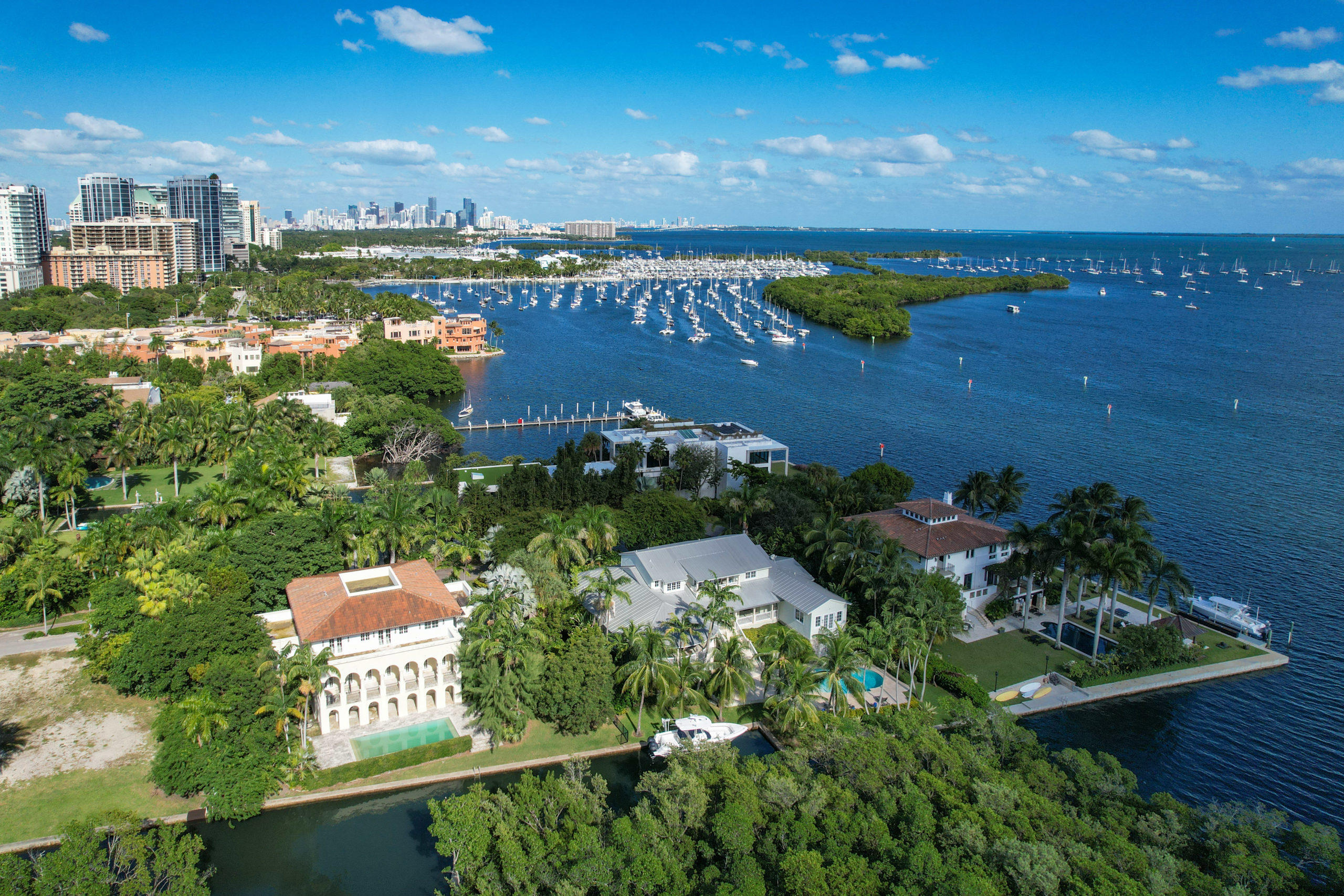
If you are arriving in Miami with a family and a discerning eye for where you plant roots, Coconut Grove is the neighborhood that consistently rises to the top. It is the only place in Miami that combines canopy-lined streets, direct Biscayne Bay access, a walkable village center, top-tier private schools, and a genuine sense of established community. It does not feel like Miami’s flashier addresses. It feels like somewhere you actually want to raise a family.
The market reflects this. According to our Q1 2026 Coconut Grove Market Report, the median price per square foot for single-family homes has risen from $810 in 2023 to $1,219 in 2026, a 50.5% increase over three years. Inland trophy product is now trading at nearly double 2023 prices. And at the waterfront level, a January 2026 transaction at 3085 Munroe Drive closed at $6,913 per square foot, establishing an entirely new pricing tier for the neighborhood. The Grove has continued to climb even as broader Miami markets have cooled. That is not a coincidence. It is driven by exactly the kind of buyer this neighborhood attracts: relocating families and end-users who want a permanent, primary residence in a place that feels rooted, not seasonal.
Why HNWI Families Choose Coconut Grove
The Grove operates 24/7 police patrols, earns consistently high walkability scores, and has the kind of neighborhood culture where “slow down, our kids play here” signs are a genuine reflection of how residents protect their streets. The tree-filled roads are safe for cyclists, runners, and children walking to school. Parks are plentiful and programmed for families, with playgrounds, weekend soccer games, picnic lawns, and dog parks woven into the neighborhood fabric.
For schooling, Coconut Grove sits within reach of two of Miami’s most respected private institutions: Carrollton School of the Sacred Heart and Ransom Everglades. Both draw families who have relocated from New York, Chicago, London, and beyond. The school waitlists are competitive precisely because the Grove’s family buyer profile is.
The lifestyle is what residents call Bohemian chic with serious substance. Walkable streets lead to high-end restaurants and laid-back cafes side by side, along with boutique stores, bookshops, and local institutions that have been part of the neighborhood for decades. It is the rare Miami address where you do not need a car to feel at home.
Understanding the Different Areas of Coconut Grove
North Grove borders Brickell and offers faster access to the financial district, making it ideal for executives who want a residential feel without sacrificing proximity to work. South Grove sits closer to the village center and buffers Coral Gables, offering the most walkable access to shops, restaurants, and the waterfront.
For families with the most substantial budgets, the gated waterfront enclaves of the Grove are in a category of their own. Camp Biscayne, The Moorings, Devon Court, and Ye Little Woods represent the pinnacle of the neighborhood. These are private, low-density communities with direct water access where prices are now setting records. The Q1 2026 waterfront market in Coconut Grove is, in the words of our own report, the market story of the decade.
For buyers seeking a luxury condominium rather than a single-family home, Park Grove remains the standout option. Three towers set within a 5.2-acre waterfront park, with large-format residences designed for families who want the services of a five-star building without sacrificing square footage. Park Grove’s top-tier units reached $3,850 per square foot in Q1 2026. Four Seasons Coconut Grove, currently in pre-construction, is expected to deliver in Q4 2028 with pricing at $3,000 to $4,000 per square foot, representing the next chapter in the neighborhood’s upward trajectory.
Coconut Grove also sits 20 to 30 minutes from Miami International Airport and the beaches, with quick access to both Coral Gables and Brickell. For relocating families who need to balance school runs, client dinners, and weekend lifestyle, the location is nearly impossible to beat.
Thinking about Coconut Grove for your family? We have decades of experience in this specific market, we know every enclave and every school, and we have helped families from across the world find their home here. Call us at 305.508.0899.
Coral Gables: Miami’s Premier Address for Families Who Expect the Best
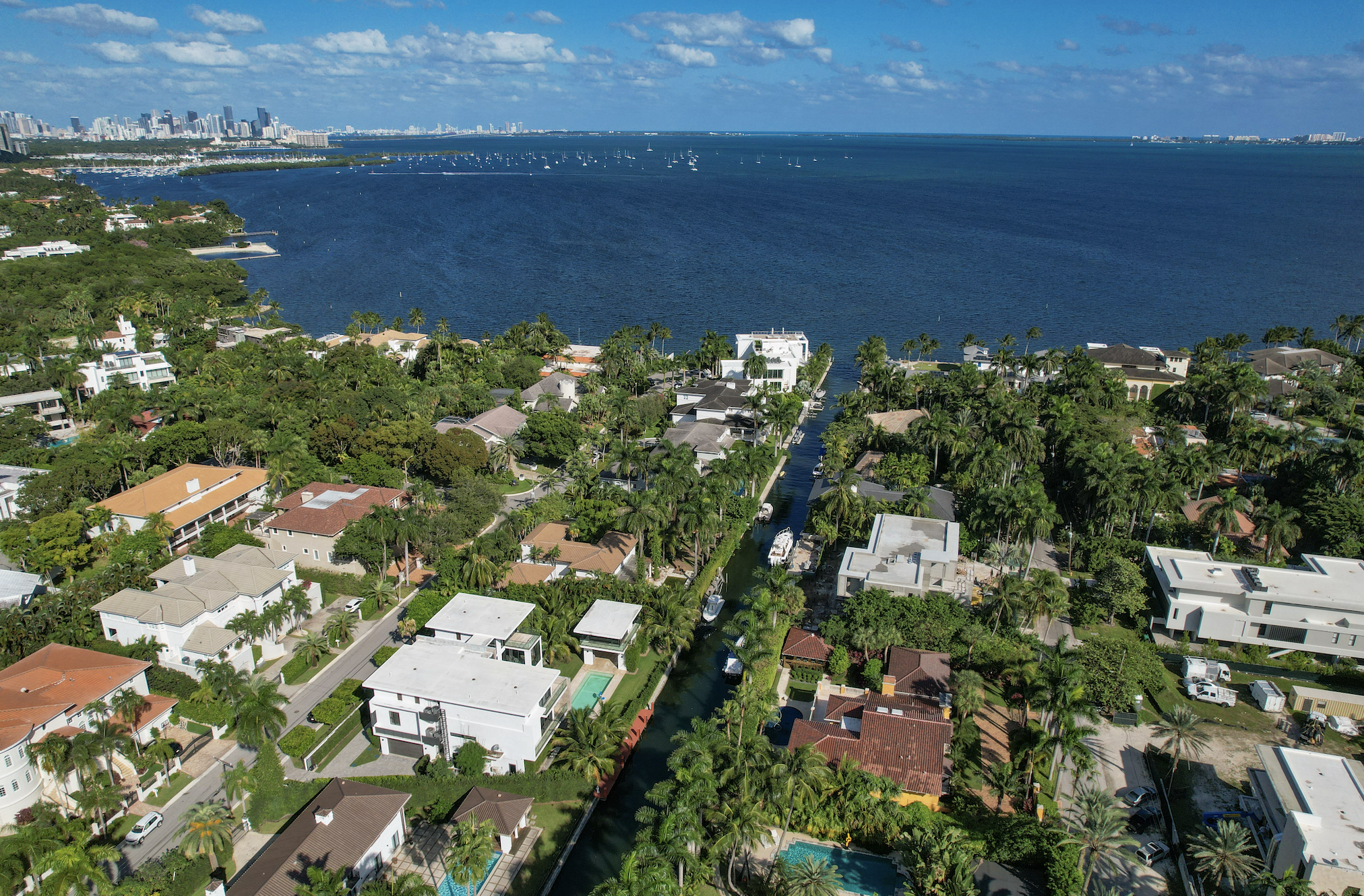
If Coconut Grove earns its reputation through lifestyle and character, Coral Gables earns its through scale, prestige, and the sheer concentration of wealth that defines its top end. For relocating families who want access to the finest schools, the most private gated communities, and a neighborhood with a long track record of delivering real value, Coral Gables is the answer.
Our Q1 2026 Market Report tells the story clearly. Every segment of this market has delivered extraordinary appreciation over the past decade, with waterfront enclaves like Gables Estates and Old Cutler Bay up well over 160% since 2016. The waterfront premium has not compressed over time. It has widened. This is what a market that consistently rewards location and land looks like.
Demand remains strong and decisive. Well-located, turnkey homes on prime interior streets are still moving within days, and at the ultra-prime waterfront level, virtually every transaction above $13 million closes entirely in cash. As our own report puts it: Coral Gables in 2026 is a selective market, not a slowing one.
The Schools That Draw Relocating Families
For families placing education at the center of their relocation decision, Coral Gables is the logical anchor. Gulliver Schools (located in Pinecrest) spans Pre-K through Grade 12 and is one of Miami’s most academically prestigious private institutions, consistently drawing families from New York, Chicago, London, and beyond. St. Philip’s Episcopal School is a sought-after option for younger children, known for its strong community culture and academic standards. School access and long-term residential stability are the two factors that define why families choose this neighborhood above all others, and Coral Gables delivers on both without compromise.
Understanding the Different Areas
The most important distinction any buyer needs to understand is the difference between homes east and west of US1. East of US1 is where the strongest demand concentrates, particularly along prime interior streets like Granada Boulevard, North Greenway Drive, and the Biltmore corridor. These are established, canopy-lined residential streets where the right home sells fast.
South Coral Gables is in a different category entirely. Once you move into the gated waterfront enclaves, prices accelerate sharply and the buyer profile shifts to global ultra-high-net-worth families. Gables Estates, Old Cutler Bay, Cocoplum, Tahiti Beach, and Snapper Creek each have their own character, price point, and community feel. The differences between them matter enormously, and picking the right one for your family requires local knowledge that goes well beyond any listing portal.
Coral Gables has more gated communities than any other neighborhood in Miami. For a full breakdown of what distinguishes each one, read our dedicated gated communities guide here.
Day to Day Life in the Gables
For executives working in Brickell or the Gables itself, the commute is minimal. The neighborhood’s gated communities come with private streets, tennis courts, playgrounds, and waterfront amenities built in. Coral Gables is also home to several of Miami’s finest golf courses. The daily life here is genuinely complete.
Thinking about Coral Gables for your family? The difference between the right enclave and the wrong street can be significant in both price and quality of life. We know every community and every school catchment here intimately. Call us at 305.508.0899.
Access Our Off-Market Listings
The most sought-after homes in Miami rarely reach the open market. Our clients get privileged first access to exclusive listings before they are ever publicly advertised. Let us show you what is available right now.
or call us on 305.508.0899
Pinecrest: Space, Schools, and a Lifestyle Built for Families

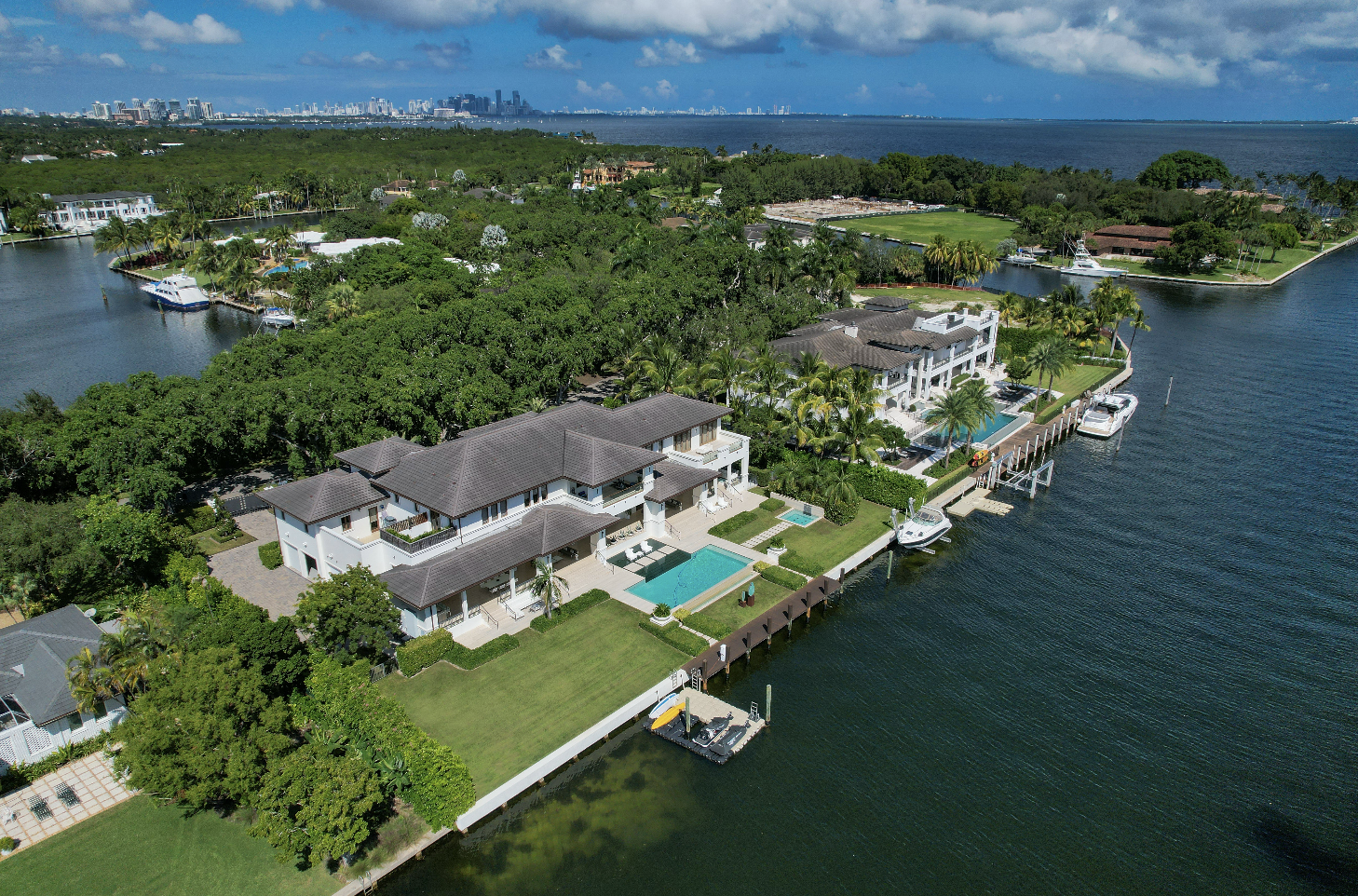
If you are relocating to Miami with children and the non-negotiable on your list is space, Pinecrest is where your search ends. Large private lots, tree-lined streets, one of the best school districts in Miami-Dade, and a genuine neighborhood calm that is genuinely rare this close to a major city. Pinecrest does not try to be Miami Beach or Brickell. It does exactly what families need it to do.
Our Q1 2026 Pinecrest Market Report captures what has been a significant shift in how the market perceives this neighborhood. As the report puts it, “what was once viewed as a quieter, value-oriented alternative to Coral Gables has firmly established itself as a premier destination for luxury buyers seeking space, privacy, and long-term livability.” The market reflects that. New construction is now trading between $1,300 and $1,500 per SF (Occasionally we will see $1,800 per SF), and most move-in-ready homes sit between $3 million and $8 million, with new builds typically starting above that. One of the most telling trends is the rise in teardown activity, with buyers acquiring older homes primarily for the land beneath them. When buyers are paying for dirt, the neighborhood has arrived.
The buyer profile here closely mirrors what we see in the Grove and the Gables: families relocating from New York, California, and Illinois, drawn by Florida’s tax advantages, lot sizes that simply do not exist in their home cities, and a family-oriented environment that actually delivers on the promise.
The Schools
Pinecrest’s school access is a primary driver for almost every family we bring through here. Gulliver Schools sits within the neighborhood and covers Pre-K through Grade 12, making it one of the most convenient private school options in all of Miami. Palmer Trinity School is another top-tier private option nearby, known for its strong academics and campus setting. For families who prefer the public route, Pinecrest Elementary consistently ranks among the best public elementary schools in Miami-Dade. The combination of strong private and public options in the same ZIP code is something very few Miami neighborhoods can offer at this level.
The Different Areas of Pinecrest
Pinecrest rewards local knowledge more than almost any other neighborhood in Miami. Not all quadrants are equal, and the differences are not always visible on a map or a listing portal. North Pinecrest, particularly the area above 112th Street between Red Road and Ludlum, is the most coveted section and trades accordingly. Homes below 120th Street occupy an entirely different market. Understanding exactly where to buy within Pinecrest, which streets, which lot orientations, and which sections have the strongest long-term fundamentals, is the kind of guidance that only comes from years of selling here.
Lot sizes across Pinecrest typically start at half an acre and frequently reach a full acre or more. For families coming from dense urban environments, the sense of space here is genuinely transformative. Children have room to run, homes have room to breathe, and the neighborhood has the quiet permanence that HNWI families are looking for when they make a long-term relocation decision.
Thinking about Pinecrest for your family? We know every quadrant, every school catchment, and every street that outperforms the rest. Call us at 305.508.0899.
Beyond the Top Three: Other Neighborhoods Worth Knowing
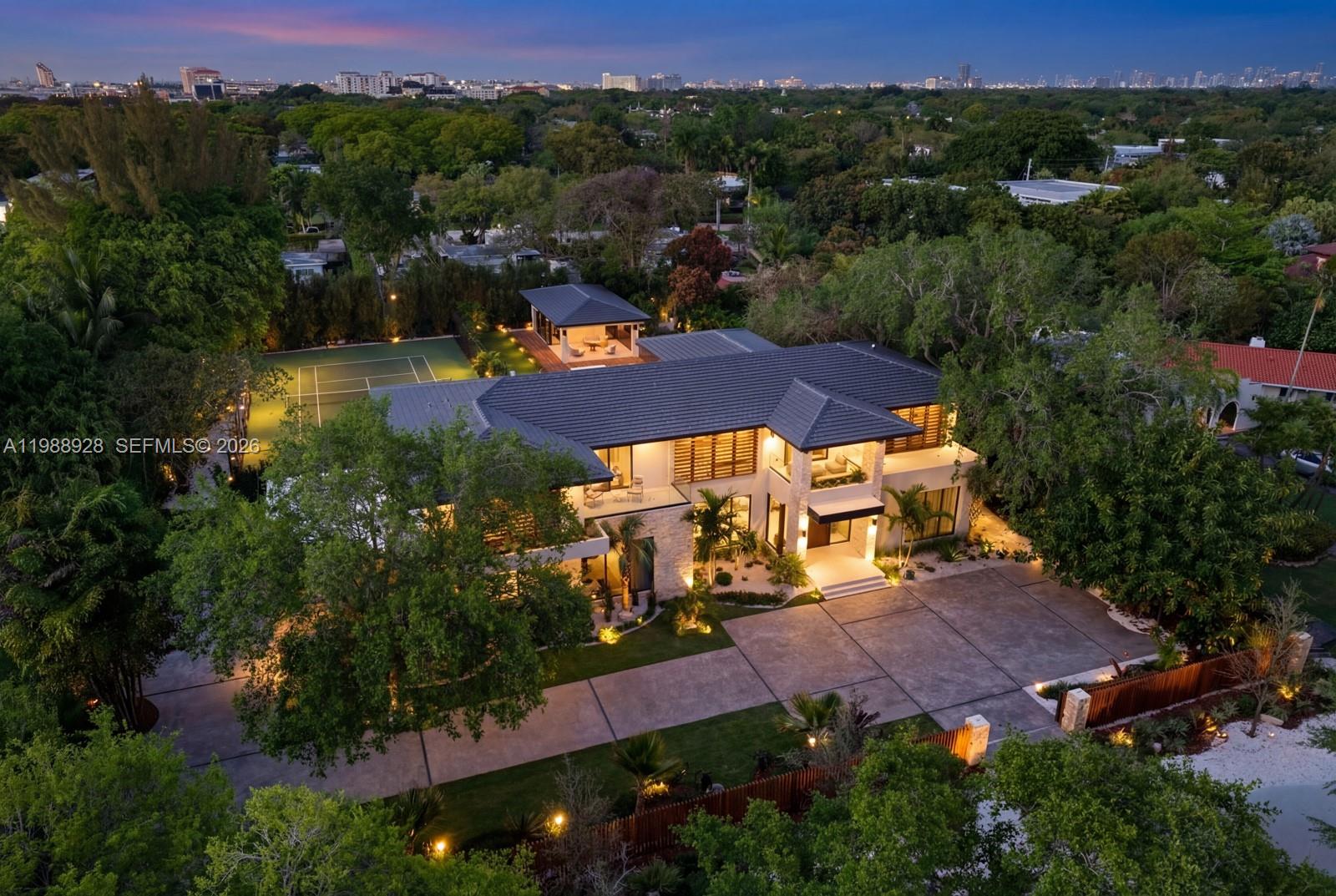
This stunning new construction home on an acre lot in Ponce Davis is listed by the David Siddons Group and asking $22M
Coconut Grove, Coral Gables, and Pinecrest are where most of our relocating families land, and for good reason. But Miami rewards those who look deeper. There are pockets within and adjacent to these neighborhoods that carry exceptional lifestyle credentials without the same level of name recognition, and for buyers who value privacy and exclusivity, that is often precisely the appeal.
Ponce Davis, High Pines, and South Miami sit quietly between the Grove and Coral Gables and offer some of the most architecturally distinguished homes in the city on generous lots, with the added benefit of being within easy reach of the same private schools. Key Biscayne is a genuinely unique option for families who want an island lifestyle with a tight-knit community feel and some of the best protected green space in South Florida. Certain pockets of Miami Beach, particularly the more residential areas away from the commercial strip, also attract serious family buyers who want water on both sides and a distinct sense of place.
Choosing Where to Live Based on the Best Private Schools
For most of the families we work with, the school decision and the neighborhood decision are inseparable. The right approach is not to choose a neighborhood and then find a school. It is to identify the schools that matter most to your family and build your search around commute time and proximity.
We have done exactly that work for you. Our dedicated private school guide maps every top institution across Miami, from elementary through high school, and identifies the homes and communities that sit within a 20-minute drive during morning rush hour. It is one of the most practical tools we have built for relocating families and it consistently changes how buyers think about where to focus their search. Read the full private school proximity guide here.
FAQS about Moving to Miami With a Family
1. What is the best neighborhood in Miami to raise a family in 2026?
The three neighborhoods that consistently rise to the top for families are Coconut Grove, Coral Gables, and Pinecrest. Each serves a different buyer profile. Coconut Grove suits families who want walkability, a village atmosphere, and quick access to Biscayne Bay. Coral Gables attracts those who prioritize prestige, gated communities, and the highest concentration of private schools in Miami. Pinecrest is the choice for families who want enormous lot sizes, outstanding public and private school access, and the option to build a custom estate. The right answer depends entirely on your lifestyle, your children’s ages, and your budget. We have helped hundreds of relocating families navigate exactly this decision.
2. Is Miami a good city to relocate to from New York with children?
Yes, and the transition tends to be smoother than most families expect. Miami offers year-round outdoor living, top-ranked private schools, a thriving international community, and significantly lower taxes than New York. Families relocating from the Northeast typically settle in Coconut Grove, Coral Gables, or Pinecrest, all of which offer the kind of established, community-oriented environment that feels familiar to those coming from places like Greenwich, Westchester, or the Upper East Side. The lifestyle shift from four seasons to year-round warmth also tends to be transformative for children, with outdoor sports, beach access, and active weekends becoming a normal part of family life.
3. What are the best private schools in Miami for relocating families?
Miami has a strong private school ecosystem that rivals most major US cities. The most sought-after options for relocating families are Ransom Everglades and Carrollton School of the Sacred Heart in Coconut Grove, Gulliver Schools and Palmer Trinity in Pinecrest, and St. Philip’s Episcopal School and St. Thomas Episcopal Parish School in the Coral Gables area. Most of these schools have competitive admissions processes, and waitlists at the top institutions can be significant. If school placement is a priority, we strongly recommend beginning that process before finalizing your neighborhood choice, as proximity to your preferred school should directly influence where you buy. We can provide a private school proximity map for any neighborhood on request.
4. What is the difference between Coral Gables and Coconut Grove for families?
Both neighborhoods are safe, walkable, and established, but they attract different buyer profiles. Coconut Grove has a more bohemian, organic character with a walkable village center, lower density, and a slightly more relaxed atmosphere. Coral Gables is larger, more formal, and home to the highest concentration of gated communities in Miami. Price points also diverge significantly at the top end: Coral Gables waterfront enclaves like Gables Estates trade at $3,000 per square foot and above, while the Grove’s ultra-prime waterfront is approaching similar levels following record transactions in 2026. Families who want to walk to dinner choose the Grove. Families who want maximum privacy and a gated address tend to choose the Gables.
5. Is Pinecrest or Coral Gables better for raising a family?
Both are excellent, and the choice usually comes down to two things: lot size and lifestyle. Pinecrest offers significantly larger lots, often reaching a full acre or more, making it the preferred choice for families who want space for children to run, pools, tennis courts, and room to build a custom estate. Coral Gables offers a more urban feel with more gated communities, slightly better school proximity in some cases, and a prestige address that carries more name recognition globally. Pinecrest also tends to offer more value per square foot, with resale homes at $950 to $1,000 per square foot compared to Coral Gables’ average of $1,050. Neither is the wrong choice; it comes down to your family’s priorities.
6. What are gated communities in Miami like for families with children?
Gated communities in Miami, particularly in Coral Gables, are exceptionally well-suited to family life. Most feature private roads, on-site security, and a genuine sense of neighborhood community among residents. Many of the top enclaves such as Gables Estates, Cocoplum, and Old Cutler Bay offer waterfront access, tennis courts, playgrounds, and quiet streets where children can move freely and safely. For families relocating from cities where children had limited outdoor independence, these communities represent a significant lifestyle upgrade. Coral Gables alone has more gated communities than any other neighborhood in Miami, giving buyers a wide range of options across different price points and community sizes.
7. What does a family home cost in Miami in 2026?
It depends heavily on the neighborhood and property type. In Pinecrest, resale family homes trade at $950 to $1,000 per square foot, with most livable homes falling between $3 million and $8 million. New construction in Pinecrest reaches $1,300 to $1,500 per square foot. In Coral Gables, the average resale sits at $1,050 per square foot, with waterfront properties ranging from $1,500 to $1,700 per square foot and ultra-prime waterfront enclaves like Gables Estates trading at $3,000 per square foot and above. In Coconut Grove, the single-family home median is $1,219 per square foot. For families with a budget above $10 million, all three neighborhoods offer compelling options at different ends of the privacy and lifestyle spectrum.
8. Can I build a custom home in Miami?
Yes, and Pinecrest is the best neighborhood for it. The large lot sizes, often half an acre to a full acre, combined with relatively straightforward building regulations make Pinecrest the top choice for buyers who want to acquire land and build a custom estate from scratch. New construction in Pinecrest is currently pricing at $1,300 to $1,500 per square foot, and teardown activity has increased significantly as buyers recognize the value of the land itself. Coral Gables is a less straightforward option for custom builds due to the city’s strict architectural guidelines, though it is not impossible. If building your own home is a priority, Pinecrest is where we would start your search.
9. Is Miami safe for families with young children?
Miami’s safety varies significantly by neighborhood, which is one of the most important reasons to work with a local expert rather than relying on broad city-level statistics. Coconut Grove, Coral Gables, and Pinecrest are consistently among the safest areas in all of Miami-Dade County. Coconut Grove operates 24/7 police patrols and has a strong neighborhood watch culture. Coral Gables’ gated communities add an additional layer of security with private roads and controlled access. Pinecrest is a low-density, residential city with one of the lowest crime rates in South Florida. For families relocating from major cities, the safety profile of these three neighborhoods is typically a significant positive surprise.
10. How do I start the process of relocating my family to Miami?
The most common mistake families make is searching for properties before they have clarity on neighborhood, schools, and commute. We recommend starting with a private consultation where we walk through your lifestyle priorities, your children’s school needs, your budget, and your timeline. From there we build a shortlist of neighborhoods and specific communities, arrange private tours, and where relevant, provide access to off-market listings that never reach public portals. Most of our relocating clients from New York, London, Chicago, and international markets complete their search and go under contract within two to three visits. The process works best when it is guided from the start by someone who knows every street, every school waitlist, and every enclave intimately.
Ready to Find Your Family’s Home in Miami?
Relocating a family to a new city is one of the most significant decisions you will make, and Miami rewards those who get the neighborhood right from the start. The difference between the right street in Coral Gables and the wrong one, or knowing which quadrant of Pinecrest has the strongest long-term fundamentals, is not something any listing portal can tell you. It comes from decades of living and working in these markets.
We have helped families relocate to Miami from New York, London, Chicago, Sao Paulo, and beyond. We know the schools, the gated communities, the off-market opportunities, and the micro-markets that only locals understand. Most importantly, we approach every relocation as a long-term relationship, not a transaction.
If you are in the early stages of researching a move, we are happy to have an informal conversation with no obligation. If you are ready to see specific properties, we can arrange private tours of homes that never make it to the open market.
Schedule a private consultation via the application below, or call us directly at +1 (305) 508-0899. We look forward to helping your family find exactly where you belong in Miami.
FAQ
These are the most commonly Miami Real Estate Related questions
1. What is the best neighborhood in Miami to raise a family in 2026?
The three neighborhoods that consistently rise to the top for families are Coconut Grove, Coral Gables, and Pinecrest. Each serves a different buyer profile. Coconut Grove suits families who want walkability, a village atmosphere, and quick access to Biscayne Bay. Coral Gables attracts those who prioritize prestige, gated communities, and the highest concentration of private schools in Miami. Pinecrest is the choice for families who want enormous lot sizes, outstanding public and private school access, and the option to build a custom estate. The right answer depends entirely on your lifestyle, your children’s ages, and your budget. We have helped hundreds of relocating families navigate exactly this decision.
2. Is Miami a good city to relocate to from New York with children?
Yes, and the transition tends to be smoother than most families expect. Miami offers year-round outdoor living, top-ranked private schools, a thriving international community, and significantly lower taxes than New York. Families relocating from the Northeast typically settle in Coconut Grove, Coral Gables, or Pinecrest, all of which offer the kind of established, community-oriented environment that feels familiar to those coming from places like Greenwich, Westchester, or the Upper East Side. The lifestyle shift from four seasons to year-round warmth also tends to be transformative for children, with outdoor sports, beach access, and active weekends becoming a normal part of family life.
3. What are the best private schools in Miami for relocating families?
Miami has a strong private school ecosystem that rivals most major US cities. The most sought-after options for relocating families are Ransom Everglades and Carrollton School of the Sacred Heart in Coconut Grove, Gulliver Schools and Palmer Trinity in Pinecrest, and St. Philip’s Episcopal School and St. Thomas Episcopal Parish School in the Coral Gables area. Most of these schools have competitive admissions processes, and waitlists at the top institutions can be significant. If school placement is a priority, we strongly recommend beginning that process before finalizing your neighborhood choice, as proximity to your preferred school should directly influence where you buy. We can provide a private school proximity map for any neighborhood on request.
4. What is the difference between Coral Gables and Coconut Grove for families?
Both neighborhoods are safe, walkable, and established, but they attract different buyer profiles. Coconut Grove has a more bohemian, organic character with a walkable village center, lower density, and a slightly more relaxed atmosphere. Coral Gables is larger, more formal, and home to the highest concentration of gated communities in Miami. Price points also diverge significantly at the top end: Coral Gables waterfront enclaves like Gables Estates trade at $3,000 per square foot and above, while the Grove’s ultra-prime waterfront is approaching similar levels following record transactions in 2026. Families who want to walk to dinner choose the Grove. Families who want maximum privacy and a gated address tend to choose the Gables.
5. Is Pinecrest or Coral Gables better for raising a family?
Both are excellent, and the choice usually comes down to two things: lot size and lifestyle. Pinecrest offers significantly larger lots, often reaching a full acre or more, making it the preferred choice for families who want space for children to run, pools, tennis courts, and room to build a custom estate. Coral Gables offers a more urban feel with more gated communities, slightly better school proximity in some cases, and a prestige address that carries more name recognition globally. Pinecrest also tends to offer more value per square foot, with resale homes at $950 to $1,000 per square foot compared to Coral Gables’ average of $1,050. Neither is the wrong choice; it comes down to your family’s priorities.
6. What are gated communities in Miami like for families with children?
Gated communities in Miami, particularly in Coral Gables, are exceptionally well-suited to family life. Most feature private roads, on-site security, and a genuine sense of neighborhood community among residents. Many of the top enclaves such as Gables Estates, Cocoplum, and Old Cutler Bay offer waterfront access, tennis courts, playgrounds, and quiet streets where children can move freely and safely. For families relocating from cities where children had limited outdoor independence, these communities represent a significant lifestyle upgrade. Coral Gables alone has more gated communities than any other neighborhood in Miami, giving buyers a wide range of options across different price points and community sizes.
7. What does a family home cost in Miami in 2026?
It depends heavily on the neighborhood and property type. In Pinecrest, resale family homes trade at $950 to $1,000 per square foot, with most livable homes falling between $3 million and $8 million. New construction in Pinecrest reaches $1,300 to $1,500 per square foot. In Coral Gables, the average resale sits at $1,050 per square foot, with waterfront properties ranging from $1,500 to $1,700 per square foot and ultra-prime waterfront enclaves like Gables Estates trading at $3,000 per square foot and above. In Coconut Grove, the single-family home median is $1,219 per square foot. For families with a budget above $10 million, all three neighborhoods offer compelling options at different ends of the privacy and lifestyle spectrum.
8. Can I build a custom home in Miami?
Yes, and Pinecrest is the best neighborhood for it. The large lot sizes, often half an acre to a full acre, combined with relatively straightforward building regulations make Pinecrest the top choice for buyers who want to acquire land and build a custom estate from scratch. New construction in Pinecrest is currently pricing at $1,300 to $1,500 per square foot, and teardown activity has increased significantly as buyers recognize the value of the land itself. Coral Gables is a less straightforward option for custom builds due to the city’s strict architectural guidelines, though it is not impossible. If building your own home is a priority, Pinecrest is where we would start your search.
9. Is Miami safe for families with young children?
Miami’s safety varies significantly by neighborhood, which is one of the most important reasons to work with a local expert rather than relying on broad city-level statistics. Coconut Grove, Coral Gables, and Pinecrest are consistently among the safest areas in all of Miami-Dade County. Coconut Grove operates 24/7 police patrols and has a strong neighborhood watch culture. Coral Gables’ gated communities add an additional layer of security with private roads and controlled access. Pinecrest is a low-density, residential city with one of the lowest crime rates in South Florida. For families relocating from major cities, the safety profile of these three neighborhoods is typically a significant positive surprise.
10. How do I start the process of relocating my family to Miami?
The most common mistake families make is searching for properties before they have clarity on neighborhood, schools, and commute. We recommend starting with a private consultation where we walk through your lifestyle priorities, your children’s school needs, your budget, and your timeline. From there we build a shortlist of neighborhoods and specific communities, arrange private tours, and where relevant, provide access to off-market listings that never reach public portals. Most of our relocating clients from New York, London, Chicago, and international markets complete their search and go under contract within two to three visits. The process works best when it is guided from the start by someone who knows every street, every school waitlist, and every enclave intimately. Reach out here to begin the conversation.
WHY WORK WITH DAVID? THINGS YOU SHOULD KNOW...
For all our analytics we are agents driving some very unique and advanced tech. We Provide a granular and custom experience that empower our clients with the insight and tools to understand the most complex behaviors of any local markets.
-
Analytical
Over 100 reports produced to date
-
Knowledgeable
Over 1800 published articles and counting


Related Articles
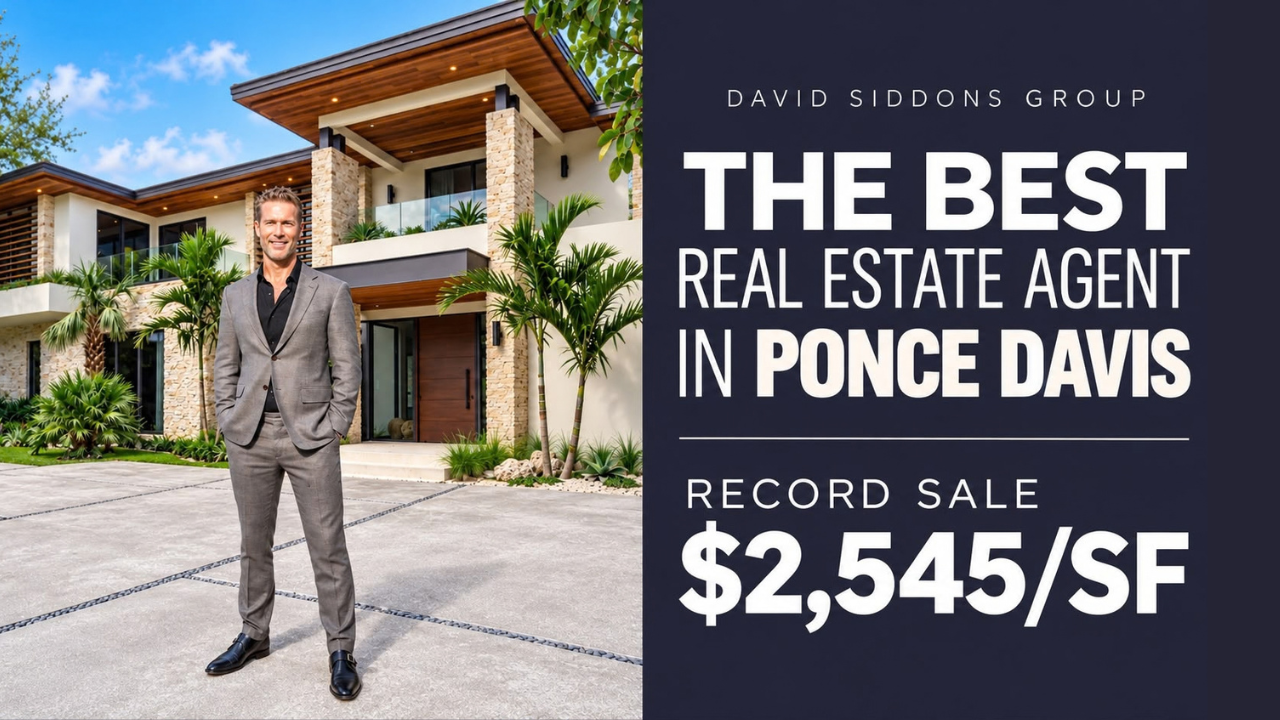
The Best Real Estate Agent in Ponce Davis
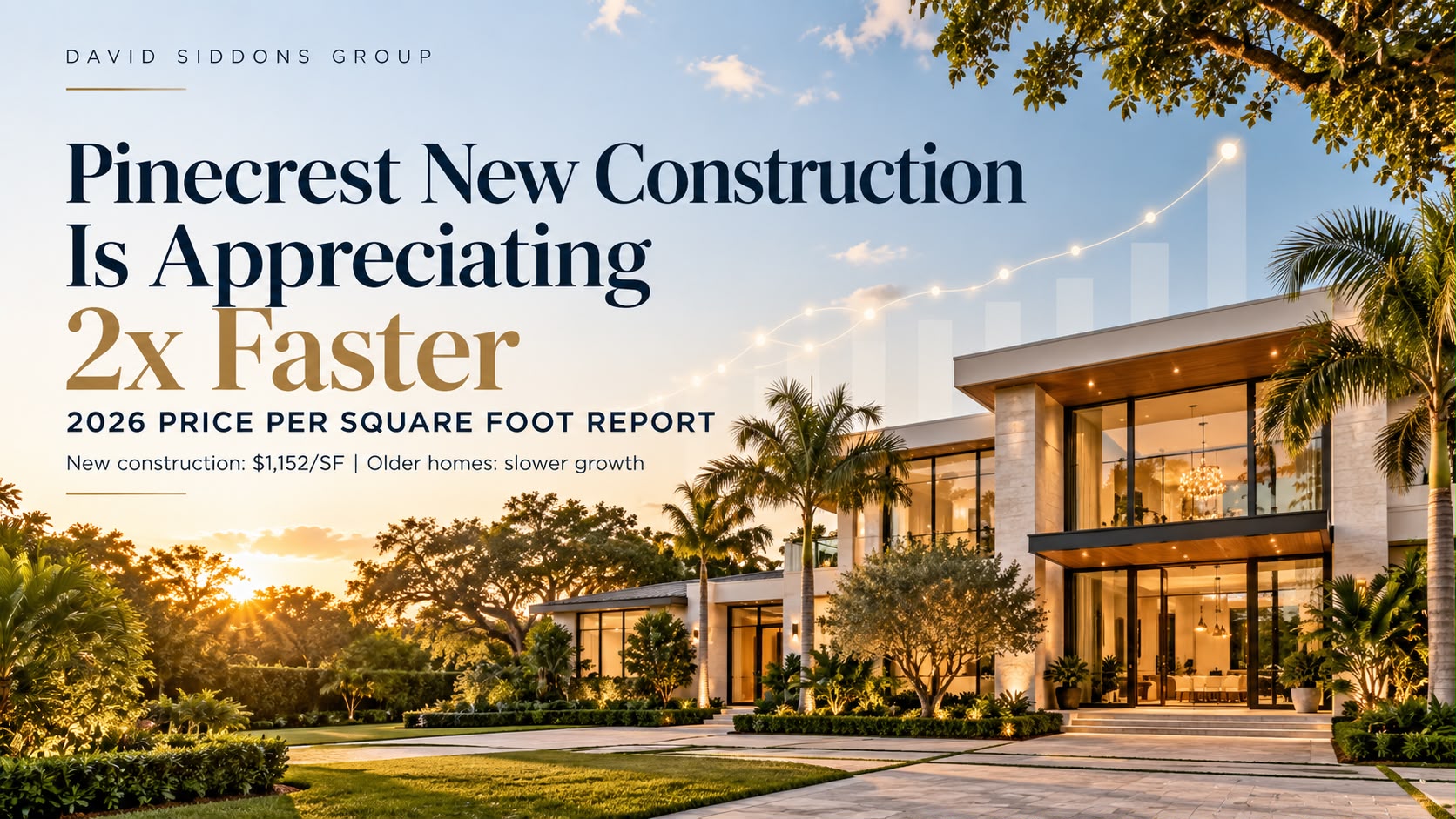
Pinecrest New Construction Is Appreciating 2x Faster Than Older Homes

Inside 1428 Brickell: Why Ytech Skipped the Hotel Brand to Build Brickell’s Best Finishes
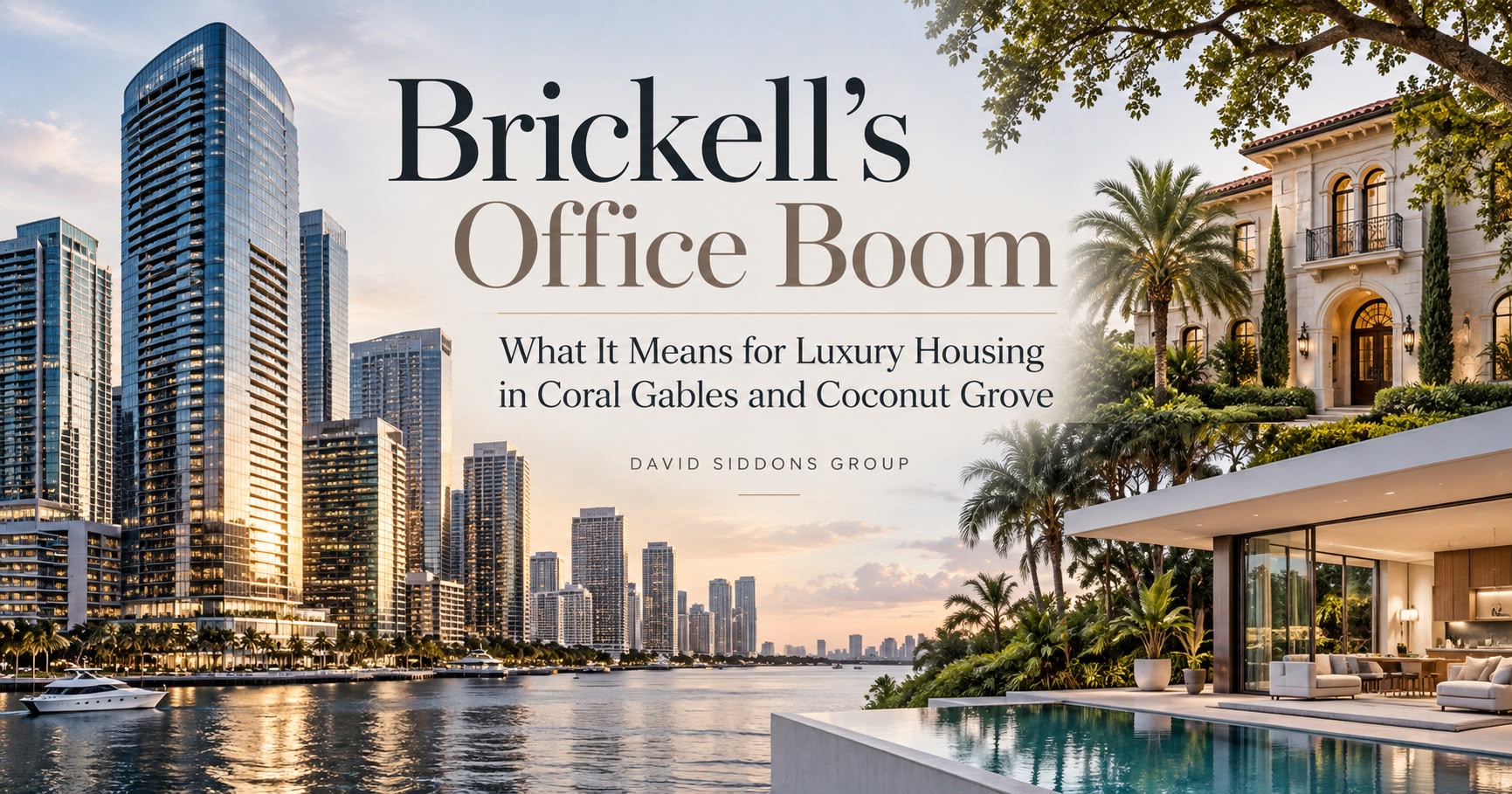
Brickell’s Office Boom: What It Means for Luxury Housing in Coral Gables and Coconut Grove
Palmetto Bay Land Values Are Rising. Is Your Home Worth More as Land?

Killian Drive: Kendall’s Luxury New Construction Corridor Hits $1,000/SF

Pinecrest’s 4 Best Streets in 2026
The 5 Best Luxury Streets in Miami’s Gated Communities

The Real Estate Team Behind the Agent: Why Systems Matter More Than Star Power
Selling a Home in Pinecrest: Why Some Homes Sell for $1,500/SF and Others Sit

We Built the Largest YouTube Audience of Any Miami Real Estate Team.
Empty Nesters in Miami: What Comes After the Big Family Home?
Palmetto Bay Has Almost No Inventory. So Why Are Homes Still Sitting?
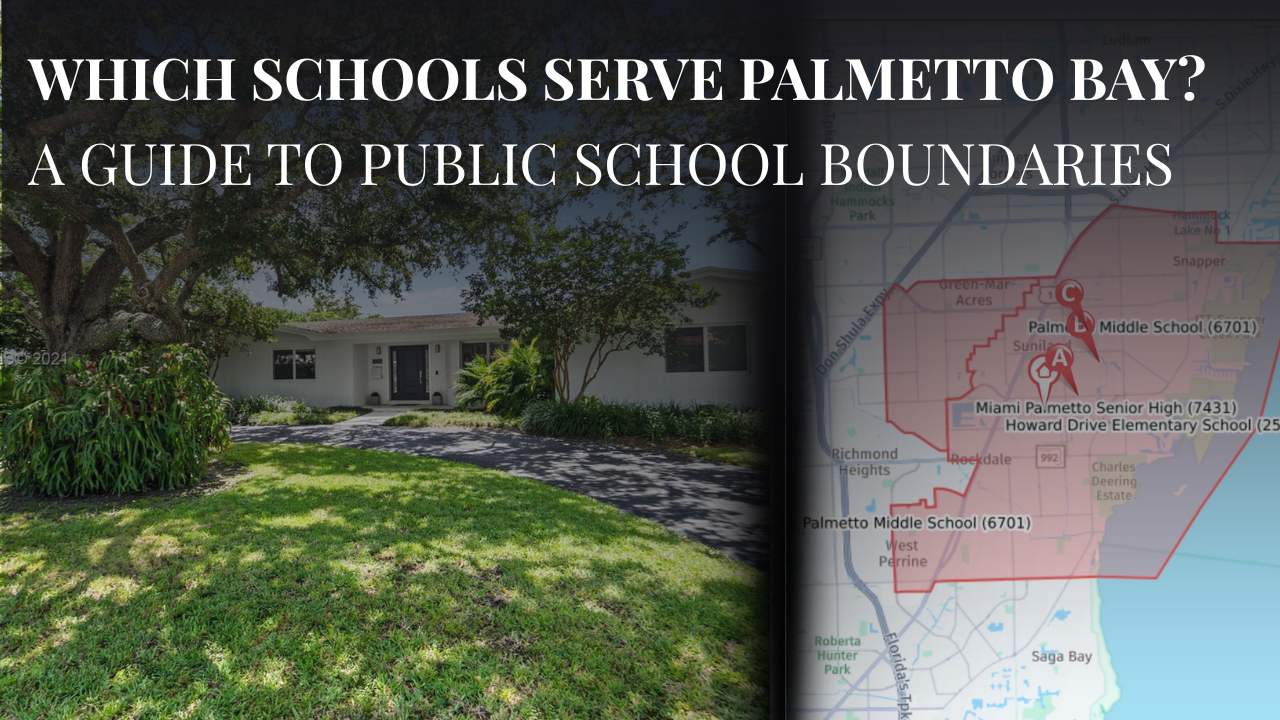
Which Schools Serve Palmetto Bay? A Guide to Public School Boundaries
Please fill in your details and David Siddons will contact you

Search related videos

#BetterDecisions Navigating Private Schools in Miami | An Interview with Palmer Trinity MovingToMiami
Migrating Families and the Challenges of Finding the Right Miami School. Moving to Coral Gables
Moving to Miami with a Family and Kids | We Know What Matters! Family
The Best Private Schools in Miami – Where Should You Live? MovingToMiami
Why are the weathiest families in the USA looking to buy in Coconut Grove? CoconutGrove
The Number 1 Neighborhood in South Florida to Raise a Family Family
Botaniko Weston – A brand new gated community in South Florida’s No.1 choice for families Family


- Get our Newsletter
- Subscribe
- No Thanks
Get the latest news from Miami Real Estate News
Close
Edit Search
Close
2 of 14
Share this property
Recomend this to a friend, just enter their email below.
Close
Your email was sent successfully
Close
 COMPARE WITH CONDOGEEKS