

















- Best of All
- Best Miami Luxury Condos
- Most popular
- Relocating to Miami
- Private Schools
- Investments
- Gated communities
- Waterfront information
- Luxury homes
- Luxury Condos
- New Construction Condos in South Florida
- Independent Pre-Construction condo reviews for Miami
- Independent Pre-Construction condo reviews for Fort Lauderdale
Miami’s Ultra-Luxury Condos – A Market Update Q1 2017
What is the Status of Miami’s Ultra-Luxurious Condo Market ($5M+)
There has been a great deal of speculation regarding Miami’s condo market, especially the higher end of the market. In the last few years, the Miami market experienced an increase in demand with some substantial price increases resulting from it. As the market started to cool down in 2015 – 2016, we saw rising inventory and sellers forced to lower their prices.
As we experienced an increase in clients asking for ultra luxury condos and ultra-luxury Miami homes, we expected the market might be bouncing back after a period of correction. We decided to have a look at the actual numbers and to put our findings, combined with our day to day experience in the ultra luxury market, on ‘paper’.

The Average Prices in the Ultra – Luxury Miami Condo Market
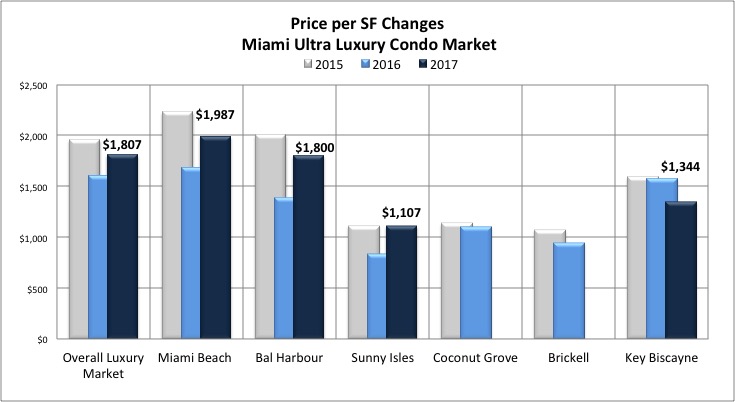
The luxury condo market saw some heavily inflated prices in the last few years. Buyers were flocking in and bought properties that were priced far over market value. This real estate boom cooled down in 2015/2016, as the market was seeing a decline in buyers and an incline in inventory. As a consequence of this, sellers needed to adjust their prices in order to attract the increasingly price conscious buyers. As can be seen from the graph below; 2016 was a year of price corrections, while 2017 (First 4 months) is showing a recovering market with increasing prices. Key Biscayne shows a lower average price per SF in 2017 but it needs to be noted that only 1 property was sold in 2017.
As can be seen from the table on the right hand side, the average active listing prices are mostly far above the average sales prices. This means that sellers are very positive about the market, but those who want to sell quickly better price their units close to market price.
Click to enlarge image
Click to enlarge image
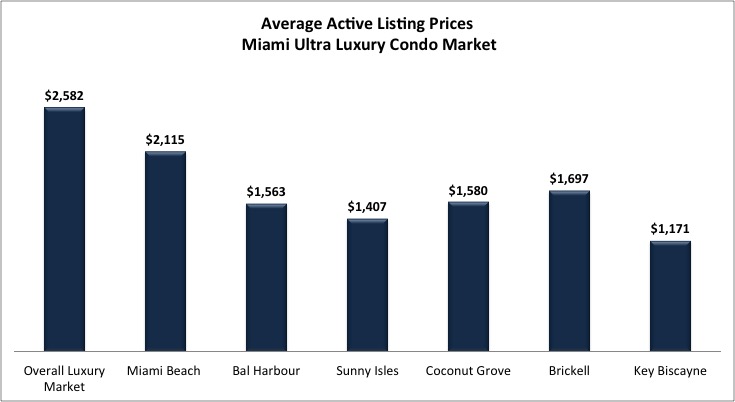
Months of Inventory for Miami Luxury Condos
Months of inventory is an important indicator to know where the market is heading. A high inventory leads to a buyers market and decreasing prices while low inventory leads to a sellers market and increasing prices.
As you can see from the graph below, most markets including the overall Miami market is experiencing a strong buyers market with 18+ months of inventory. Brickell and Coconut Grove are experiencing a neutral, almost sellers market. Especially Coconut Grove is showing a high demand for ultra luxury properties with a limited supply.
Click to enlarge image
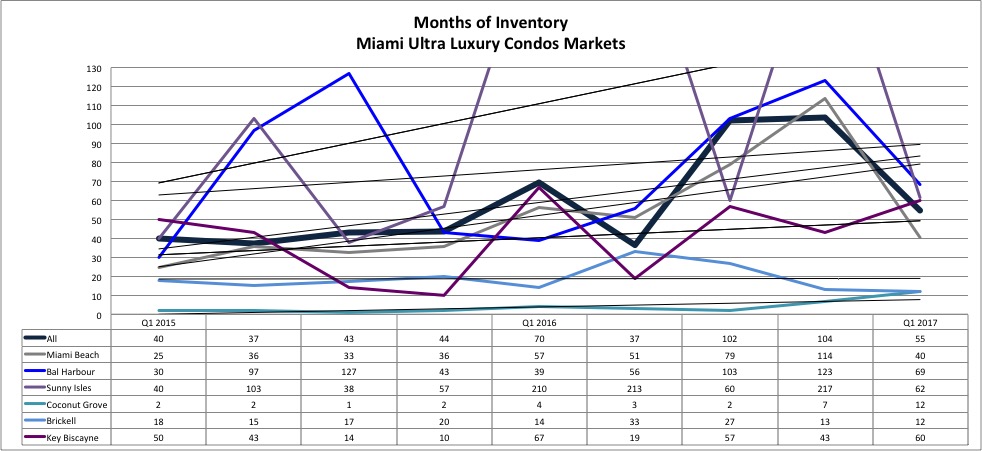
The Months of Inventory in the ultra luxury market indicate a well balanced market between 12 and 18 months of inventory and a buyers market in case of 18+ months of inventory. For readability the X-Axis with the months goes up to 130 months only.
Miami Luxury Condos Sold Versus Luxury Condos for Sale
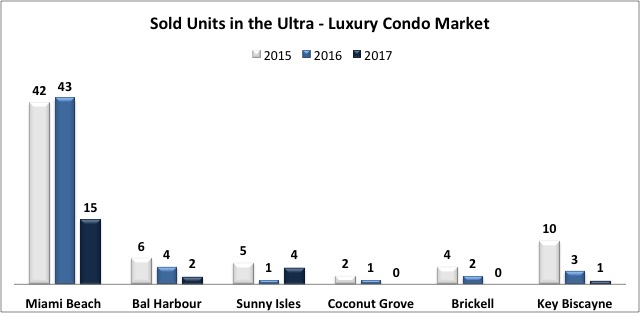
In the table below you see how many ultra-luxury condos sold in each Miami neighborhood, with Miami Beach being the largest market. You can see that 2016 had a slight decrease in the number of sales while 2017 seems to be picking up again (2017 is only taken over the first 4 months).
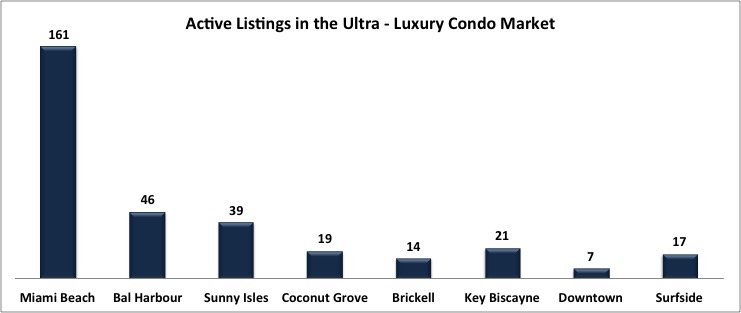
Regarding the listings in each market we also see that Miami Beach is in the lead with 161 ultra luxury condos being listed for sale.
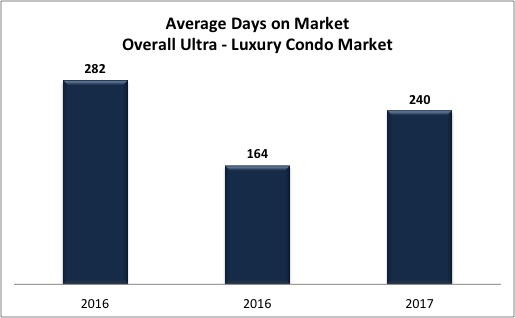
Average Days the Miami Ultra-Luxury Condos stay on the Market
The table below shows how many days it takes on average before a property is sold. We only took the overall market into account as the limited numbers of properties sold in specific sub-markets would skew the numbers too much and give an erroneous perception of the market.
In 2017 we see an average of 240 days or approximately 8 months before a ultra luxury condo is sold. This was respectively 164 and 282 days in 2016 and 2015.
New Ultra-Luxury Condos to enter the Miami Market
A handful of brand new and super exclusive condos are being developed at this moment or are just starting to resell their units. Please find some of the most prestigious new condos below.
Some of the Newest Ultra-Luxury Condos in Miami Beach
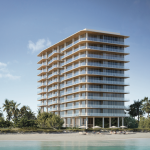
Eighty Seven Park: Eighty Seven Park (87 Park) by Renzo Piano is a selection of private Miami Beach oceanfront residences designed to seamlessly embrace park and ocean in Miami Beach’s newest neighborhood. The first residential project in the United States created by Pritzker Award-Winning architect, Renzo Piano. Located on an oceanfront 3 acres lot, the residences will be located on 1 acre while 2 acres on the north side will be a private park for the building.
Other Desired Luxury Condos are:
Some of the Newest Ultra-Luxury Condos in Coconut Grove
Park Grove – Tower 1: Park Grove in Coconut Grove is a new architectural masterpiece by Rem Koolhaas’ Office for Metropolitan Architecture. The Park Grove Condo project will feature 3 towers and 298 completely finished residential units located in a 5.2-acre waterfront park with over 50,000 Sq.Ft of amenities and a major collection of Art, displayed throughout the property.
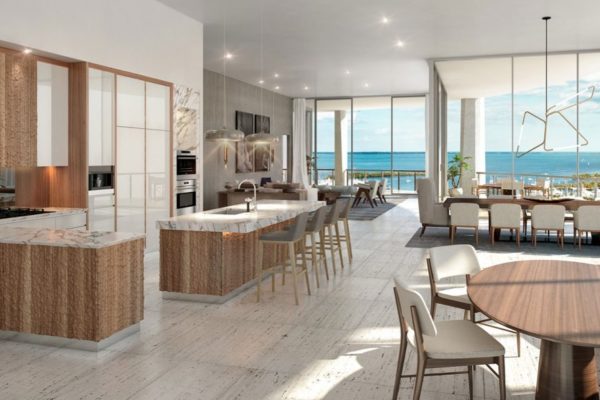
Some of the Newest Ultra-Luxury Condos in Brickell / Downtown Miami
Other Luxury Condos are:
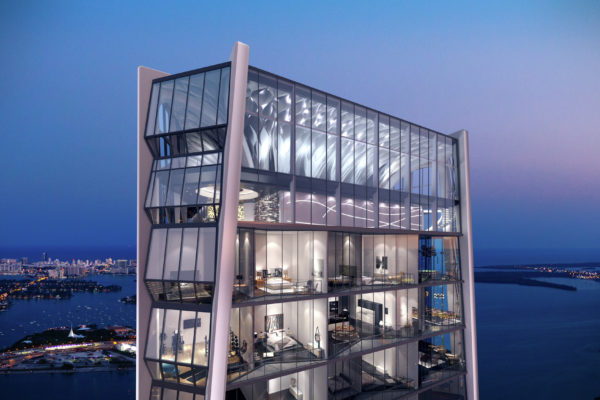
Some of the Newest Ultra-Luxury Condos in Sunny Isles Beach
The Porsche Design Tower is Sunny Isles Beach is the first Porsche Condo ever built in the world, appropriately named P001. The Porsche Design Tower is unique in its kind with its Robotic parking system that will allow its residents to transport and park their cars in their own private Garage (2 -4 Car Garage) at the door step of their residence. This basically means that nobody ever needs to see you coming in and out of your unit. This privacy aspect makes the building highly desired by high profile people. The tower is the first Porsche Designed Tower in the world and in case you are interested: 2% of the world’s billionaires own in this building (that will be some impressive networking). The tower is expected to be delivered in 2016
The residences, which range between 4,750 Sq. Ft. and 14,000 Sq. Ft, feature private elevators, private plunge pools and outdoor kitchens. Exclusive enough? Read more about this unique luxury condo here below
Another Luxury Condos is:
Armani Residences

Some of the Newest Ultra-Luxury Condos in Surfside
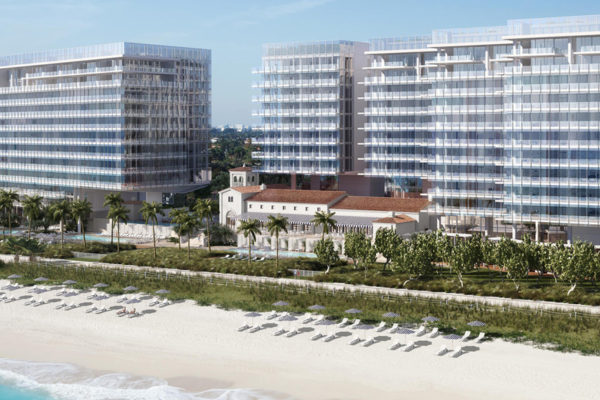
The Surf Club Four Seasons Residences:
The Surf Club Four Seasons Private Residences is situated on eight acres of oceanfront gardens, palm stands and pathways. Designed by Pritzker Prize-winning architect Richard Meier, in collaboration with architect Kobi Karp, two transparent 12-story residential buildings and an intimate Four Seasons Hotel incorporate the historic 1930 Russell Pancoast-designed Surf Club, preserving its legendary past. Combining luxury and legendary Four Seasons service and tailoring it to match the understated elegance of this seaside location, The Surf Club Four Seasons Private Residences caters to residents’ every whim, whether they are lounging in a cabana by one of four pools or dining with unimpeded vistas of the ocean.
The Surf Club Four Seasons Private Residences offers abundant options. Elegant venues in the historic Surf Club for intimate entertaining. Idyllic oceanfront public spaces and lush landscaped gardens for socializing. A sumptuous Four Seasons Spa and Wellness center with customized treatments for rejuvenation and relaxation. Yours to enjoy.
FAQ
These are the most commonly Miami Real Estate Related questions
What should relocation buyers know before buying real estate in Miami?
HOME BUYERS
Relocation buyers looking at homes in Miami should understand that choosing the right house is less about the property itself and more about location, schools, and long-term value. Many buyers make the mistake of focusing on price or finishes, while the real driver of value is the neighborhood and micro-location. Older homes often represent better value, but may also be part of a future redevelopment cycle. Newer homes command premiums, but don’t always sell faster if pricing is ahead of the market. Commute time, school access, and community dynamics are critical and often underestimated. The key is to evaluate homes not just as lifestyle purchases, but as long-term assets within a very localized market.
Sources:
https://luxlifemiamiblog.com/relocating-to-miami/
https://luxlifemiamiblog.com/relocating-to-miami-with-a-family/
CONDO BUYERS:
Relocation buyers should understand that Miami is a highly segmented, building-driven market, not a uniform one. Pricing can vary significantly between similar properties depending on building quality, layout, and financial health. Many buyers assume newer construction equals better investment, but that is often not the case. Factors like HOA fees, reserves, and rental policies can materially impact long-term value and liquidity. Negotiation opportunities often exist, especially in slower segments, but require precise market knowledge. The key is to evaluate micro-markets and individual buildings, not just neighborhoods or price per square foot.
Sources:
https://luxlifemiamiblog.com/miami-real-estate-market-report/
https://luxlifemiamiblog.com/new-construction-miami-guide/
What are the best areas for relocating families with children
For families relocating to Miami with young children, the most recommended neighborhoods are Coral Gables, Coconut Grove, and Pinecrest. Coral Gables offers the best balance of top schools, safety, and long-term value. Coconut Grove is ideal for younger families seeking walkability, greenery, and a lifestyle-driven environment. Pinecrest provides larger homes, excellent schools, and better value for space, making it ideal for growing families. The key driver across all three is access to strong schools and primary residential stability. Relocation decisions are less about new construction and more about long-term livability and resale strength.
Sources:
https://luxlifemiamiblog.com/best-neighborhoods-miami/
https://luxlifemiamiblog.com/what-are-the-best-family-neighborhoods-in-miami-in-2023/
Are new construction condos in Miami a good investment?
New construction condos in Miami can be a good investment—but only if you understand that not all buildings perform the same. According to the David Siddons Group, many buyers assume “new = better,” but in reality, performance depends on pricing, layout, building quality, and long-term demand. Some new developments set future price benchmarks and can drive long-term appreciation, especially in top-tier projects. However, many are priced aggressively at launch, and buyers relying on marketing instead of data often overpay.
The market is highly segmented, meaning two new buildings next to each other can perform very differently.
The best opportunities typically come from selecting the right building early or negotiating correctly in later phases.
In short: new construction is not automatically a good investment—it becomes one only with building-level analysis and disciplined entry pricing.
Sources:
https://luxlifemiamiblog.com/how-to-buy-a-luxury-condo-in-miami/
https://luxlifemiamiblog.com/category/independent-new-construction-condo-reviews/
https://luxlifemiamiblog.com/beyond-clickbait-real-insights-into-miamis-luxury-condo-market/
Why is buying a Miami condo riskier than buyers think?
Buying a Miami condo is often riskier than buyers expect because the true risks are at the building level—not visible in the listing price. Many buyers focus on finishes and views, while overlooking HOA reserves, insurance exposure, and potential special assessments. In reality, two identical units in different buildings can perform completely differently over time. Rising HOA fees and stricter regulations are also increasing the true cost of ownership, especially in older buildings. Liquidity can be affected by factors like financial health, rental policies, and ongoing repairs. The key risk is not the condo itself—but buying into the wrong building without proper due diligence.
Sources:
https://luxlifemiamiblog.com/how-to-buy-a-luxury-condo-in-miami/
https://luxlifemiamiblog.com/miami-condo-market-risks/
What are Miami's Safest Areas?
Which Miami Areas Still offer Great Value (Budget Friendly alternatives to Coral Gables and Pinecrest)
If you’re looking for better value than Coral Gables or Pinecrest, the answer (in true Siddons style) is not “go cheaper”—it’s go one layer outside the obvious markets.
The strongest value plays are:
- Schenley Park → closest substitute to Coral Gables at ~20% discount while maintaining similar character and location
- Biltmore Heights → almost identical feel to the Gables but ~25–30% cheaper on a $/SF basis
- Glenvar Heights → central location with larger lots and ~25% pricing advantage vs South Miami/Gables
- Baptist / Galloway (Kendall) → Pinecrest-style living (space, schools, land) at up to ~30% lower pricing
The pattern is consistent:
👉 Buyers are shifting west and slightly off-market to gain land, scale, and pricing efficiency. You don’t find value by going to a “cheaper neighborhood”—you find it by identifying adjacent micro-markets that offer the same lifestyle fundamentals without the brand premium.
Sources:
https://luxlifemiamiblog.com/best-value-neighborhoods-miami/
https://luxlifemiamiblog.com/category/miami-neighborhoods/
Is NOW a good time to buy in Miami?
Are Miami real estate prices going down in 2026?
No—but that’s the wrong way to look at it. Miami is not one market anymore, so prices are not moving in one direction. In 2026, the market is split into two: ultra-luxury, scarcity-driven areas (like waterfront and top-tier neighborhoods) are still holding or even rising, while mid-tier condos and oversupplied segments are flat or correcting. What we’re seeing is price divergence, not a crash—some properties are gaining value while others are quietly adjusting downward. Rising inventory and more selective buyers are putting pressure on pricing in certain segments, especially older condos or buildings with weaker fundamentals.
At the same time, global wealth and cash buyers continue to support pricing at the top end of the market. So the real answer: prices aren’t broadly dropping—they’re being repriced based on quality, location, and supply.
Should I buy a house or a condo when relocating to Miami?
The decision comes down to lifestyle first, investment second—and most relocation buyers get that backwards. If you want space, privacy, schools, and long-term family living, a single-family home in areas like Coral Gables or Coconut Grove is typically the stronger choice. If you prioritize walkability, low maintenance, and proximity to business districts, a condo in Brickell or waterfront markets makes more sense.
From an investment perspective, homes tend to be more stable, while condos are more building-dependent and cyclical. Most relocation clients underestimate how much building quality, HOA structure, and future costs impact condo performance. The right answer isn’t “house vs condo”—it’s which asset fits your lifestyle AND holds value within its micro-market.
How do I choose the right Miami neighborhood for my lifestyle?
Why are Miami condo prices so different between buildings?
Miami condo pricing varies widely because value is determined at the building level, not just by location. Two buildings next to each other can have major differences in financial health, reserves, HOA fees, and management quality. Buyers also pay premiums for better layouts, views, amenities, and newer construction—but not all “new” buildings perform equally. Factors like rental policies, upcoming assessments, and building reputation can significantly impact resale value. This is why price per square foot alone is misleading in Miami’s condo market. The real driver of value is how that specific building competes within its micro-market over time.
Sources:
https://luxlifemiamiblog.com/how-to-buy-a-luxury-condo-in-miami/
https://luxlifemiamiblog.com/category/independent-new-construction-condo-reviews/
WHY WORK WITH DAVID? THINGS YOU SHOULD KNOW...
For all our analytics we are agents driving some very unique and advanced tech. We Provide a granular and custom experience that empower our clients with the insight and tools to understand the most complex behaviors of any local markets.
-
Analytical
Over 100 reports produced to date
-
Knowledgeable
Over 1800 published articles and counting


Related Articles
Brickell’s Office Boom: What It Means for Luxury Housing in Coral Gables and Coconut Grove
Palmetto Bay Land Values Are Rising. Is Your Home Worth More as Land?

Killian Drive: Kendall’s Luxury New Construction Corridor Hits $1,000/SF

Pinecrest’s 4 Best Streets in 2026
The 5 Best Luxury Streets in Miami’s Gated Communities

The Real Estate Team Behind the Agent: Why Systems Matter More Than Star Power
Selling a Home in Pinecrest: Why Some Homes Sell for $1,500/SF and Others Sit

We Built the Largest YouTube Audience of Any Miami Real Estate Team.

Empty Nesters in Miami: What Comes After the Big Family Home?
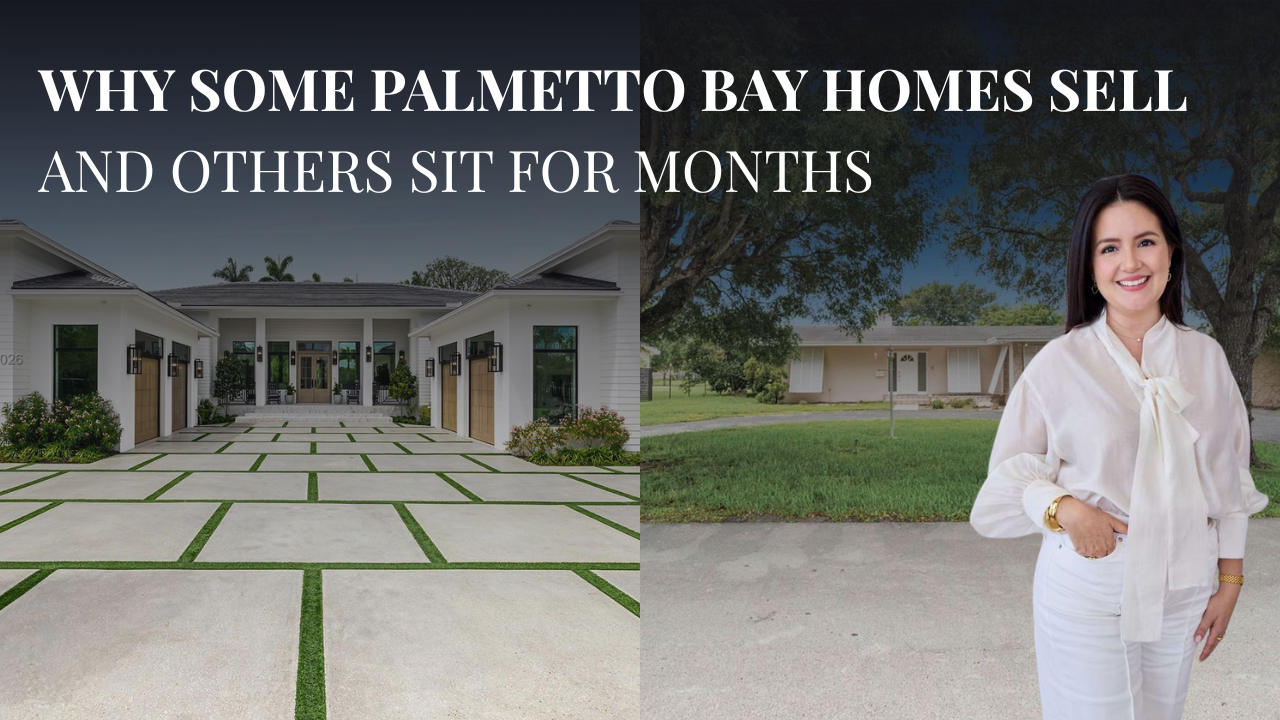
Palmetto Bay Has Almost No Inventory. So Why Are Homes Still Sitting?

Which Schools Serve Palmetto Bay? A Guide to Public School Boundaries

Beyond the Developer Finish
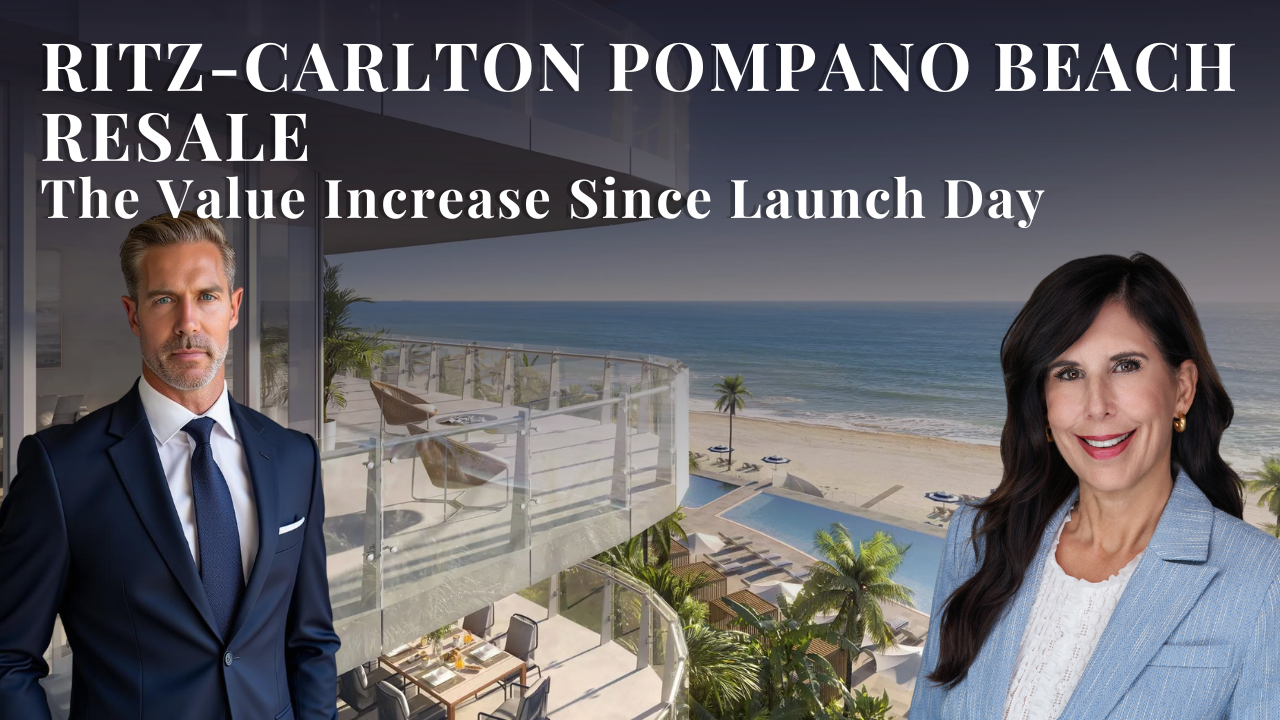
Ritz-Carlton Residences Pompano Beach Resale: The Opportunity After Closing
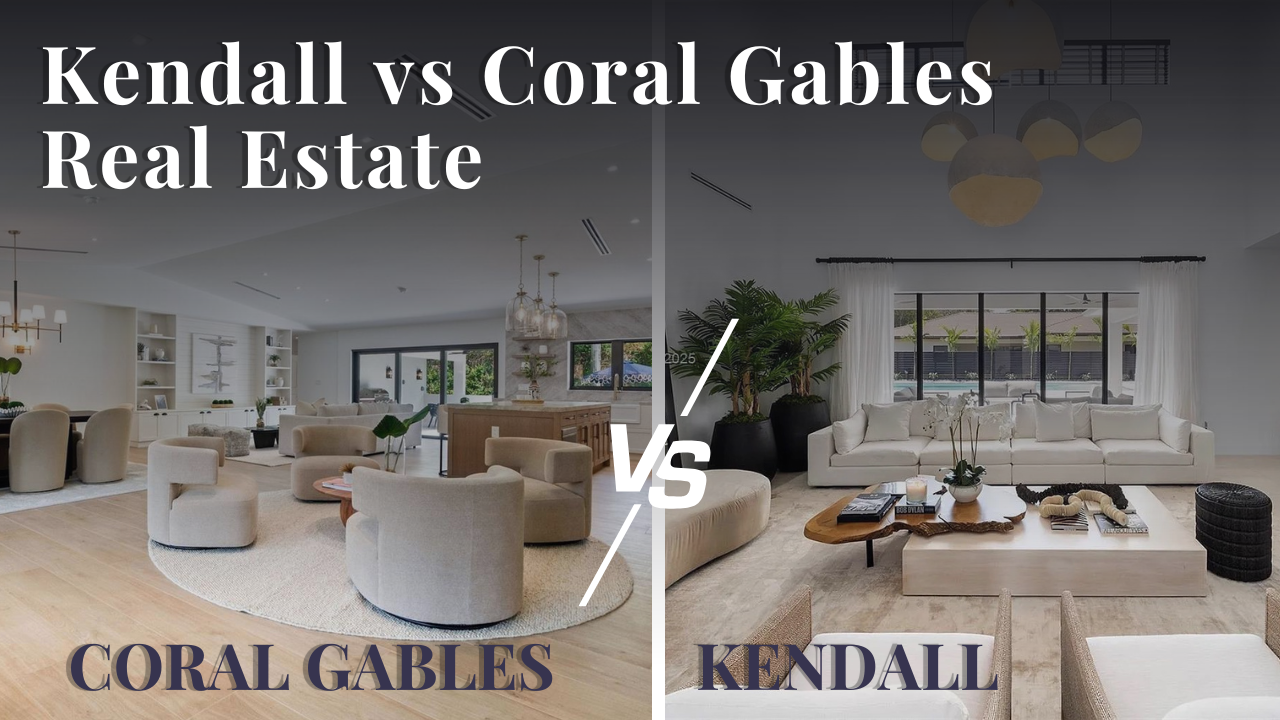
Kendall Real Estate vs. Coral Gables Real Estate: More Land, More House, Same Budget
Please fill in your details and David Siddons will contact you

Search related videos

Insights on Miami Real Estate Trends: A Discussion with Eli Beracha Professor of Real Estate Education
2024 Miami Real Estate: Top 10 Predictions & Trends to Watch! Education
Miami Real Estate 2024 Forecast! #BetterDecisions CondoMarket
Is Miami Real Estate Crash Coming? The Economic Truth! With FIU Professor Eli Beracha MarketUpdates
Miami Real Estate Market Insights: 10 Key Points in 10 Minutes MarketUpdates
As the Miami Real Estate Markets Shifts, Who is Vulnerable? Education
2021 Miami Real Estate Report | Where Are We and Where Are We Going? CondoMarket
The 2020 Q2 and Q3 Miami Real Estate Report. An Analytical perspective. Education
David Siddons on the takeaways of his 2019 Miami Real Estate Forecast 2019Forecast
The 2019 /2020 Miami Real Estate Forecast – By A Top Producing Miami Realtor 2019Forecast
The 2019 Miami Real Estate Forecast: Our Accurate Market Predictions 2019Forecast
The 2018 Luxury Miami Real Estate Report: Pinecrest Luxury Homes MarketUpdates


- Get our Newsletter
- Subscribe
- No Thanks
Get the latest news from Miami Real Estate News
Close
Edit Search
Close
2 of 14
Share this property
Recomend this to a friend, just enter their email below.
Close
Your email was sent successfully
Close
 COMPARE WITH CONDOGEEKS