



















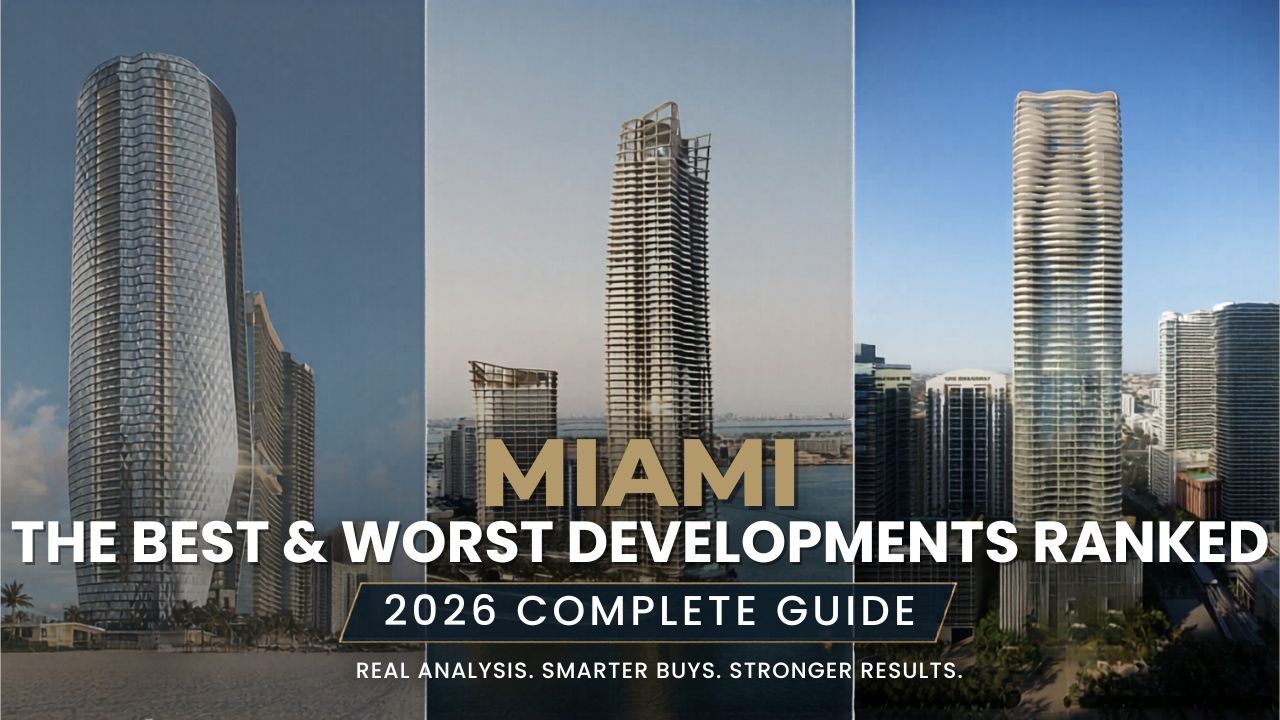
- Best of All
- Best Miami Luxury Condos
- Most popular
- Relocating to Miami
- Private Schools
- Investments
- Gated communities
- Waterfront information
- Luxury homes
- Luxury Condos
- New Construction Condos in South Florida
- Independent Pre-Construction condo reviews for Miami
- Independent Pre-Construction condo reviews for Fort Lauderdale
Investing in Miami Real Estate: Building A Custom House
Building a House in Miami | Costs, Timelines and Upsides of Custom Home Building in Miami
This article focuses on the costs, timelines, and other questions you might have regarding Building A Custom House in Miami. Is it part of a large framework of blogs that all relate to the different investment approaches for Miami Real Estate. At the end of this article you find the link to other articles in this series.
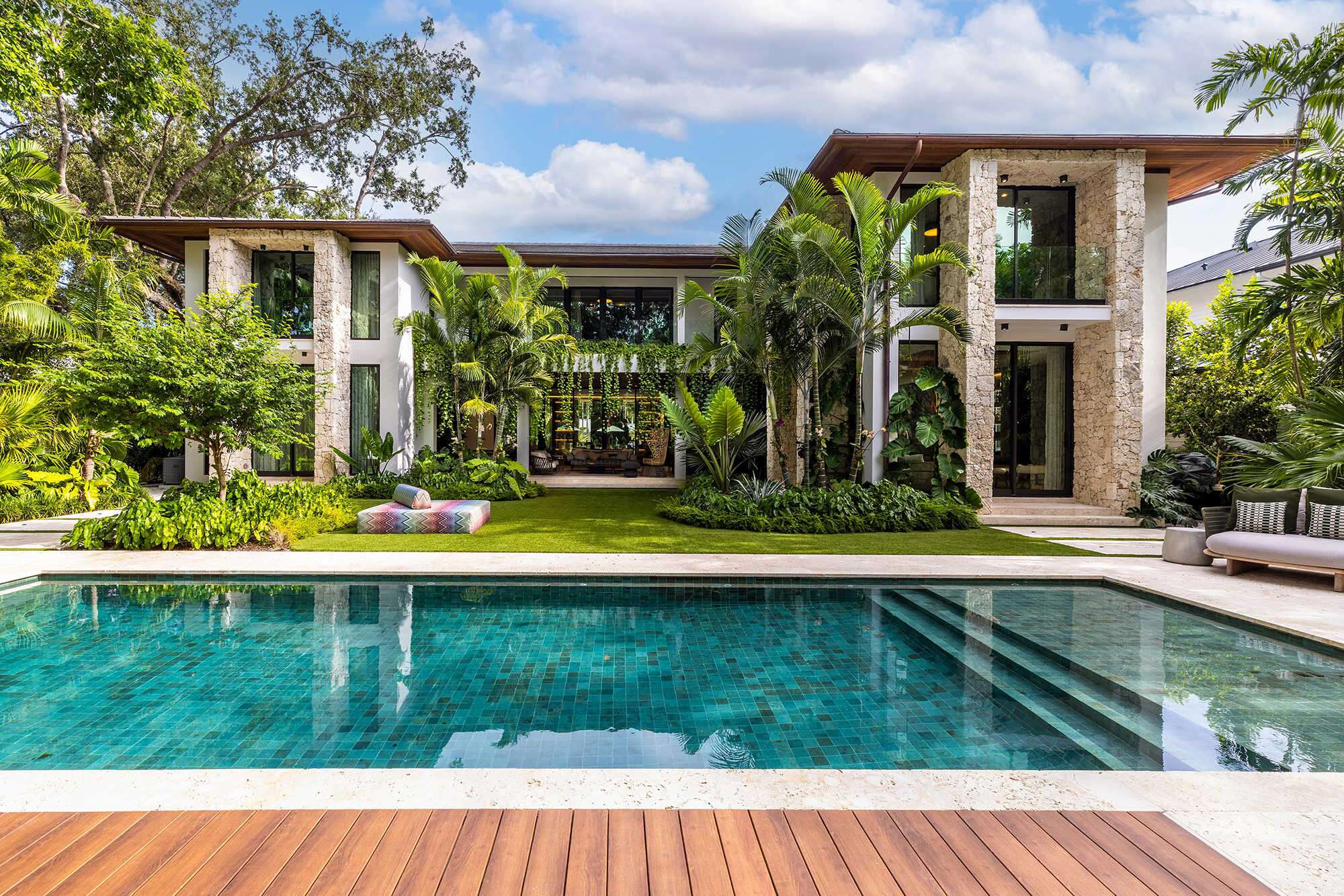
How Much Does It Cost to Build a House in Miami?
Building a house in Miami, especially a high-end custom home, starts at $650 per square foot. It’s important to note that this cost is calculated based on the gross square footage, not just the air-conditioned space. This comprehensive rate covers all aspects, from tiles and lighting to millwork and flooring, ensuring a fully finished home. While the minimum cost per square foot is $650, it can go up to $1,000 per square foot or even higher.
Custom homes come with a higher price per square foot, but the value they offer is unquestionably worth it, often commanding significantly higher selling prices. While custom homes do carry a higher per square foot price tag, our team is committed to providing guidance on what makes financial sense. We can offer insights into market caps and estimated selling prices based on your desired finishes. We prioritize transparency and won’t encourage overspending. As your agent, I’ll help you determine your spending ceiling, ensuring you build a home you love and can profitably sell when the time comes.
Is it cheaper to Build or Buy a Luxury House in Miami?
In prime areas, the price of purchasing a ready-made home has seen a remarkable surge. Compared to the previous year, property values have risen by 20% to 30%, and the increase is a staggering 50% when we look back just two years. Despite this surge in demand, our market is experiencing a significant shortage of newly built homes, even though a massive 90% of buyers are actively seeking new properties.
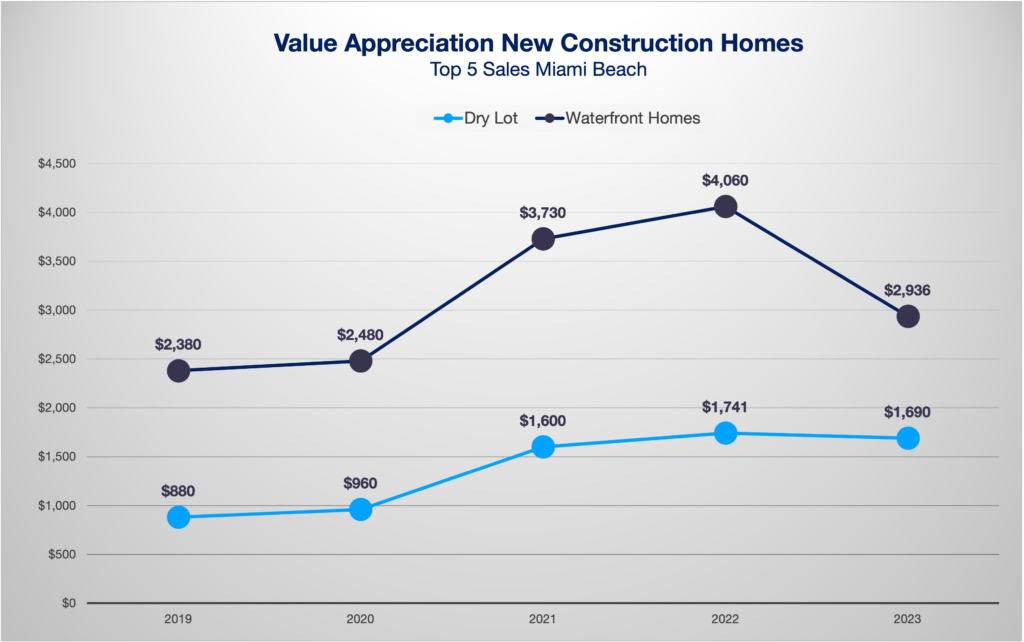
At present, the cost of a custom-built home on a dry lot can fall within the range of $1,400 to $2,000 per square foot. If you have your sights set on a custom waterfront home, you should be prepared for expenses ranging from $3,500 to even $4,500 per square foot. Considering these price points, building a house in Miami can often be the more financially prudent choice.

Is This the Right Time to Build a Custom Home in Miami?
From a real estate perspective and considering market analysis, my unequivocal recommendation is to opt for the construction of a custom home. This choice not only aligns with sound financial principles but also avoids overpaying for someone else’s efforts and time. The current state of the market is characterized by extraordinary property values, making it an opportune moment for the creation of luxurious custom homes in Miami. The demand for such homes has surged, resulting in sales prices that are now 50% higher than pre-pandemic levels. Exemplary custom homes, particularly those with meticulous finishes, consistently command prices that exceed expectations and set new records.
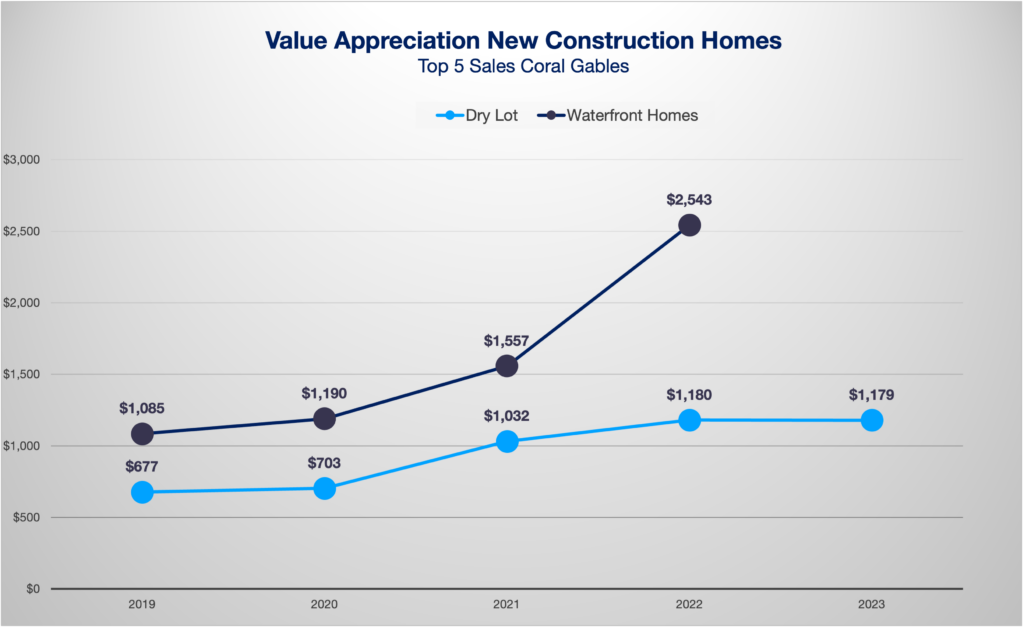
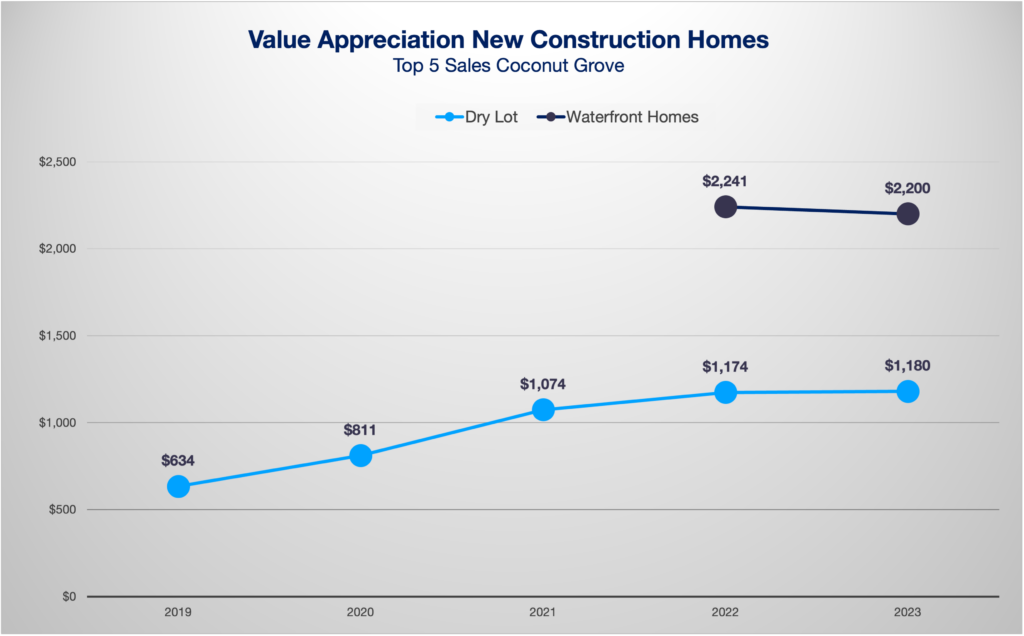
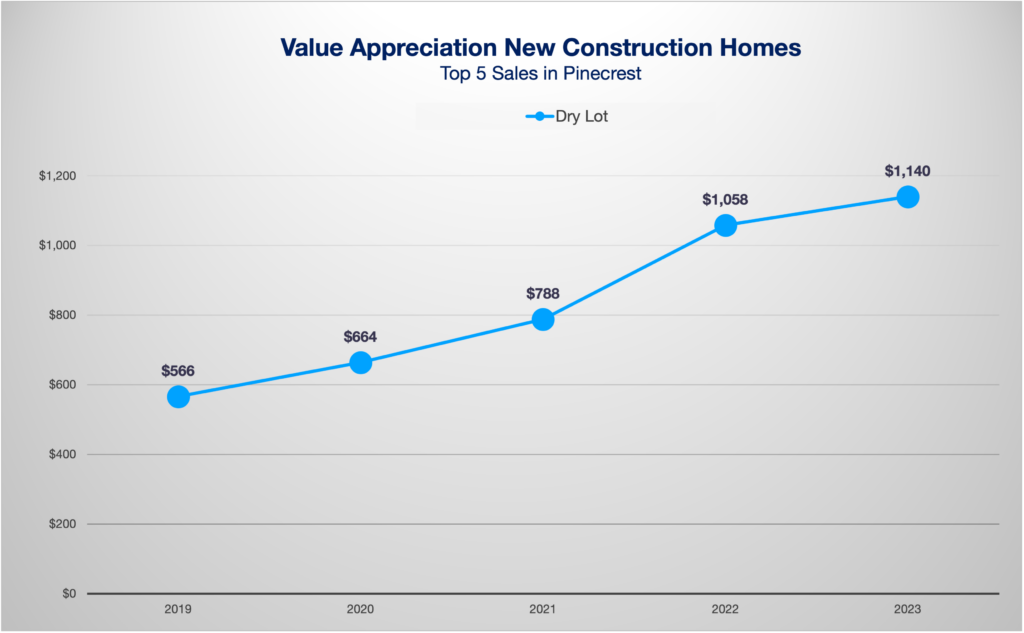
The profitability of this endeavor is substantial, primarily due to the significantly higher dollar per square foot value. For instance, properties in Coconut Grove, once valued at around $600 per square foot on dry lots, now sell for approximately $1,300 per square foot or more. Well-finished waterfront mansions can fetch prices ranging from $2,000 to $3,000 per square foot. The shift in buyer preferences in Miami towards top-tier products further enhances the appeal of building a custom house.
Given the scarcity of such properties, buyers are willing to invest generously in acquiring them. Therefore, even if the construction cost averages around $1,000 per square foot, the potential for selling at $2,000 or higher per square foot represents a remarkable 100% profit margin.
In the last few years many of the large (waterfront) deals have happened off-market. The above data only show sales that were registered on the MLS. Coconut Grove witnessed just two waterfront sales, with each data point representing a single sale.
The Process of Building a Custom House in Miami
Step 1: Land Selection. I will provide valuable insights into property values in different areas and local building regulations. It’s essential to be aware of varying regulations, including restrictions on the percentage of land you can build on. Finding the perfect land can be challenging in Miami, therefore we often explore off-market opportunities.
Step 2: Assembling Your Dream Team. Assemble a team: designer, architect, and General Contractor. Involve the designer early to align architectural and interior design, preventing delays and extra costs. Early collaboration avoids complications and overspending.
Step 3: Schematic Design and Sketches. Now, you’ll dive into the design process, with your team providing full schematic designs and sketches of your future home. This stage usually involves a two-month back-and-forth process before final plans are ready.
Step 4: Refining the Details. With your schematic designs in hand, the next step delves into the finer details of your home, including interiors, exteriors, materials, and finishes. You’ll also engage electro-mechanical consultants and structural engineers to bring your design to life and prepare for city submissions. This phase typically spans 8 to 10 months.
Step 5: The Permitting Process. The next stage involves obtaining the necessary permits, which requires submitting your team’s plans to the city for approval. Typically, permitting takes 8 to 10 months, following the design phase, resulting in an 18-month timeframe from design to permitting.
Step 6: Demolition and Ground Preparation. Demolishing a home is straightforward; permits take a few weeks. Plan utility disconnection two months ahead to avoid delays. Careful pre-construction planning is essential.
Step 7: Construction and Interior Finishing. Home construction takes around 18 months. Initial phase (6-8 months) builds the shell, including roof, doors, and plumbing. Next, 8 months finish interiors, plumbing, electrical, and millwork.
Building a House in Miami | How Long Does it Take to Build a Custom Home in Miami?
| Home Building Steps | Calculated Time | Cumulative Time |
| Step 2 & 3: Assembling Your Team and Finalizing the Schematic Design and Sketches | 2 Months | 2 Months |
| Step 4: Refining the Details | 8-10 Months | 10-12 Months |
| Step 5: The Permitting Process | 8-10 Months | 18-22 Months |
| Step 6 & 7: Construction and Interior Finishing | 18 Months | 36 months - 40 Months |
| Total Time | 3 Years with several months of buffer time |
Start your Search here!
| Neighborhoods | Search Land for Sale | Search New Construction Homes (Built max. 2 years ago) | Comments |
| Coral Gables | Land for Sale | New Construction Homes | Ask me for off-market opportunities! |
| Coconut Grove | Land for Sale | New Construction Homes | |
| South Miami | Land for Sale | New Construction Homes | |
| High Pines/Ponce Davis | Land for Sale | New Construction Homes | |
| Pinecrest | Land for Sale | New Construction Homes | |
| Miami Beach | Land for Sale | New Construction Homes |
Three Final Recommendations before you start Building a House
- Understanding the economic context is vital when making your decisions. Make sure that the chosen location can accommodate the type of property you aim to build. In gated communities, you have greater flexibility to pursue top-tier construction. These areas typically have limited property availability, and the potential for property appreciation is high. Quality homes in such markets often set records due to their elevated standards and the strong demand for excellence. Cutting corners is not advisable when building high-end custom homes, as discerning buyers are willing to invest in quality. Quality supply is limited, and well-executed homes consistently attract potential buyers.
- Selecting the right team from the very beginning is crucial. It’s not just about the numbers; it’s about choosing a team with a proven track record, extensive experience, and a demonstrated ability to work cohesively. Checking their references is essential, and it’s a wise practice to speak with previous clients about their punctuality and adherence to budget. Working on high-end homes with top-tier finishes necessitates skilled labor, which can be challenging to secure. In Miami, finding artisanal labor is not always straightforward. Successful teams have a closely-knit, in-house workforce, minimizing reliance on subcontractors. Contact us for our local recommendations that we have work with successfully.
- When it comes to interior design, it’s important to set realistic expectations. It’s vital to differentiate between knowing your preferences and being prepared to invest in them. It’s not uncommon for buyers to opt for the lowest quote, only to later discover unexpected delays and increased costs.
The different mechanisms to invest in Miami Real Estate
- Income-generating properties – Condos In this article, we discuss which Miami condos offer the best returns, share real-life examples of condo investments, provide guidelines on what to invest in and what to steer clear of, and examine the local and global factors influencing the Miami real estate market.
- Income-Generating Properties – Homes This article focuses on investing in single-family rental properties in Miami. We discuss which neighborhoods and property types currently offer the best rental returns. We offer real-life investment examples and provide guidelines on what to avoid and what to invest in. Furthermore, we analyze the various factors, both local and global, that influence the Miami real estate market.
- Fix and Flip. We explore the realm of property renovations aimed at boosting its value. If you’re looking to purchase a more budget-friendly home, consider investing in cosmetic improvements and then selling it at a profit.
- Building a house.
- New Condo Construction Investors highly favor new construction condos, especially when acquired early at lower prices. We will share key insights on what to consider and what to steer clear of. Additionally, we’ll provide an overview of how different new condos compare in terms of price per square foot.
- Join our Fund! We’re in the process of launching a fund that allows anyone interested in Miami real estate investment to join. We’ve assembled a team of expert professionals who are well-versed in the market. Given the elevated interest rates and property prices, our fund will enable investors to collectively purchase prime and ultra-luxury real estate.
Schedule a Meeting with David (Via Zoom or in Person)
I have a lot of experience with custom home building in Miami both as a realtor and as a consumer. I have close relationships with several of Miami’s best architects, contractors and design companies.
FAQ
These are the most commonly Miami Real Estate Related questions
What should relocation buyers know before buying real estate in Miami?
HOME BUYERS
Relocation buyers looking at homes in Miami should understand that choosing the right house is less about the property itself and more about location, schools, and long-term value. Many buyers make the mistake of focusing on price or finishes, while the real driver of value is the neighborhood and micro-location. Older homes often represent better value, but may also be part of a future redevelopment cycle. Newer homes command premiums, but don’t always sell faster if pricing is ahead of the market. Commute time, school access, and community dynamics are critical and often underestimated. The key is to evaluate homes not just as lifestyle purchases, but as long-term assets within a very localized market.
Sources:
https://luxlifemiamiblog.com/relocating-to-miami/
https://luxlifemiamiblog.com/relocating-to-miami-with-a-family/
CONDO BUYERS:
Relocation buyers should understand that Miami is a highly segmented, building-driven market, not a uniform one. Pricing can vary significantly between similar properties depending on building quality, layout, and financial health. Many buyers assume newer construction equals better investment, but that is often not the case. Factors like HOA fees, reserves, and rental policies can materially impact long-term value and liquidity. Negotiation opportunities often exist, especially in slower segments, but require precise market knowledge. The key is to evaluate micro-markets and individual buildings, not just neighborhoods or price per square foot.
Sources:
https://luxlifemiamiblog.com/miami-real-estate-market-report/
https://luxlifemiamiblog.com/new-construction-miami-guide/
What are the best areas for relocating families with children
For families relocating to Miami with young children, the most recommended neighborhoods are Coral Gables, Coconut Grove, and Pinecrest. Coral Gables offers the best balance of top schools, safety, and long-term value. Coconut Grove is ideal for younger families seeking walkability, greenery, and a lifestyle-driven environment. Pinecrest provides larger homes, excellent schools, and better value for space, making it ideal for growing families. The key driver across all three is access to strong schools and primary residential stability. Relocation decisions are less about new construction and more about long-term livability and resale strength.
Sources:
https://luxlifemiamiblog.com/best-neighborhoods-miami/
https://luxlifemiamiblog.com/what-are-the-best-family-neighborhoods-in-miami-in-2023/
Are new construction condos in Miami a good investment?
New construction condos in Miami can be a good investment—but only if you understand that not all buildings perform the same. According to the David Siddons Group, many buyers assume “new = better,” but in reality, performance depends on pricing, layout, building quality, and long-term demand. Some new developments set future price benchmarks and can drive long-term appreciation, especially in top-tier projects. However, many are priced aggressively at launch, and buyers relying on marketing instead of data often overpay.
The market is highly segmented, meaning two new buildings next to each other can perform very differently.
The best opportunities typically come from selecting the right building early or negotiating correctly in later phases.
In short: new construction is not automatically a good investment—it becomes one only with building-level analysis and disciplined entry pricing.
Sources:
https://luxlifemiamiblog.com/how-to-buy-a-luxury-condo-in-miami/
https://luxlifemiamiblog.com/category/independent-new-construction-condo-reviews/
https://luxlifemiamiblog.com/beyond-clickbait-real-insights-into-miamis-luxury-condo-market/
Why is buying a Miami condo riskier than buyers think?
Buying a Miami condo is often riskier than buyers expect because the true risks are at the building level—not visible in the listing price. Many buyers focus on finishes and views, while overlooking HOA reserves, insurance exposure, and potential special assessments. In reality, two identical units in different buildings can perform completely differently over time. Rising HOA fees and stricter regulations are also increasing the true cost of ownership, especially in older buildings. Liquidity can be affected by factors like financial health, rental policies, and ongoing repairs. The key risk is not the condo itself—but buying into the wrong building without proper due diligence.
Sources:
https://luxlifemiamiblog.com/how-to-buy-a-luxury-condo-in-miami/
https://luxlifemiamiblog.com/miami-condo-market-risks/
What are Miami's Safest Areas?
Which Miami Areas Still offer Great Value (Budget Friendly alternatives to Coral Gables and Pinecrest)
If you’re looking for better value than Coral Gables or Pinecrest, the answer (in true Siddons style) is not “go cheaper”—it’s go one layer outside the obvious markets.
The strongest value plays are:
- Schenley Park → closest substitute to Coral Gables at ~20% discount while maintaining similar character and location
- Biltmore Heights → almost identical feel to the Gables but ~25–30% cheaper on a $/SF basis
- Glenvar Heights → central location with larger lots and ~25% pricing advantage vs South Miami/Gables
- Baptist / Galloway (Kendall) → Pinecrest-style living (space, schools, land) at up to ~30% lower pricing
The pattern is consistent:
👉 Buyers are shifting west and slightly off-market to gain land, scale, and pricing efficiency. You don’t find value by going to a “cheaper neighborhood”—you find it by identifying adjacent micro-markets that offer the same lifestyle fundamentals without the brand premium.
Sources:
https://luxlifemiamiblog.com/best-value-neighborhoods-miami/
https://luxlifemiamiblog.com/category/miami-neighborhoods/
Is NOW a good time to buy in Miami?
Are Miami real estate prices going down in 2026?
No—but that’s the wrong way to look at it. Miami is not one market anymore, so prices are not moving in one direction. In 2026, the market is split into two: ultra-luxury, scarcity-driven areas (like waterfront and top-tier neighborhoods) are still holding or even rising, while mid-tier condos and oversupplied segments are flat or correcting. What we’re seeing is price divergence, not a crash—some properties are gaining value while others are quietly adjusting downward. Rising inventory and more selective buyers are putting pressure on pricing in certain segments, especially older condos or buildings with weaker fundamentals.
At the same time, global wealth and cash buyers continue to support pricing at the top end of the market. So the real answer: prices aren’t broadly dropping—they’re being repriced based on quality, location, and supply.
Should I buy a house or a condo when relocating to Miami?
The decision comes down to lifestyle first, investment second—and most relocation buyers get that backwards. If you want space, privacy, schools, and long-term family living, a single-family home in areas like Coral Gables or Coconut Grove is typically the stronger choice. If you prioritize walkability, low maintenance, and proximity to business districts, a condo in Brickell or waterfront markets makes more sense.
From an investment perspective, homes tend to be more stable, while condos are more building-dependent and cyclical. Most relocation clients underestimate how much building quality, HOA structure, and future costs impact condo performance. The right answer isn’t “house vs condo”—it’s which asset fits your lifestyle AND holds value within its micro-market.
How do I choose the right Miami neighborhood for my lifestyle?
Why are Miami condo prices so different between buildings?
Miami condo pricing varies widely because value is determined at the building level, not just by location. Two buildings next to each other can have major differences in financial health, reserves, HOA fees, and management quality. Buyers also pay premiums for better layouts, views, amenities, and newer construction—but not all “new” buildings perform equally. Factors like rental policies, upcoming assessments, and building reputation can significantly impact resale value. This is why price per square foot alone is misleading in Miami’s condo market. The real driver of value is how that specific building competes within its micro-market over time.
Sources:
https://luxlifemiamiblog.com/how-to-buy-a-luxury-condo-in-miami/
https://luxlifemiamiblog.com/category/independent-new-construction-condo-reviews/
WHY WORK WITH DAVID? THINGS YOU SHOULD KNOW...
For all our analytics we are agents driving some very unique and advanced tech. We Provide a granular and custom experience that empower our clients with the insight and tools to understand the most complex behaviors of any local markets.
-
Analytical
Over 100 reports produced to date
-
Knowledgeable
Over 1800 published articles and counting


Related Articles

Coral Gables Real Estate Market Q1 2026
Kendall Luxury Real Estate Market Update Q1 2026
Miami Real Estate Market Report Q1 2026: The Two-Market Reality Driving Prices

Sunny Isles Real Estate Market Q1 2026

Who Is the Best Real Estate Agent in Miami for New Construction Condos? (2026 Data-Driven Guide)

How to Buy a Luxury Condo in Miami (2026 Playbook for Smart Buyers)

Pinecrest Real Estate Market Update Q1 2026

Aventura Real Estate Market Report Q1 2026

Brickell Real Estate Market Report Q1 2026
Coconut Grove Real Estate Market Q1 2026

South of Fifth Real Estate Market Report Q1 2026
Fort Lauderdale Luxury Real Estate Update Q1 2026 | A Quiet Market Shift is Underway

Best Value Neighborhoods in Miami

Real Estate Investing in 2026: Why the Old Strategies No Longer Work
Please fill in your details and David Siddons will contact you

Search related videos

Are St. Regis Sunny Isles Residences Worth the Brand Premium?
Coral Gables Market Report 2025: What the Headlines Aren’t Telling You!
How David Siddons’ Power Team Drives Miami’s Luxury Market
Mid‑Year 2025 Coconut Grove Report: The Truth About What’s Selling Now
Brickell Mid‑Year Market Report 2025 | Is Brickell’s Luxury Market in Trouble?
Pinecrest Mid-Year Market Report 2025 | What’s Selling, What’s Sitting & Why
Miami Beach Condo Market Mid-Year Report 2025 | What Buyers & Sellers Need to Know
How to Lose $1M in The Miami Condo market | Top Mistakes That Cost Miami Condo Buyers Millions
The Well Project EXPOSED Coconut Grove’s Hottest Units
Miami Real Estate in 2025 Is NOT What You Think 😱 | Midyear Must Knows for Buyers & Sellers!
7 Things You Should Never Say to a Real Estate Agent in Miami!
Landmark Victoria Park Residence in Fort Lauderdale: Inside 420 NE 11th Ave 🌴✨
Luxury Living on 2355 S. Miami Ave | Fully Furnished 4-Bed Home w/ Resort-Style Pool 🏊
Is Mandarin Oriental Residences Miami a Smart Condo Investment? Prices, Floorplans, Views & Finishes


- Get our Newsletter
- Subscribe
- No Thanks
Get the latest news from Miami Real Estate News
Close
Edit Search
Close
2 of 14
Share this property
Recomend this to a friend, just enter their email below.
Close
Your email was sent successfully
Close
 COMPARE WITH CONDOGEEKS