













- Best of All
- Best Miami Luxury Condos
- Most popular
- Relocating to Miami
- Private Schools
- Investments
- Gated communities
- Waterfront information
- Luxury homes
- Luxury Condos
- New Construction Condos in South Florida
- Independent Pre-Construction condo reviews for Miami
- Independent Pre-Construction condo reviews for Fort Lauderdale
The 5 Best Investment Properties in Miami (2026)
Most Miami investment guides tell you where to buy. David Siddons tells you what to buy. After 20+ years and over $3 billion in transactions across Miami’s most competitive submarkets, he has a clear framework: in 2026, Miami has split into two markets. Waterfront, ultra-luxury, and scarcity-driven assets are holding or rising. Oversupplied mid-tier condos are flat or correcting. The five property types below are where David consistently sees the strongest returns — and each one comes with his specific guidance on what to look for and what to avoid. These are what David considers the best investment properties in Miami.
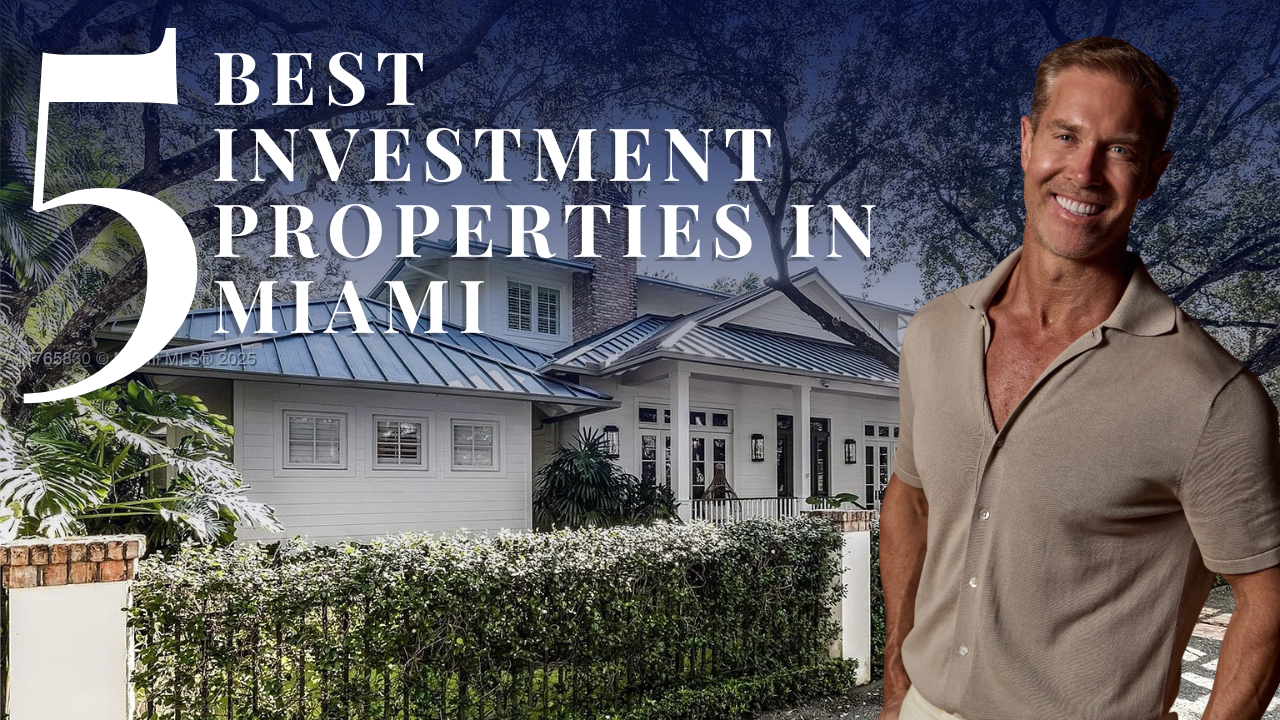
Who Is David Siddons?
David Siddons is one of Miami’s most recognized luxury real estate brokers, ranked in the top 0.1% of Realtors nationwide, leading the number one team in Coral Gables and the number three team in Miami. Over a 20-year career he has closed more than $3 billion in transactions, including $800 million in just the past three years. Originally from the UK with a background in finance, David brings a data-driven approach to a market that too often runs on hype. His analysis has been featured in Bloomberg, CNBC, BBC World, and the Miami Herald, and he serves as a board member of the FIU Hollo School of Real Estate. He lives in Ponce Davis with his family — meaning he is not just advising on this market, he is invested in it personally.
What sets David apart is not the volume. It is the transparency. His blog at luxlifemiamiblog.com includes some of the most direct investment guidance available anywhere on the Miami market — including full articles on what not to buy, which buildings to avoid, and the mistakes that cost investors money. That kind of honesty is rare in real estate.
The best investment properties in Miami
1. Single-Family Homes Near Miami’s Top Schools
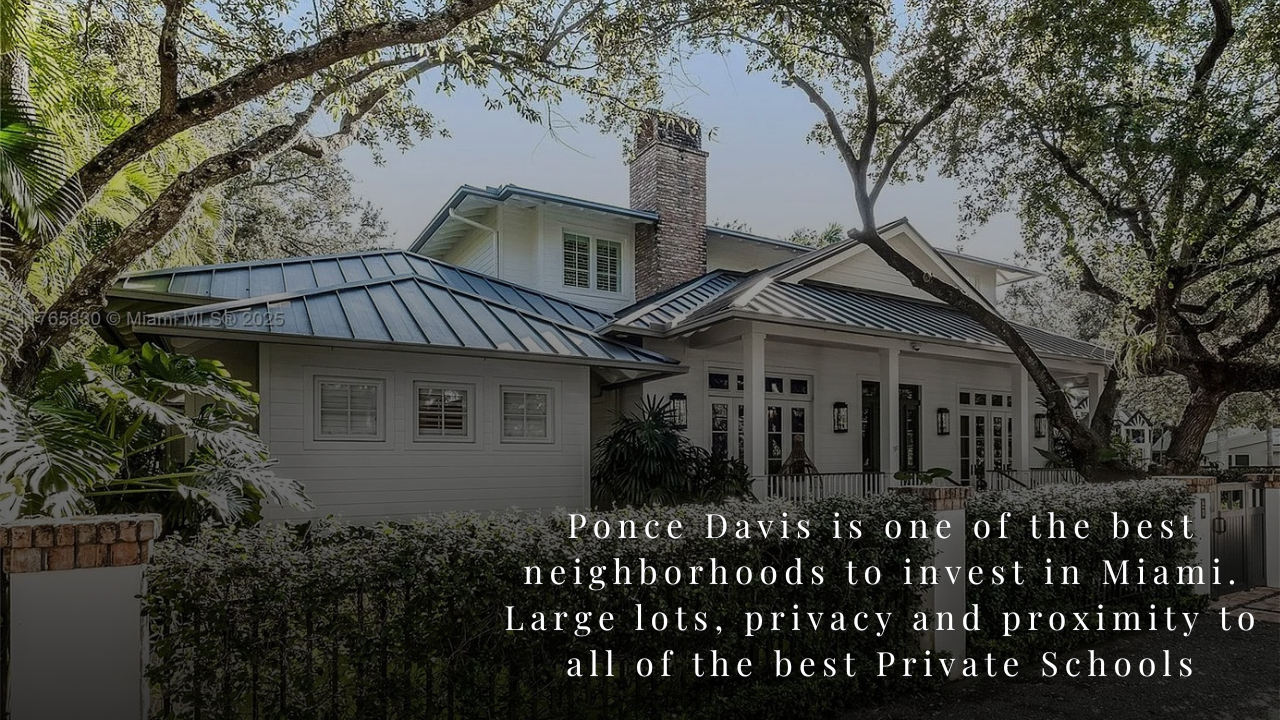
Single-family homes near top schools in Coral Gables, Ponce Davis, Coconut Grove, and Pinecrest are what David describes as the most consistently reliable investment in the Miami market. The demand is structural: families relocating to Miami always target the $1M- $2M range in these neighborhoods, and that demand is driven by end-users, not investors. It does not evaporate when the market softens. From a performance standpoint, David notes that single-family homes have been more stable than condos across every market cycle. Supply in these school-zoned neighborhoods is genuinely constrained. You cannot build new single-family inventory in East Coral Gables or central Coconut Grove at any meaningful scale. That scarcity, combined with persistent family demand, produces the kind of price floor that more speculative property types simply do not have. David specifically identifies East Coral Gables, where properties in the $3M-$6M range are absorbing in approximately two months on average in 2026, as the standout performer.
Avoid: Cosmetically flipped homes. Miami has a significant flip culture where new kitchens and bathrooms are used to disguise serious plumbing, electrical, and structural problems. Always commission a full independent inspection before any commitment.
Skip the research. One call with David tells you exactly where to put your money.
Book your free 30-minute consultation below.
2. Waterfront Estate Homes: From Gated Coral Gables to Private Islands
This is wealth preservation at its most durable. At one end of the spectrum: gated bayfront communities in Coral Gables including Gables Estates, Old Cutler, and Cocoplum, which David singles out as essentially impossible to replicate anywhere in Miami. At the other end: private island estates on Indian Creek (40 homes, 250 acres, its own police force, $25M-$80M+), Star Island, and Palm and Hibiscus Islands. Both ends of this spectrum share the same investment logic: permanently fixed supply, global wealth demand, and a scarcity premium that compounds over time. These are not yield investments. Cap rates are low. What you own instead is an asset whose supply cannot be increased, in a city whose position in the global wealth landscape has permanently upgraded over the past decade. For international buyers seeking US dollar-denominated capital preservation with world-class lifestyle value, this is David’s answer.
Avoid: Dated, waterfront-adjacent properties in flood hazard zones that are just remodeled or need remodeling, and off-water properties in these communities that carry the location premium without the water access that underpins the investment thesis. Always get an independent flood risk and structural assessment.
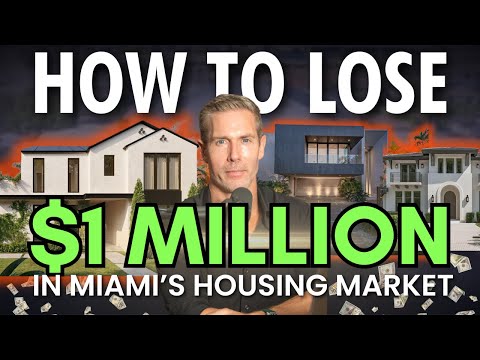
How to Lose $1M in the Miami Real Estate Market
3. Hospitality-Branded Oceanfront Condos With Large Floor Plans
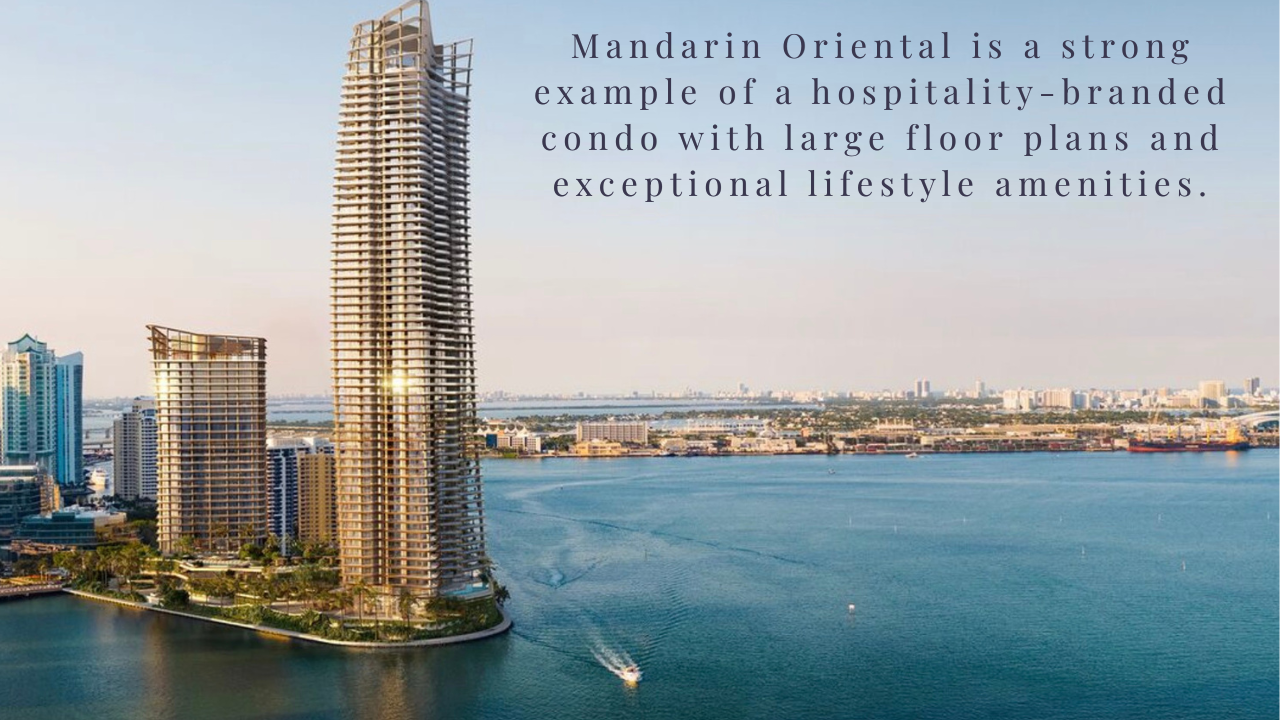
This is the condo investment David points to most strongly. His research shows that true hospitality-branded residences outperformed regular condos by 136%. The operative word is ‘true hospitality’: brands like Mandarin Oriental or Four Seasons form genuine operational partnerships with real service infrastructure. That is what drives the premium, not just a name on a sign. The product itself matters as much as the brand. David points to large-footprint oceanfront residences as the benchmark: projects like Ocean Terrace (52 oceanfront residences with floor plans from 3,000 to 7,000 SF, 10-foot ceilings, and deep terraces) and Continuum on South Beach (a true resort lifestyle on a 13-acre beachfront parcel) represent the standard. Large units, ocean positioning, and genuine hospitality operations are the combination that creates durable investment value.
Avoid: Fashion and car brand condos. These license their name with minimal operational involvement. David draws a clear line between lifestyle branding and true hospitality. The 136% outperformance belongs to the latter, not the former. Although not all of these are bad, they need to be considered carefully.
4. Pre-Construction From Proven Developers in Established Corridors
Pre-construction can be the highest-returning entry point in Miami real estate, or it can lock your capital up for 36 months at an overpriced entry with no room to appreciate. The difference is entirely about who you work with and where the project sits. David’s framework is straightforward: buy early, in a neighborhood with proven demand drivers, from a developer who has successfully delivered multiple Miami projects before. Early buyers in strong, well-located projects have consistently captured meaningful appreciation before their building even closes. David is equally clear about what goes wrong. Buyers who rely on developer marketing rather than independent market data overpay. Buyers who chase projects in ‘up and coming’ areas without real infrastructure get stuck. And buyers who pick impressive-sounding projects from developers without a Miami track record face the full range of execution risk. His advice: the pre-construction market rewards expertise and penalizes shortcuts.
Avoid: Developers new to the Miami market regardless of what they have done elsewhere, projects in underdeveloped areas where the growth narrative is not supported by real investment and infrastructure, and any building where the amenity package is so extensive that HOA fees will inevitably escalate significantly after the promotional period.
5. Value-Play Single-Family Homes in Coral Gables-Adjacent Neighborhoods
One of the most practical insights David shares is his analysis of the neighborhoods that offer Coral Gables quality at a meaningful discount. Schenley Park trades at approximately 20% below Coral Gables pricing while sharing its character and location. Biltmore Heights has an almost identical feel to the Gables at 25-30% less per square foot. Glenvar Heights offers larger lots at roughly 25% below Coral Gables and South Miami pricing. As higher-income buyers continue concentrating in the benchmark neighborhoods and pricing out the next tier of buyer, demand spills into these adjacent areas and the gap closes. This is a patient, data-driven play. You are not buying the hottest story in the Miami market. You are buying documented quality at a discount to a proven benchmark, with a clear mechanism for appreciation as the premium neighborhood fills up. For investors with a 5-to-10 year horizon who want exposure to Miami’s wealth migration trend at a more accessible entry point, this is David’s most actionable recommendation.
Avoid: Neighborhoods that are geographically close to Coral Gables but share none of its school quality, neighborhood character, or infrastructure. Proximity alone does not close the price gap. Only similarity in the things buyers actually care about does that
What David Says to Never Buy
- Hotel condos and condo-hotel structures
- Buildings with 80%+ investor-renter ratios, which are mostly generic condos
- New construction from unproven developers
- Condos in underdeveloped areas marketed as ‘up and coming’
- Buildings with excessive amenities driving escalating HOA fees
- Airbnb and short-term rental focused projects
- Pre-1980 condos with unresolved structural reports
- Flipped homes hiding structural problems behind cosmetic upgrades
- (Older) Properties in designated flood hazard zones
- Homes on busy streets
- Any property where the developer or seller is your only source of market data
Click here to explore some of the investment fundamentals we keep in mind when selecting properties for our clients.
30 minutes with David tells you more than hours of research.
You can spend hours reading market reports, scrolling listings, and trying to separate good advice from developer marketing. Or you can spend 30 minutes with David Siddons. After 20+ years and over $3 billion in Miami transactions, David can tell you exactly which property type fits your goals, which neighborhoods are actually performing right now, and which projects to avoid — in the time it takes to have a coffee. The call is free. The insight is not something you will find anywhere else. Call 305.508.0899, email [email protected], or schedule a consultation via the application below.
FAQ
These are the most commonly Miami Real Estate Related questions
Is Miami real estate still a good investment in 2026?
Yes, but the market has split. Waterfront, ultra-luxury, and scarcity-driven assets are holding or appreciating. Mid-tier condos in oversupplied buildings are flat or correcting. The question is no longer whether to invest in Miami — it is what to invest in and where. Get that right and Miami remains one of the strongest residential investment markets in the United States.
Are condos or single-family homes a better investment in Miami?
David Siddons consistently points to single-family homes as the more stable investment across market cycles. They are scarcer, particularly in the rental market, and less susceptible to oversupply. That said, the right condo in the right building — large floor plan, distinctive unit, proven developer, end-user dominated building — can outperform. The mistake is buying a generic condo and expecting it to perform like a scarce asset.
What makes a Miami condo a good investment?
Three things: a distinctive floor plan (flow-through, corner, water-facing, high ceilings), a building where owner-occupiers significantly outnumber renters, and a developer with a documented track record in Miami. Everything else — the brand name, the amenity package, the marketing — is secondary to those three fundamentals.
Is pre-construction a good investment in Miami?
It can be the highest-returning entry point in the market, or it can lock your capital up for 36 months at an overpriced entry with no upside. The difference is entirely about the developer’s track record and the location’s demand fundamentals. Buy early, buy from proven developers, and never rely on the developer’s own marketing as your analysis.
What areas of Miami are best for real estate investment in 2026?
David’s top picks for 2026 are Coral Gables, Coconut Grove, Miami Beach waterfront, and Edgewater for appreciation-focused buyers. For value plays, Schenley Park, Biltmore Heights, and Glenvar Heights offer Coral Gables-quality neighborhoods at 20-30% discounts. For ultra-luxury wealth preservation, Indian Creek Island, Star Island, and the gated Coral Gables waterfront estates remain unmatched.
What should I never buy in Miami real estate?
Homes on busy streets, properties in flood hazard zones, cosmetically flipped homes hiding structural problems, hotel condos, buildings with 80%+ investor-renter ratios, pre-construction from unproven developers, and any property where the seller or developer is your only source of market data.
How do I know if a Miami investment property meets David Siddons' criteria?
quickest way is a 30-minute call with David’s team. After 20+ years and over $3 billion in Miami transactions, the team can assess any property against the criteria that actually predict performance — scarcity, demand profile, floor plan quality, building fundamentals, and exit strategy. Contact David at [email protected] or book directly at calendly.com/david_siddons_group/30min.
WHY WORK WITH DAVID? THINGS YOU SHOULD KNOW...
For all our analytics we are agents driving some very unique and advanced tech. We Provide a granular and custom experience that empower our clients with the insight and tools to understand the most complex behaviors of any local markets.
-
Analytical
Over 100 reports produced to date
-
Knowledgeable
Over 1800 published articles and counting


Related Articles
Greenview at Presidential Aventura
The Best Real Estate Agent in Ponce Davis
Pinecrest New Construction Is Appreciating 2x Faster Than Older Homes
Inside 1428 Brickell: Why Ytech Skipped the Hotel Brand to Build Brickell’s Best Finishes
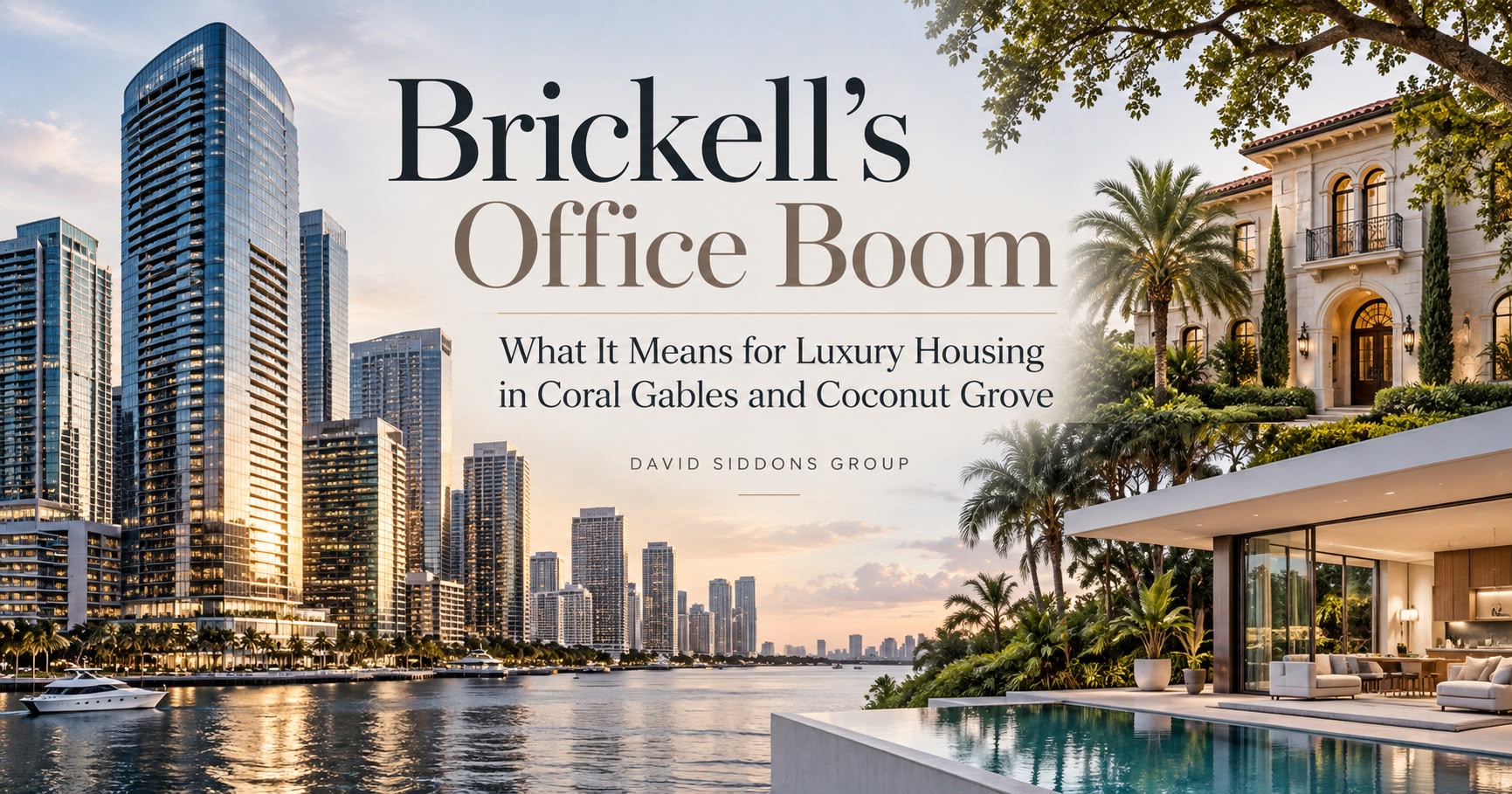
Brickell’s Office Boom: What It Means for Luxury Housing in Coral Gables and Coconut Grove
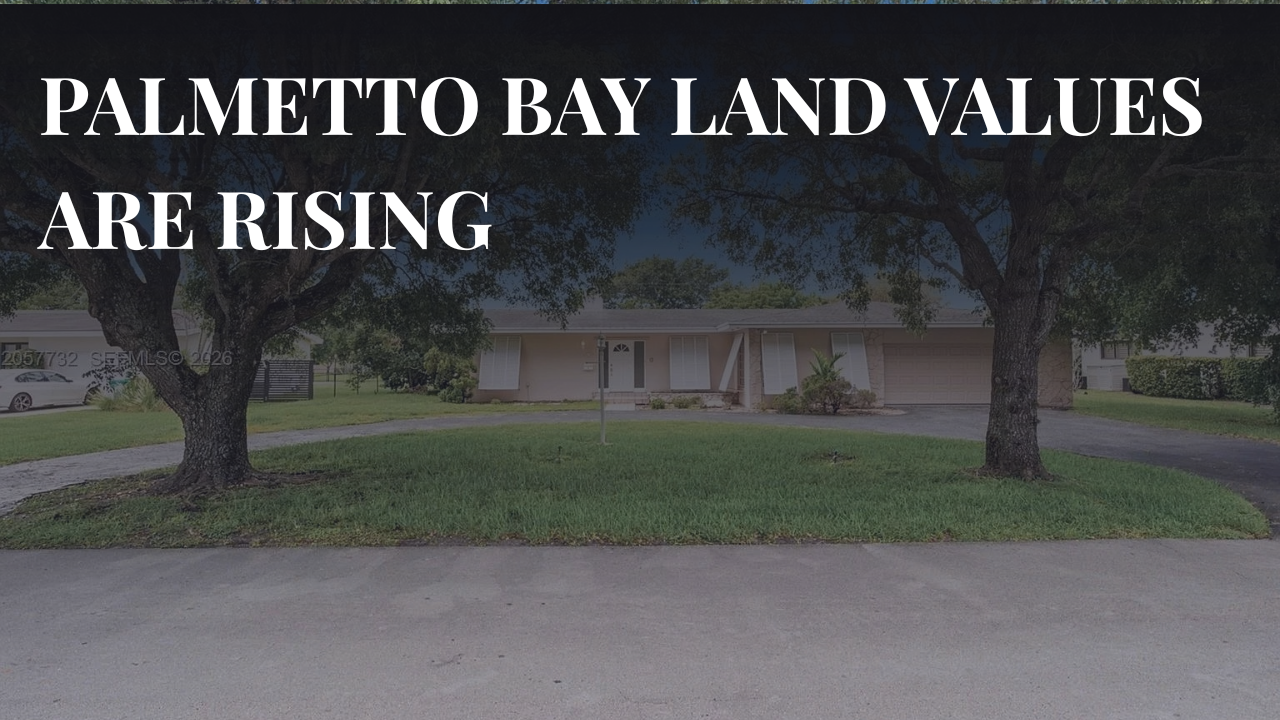
Palmetto Bay Land Values Are Rising. Is Your Home Worth More as Land?

Killian Drive: Kendall’s Luxury New Construction Corridor Hits $1,000/SF
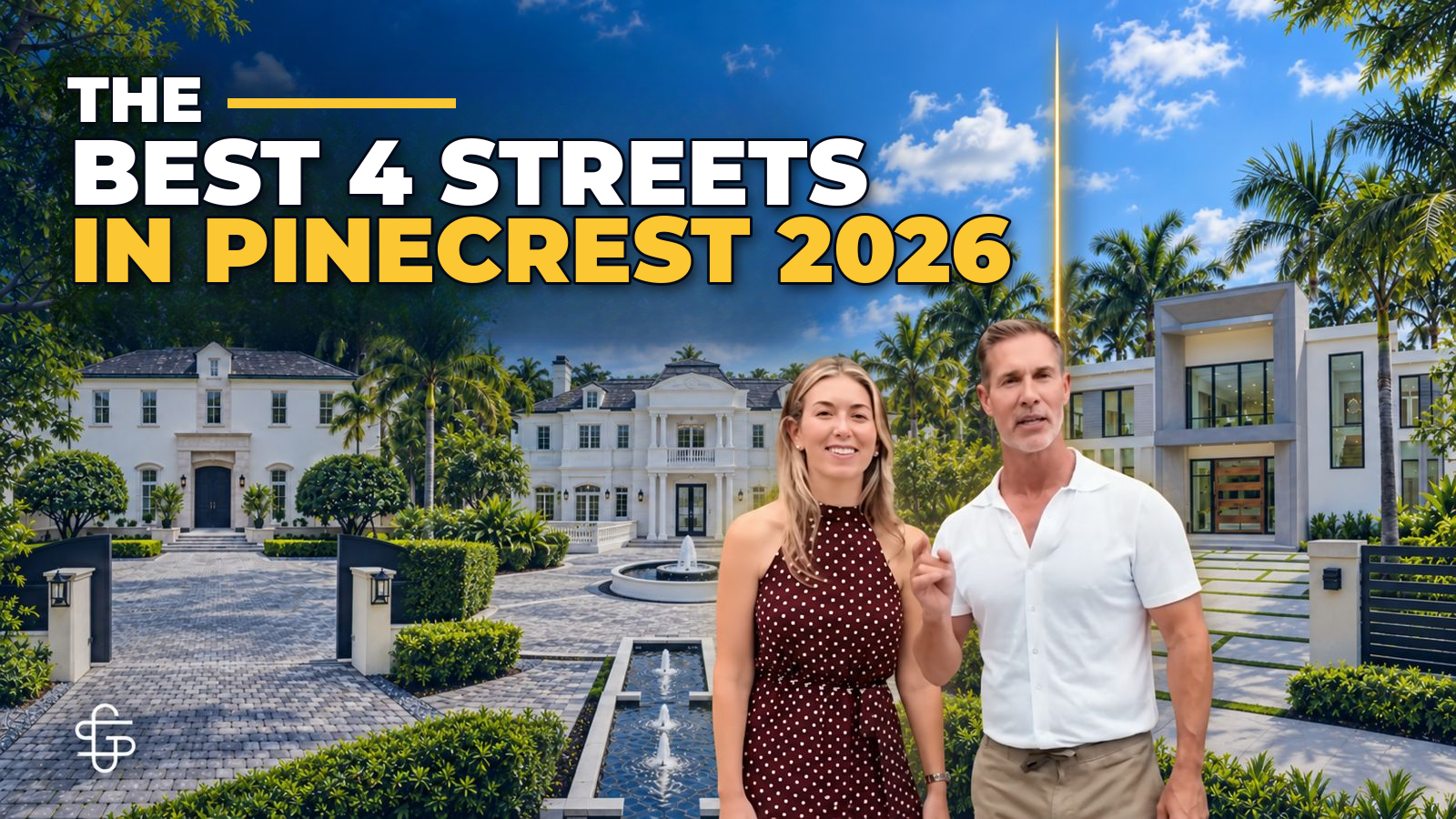
Pinecrest’s 4 Best Streets in 2026
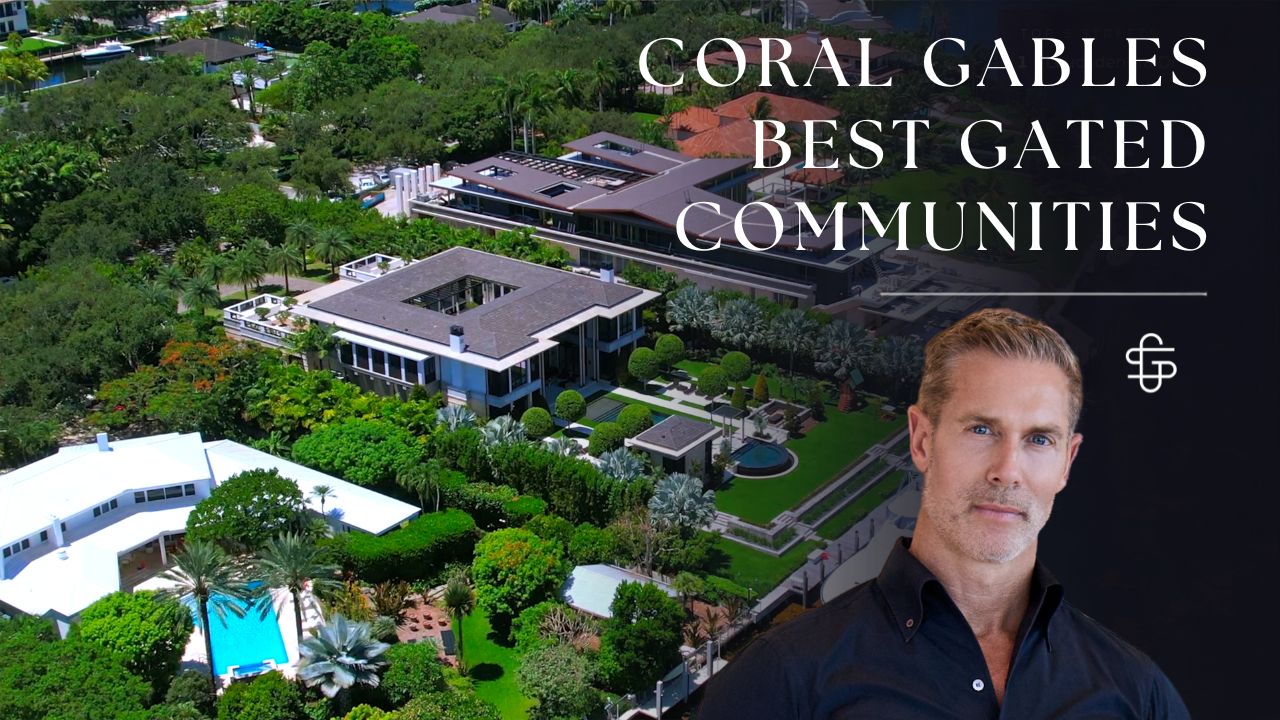
The 5 Best Luxury Streets in Miami’s Gated Communities
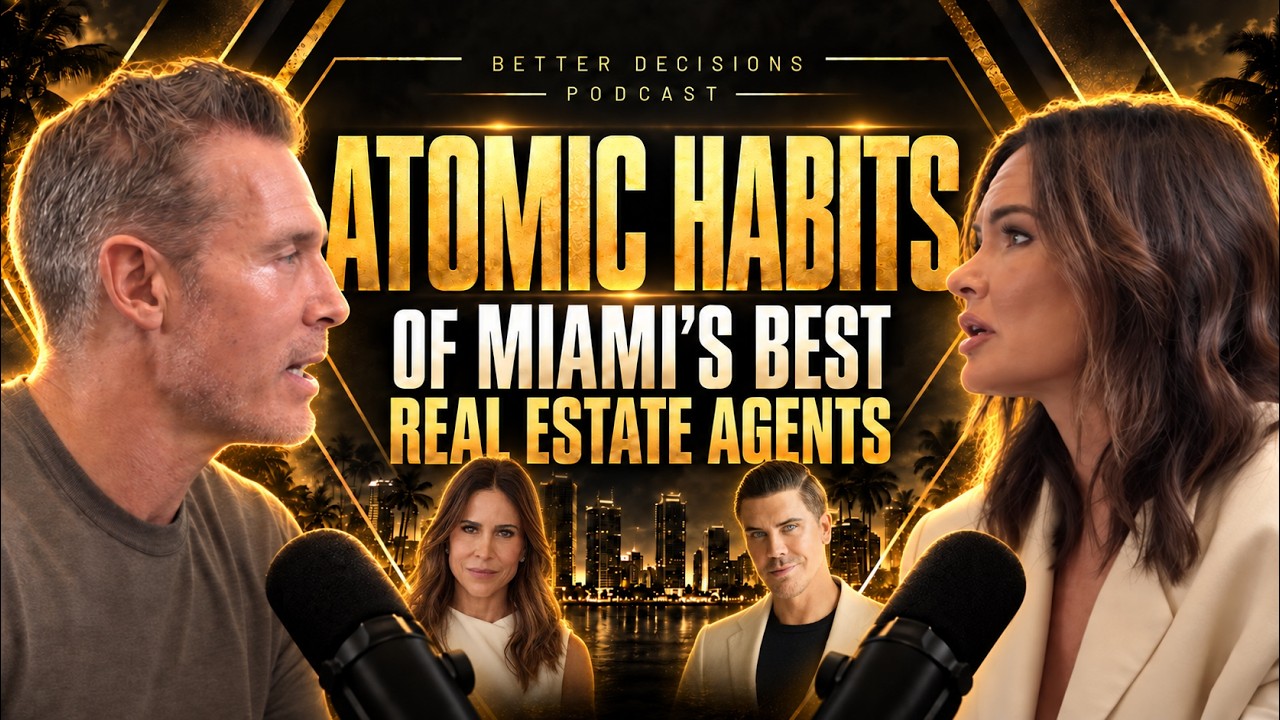
The Real Estate Team Behind the Agent: Why Systems Matter More Than Star Power
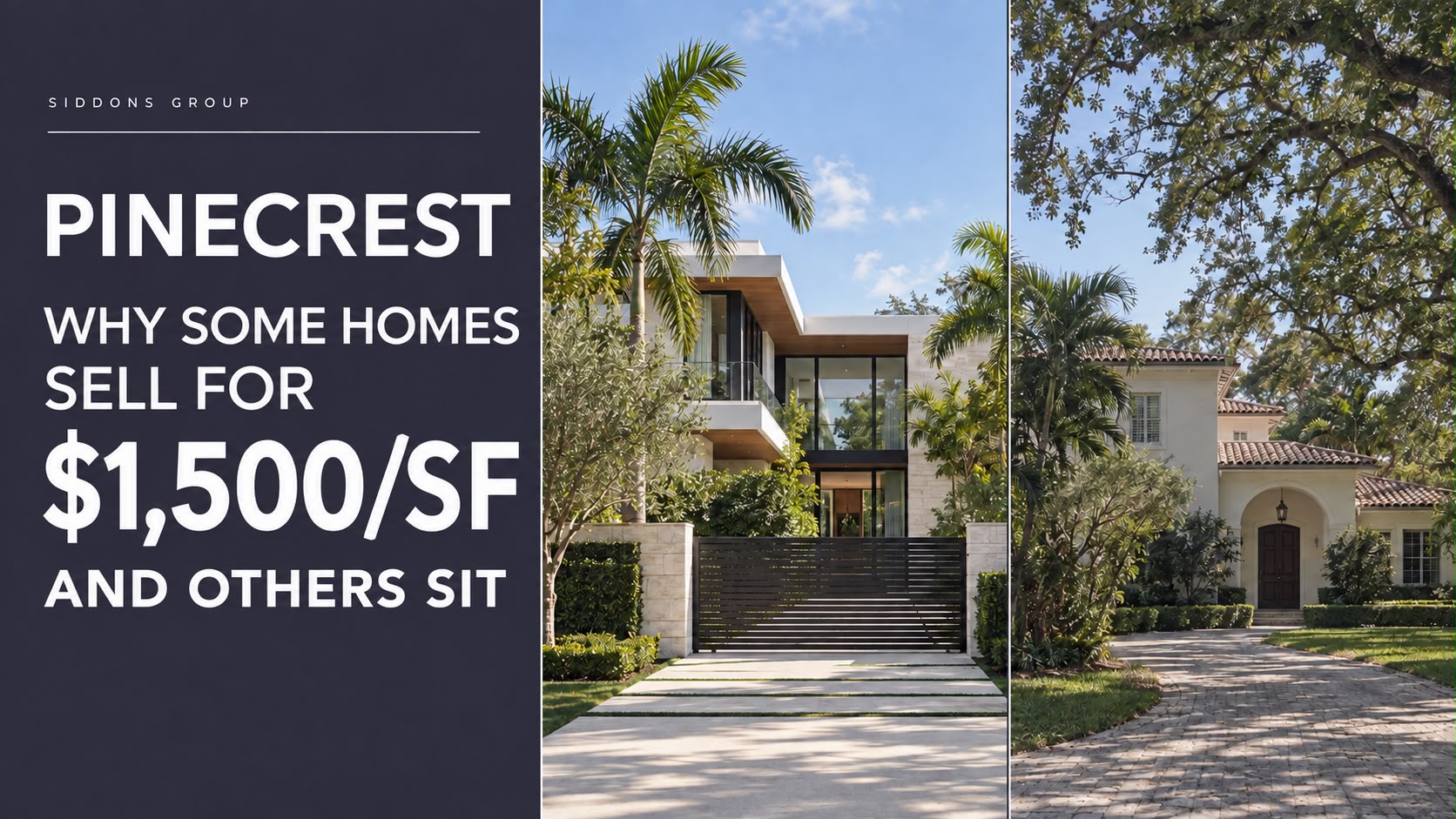
Selling a Home in Pinecrest: Why Some Homes Sell for $1,500/SF and Others Sit

We Built the Largest YouTube Audience of Any Miami Real Estate Team.
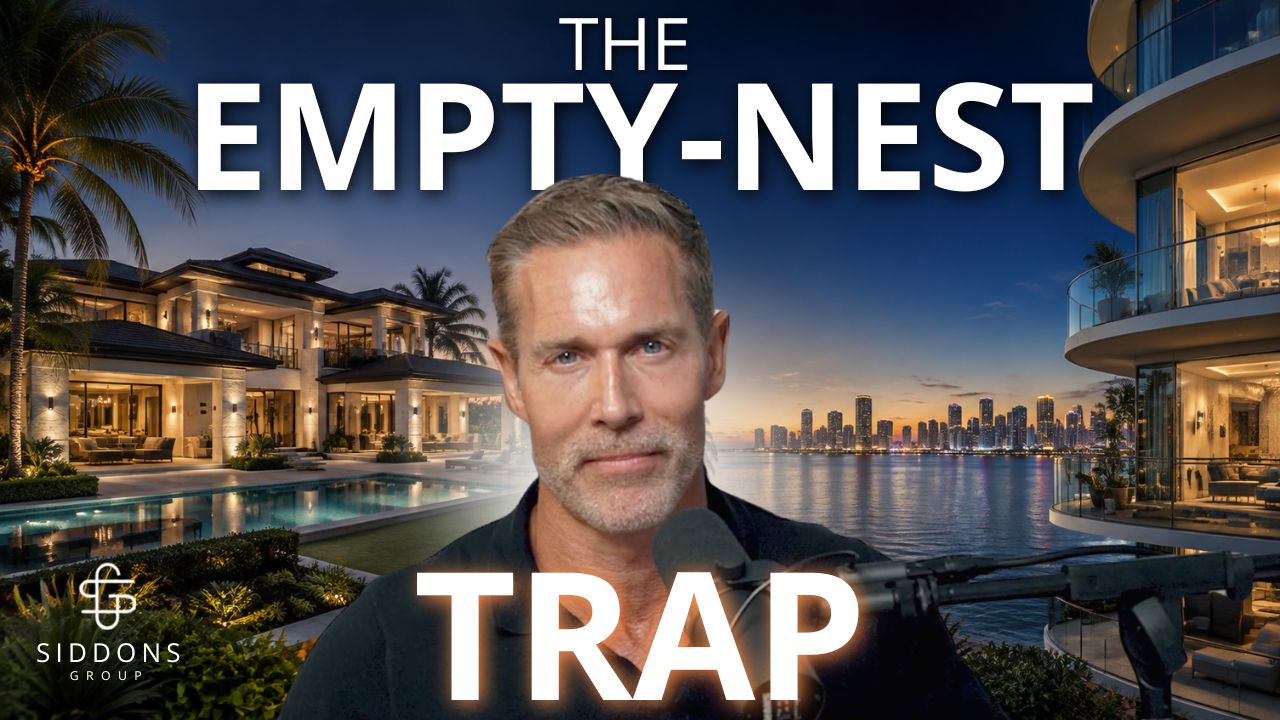
Empty Nesters in Miami: What Comes After the Big Family Home?
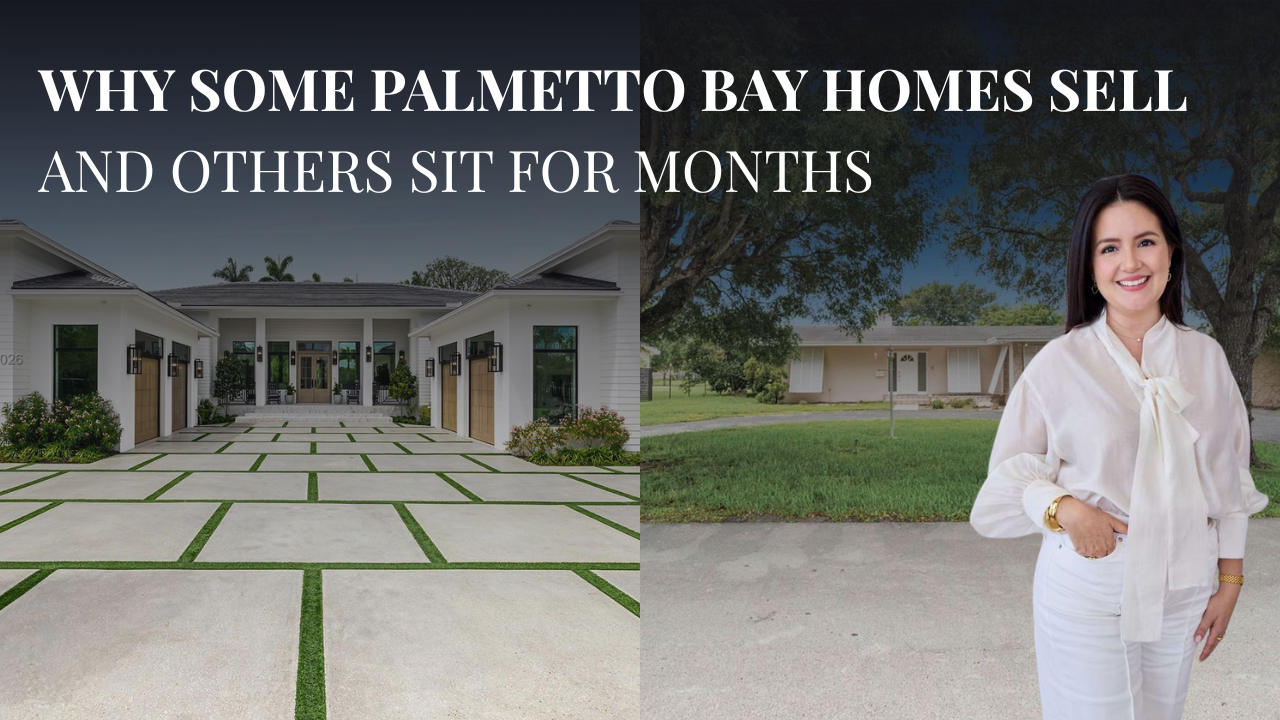
Palmetto Bay Has Almost No Inventory. So Why Are Homes Still Sitting?
Please fill in your details and David Siddons will contact you

Search related videos

Are St. Regis Sunny Isles Residences Worth the Brand Premium?
Coral Gables Market Report 2025: What the Headlines Aren’t Telling You!
How David Siddons’ Power Team Drives Miami’s Luxury Market
Mid‑Year 2025 Coconut Grove Report: The Truth About What’s Selling Now
Brickell Mid‑Year Market Report 2025 | Is Brickell’s Luxury Market in Trouble?
Pinecrest Mid-Year Market Report 2025 | What’s Selling, What’s Sitting & Why
Miami Beach Condo Market Mid-Year Report 2025 | What Buyers & Sellers Need to Know
How to Lose $1M in The Miami Condo market | Top Mistakes That Cost Miami Condo Buyers Millions
The Well Project EXPOSED Coconut Grove’s Hottest Units
Miami Real Estate in 2025 Is NOT What You Think 😱 | Midyear Must Knows for Buyers & Sellers!
7 Things You Should Never Say to a Real Estate Agent in Miami!
Landmark Victoria Park Residence in Fort Lauderdale: Inside 420 NE 11th Ave 🌴✨
Luxury Living on 2355 S. Miami Ave | Fully Furnished 4-Bed Home w/ Resort-Style Pool 🏊
Is Mandarin Oriental Residences Miami a Smart Condo Investment? Prices, Floorplans, Views & Finishes


- Get our Newsletter
- Subscribe
- No Thanks
Get the latest news from Miami Real Estate News
Close
Edit Search
Close
2 of 14
Share this property
Recomend this to a friend, just enter their email below.
Close
Your email was sent successfully
Close
 COMPARE WITH CONDOGEEKS