




















- Best of All
- Best Miami Luxury Condos
- Most popular
- Relocating to Miami
- Private Schools
- Investments
- Gated communities
- Waterfront information
- Luxury homes
- Luxury Condos
- New Construction Condos in South Florida
- Independent Pre-Construction condo reviews for Miami
- Independent Pre-Construction condo reviews for Fort Lauderdale
Investing in Rental Properties: Income Generating Homes in Miami
Introduction to Rental Property Investments in Miami
This article is about investing in rental properties in Miami and specially, single family homes. For Miami condo investments please click on the link. In this article, we cover which neighborhoods or types of homes are currently providing the highest returns as rental properties Investment. We cover working examples of investments and provide rules of what to avoid and what to buy. Additionally, we take a broader perspective by examining the micro and macro variables influencing the Miami investment landscape. To cap it off, we present compelling reasons why the overall Miami housing market merits serious consideration for inclusion in your investment portfolio.
For personalized investment guidance tailored to your specific budget, timeline, and expectations, please don’t hesitate to reach out to me directly. Your individual needs are at the forefront of our approach, and we’re here to provide one-on-one assistance.
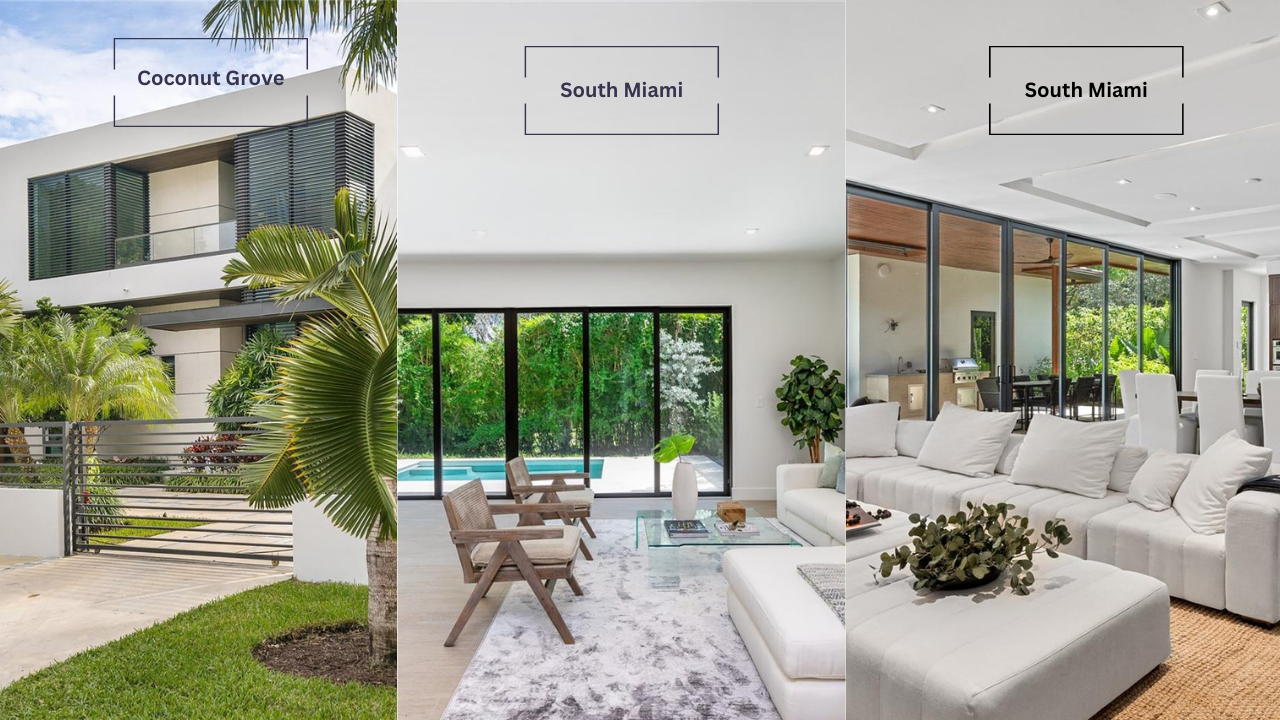
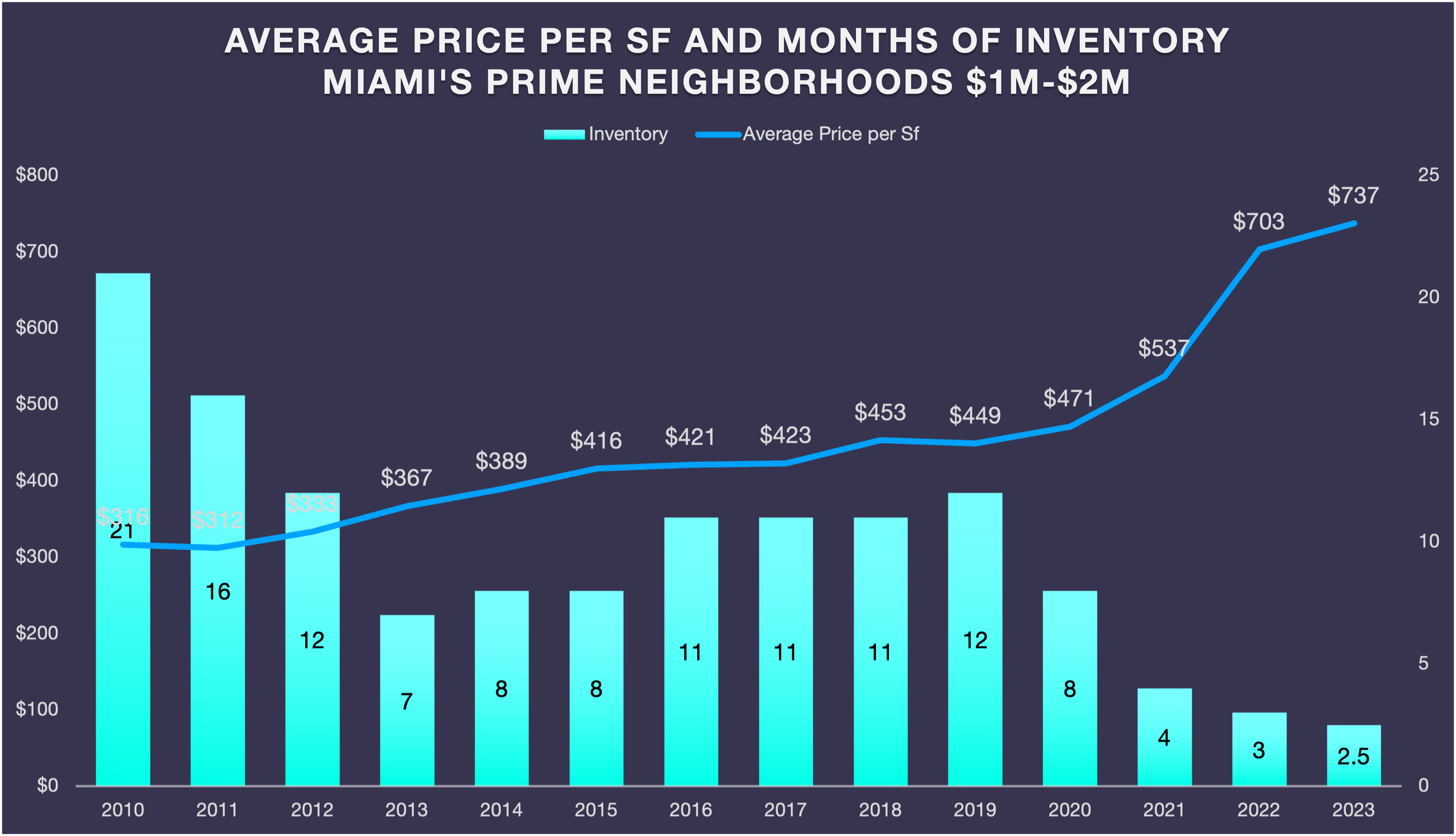
Historical performance of the Miami Housing investment market
Most people look at the condo market when investing in the Miami real estate market. The housing market however tends to provide a higher ROI. Houses are scarcer than condos, especially in the rental market. Given the high demand and low supply, landlords have a better negotiation position.
Historically seen, the single family market has been more stable than the condo market. While the condo market saw waves of mass investment, followed by lows because of oversupply, the single-family home markets in Miami have always shown a healthy performance with year over year increase in value.
With more and more families moving into Miami, who often want to test the market before they buy a property, the housing rental market has boomed in recent years. Especially the housing markets around Miami best private schools. These areas are therefore best to focus on when you are investing in rental properties.
Why work with us when buying a Miami Investment?
The Miami housing market is a good market to invest in if you follow a few basic ground rules. In short, this is how we effectively analyze the best Miami investments.
- We run our own data analysis.
- We have our own software and also look at additional data sources to follow the market.
- Soon we will have our brand new Home Geeks tools that can trace the market 15 years back
- We consider not just ROI but resale values.
- We study the human behavior.
- We look at the close relationship between supply and demand.
- After 15 years in the market dealing with sellers and buyers, we know what homes will appreciate and which ones won’t
The Neighborhoods that Yield the Highest Rental Returns per SF
| Neighborhoods | Average Rental Price per SF | Average Rental Price | Search for Properties |
| Coral Gables (West) | $3.58 | $7,950 | Coral Gables Homes for Sale |
| Coral Gables (East) | $4.31 | $12,000 | Coral Gables Homes for Sale |
| Coconut Grove | $3.86 | $9,000 | Coconut Grove Homes for Sale |
| Pinecrest | $3.35 | $9,631 | Pinecrest Homes for Sale |
| Ponce Davis | $3.77 | $11,700 | Ponce Davis Homes for Sale |
| High Pines | $4.34 | $10,500 | High Pines Homes for Sale |
| South Miami | $3.91 | $9,592 | South Miami Homes for Sale |
| Key Biscayne | $5.16 | $13,000 | Key Biscayne Homes for Sale |
| Miami Beach | $4.54 | $11,314 | Miami Beach Homes for Sale |
| Miami Beach Islands | $6.63 | $17,825 | Miami Beach Homes for Sale |
The different rental prices per SF in Miami’s most desired markets. Average taken over all rental prices in last 365 days (since Oct 2023) that rented between $5K and $25K.
What to Avoid when Investing in Rental Properties in Miami
- Avoid older homes when possible. Most tenants are focused on newer homes and these tend to rent faster and for higher amounts. Furthermore, they tend to be in better shape, so the tenant will not be calling you or complaining on a weekly basis. Newer homes are also more more economical when it comes to insurance rates and will have less structural issues eg termite, roofing etc. In addition, newer homes have a higher appreciation rate than older homes.
- Homes in the floodzone. These tend to be of lower value, but appreciate less over the years and insurance costs are expected to rise sharply in the years to come
- Don’t buy close to main arterial or on main arterial streets.Most renters are families and prefer more quiet or safe streets It may be a great neighborhood, but if you’re selling to families being on a busy street is a big negative. In addition, homes on these busier streets have a limited ceiling for appreciation.
What To Focus for your rental property investment in Miami
- The most desired areas to rent a property are those around Miami’s best public and private schools. These areas are Pinecrest, Coral Gables, Coconut Grove, South Miami, High Pines and Ponce Davis. Key Biscayne also offers some excellent opportunities.
- Focus on areas that have parks or walkable areas nearby and that cater to families.
- Quiet cul-de-sac and dead-end streets will be best for families looking to rent a property. When we look at homes around busy streets they most certainly have a ceiling limit to their values and it’s unsurprising to see homes se ll for 30% less on these busy streets. It may be a great neighborhood, but if you’re selling to families being on a busy street is a big negative.
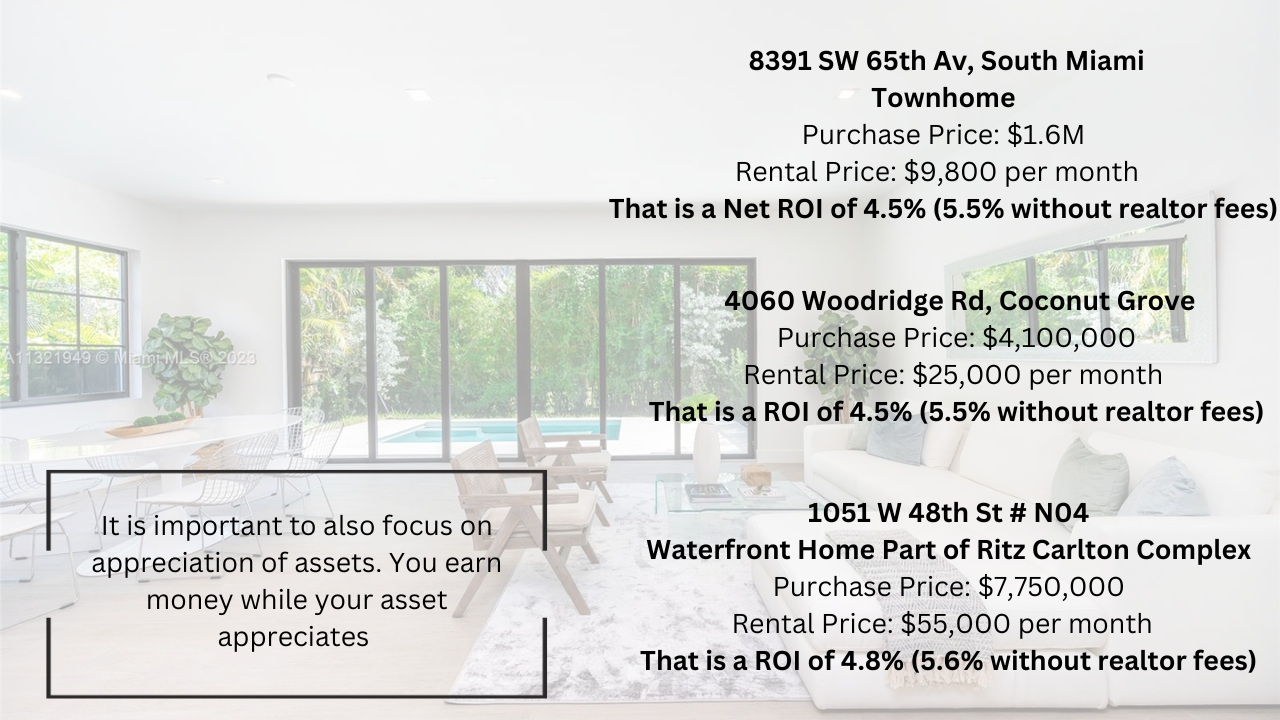
3 Investing in Rental Properties | Working Examples of Income Generating Properties. Investing in Rental Properties
Please find below three examples of income generating properties. Cap rates are important but please also keep the appreciation in mind. The townhome in question was bought for $1.6M and is now (less than a year later) worth around$1.85M. We had an investor who bought a brand new home with us in 2016 for $2.5M. They have been renting it ever since around $30k /$35K per month. It is currently rented for $38K. That is a 14% net ROI. The property is currently worth around $4,2M. Hence it appreciated $270K year over year.
Tax Benefits of Investing in Rental Properties
One of the tax advantages of owning a rental property might be the real estate depreciation. Depreciating a property for tax advantages involves utilizing the depreciation expense as a deduction to reduce taxable income, thereby lowering the tax liability.
Contact me if you would like more information on investment properties or to discuss your personal situation and investment opportunities.
Is this Rental Market sustainable?
Recent reports in the media have highlighted a decrease in Miami’s rental prices. Yes, the turbulence of 2021/2022 has subsided, leading to a modest correction in rental rates. Professor Beracha from FIU underscores the importance of considering the price’s historical context. It would be unjust to claim that prices dropped from $10,000 per month to $7,500 per month without acknowledging their pre-pandemic level of $6,000. During the pandemic, individuals were willing to pay premiums merely to secure housing, but today, such overpayments are no longer commonplace. While the market remains robust, prices have stabilized, signaling the end of panic-driven surges. This adjustment does not imply that the market was in a bubble and is now collapsing; rather, it signifies the dissipation of the urgency to acquire a property.
The demand for rental units remains high, and we are aware that the housing market is currently experiencing a shortage of available properties. The demand for properties is extremely high and in an area like Miami that is landlocked between the Everglades and the Ocean, it is harder to built new homes. The number of ongoing migration and new businesses do not lie, while inventory keeps decreasing.

What are the best Place to Buy in Miami?
The best places to live are those areas around the urban core that also offer the best schools. The demand for properties is largest here and prices have increased year over year. These markets are Coral Gables, Coconut Grove, Pinecrest, High Pines and South Miami. South Miami is quickly becoming a new luxury market, where old properties are being replaced for new luxury homes. When you are looking to invest in Rental Properties these are solid choices.
Are Miami Homes Profitable for Rental Property Investing? Conclusions by the Author
In conclusion, Miami is a magnet for relocating families and businesses, often accompanied by their workforce. Notably, the city is witnessing a significant increase in the arrival of young individuals, which is a key factor driving its ongoing economic transformation. This contributes to a growing demand in a market where the supply of available properties is limited. It essentially boils down to the classic issue of supply versus demand.
There are several very desired areas in Miami that concentrate around the Financial district as well as the best private schools. I have given some very solid points on what to look out for and what to avoid. With over 15 years of experience as a real estate agent, I possess extensive knowledge of what kind of properties are likely to appreciate and which ones do not. In addition, I can offer valuable insights into the current market trends. Please do not hesitate to get in touch with me, and together, we can navigate the Miami real estate landscape to help you achieve your investment goals.
The different mechanisms to invest in Miami Real Estate
- Income-generating properties – Condos In this article, we discuss which Miami condos offer the best returns, share real-life examples of condo investments, provide guidelines on what to invest in and what to steer clear of, and examine the local and global factors influencing the Miami real estate market.
- Building a new home. In Miami, a notable trend is the high demand for new luxury homes. Custom, finely crafted properties command premium prices. We’ll cover how to locate suitable land, determine the construction cost, and manage the project timeline.
Schedule time with me (In Person or Via Zoom)
If you are considering investing in Rental Properties in Miami or want to invest in any other type of Miami property, please contact me today!
FAQ
These are the most commonly Miami Real Estate Related questions
What should relocation buyers know before buying real estate in Miami?
HOME BUYERS
Relocation buyers looking at homes in Miami should understand that choosing the right house is less about the property itself and more about location, schools, and long-term value. Many buyers make the mistake of focusing on price or finishes, while the real driver of value is the neighborhood and micro-location. Older homes often represent better value, but may also be part of a future redevelopment cycle. Newer homes command premiums, but don’t always sell faster if pricing is ahead of the market. Commute time, school access, and community dynamics are critical and often underestimated. The key is to evaluate homes not just as lifestyle purchases, but as long-term assets within a very localized market.
Sources:
https://luxlifemiamiblog.com/relocating-to-miami/
https://luxlifemiamiblog.com/relocating-to-miami-with-a-family/
CONDO BUYERS:
Relocation buyers should understand that Miami is a highly segmented, building-driven market, not a uniform one. Pricing can vary significantly between similar properties depending on building quality, layout, and financial health. Many buyers assume newer construction equals better investment, but that is often not the case. Factors like HOA fees, reserves, and rental policies can materially impact long-term value and liquidity. Negotiation opportunities often exist, especially in slower segments, but require precise market knowledge. The key is to evaluate micro-markets and individual buildings, not just neighborhoods or price per square foot.
Sources:
https://luxlifemiamiblog.com/miami-real-estate-market-report/
https://luxlifemiamiblog.com/new-construction-miami-guide/
What are the best areas for relocating families with children
For families relocating to Miami with young children, the most recommended neighborhoods are Coral Gables, Coconut Grove, and Pinecrest. Coral Gables offers the best balance of top schools, safety, and long-term value. Coconut Grove is ideal for younger families seeking walkability, greenery, and a lifestyle-driven environment. Pinecrest provides larger homes, excellent schools, and better value for space, making it ideal for growing families. The key driver across all three is access to strong schools and primary residential stability. Relocation decisions are less about new construction and more about long-term livability and resale strength.
Sources:
https://luxlifemiamiblog.com/best-neighborhoods-miami/
https://luxlifemiamiblog.com/what-are-the-best-family-neighborhoods-in-miami-in-2023/
Are new construction condos in Miami a good investment?
New construction condos in Miami can be a good investment—but only if you understand that not all buildings perform the same. According to the David Siddons Group, many buyers assume “new = better,” but in reality, performance depends on pricing, layout, building quality, and long-term demand. Some new developments set future price benchmarks and can drive long-term appreciation, especially in top-tier projects. However, many are priced aggressively at launch, and buyers relying on marketing instead of data often overpay.
The market is highly segmented, meaning two new buildings next to each other can perform very differently.
The best opportunities typically come from selecting the right building early or negotiating correctly in later phases.
In short: new construction is not automatically a good investment—it becomes one only with building-level analysis and disciplined entry pricing.
Sources:
https://luxlifemiamiblog.com/how-to-buy-a-luxury-condo-in-miami/
https://luxlifemiamiblog.com/category/independent-new-construction-condo-reviews/
https://luxlifemiamiblog.com/beyond-clickbait-real-insights-into-miamis-luxury-condo-market/
Why is buying a Miami condo riskier than buyers think?
Buying a Miami condo is often riskier than buyers expect because the true risks are at the building level—not visible in the listing price. Many buyers focus on finishes and views, while overlooking HOA reserves, insurance exposure, and potential special assessments. In reality, two identical units in different buildings can perform completely differently over time. Rising HOA fees and stricter regulations are also increasing the true cost of ownership, especially in older buildings. Liquidity can be affected by factors like financial health, rental policies, and ongoing repairs. The key risk is not the condo itself—but buying into the wrong building without proper due diligence.
Sources:
https://luxlifemiamiblog.com/how-to-buy-a-luxury-condo-in-miami/
https://luxlifemiamiblog.com/miami-condo-market-risks/
What are Miami's Safest Areas?
Which Miami Areas Still offer Great Value (Budget Friendly alternatives to Coral Gables and Pinecrest)
If you’re looking for better value than Coral Gables or Pinecrest, the answer (in true Siddons style) is not “go cheaper”—it’s go one layer outside the obvious markets.
The strongest value plays are:
- Schenley Park → closest substitute to Coral Gables at ~20% discount while maintaining similar character and location
- Biltmore Heights → almost identical feel to the Gables but ~25–30% cheaper on a $/SF basis
- Glenvar Heights → central location with larger lots and ~25% pricing advantage vs South Miami/Gables
- Baptist / Galloway (Kendall) → Pinecrest-style living (space, schools, land) at up to ~30% lower pricing
The pattern is consistent:
👉 Buyers are shifting west and slightly off-market to gain land, scale, and pricing efficiency. You don’t find value by going to a “cheaper neighborhood”—you find it by identifying adjacent micro-markets that offer the same lifestyle fundamentals without the brand premium.
Sources:
https://luxlifemiamiblog.com/best-value-neighborhoods-miami/
https://luxlifemiamiblog.com/category/miami-neighborhoods/
Is NOW a good time to buy in Miami?
Are Miami real estate prices going down in 2026?
No—but that’s the wrong way to look at it. Miami is not one market anymore, so prices are not moving in one direction. In 2026, the market is split into two: ultra-luxury, scarcity-driven areas (like waterfront and top-tier neighborhoods) are still holding or even rising, while mid-tier condos and oversupplied segments are flat or correcting. What we’re seeing is price divergence, not a crash—some properties are gaining value while others are quietly adjusting downward. Rising inventory and more selective buyers are putting pressure on pricing in certain segments, especially older condos or buildings with weaker fundamentals.
At the same time, global wealth and cash buyers continue to support pricing at the top end of the market. So the real answer: prices aren’t broadly dropping—they’re being repriced based on quality, location, and supply.
Should I buy a house or a condo when relocating to Miami?
The decision comes down to lifestyle first, investment second—and most relocation buyers get that backwards. If you want space, privacy, schools, and long-term family living, a single-family home in areas like Coral Gables or Coconut Grove is typically the stronger choice. If you prioritize walkability, low maintenance, and proximity to business districts, a condo in Brickell or waterfront markets makes more sense.
From an investment perspective, homes tend to be more stable, while condos are more building-dependent and cyclical. Most relocation clients underestimate how much building quality, HOA structure, and future costs impact condo performance. The right answer isn’t “house vs condo”—it’s which asset fits your lifestyle AND holds value within its micro-market.
How do I choose the right Miami neighborhood for my lifestyle?
Why are Miami condo prices so different between buildings?
Miami condo pricing varies widely because value is determined at the building level, not just by location. Two buildings next to each other can have major differences in financial health, reserves, HOA fees, and management quality. Buyers also pay premiums for better layouts, views, amenities, and newer construction—but not all “new” buildings perform equally. Factors like rental policies, upcoming assessments, and building reputation can significantly impact resale value. This is why price per square foot alone is misleading in Miami’s condo market. The real driver of value is how that specific building competes within its micro-market over time.
Sources:
https://luxlifemiamiblog.com/how-to-buy-a-luxury-condo-in-miami/
https://luxlifemiamiblog.com/category/independent-new-construction-condo-reviews/
WHY WORK WITH DAVID? THINGS YOU SHOULD KNOW...
For all our analytics we are agents driving some very unique and advanced tech. We Provide a granular and custom experience that empower our clients with the insight and tools to understand the most complex behaviors of any local markets.
-
Analytical
Over 100 reports produced to date
-
Knowledgeable
Over 1800 published articles and counting


Related Articles

Selling Your Home in Miami?

Bal Harbour & Surfside Real Estate Market Q1 2026
Ranking The Best and Worst Miami New Construction Condos for 2026

Coral Gables Real Estate Market Q1 2026
Kendall Luxury Real Estate Market Update Q1 2026
Miami Real Estate Market Report Q1 2026: The Two-Market Reality Driving Prices

Sunny Isles Real Estate Market Q1 2026

Who Is the Best Real Estate Agent in Miami for New Construction Condos? (2026 Data-Driven Guide)

How to Buy a Luxury Condo in Miami (2026 Playbook for Smart Buyers)

Pinecrest Real Estate Market Update Q1 2026

Aventura Real Estate Market Report Q1 2026

Brickell Real Estate Market Report Q1 2026

Coconut Grove Real Estate Market Q1 2026

South of Fifth Real Estate Market Report Q1 2026
Please fill in your details and David Siddons will contact you



- Get our Newsletter
- Subscribe
- No Thanks
Get the latest news from Miami Real Estate News
Close
Edit Search
Close
Share this property
Recomend this to a friend, just enter their email below.
Close
Your email was sent successfully
Close
 COMPARE WITH CONDOGEEKS