

















- Best of All
- Best Miami Luxury Condos
- Most popular
- Relocating to Miami
- Private Schools
- Investments
- Gated communities
- Waterfront information
- Luxury homes
- Luxury Condos
- New Construction Condos in South Florida
- Independent Pre-Construction condo reviews for Miami
- Independent Pre-Construction condo reviews for Fort Lauderdale
The Visionary Architect of Instant Luxury: How Paulo Bacchi Reshaped Miami Luxury Living
On this episode of the Better Decisions Podcast, David sits down with long-time friend and respected Miami entrepreneur Paulo Bacchi, the force behind Artefacto, one of the largest high-end furniture and lifestyle brands in Florida. For nearly two decades, Paulo has shaped how luxury real estate is experienced, building a brand known not just for furniture, but for scale, service, and the ability to deliver instantly in a market defined by urgency.
If you want to understand where Miami luxury living is heading, and who is quietly shaping the next era, you need to understand the mindset of Paulo Bacchi. His influence extends far beyond furniture; it reaches developers, architects, and buyers who want instant, elevated, turnkey living. This episode reveals insights that directly impact buyers, sellers, and investors navigating Miami’s fast-changing luxury market.
Paulo’s Journey: From Newcomer to Market Shaper
Paulo arrived in Miami in 2002 with a clear goal: to redefine what a luxury furniture operation could be. Although he was already running a million-square-foot factory with 3,000 employees in Brazil, he quickly realized that Miami demanded a completely different strategy. Instead of relying on assumptions, he spent six months studying the market in depth—visiting 147 showrooms across Miami-Dade and Broward to understand how the industry really worked.
What he found was a major gap. Luxury buyers wanted immediate gratification, yet almost every showroom required four to six months for European orders. Paulo’s response was bold. He stocked five times more inventory than a typical showroom and stored it in a large Miami warehouse, allowing him to deliver in as little as two weeks. No one else was doing it. That decision positioned him as a key partner for developers who needed furnished units fast and wanted to accelerate sales.
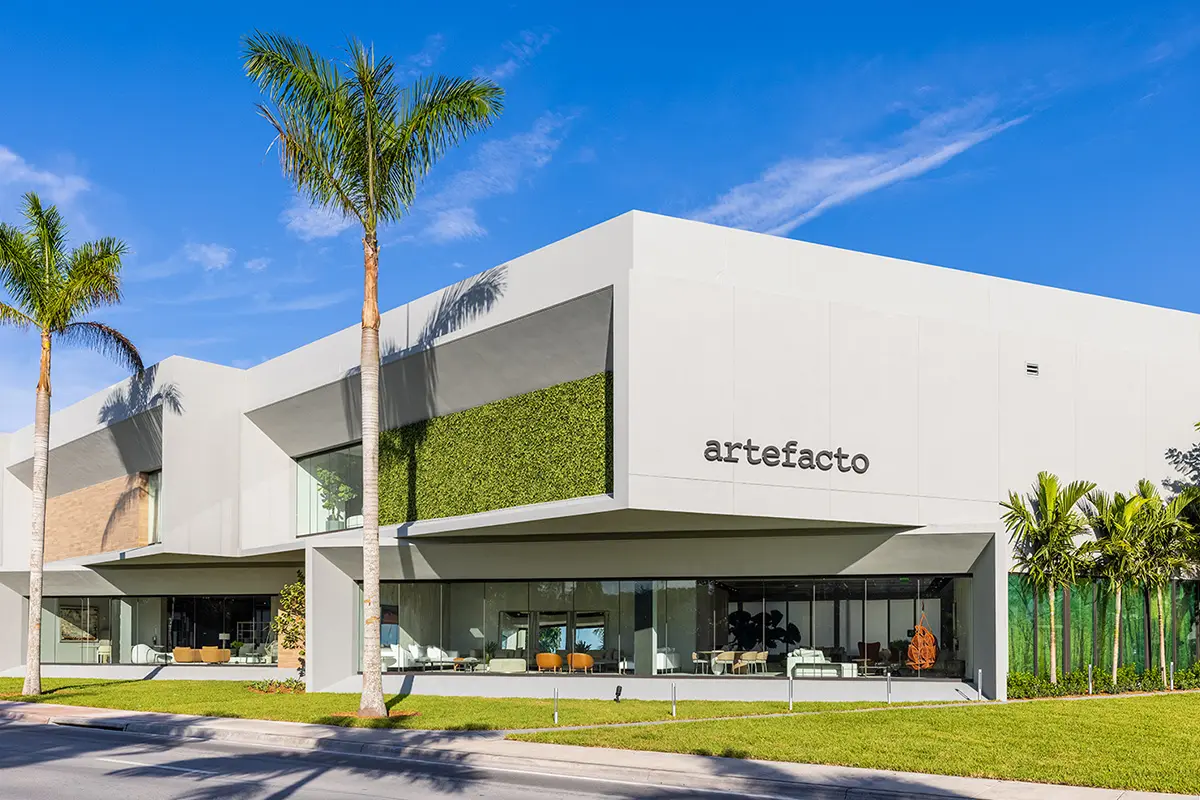
His early success allowed him to expand quickly across the U.S., but when the 2008 crash hit, Paulo didn’t retreat. Instead, he adapted. Developers were stuck with unsold condos, and he leaned into the opportunity—furnishing units, creating showcases, and helping sell entire lines of inventory. He launched roadshows in Brazil that produced instant momentum, including a remarkable stretch where 120 units sold in three months. The downturn also gave him the chance to acquire land and build flagship spaces, including the signature 40,000-square-foot Coral Gables showroom.
For Paulo, two principles became the foundation of his business: inventory and speed create value, and understanding how luxury buyers think is everything. Their true currency is not the furniture—it’s time.
How Miami Is Evolving: Adaptation, Opportunity, and Global Appeal
Miami’s evolution runs parallel to Paulo’s story—rooted in resilience, ambition, and reinvention. Over the past two decades, the city has shifted from a regional real estate market to the capital of Latin America and, more recently, a global safe haven. Today’s buyers, whether from Latin America, the Northeast, or Europe, are drawn to Miami for its safety, warm climate, cultural diversity, tax advantages, and a lifestyle where success is celebrated rather than judged.
Miami has always been a city shaped by its ability to adapt. It weathered the 2008 collapse, rebounded with liquidity from Brazil, reinvented itself again during the post-2020 migration boom, and continues to evolve as new industries and global investors enter the market. Its unique culture of ambition sets it apart; here, people admire success and use it as motivation, creating an environment where upward mobility is part of everyday life.
Paulo’s journey and Miami’s story share the same DNA—bold moves, rapid adaptation, and an instinct to seize opportunity before others see it. Their trajectories show how far the city has come and hint at how much potential still lies ahead.

The Philosophy Behind Paulo’s Success: Collaboration, Credibility, and a Client-First Mindset
Paulo’s rise in Miami’s luxury market is built on a simple but powerful philosophy: help others succeed, and success comes back in multiples. Whether working with designers, developers, or realtors, his approach has always been the same—elevate their work, make their properties sell faster, and deliver an experience that turns clients into long-term partners. That’s why he stages listings before Art Basel, supports designers by showcasing their creativity, and treats every collaboration as a shared win.
At the center of everything is the client. Paulo never approaches a project by asking how to make money; he asks what the buyer truly needs and how he can deliver it faster, better, and more reliably than anyone else. This mindset has shaped not only his business, but the next generation. His sons, Bruno and Pietro, began working alongside him as teenagers—learning discipline, customer psychology, and the value of showing up. Their success in launching a profitable 15,000-square-foot Madison Avenue showroom in its first year is proof that the family philosophy works.
But the real foundation of Paulo’s empire is credibility, a lesson passed down from his father. Your word is everything. If something is delayed, you call the client. If a sofa needs to arrive by Thanksgiving, you put it on a plane—even if you lose money. That commitment has sustained a 50-year, three-generation business that now spans Miami, New York, and São Paulo. As Paulo prepares to celebrate the company’s milestone anniversary, the message is clear: collaboration, integrity, and relentless service aren’t just part of his business—they are the reason it continues to grow.
From Designer to Developer: How Paulo Became a Driving Force in Miami’s Real Estate Evolution
Paulo’s journey has expanded far beyond design—he’s become one of the most influential new voices shaping Miami’s luxury real estate landscape. His constant presence across the city, deep ties with leading developers like Related Group and David Martin, and his hands-on experience building high-end “spec homes” with his sons have pushed him naturally into the role of a developer-partner. What began as small side projects turned into full-scale collaborations and soon evolved into branded buildings carrying the Artefacto name—projects that sell out because buyers trust his legacy of craftsmanship, comfort, and timeless design. Today, with 11 branded towers in Brazil and his first U.S. building sold out in Bay Harbor, Paulo is stepping into a new chapter: creating hotels, residences, and large-scale developments that embody his signature “warm contemporary” aesthetic. As he prepares for the company’s 50-year milestone and hands global operations to the next generation, Paulo is doubling down on real estate—driven by legacy, credibility, and a desire to make his father proud, while building the foundation his sons will carry forward.

Miami’s Next Decade: A Magnet for Wealth, Talent, and Opportunity
Miami’s trajectory is unmistakable—this city is becoming the epicenter of wealth migration, business expansion, and lifestyle-driven relocation. From Ken Griffin’s multibillion-dollar commitment to the steady flow of financial leaders, entrepreneurs, and creatives, Miami is entering a new era defined by investment and influence. Strong governance, pro-business policies, and long-term tax advantages are fueling a wave of billionaires—and with them, the executives, talent, and infrastructure that reshape entire cities. As Paolo notes, people want to live where they are welcomed, where opportunity feels unlimited, and where quality of life keeps rising. Over the next ten years, Miami is set to become one of the wealthiest, most dynamic cities in the country—an ecosystem built on ambition, culture, and a deep sense of possibility.
And for those coming to Miami to build a business or a career? His advice is simple but powerful: differentiate through service. In a fast-growing market where demand outpaces talent, true excellence comes from anticipation, attention to detail, and delivering more than what’s expected. Service isn’t just a skill—it’s a competitive advantage. The people who lead with care, effort, and follow-through are the ones who will thrive in Miami’s next chapter.
Connect with the David Siddons Group
For personalized guidance on Miami luxury real estate, new construction, or market strategy, our team is here to help.
FAQ
These are the most commonly Miami Real Estate Related questions
What should relocation buyers know before buying real estate in Miami?
HOME BUYERS
Relocation buyers looking at homes in Miami should understand that choosing the right house is less about the property itself and more about location, schools, and long-term value. Many buyers make the mistake of focusing on price or finishes, while the real driver of value is the neighborhood and micro-location. Older homes often represent better value, but may also be part of a future redevelopment cycle. Newer homes command premiums, but don’t always sell faster if pricing is ahead of the market. Commute time, school access, and community dynamics are critical and often underestimated. The key is to evaluate homes not just as lifestyle purchases, but as long-term assets within a very localized market.
Sources:
https://luxlifemiamiblog.com/relocating-to-miami/
https://luxlifemiamiblog.com/relocating-to-miami-with-a-family/
CONDO BUYERS:
Relocation buyers should understand that Miami is a highly segmented, building-driven market, not a uniform one. Pricing can vary significantly between similar properties depending on building quality, layout, and financial health. Many buyers assume newer construction equals better investment, but that is often not the case. Factors like HOA fees, reserves, and rental policies can materially impact long-term value and liquidity. Negotiation opportunities often exist, especially in slower segments, but require precise market knowledge. The key is to evaluate micro-markets and individual buildings, not just neighborhoods or price per square foot.
Sources:
https://luxlifemiamiblog.com/miami-real-estate-market-report/
https://luxlifemiamiblog.com/new-construction-miami-guide/
What are the best areas for relocating families with children
For families relocating to Miami with young children, the most recommended neighborhoods are Coral Gables, Coconut Grove, and Pinecrest. Coral Gables offers the best balance of top schools, safety, and long-term value. Coconut Grove is ideal for younger families seeking walkability, greenery, and a lifestyle-driven environment. Pinecrest provides larger homes, excellent schools, and better value for space, making it ideal for growing families. The key driver across all three is access to strong schools and primary residential stability. Relocation decisions are less about new construction and more about long-term livability and resale strength.
Sources:
https://luxlifemiamiblog.com/best-neighborhoods-miami/
https://luxlifemiamiblog.com/what-are-the-best-family-neighborhoods-in-miami-in-2023/
Are new construction condos in Miami a good investment?
New construction condos in Miami can be a good investment—but only if you understand that not all buildings perform the same. According to the David Siddons Group, many buyers assume “new = better,” but in reality, performance depends on pricing, layout, building quality, and long-term demand. Some new developments set future price benchmarks and can drive long-term appreciation, especially in top-tier projects. However, many are priced aggressively at launch, and buyers relying on marketing instead of data often overpay.
The market is highly segmented, meaning two new buildings next to each other can perform very differently.
The best opportunities typically come from selecting the right building early or negotiating correctly in later phases.
In short: new construction is not automatically a good investment—it becomes one only with building-level analysis and disciplined entry pricing.
Sources:
https://luxlifemiamiblog.com/how-to-buy-a-luxury-condo-in-miami/
https://luxlifemiamiblog.com/category/independent-new-construction-condo-reviews/
https://luxlifemiamiblog.com/beyond-clickbait-real-insights-into-miamis-luxury-condo-market/
Why is buying a Miami condo riskier than buyers think?
Buying a Miami condo is often riskier than buyers expect because the true risks are at the building level—not visible in the listing price. Many buyers focus on finishes and views, while overlooking HOA reserves, insurance exposure, and potential special assessments. In reality, two identical units in different buildings can perform completely differently over time. Rising HOA fees and stricter regulations are also increasing the true cost of ownership, especially in older buildings. Liquidity can be affected by factors like financial health, rental policies, and ongoing repairs. The key risk is not the condo itself—but buying into the wrong building without proper due diligence.
Sources:
https://luxlifemiamiblog.com/how-to-buy-a-luxury-condo-in-miami/
https://luxlifemiamiblog.com/miami-condo-market-risks/
What are Miami's Safest Areas?
Which Miami Areas Still offer Great Value (Budget Friendly alternatives to Coral Gables and Pinecrest)
If you’re looking for better value than Coral Gables or Pinecrest, the answer (in true Siddons style) is not “go cheaper”—it’s go one layer outside the obvious markets.
The strongest value plays are:
- Schenley Park → closest substitute to Coral Gables at ~20% discount while maintaining similar character and location
- Biltmore Heights → almost identical feel to the Gables but ~25–30% cheaper on a $/SF basis
- Glenvar Heights → central location with larger lots and ~25% pricing advantage vs South Miami/Gables
- Baptist / Galloway (Kendall) → Pinecrest-style living (space, schools, land) at up to ~30% lower pricing
The pattern is consistent:
👉 Buyers are shifting west and slightly off-market to gain land, scale, and pricing efficiency. You don’t find value by going to a “cheaper neighborhood”—you find it by identifying adjacent micro-markets that offer the same lifestyle fundamentals without the brand premium.
Sources:
https://luxlifemiamiblog.com/best-value-neighborhoods-miami/
https://luxlifemiamiblog.com/category/miami-neighborhoods/
Is NOW a good time to buy in Miami?
Are Miami real estate prices going down in 2026?
No—but that’s the wrong way to look at it. Miami is not one market anymore, so prices are not moving in one direction. In 2026, the market is split into two: ultra-luxury, scarcity-driven areas (like waterfront and top-tier neighborhoods) are still holding or even rising, while mid-tier condos and oversupplied segments are flat or correcting. What we’re seeing is price divergence, not a crash—some properties are gaining value while others are quietly adjusting downward. Rising inventory and more selective buyers are putting pressure on pricing in certain segments, especially older condos or buildings with weaker fundamentals.
At the same time, global wealth and cash buyers continue to support pricing at the top end of the market. So the real answer: prices aren’t broadly dropping—they’re being repriced based on quality, location, and supply.
Should I buy a house or a condo when relocating to Miami?
The decision comes down to lifestyle first, investment second—and most relocation buyers get that backwards. If you want space, privacy, schools, and long-term family living, a single-family home in areas like Coral Gables or Coconut Grove is typically the stronger choice. If you prioritize walkability, low maintenance, and proximity to business districts, a condo in Brickell or waterfront markets makes more sense.
From an investment perspective, homes tend to be more stable, while condos are more building-dependent and cyclical. Most relocation clients underestimate how much building quality, HOA structure, and future costs impact condo performance. The right answer isn’t “house vs condo”—it’s which asset fits your lifestyle AND holds value within its micro-market.
How do I choose the right Miami neighborhood for my lifestyle?
Why are Miami condo prices so different between buildings?
Miami condo pricing varies widely because value is determined at the building level, not just by location. Two buildings next to each other can have major differences in financial health, reserves, HOA fees, and management quality. Buyers also pay premiums for better layouts, views, amenities, and newer construction—but not all “new” buildings perform equally. Factors like rental policies, upcoming assessments, and building reputation can significantly impact resale value. This is why price per square foot alone is misleading in Miami’s condo market. The real driver of value is how that specific building competes within its micro-market over time.
Sources:
https://luxlifemiamiblog.com/how-to-buy-a-luxury-condo-in-miami/
https://luxlifemiamiblog.com/category/independent-new-construction-condo-reviews/
WHY WORK WITH DAVID? THINGS YOU SHOULD KNOW...
For all our analytics we are agents driving some very unique and advanced tech. We Provide a granular and custom experience that empower our clients with the insight and tools to understand the most complex behaviors of any local markets.
-
Analytical
Over 100 reports produced to date
-
Knowledgeable
Over 1800 published articles and counting


Related Articles
Miami Real Estate Market Report Q1 2026: The Two-Market Reality Driving Prices
Sunny Isles Real Estate Market Q1 2026
Who Is the Best Real Estate Agent in Miami for New Construction Condos? (2026 Data-Driven Guide)
How to Buy a Luxury Condo in Miami (2026 Playbook for Smart Buyers)
Pinecrest Real Estate Market Update Q1 2026
Aventura Real Estate Market Report Q1 2026
Brickell Real Estate Market Report Q1 2026
Coconut Grove Real Estate Market Q1 2026
South of Fifth Real Estate Market Report Q1 2026
Fort Lauderdale Luxury Real Estate Update Q1 2026 | A Quiet Market Shift is Underway
Best Value Neighborhoods in Miami

Real Estate Investing in 2026: Why the Old Strategies No Longer Work
West Palm Beach Real Estate Market 2026: Luxury Prices Surge & New Developments Redefine the Market

What the Top 1% Do Differently — Lessons from Hosting the World’s Biggest Stars
Please fill in your details and David Siddons will contact you

Search related videos

Are St. Regis Sunny Isles Residences Worth the Brand Premium?
Coral Gables Market Report 2025: What the Headlines Aren’t Telling You!
How David Siddons’ Power Team Drives Miami’s Luxury Market
Mid‑Year 2025 Coconut Grove Report: The Truth About What’s Selling Now
Brickell Mid‑Year Market Report 2025 | Is Brickell’s Luxury Market in Trouble?
Pinecrest Mid-Year Market Report 2025 | What’s Selling, What’s Sitting & Why
Miami Beach Condo Market Mid-Year Report 2025 | What Buyers & Sellers Need to Know
How to Lose $1M in The Miami Condo market | Top Mistakes That Cost Miami Condo Buyers Millions
The Well Project EXPOSED Coconut Grove’s Hottest Units
Miami Real Estate in 2025 Is NOT What You Think 😱 | Midyear Must Knows for Buyers & Sellers!
7 Things You Should Never Say to a Real Estate Agent in Miami!
Landmark Victoria Park Residence in Fort Lauderdale: Inside 420 NE 11th Ave 🌴✨
Luxury Living on 2355 S. Miami Ave | Fully Furnished 4-Bed Home w/ Resort-Style Pool 🏊
Is Mandarin Oriental Residences Miami a Smart Condo Investment? Prices, Floorplans, Views & Finishes


- Get our Newsletter
- Subscribe
- No Thanks
Get the latest news from Miami Real Estate News
Close
Edit Search
Close
2 of 14
Share this property
Recomend this to a friend, just enter their email below.
Close
Your email was sent successfully
Close
 COMPARE WITH CONDOGEEKS